When To Stop Using A Baby Monitor: 5 Signs It’s Time
That little screen on your nightstand has probably been your security blanket for years. You’ve fallen asleep watching your little one’s tiny chest rise and fall, turned up the volume for every cough, and checked it more times than you can count. But lately you’ve started wondering… do we still need this? Is it time to let go of the baby monitor?
If you’re wondering when to stop using a baby monitor at night, you’re not alone. Every mom reaches this point, where safety meets independence, and peace of mind starts to look a little different. In this guide, we’ll walk through exactly when most families stop using a baby monitor, the signs your child might be ready, and how to make the transition without losing sleep over it.
TL;DR: When to stop using a baby monitor:
- The Sweet Spot: Most families phase out the monitor between ages 2 and 4, but there is no “wrong” age to stop.
- Ready for “Off” if: Your child sleeps through the night, can physically come find you if they need help, and respects basic room safety rules.
- Keep it Plugged In if: You have a multi-story home, a child with medical concerns, or a toddler who has just transitioned to a “big kid bed” and might wander.
- The Pro Move: Don’t go cold turkey. Transition by switching to audio-only mode first, or use it only for the first few hours of the night.
- The “Sick Day” Rule: Even when you stop daily use, keep the hardware! It’s a lifesaver for monitoring a sick child without waking them up.
- The Bottom Line: If the monitor is causing you more “screen-checking anxiety” than peace of mind, it’s officially time to let go.
At What Age Should You Stop Using A Baby Monitor?
While there is no specified age when you should stop using your baby monitor, most families begin to phase out the monitor between the ages of 2 and 4. By age two, many children have developed the verbal skills to call out for help or the physical ability to walk into their parents’ room.
By age four, most have reached a level of sleep maturity where constant surveillance is no longer a safety necessity. However, I strongly suggest focusing on readiness signs rather than following the age rule. Remember, every child develops independence at a different pace.
Baby Monitor Necessity by Your Baby Age Group:
This table breaks down the essential role of a monitor at every developmental stage of your infant to help you decide when it’s finally time to unplug.
| Age Group | Necessity Level | Primary Focus & Usage |
| Under 12 Months | High Necessity | Helps in monitoring breathing, sleep positions, and quick responses to feeding or comfort needs. |
| 1 to 2 Years Old | High Utility | Ensuring safety during the transition to mobility, watching for “crib gymnastics” or climbing. |
| 2 to 4 Years Old | Transitional | Shifts from safety watch to an “intercom” for communication as children gain more independence. |
| Preschool & Beyond | Low/Optional | Generally unnecessary unless medical concerns, night terrors, or complex home layouts are involved. |
5 Signs Your Child May Be Ready to Stop Using a Baby Monitor:
If you aren’t sure if it’s time to hit the power button for the last time, look for these five developmental milestones as clear indicators of readiness:
#1. Your Little one Sleeps Through the Night Consistently
When your child reaches the stage where they sleep soundly for ten to twelve hours without waking for a feeding or comfort, your monitor effectively becomes a broadcast of “dead air.”
If they handle brief stirrings by self-soothing and falling back asleep without your intervention, you are likely monitoring silence. At this point, the monitor could be disrupting your sleep rather than ensuring their safety or well-being.
#2. Your Child Can Call Out or Come to You
The main job of a monitor is to bridge the gap between your baby’s cry and your ears. However, once your child is in a toddler bed and can easily navigate a dark hallway, they become their own communication system.
If your little one knows exactly how to find your bedside or can shout loudly enough to be heard through a closed door, the “emergency” utility of a digital link drops significantly.
#3. Your Child Understands Basic Safety Rules
Visual supervision is important when toddlers are prone to “crib gymnastics,” or when they start exploring dangerous corners. You’ll know they are ready to go monitor-free when they consistently follow house rules, such as staying in bed until morning and avoiding furniture climbing.
When you can trust that they won’t treat their bookshelf like a ladder or poke at outlets the moment you look away, the need for a constant 24/7 video feed naturally diminishes.
#4. You Rarely Check the Monitor Anymore
Sometimes the psychological transition happens long before we physically unplug the camera. If the parent unit sits on your nightstand but you find yourself ignoring the screen until the sun comes up, you have already subconsciously moved on.
This lack of “checking-in” behavior is a strong sign that your parental intuition is satisfied with their safety, and the monitor has become more of a decorative paperweight.
#5. You Feel Comfortable Without It
The final sign is perhaps the most important: your own gut feeling. As parents, we can agree that parenting is usually a series of “letting go” moments, and trusting your instincts is key to a smooth transition.
If the thought of turning the unit off no longer causes a spike in your heart rate or a wave of “what-if” anxiety, you’re likely ready to stop using the baby monitor.
Situations Where You May Want To Keep The Baby Monitor Longer
Here are some instances where you might want to keep your baby monitoring device plugged in a bit longer:
You Live In A Large or Multi-Story Home:
If your master bedroom is on a different floor or at the opposite end of a sprawling ranch-style home, an audio or video link ensures you can hear a nightmare or a call for help from your little one’s room that wouldn’t reach you through walls and floors.
You Have A Toddler In Transition
Your child moving from a crib to a “big kid bed” is a major milestone for sure. And in this case, a monitor can help ensure they aren’t wandering into the kitchen or bathroom unsupervised in the middle of the night.
Your Kid Has Special Needs Or Medical Concerns
If your child has a history of febrile seizures, severe asthma, or recurring night terrors, a monitor becomes a necessity that you want to keep plugged in a while longer. Likewise, if your baby is autistic, you should consider keeping your monitor on well into elementary school for their safety.
Shared Rooms or Siblings
Do you have an older child who shares a room with your baby? If yes, a monitor helps you ensure the older sibling isn’t “helping” too much or accidentally waking the little one.
Does Keeping A Baby Monitor Too Long Affect Sleep?
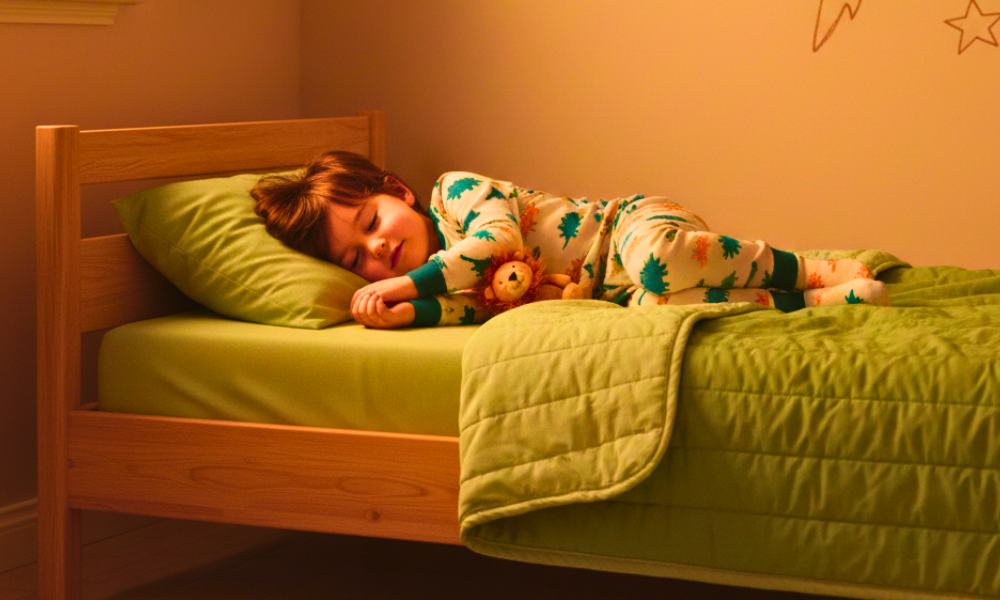
There is a tipping point where a monitor stops being a helpful tool and becomes a disruption. It can slowly hook you into parental hypervigilance, where you wake up at every toss and turn displayed on the screen. And this has led to chronic sleep deprivation for parents.
Furthermore, if your child knows they are being watched, it can occasionally hinder their sleep confidence. Learning to be alone in the dark is a developmental skill. If you rush in the second the child sits up because you saw it on the screen, your toddler may never learn the vital skill of falling back asleep independently.
How To Transition Away From A Baby Monitor
If you’ve finally decided it’s time to stop using the baby monitor, I won’t advise you to go “cold turkey” on it. Rather, I encourage you to follow a gradual phase-out (this is something I’ve personally followed, and it works well). Here are my personal tips for phasing out your baby monitor:
- Start with Audio Only: Turn the screen brightness down or cover the video element. Or switch to the Audio-only feature (if your unit supports it). Listen for calls for help rather than watching every movement.
- Turn It on Only After Bedtime: Use the monitor for the first few hours while you are downstairs, but turn it off when you go to bed yourself.
- Do A Trial Week: Tell yourself (and your partner) that the monitor stays off for seven days. If a true need arises, you can always plug it back in.
- Keep It Stored, Not Installed: Move the hardware to a closet. Knowing it’s available for “sick days” or power outages provides a safety net without the nightly temptation to peek.
What Pediatric Experts Say About When To Stop Using a Baby Monitor
Pediatricians generally view monitors as convenience and supervision tools, not medical devices. While the American Academy of Pediatrics (AAP) emphasizes room-sharing (but not bed-sharing) for the first six months to prevent SIDS, they do not mandate monitors.
Experts suggest that once a child reaches the preschool years, the focus should shift from “monitoring” to “open communication.” (Source). The monitor should never replace a childproofed environment; safety starts with a secure room, not a camera lens.
Frequently Asked Questions About Stopping Baby Monitor Use
Here are the answers to some of the questions moms and dads repeatedly ask about when to stop using a baby monitor:
How long should you use a baby monitor?
Most families use a monitor until the child is between two and four years old. The duration depends on your home’s layout and your child’s maturity. If your child transitions to a toddler bed, continuing use helps ensure they don’t wander into hazardous areas of the house at night.
At what age to stop using baby monitor?
There is no “correct” age to stop using a baby monitor, but many parents stop between ages two and four. Once a child can safely navigate the house, communicate clearly, and no longer wanders at night, the monitor becomes optional. Privacy becomes more important as they grow, signaling it is time to phase it out.
Do you need a baby monitor for newborns?
While not strictly mandatory if you are in a small living space, a monitor provides essential peace of mind. It allows you to monitor a newborn’s delicate sleep patterns and breathing from another room. For most parents, the ability to respond instantly to cries makes it an indispensable safety tool.
Do I need a baby monitor for a 2-year-old?
At age two, a monitor remains highly useful tool for your baby’s safety rather than just sleep tracking. It helps you supervise a toddler who might climb out of their crib or explore their room unsupervised. A video monitor ensures they are safe without you needing to physically enter and disrupt their rest.
When to start using a baby monitor?
You should ideally start using a baby monitor the very first time your baby sleeps in a separate room or during daytime naps. Most parents find it helpful to set up a baby monitor before the baby arrives, ensuring the camera angles and signal strength are perfect for the first night.
Final Takeaway
Ultimately, deciding when to stop using a baby monitor comes down to three simple questions: can your child safely reach your bedside if they need you, is their room fully childproofed, and does the monitor currently cause you more stress than relief? If you can confidently answer “yes” to these, then it is likely time to retire the camera and trust in the secure environment you’ve built.
Remember, the heart of parenting is slowly building a bridge toward independence, and you should view turning off that screen as a powerful vote of confidence in your child’s growth and your own peace of mind.