How To Prepare Your Baby’s Room For Better Sleep (7 Key Steps)
When my daughter was three weeks old, I spent a full Saturday rearranging her nursery, convinced that the right setup would finally help her sleep longer. I moved the bassinet, repositioned the sound machine, and ordered blackout curtains at midnight.
What I eventually learned was that a thoughtful sleep environment supports better sleep, but it does not need to cost much or require a Pinterest-worthy nursery.
Knowing how to prepare your baby’s room for better sleep comes down to a handful of decisions around safety, temperature, light, and noise. This guide walks you through each one so you can skip the overwhelm and focus on what moves the needle.
Why You Should Prepare Your Baby’s Sleep Environment
BEFORE you choose those blackout curtains or rearrange your nursery, it’s important to understand why the right sleep environment in the first place. While no room setup can guarantee uninterrupted baby sleep, the right environment can minimize disruptions, encourage healthy sleep habits, and provide a safe place for your baby to rest.
How the Nursery Affects Your Baby’s Sleep Quality
A baby’s sleep environment shapes how easily they fall asleep, how often they rouse between cycles, and whether outside disruptions pull them out of deep sleep prematurely. The right setup reduces unnecessary interruptions without eliminating normal night wakings, which are a typical part of the first year.
Safety Comes Before Comfort
Before considering any ambiance or décor, the crib or bassinet needs to meet safe sleep standards. A safe sleep space is the foundation everything else builds on.
Step 1. Start With A Safe Sleep Space
The foundation of every sleep-friendly nursery is safety. Before thinking about décor or accessories, make sure your baby’s sleep space follows current safe sleep recommendations. A simple crib setup is often the safest and most effective.
Here are the safe sleep guidelines to follow:
- Choose a Firm Crib Mattress: The mattress should not contour to your hand when you press on it. A firm, flat surface reduces the risk of suffocation and supports healthy spinal development. Look for CPSC certification and make sure the mattress fits snugly inside the crib frame with no gaps larger than two fingers along the edges.
- Use a Fitted Crib Sheet Only: One firm mattress, one fitted sheet. That is the entire bedding setup for a safe infant sleep space. Fitted sheets should fit tightly without bunching or pulling up at the corners.
- Keep the Crib Free of Blankets, Pillows, and Toys: Nothing belongs in the crib except your baby. No bumper pads, no stuffed animals, no sleep positioners, no loose blankets. The AAP is clear on this, and the research behind it is strong. Decorating the crib is one of the most common nursery mistakes new parents make.
- Position the Crib Safely Within the Room: Place the crib away from windows, curtain cords, wall outlets, and any furniture your baby could pull down once mobile. Keep it away from direct heating or cooling vents.
Step 2. Find The Ideal Room Temperature
Temperature is one of the easiest parts of the nursery to adjust, yet it’s often overlooked. Keeping the room comfortably cool helps your baby sleep more comfortably while reducing the risk of overheating.
What Is the Best Temperature for Baby Sleep?
A room temperature between 68 and 72 degrees Fahrenheit works well for most babies. Overheating is a known risk factor for SIDS, so erring on the slightly cooler side is safer than keeping the room too warm.
How to Tell if Your Baby Is Too Hot or Too Cold
Check the back of your baby’s neck or their chest rather than their hands or feet, which tend to run cooler. Sweating, flushed skin, or rapid breathing can signal overheating. A baby who feels cool but is sleeping comfortably is usually fine.
Choosing the Right Sleep Clothing
A helpful rule of thumb is to dress your baby for bed in one more layer than you are comfortable wearing in the same room. A sleep sack or wearable blanket works well because it adds warmth without creating loose fabric in the sleep space.
RELATED: What Temperature Is Too Hot For A Baby To Sleep?
Step 3. Control Light for Better Sleep
Light sends powerful signals to your baby’s developing internal clock. Although newborns don’t immediately distinguish day from night, creating a darker sleep environment can gradually encourage healthier sleep patterns.
Why Darkness Helps Babies Sleep
Darkness triggers melatonin production, and melatonin signals the body that it is time to sleep. Newborns do not produce melatonin consistently at first, but as their circadian rhythms develop over the first few months, a dark sleep environment actively supports that process.
Should You Use Blackout Curtains?
Yes, and they are one of the most cost-effective sleep tools available. Blackout curtains help during early morning naps when sunlight would otherwise flood the room and cut sleep short, and they become even more valuable in the summer months when daylight stretches into the evening.
Best Night Light Options for Night Feedings
You need enough light to feed safely and check on your baby without fully waking either of you. A dim, warm-toned night light on the lowest setting works well. Avoid blue-spectrum lights, which can interfere with melatonin production and make it harder for both of you to settle back to sleep.
Step 4. Reduce Household Noise Without Making the Room Silent
Many parents assume complete silence is necessary for good sleep, but that’s rarely realistic. The goal is to reduce sudden, disruptive sounds while allowing your baby to become comfortable with normal household noise.
Can White Noise Help Babies Sleep?
White noise mimics the ambient sound of the womb, which was consistently louder than most people expect. A sound machine with steady white noise helps babies sleep through household disruptions like closing doors, older siblings, or street noise.
Choosing a Safe Volume and Placement
Place the sound machine across the room from the crib rather than directly beside it. Volume should sit around 65 decibels, comparable to a quiet conversation. Avoid machines with auto-shutoff features that silence the room mid-nap and trigger a wake-up.
Everyday Sounds That Can Disrupt Sleep
Sudden sounds are more disruptive than consistent ones. A dog barking, a phone notification, or a sibling shouting can pull a baby out of a light sleep cycle. White noise works by creating a consistent auditory backdrop that absorbs those sudden spikes.
RELATED: Baby Moves A Lot In Sleep (When To Worry)
Step 5. Choose Comfortable and Practical Nursery Furniture
Most new parents make the mistake of thinking that a sleep-friendly nursery is all about filling the room with expensive furniture. However, you just need to focus on choosing the few practical pieces below to make bedtime, nighttime feeds, and diaper changes easier for both you and your baby.
- Pick the Right Crib: Choose a crib that meets current CPSC safety standards. Avoid drop-side cribs, which were recalled years ago. A convertible crib that transitions to a toddler bed extends its usefulness for several years.
- A Comfortable Chair for Feeding and Soothing: You’ll spend significant time in this chair at odd hours. A supportive glider or rocker with armrests at the right height for feeding makes a practical difference in your comfort during those long nighttime sessions.
- Keep the Essentials Within Reach: Keep diapers, wipes, a spare onesie, and a burp cloth within arm’s reach of the changing area. Fumbling through drawers at 3 a.m. is its own kind of exhausting. A small, organized caddy on the changing table saves more time than you expect.
Step 6. Keep the Nursery Comfortable and Clutter-Free
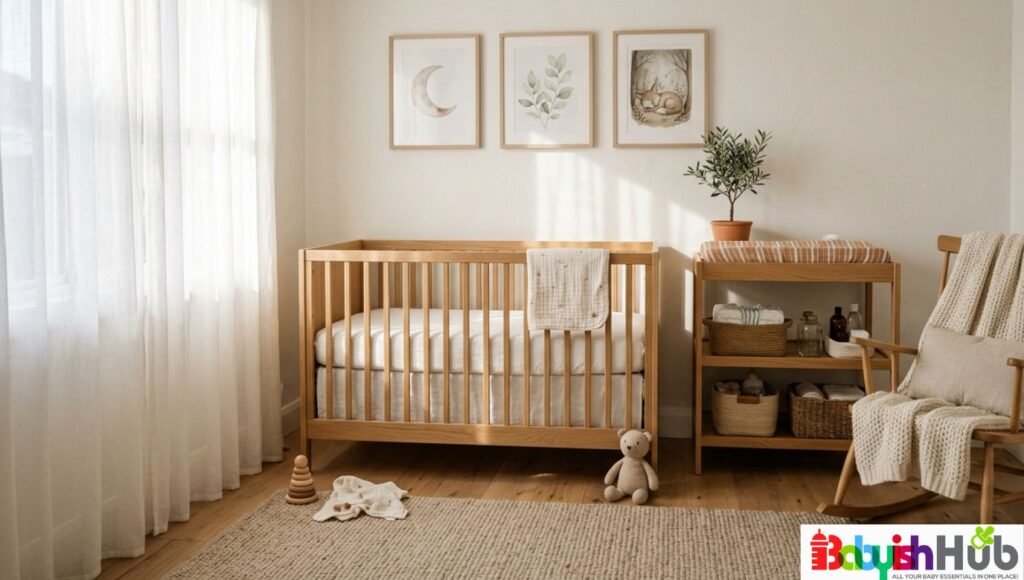
A simple, organized room supports a calming bedtime routine. Visual busyness and accessible toys signal playtime, not sleep. Store all the toys outside the sleep space, keep surfaces clear, and lean toward a calm atmosphere.
Use a Consistent Bedtime Environment
Babies thrive on familiarity. When the sleep environment stays consistent from one nap to the next, your baby gradually learns to associate those surroundings with rest, making it easier to settle over time.
Keep the Room the Same for Every Sleep
Your baby builds sleep associations with their environment. When the room looks, sounds, and feels the same at every nap and bedtime, those sensory cues become part of the wind-down signal. Consistency helps babies sleep faster over time.
Why Consistency Helps Babies Feel Secure
Babies thrive on knowing what to expect. A familiar environment for sleep, with the same sounds, darkness, and temperature each night, reduces the cognitive load of settling in a changing space and builds the sense of security that healthy sleep requires.
Step 7. How To Prepare The Room for Different Ages
Your baby’s sleep needs won’t stay the same for long. As they become more mobile and their sleep patterns mature, you’ll need to make a few adjustments to keep the nursery both safe and sleep-friendly.
Here’s how to prepare your baby’s room for better sleep based on their age:
Newborn Nursery Setup
In the first few months, a firm bassinet or crib positioned near your bed makes nighttime feeds more manageable. Keep the setup minimal. You do not need much beyond a safe sleep surface, a sound machine, and dim lighting for feeds.
Sleep Space for Babies 3 to 6 Months
As your baby’s circadian rhythm matures, blackout curtains become more valuable, and consistent nap environments start reinforcing sleep patterns. Babies begin showing stronger environmental sleep associations at this stage, making consistency more important.
Adjust the Room as Your Baby Becomes More Mobile
Once your baby begins pulling up, set the crib mattress to its lowest position and remove any nearby furniture within reach. Transition mobiles or hanging items out of range, and make sure your monitor provides a clear view of the crib.
Frequently Asked Questions
Parents often have similar questions when setting up a nursery for sleep. Here are quick answers to some of the most common questions:
What is the best room temperature for a baby’s sleep?
Between 68 and 72 degrees Fahrenheit suits most babies well. When in doubt, go slightly cooler rather than warmer.
Should babies sleep in complete darkness?
A dark room is helpful, especially for naps. Total darkness is not required, but it does support melatonin production and reduces early wake-ups from light exposure.
Is white noise safe for babies?
Yes, at a safe volume around 65 decibels and placed across the room from the sleep surface. Avoid placing sound machines directly in the crib.
Do babies sleep better in their own room?
The AAP recommends room-sharing without bed-sharing for at least the first six months. Many families find this arrangement supports safer and more convenient nighttime care.
What should be inside a baby’s crib?
Only your baby and a firm, fitted sheet. Nothing else.
Quick Checklist for A Sleep-Friendly Baby Room
Before you put your baby down for the night, use this quick checklist to make sure the nursery supports both safe and restful sleep:
- A sleep-friendly nursery covers these basics: a firm, CPSC-certified mattress
- One fitted crib sheet
- Empty crib free of all soft items
- Room temperature between 68 and 72 degrees Fahrenheit
- Blackout curtains
- White noise machine placed across the room at a safe volume
- Dim warm-toned night light for feeds
- Changing essentials organized within reach
- Comfortable feeding chair with good arm support
- Baby monitor with a clear sightline to the crib
Key Takeaways
The most sleep-supportive nursery doesn’t have to cost you an arm and a leg. Knowing how to prepare your baby’s room for better sleep means prioritizing safety first, then building in the environmental conditions that reduce unnecessary disruptions. Temperature, darkness, consistent sound, and an organized setup quietly do their work in the background. Start with what you have, adjust as your baby grows, and trust that small, consistent changes add up.