
Why Does My Baby Move So Much In Sleep? When To Worry

Have you ever glanced at the baby monitor and wondered if your little one is training for a marathon in there? Or as many moms ask, “Why does my baby move so much in sleep?” Kicking, stretching, squirming, rolling, even the occasional half-cry followed by silence again, it can look like a rough night from the outside while your baby barely registers any of it.
Most babies move frequently during sleep because they spend a large portion of the night in active, or REM, sleep, a lighter stage where twitching, stretching, kicking, facial expressions, and brief noises are common. In most cases, this movement is a normal part of infant sleep and decreases as babies mature and their sleep cycles develop.
This guide walks you through why babies move so much during sleep, what’s typical at different ages, and the specific signs that are worth mentioning to your pediatrician.
Key Takeaways:
- Frequent movement during sleep is normal for most babies.
- Newborns spend roughly half their sleep time in active, REM-like sleep.
- Twitching, stretching, kicking, and squirming are usually harmless.
- Movement patterns shift as babies grow and their sleep cycles mature.
- Persistent unusual movements, breathing changes, or developmental concerns are worth discussing with a healthcare provider.
Why Do Babies Move So Much While Sleeping?
If you’re trying to figure out “Why does my baby move so much in sleep?”, a big piece of this comes down to how much time babies spend in active sleep, a lighter, more physically expressive stage compared to deep, quiet sleep. Their nervous systems are also still developing, which shows up as involuntary twitches and reflexes that settle down as babies get older.
Movement during sleep isn’t limited to twitching, either. Babies transition between sleep cycles more often than adults do, and those transitions often come with a burst of squirming, repositioning, or brief fussing before settling back down. Some of that movement even functions as a form of self-soothing, helping a baby resettle without fully waking.
So, What Is Active Sleep?
Active sleep is the infant version of REM sleep, and it looks quite different from quiet, deep sleep. During active sleep, you might notice fluttering eyelids, facial expressions, twitching limbs, irregular breathing, and small sounds, all while your baby remains asleep.
Newborns spend close to half their total sleep time in active sleep, a much larger share than adults, who spend closer to a quarter of their sleep in REM. That difference is a big part of why newborns seem so much more physically active overnight than older babies or adults sleeping in the next room.
Some of the most common behaviors during active sleep include twitching, brief whimpering, sucking motions, and stretching, all of which are considered typical.
Normal Baby Sleep Movements
If you’re watching your little one on the monitor right now, you might see a whole menu of midnight acrobatics. Here is a quick look at the most common, totally normal movements you’ll likely spot:
- Twitching: Small, involuntary muscle twitches are common during active sleep and don’t indicate discomfort or a problem.
- Kicking Legs: Leg kicks often show up during dream-like active sleep and can also reflect a baby practicing motor movements even while asleep.
- Waving Arms: Arm movements, including sudden extensions tied to the startle reflex, are typical, especially in the newborn months.
- Stretching: A big stretch mid-sleep is a normal part of shifting between sleep cycles and doesn’t usually signal your baby is uncomfortable.
- Squirming: General squirming or repositioning often happens as babies transition from one sleep stage to another throughout the night.
- Rolling (Age Appropriate): Once babies develop the strength to roll, doing so during sleep is a normal, expected milestone rather than a sign of restlessness.
- Brief Crying or Whimpering: A short cry or whimper that resolves on its own, without your baby fully waking, is common during active sleep and doesn’t always need a response.
Baby Sleep Movement By Age
Here is how normal sleep movements evolve from the newborn days all the way into toddlerhood:
Newborns (0 to 3 Months)
Active sleep dominates the newborn sleep stage, making up close to half of total sleep time. The Moro, or startle, reflex is especially common here, causing sudden arm movements that can briefly wake a newborn or simply pass without disturbing their sleep at all. Frequent twitching throughout the night is typical during this period.
Babies (3 to 6 Months)
Sleep cycles start to lengthen and become more organized, which often means less overall twitching compared to the newborn stage. You may notice more rolling attempts and squirming as your baby gains strength and mobility.
Babies (6 to 12 Months)
Repositioning becomes more common as your baby practices new skills like sitting and crawling, sometimes even attempting these movements in their sleep. This stage also overlaps with common sleep regressions, which can bring a temporary increase in nighttime movement and waking.
Toddlers
Rolling and changing positions throughout the night remain common. Some toddlers begin talking or babbling briefly during sleep, which is a normal part of active sleep at this age.
Why Does My Baby Kick Their Legs While Sleeping?
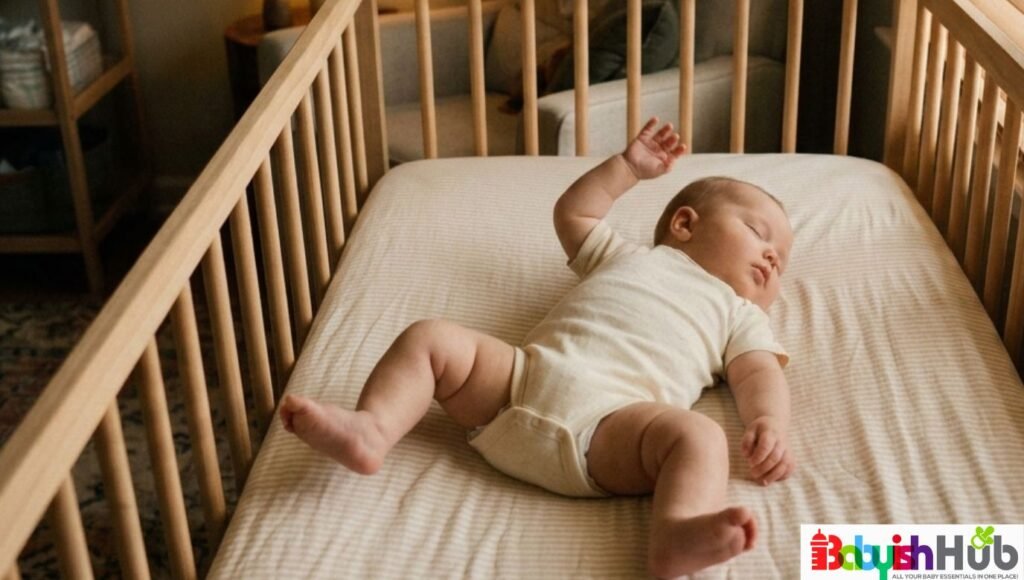
A few different things can be behind leg kicking in babies during sleep. One key reason is self-soothing movements, where some babies use repetitive motion to help themselves settle. Gas can also play a role, particularly in younger babies still working out their digestion.
Beyond that, general movement during active or dream-like sleep is simply typical, and some kicking reflects a baby working on motor skills even while resting. In most cases, leg kicking on its own, without other symptoms, isn’t something to worry about.
When Should You Be Worried?
Most nighttime movement is a normal, expected part of infant sleep, but a few signs are worth bringing to your pediatrician:
- Repetitive movements that continue even after your baby wakes up
- Difficulty breathing during sleep
- Bluish skin color around the lips or face
- Unusual stiffening or jerking that seems different from typical twitching
- Significant changes in feeding or overall development
- Any persistent concern about a movement that doesn’t feel like the usual squirming and kicking
Most of what you’ll see falls into the harmless category. If something looks or feels different from your baby’s usual pattern, I’d strongly advise you to check in with your pediatrician rather than second-guessing yourself.
How To Help Your Restless Baby Sleep Better
Here are some of the best, most effective ways to support steadier sleep and help your restless baby resettle on their own:
- Maintain a Consistent Bedtime Routine: Predictable steps before sleep help signal to your baby that it’s time to wind down, which can support smoother transitions between sleep cycles overnight.
- Keep the Room Comfortable: A room that’s too warm or too cool can add to restlessness, so keeping the temperature within a comfortable range supports steadier sleep. (Check out our guide on how to prepare your baby’s room for better sleep)
- Dress Baby Appropriately for Sleep: Overdressing or underdressing for the room temperature can contribute to a more restless night, so matching sleepwear to the actual room conditions helps.
- Avoid Overtiredness: An overtired baby often sleeps less smoothly, with more waking and movement, than one who goes down at the right time in their wake window.
- Encourage Full Feedings During the Day: Well-spaced, complete feedings during the day can support steadier sleep overnight, since hunger can contribute to extra waking and squirming.
- Give Baby Time to Self-Settle: Pausing before responding to every stir or squirm gives your baby a chance to resettle on their own, since a lot of nighttime movement resolves without any intervention needed.
Busting the Biggest Myths About Baby Sleep Movements
When my firstborn, Chloe, was a few weeks old, I remember holding my breath every time he kicked his legs mid-nap, convinced he was about to wake up crying. Spoiler alert: She was fast asleep, and I was stressing over absolutely nothing.
To save your sanity, let’s bust a few of the biggest myths that are needlessly keeping you on edge tonight:
Myth: Babies should sleep completely still.
Fact: Movement is a normal, expected part of infant sleep, particularly during active sleep stages.
Myth: Every twitch means a problem.
Fact: Most twitches happen during active sleep and are a harmless part of normal development.
Myth: Babies wake every time they move.
Fact: Many babies move quite a bit without ever fully waking, which is why a monitor can make a peaceful night look far more chaotic than it feels to your baby.
Why Does My Baby Move So Much In Sleep FAQs:
Here are the quick answers to what parents ask me about most about baby movements while sleeping:
Is it normal for babies to kick while sleeping?
Yes. Leg kicking is a common part of active sleep and can also reflect a baby practicing motor movements, even while fully asleep. On its own, it’s rarely a cause for concern.
Why does my newborn squirm all night?
Newborns spend close to half their sleep in active sleep, a lighter, more physically expressive stage. That, combined with a still-developing nervous system, explains much of the squirming you’re seeing.
Why does my baby keep moving but stays asleep?
Active sleep allows for a surprising amount of movement, including twitching and repositioning, without your baby ever fully waking. Their brain stays in a sleep state even as their body shifts around.
Can teething make babies move more during sleep?
Yes, discomfort from teething can lead to more restlessness and movement overnight, though it typically resolves once the tooth breaks through.
Does gas cause babies to squirm while sleeping?
Yes, gas can contribute to squirming, especially in younger babies still developing their digestion. This usually settles as your baby’s digestive system matures.
Why does my baby lift their legs while sleeping?
This is often tied to gas relief or general movement during active sleep, and it’s a common, harmless behavior in babies of most ages.
When do babies stop moving so much during sleep?
Movement typically decreases gradually as sleep cycles mature, often becoming noticeably less frequent somewhere between 4 and 6 months, though every baby’s timeline looks a little different.
Should I wake my baby if they’re moving a lot?
Generally, no. Most movement during sleep resolves on its own without waking your baby, and interrupting it can disrupt a sleep cycle that would have otherwise continued smoothly.
Final Thoughts
Watching your little one wiggle, kick, stretch, or twitch on the baby monitor can definitely catch you off guard. It is completely natural to look over and wonder, “Why does my baby move so much in sleep?” But in most cases, those midnight gymnastics are simply a beautiful sign of a healthy, developing nervous system doing exactly what it’s supposed to do.
As your baby grows and their sleep cycles naturally mature, you’ll notice that active nighttime wiggles start to settle down on their own. Until then, take a deep breath, get some rest, and remember to trust your mama instincts; if a movement ever feels truly off, your pediatrician is always just a quick phone call away to give you that ultimate peace of mind.