What Temperature Is Too Hot For A Baby To Sleep?
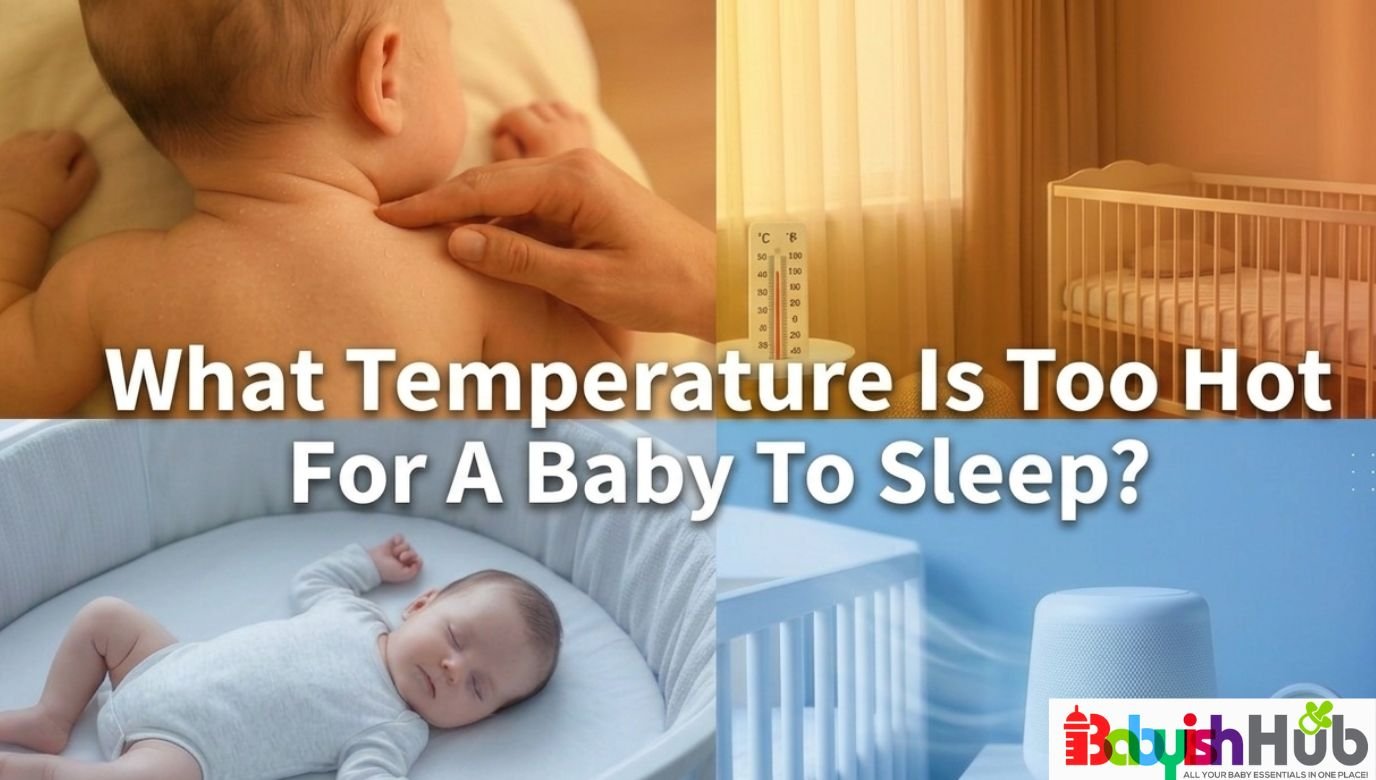
A room temperature above 75°F (24°C) starts to increase the risk of overheating for many babies. Most pediatric guidance points to keeping your baby’s sleep environment between 68°F and 72°F (20°C to 22°C) whenever possible. Dress your baby in lightweight, breathable clothing for the room temperature, and check for signs of overheating rather than relying on the thermostat alone.
“What temperature is too hot for baby to sleep?” is a question that comes up constantly once summer rolls around, especially in an older house without central air, where one room can run five degrees warmer than the rest of the place by bedtime.
Babies can’t regulate their body temperature the way adults do, which is part of why overheating gets flagged as a safe sleep concern rather than just a comfort issue.
This guide covers the ideal nursery temperature, when a room crosses into too-hot territory, how to spot overheating, and what helps keep your baby comfortable through a warm night.
Key Takeaways:
- The ideal nursery temperature is 68°F to 72°F (20°C to 22°C).
- Temperatures above 75°F (24°C) may increase the risk of overheating.
- Dress your baby based on the room temperature, not the weather outside.
- Choose lightweight sleepwear made from breathable fabrics like cotton or bamboo.
- Skip hats and heavy blankets during sleep, no matter the season.
- Check your baby’s chest or back to gauge warmth, not their hands or feet.
What Is The Ideal Room Temperature for Baby Sleep?
Most pediatric safe sleep guidance points to a range of 68°F to 72°F as the sweet spot for baby sleep. That range tends to keep a baby comfortable without the added clothing or bedding that can raise overheating risk.
Room temperature matters is a crucial consideration for babies because they’re less efficient at regulating their own body heat. A newborn especially relies on their environment and clothing to stay within a safe temperature range, since their internal thermostat is still developing.
Overheating has been identified as one of several risk factors tied to unsafe sleep (Source), alongside a soft sleep surface or loose bedding, which is why room temperature gets so much attention in safe sleep guidance.
What Temperature Is Too Hot for A Baby To Sleep?
A room temperature above 75°F (24°C) starts to increase the risk of overheating for babies. Before you touch that thermostat, here is a quick breakdown of the safe, warm, and critical temperature zones you need to know:
Below 68°F (20°C)
A cooler room isn’t dangerous, but it does call for a bit more clothing. Footed pajamas under a higher TOG sleep sack, or an added light layer underneath, keep your baby comfortably warm without needing to raise the thermostat.
68 to 72°F (20 to 22°C)
This is the range most pediatric sleep guidance treats as ideal. Footed pajamas or a bodysuit paired with an appropriately rated sleep sack usually covers this range without any adjustment needed.
73 to 75°F (23 to 24°C)
Still considered safe for most babies, but on the warmer side. Lightweight pajamas or a bodysuit alone, without heavy layering, keeps things comfortable here.
Above 75°F (24°C)
This is where overheating risk starts to climb for many babies. Reduce clothing layers, lean on breathable cotton or bamboo fabrics, and look for ways to improve airflow in the room, whether through a fan, cracked window, or air conditioning.
Above 80°F (27°C)
At this point, extra precautions are worth taking. Keep an eye on hydration if your baby is old enough for water or extra feeds per your pediatrician’s guidance, and check on your baby more frequently through the night rather than assuming a single bedtime check is enough.
Baby Sleep Temperature Chart
Dressing your baby depends on the room temperature, not the weather outside. Use this quick infant sleep temperature guide to keep your nursery in the safe zone:
| Room Temperature | Is It Safe? | Recommended Clothing |
| Below 68°F (20°C) | Yes | Footed pajamas + higher TOG sleep sack |
| 68 to 72°F (20 to 22°C) | Ideal | Footed pajamas or bodysuit + appropriate sleep sack |
| 73 to 75°F (23 to 24°C) | Generally safe | Lightweight pajamas or bodysuit |
| 76 to 79°F (24 to 26°C) | Warm, monitor closely | Lightweight cotton clothing, lower TOG |
| 80°F+ (27°C+) | Too hot, take action | Diaper or lightweight bodysuit, improve room cooling |
Signs Your Baby Is Too Hot While Sleeping
If you’re worried your nursery is getting a bit too warm, look for these telltale physical and behavioral signs of an overheated baby:
Physical Signs:
- Sweaty neck
- Damp hair
- Warm chest or back
- Flushed cheeks
- Rapid breathing
- Heat rash, especially in skin folds
Behavioral Signs:
- Restlessness
- Frequent waking
- Fussiness that doesn’t resolve with usual soothing
- Difficulty settling at bedtime
IMPORTANT: Your baby’s hands and feet naturally run cooler than the rest of their body, so they’re not a reliable way to judge overall temperature. Checking the chest or the back of the neck gives a far more accurate read on whether your baby is too warm.
RELATED: Why Does My Baby Move So Much In Sleep?
How To Keep Your Baby Cool At Night
When your thermostat won’t budge, you need practical ways to bring the temperature down. Here are safe, expert-approved steps to cool your nursery and keep your baby comfortable tonight:
#1. Dress Your Baby in Breathable Fabrics
Cotton and bamboo both allow air to move through the fabric rather than trapping heat against your baby’s skin, which makes a noticeable difference on a warm night.
#2. Choose the Right Sleep Sack TOG
A lower TOG rating means a lighter sleep sack. Matching the TOG to your room temperature, rather than defaulting to whatever sack is on top of the drawer, keeps your baby appropriately dressed without guesswork.
#3. Use Fans Safely
A fan pointed toward the general room, not directly at the crib, helps keep air moving without creating a strong draft on your baby. Keep the fan and its cord out of reach of the crib entirely.
#4. Keep The Curtains Closed During the Day
Blocking direct sunlight during the day keeps a room from heating up before bedtime even arrives, which makes the evening cooldown far more manageable.
#5. Use Air Conditioning Safely
Air conditioning is a safe, effective way to keep a nursery within range on hot nights. Avoid pointing a vent directly at the crib, and keep the room at a steady temperature rather than letting it swing widely overnight.
#6. Improve Air Circulation
Cracking a door or window, when safe to do so, and using a fan to keep air moving both help prevent a room from turning stuffy overnight.
#7. Avoid Over-Layering
It’s tempting to add a light blanket “just in case,” but extra layers on a warm night raise overheating risk rather than adding meaningful comfort. Trust the temperature chart over the instinct to bundle.
How To Dress Your Baby for Sleep In Hot Weather
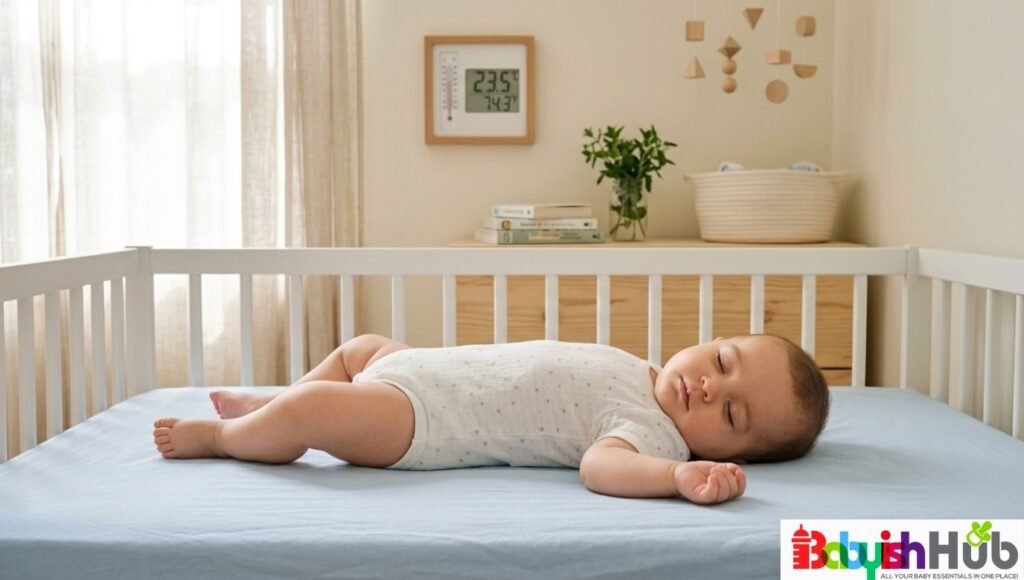
When the nursery warms up, less is almost always more. Here is your simple breakdown for choosing the safest, most breathable sleepwear layers on hot nights:
- 72°F: Lightweight bodysuit with a lower TOG sleep sack
- 75°F: Short-sleeve bodysuit alone or with a very light sleep sack
- 78°F: Lightweight cotton bodysuit, minimal to no sleep sack
- 80°F+: Diaper alone or a very light bodysuit, with a focus on cooling the room itself
Cotton and bamboo remain the most reliable fabric choices in hot weather, since both breathe well and wick moisture away from the skin. A lightweight sleep sack can still offer a sense of familiarity and containment even in warm weather if it’s rated for a low TOG.
If your baby’s sleep room gets too hot, consider going without a sleep sack or simply dressing your baby in just a diaper (personally, I considered this a more comfortable option than adding fabric for the sake of routine).
Nursery Temperature Myths: What Not To Do
Trust me, we’ve all been there, hovering over the crib at midnight wondering if it’s too hot. In the rush to keep them comfortable, it’s easy to accidentally do too much.
Here are the common summer sleep mistakes I learned to skip to keep the nursery truly safe and well-ventilated:
- Dressing for the weather outside instead of the actual room temperature
- Using a hat indoors during sleep
- Adding a heavy blanket on a warm night out of habit
- Choosing a high TOG sleep sack regardless of room temperature
- Assuming cool hands or feet means the baby is cold overall
- Covering a stroller or crib with a blanket to block sunlight, which traps heat underneath
What Temperature Is Too Hot For Baby To Sleep FAQs:
Here are quick answers to the most common questions about keeping your baby safe and cool on hot nights:
Is 80°F too hot for a baby to sleep?
Yes, 80°F and above is considered too hot for most babies. At this range, reduce clothing to a diaper or lightweight bodysuit, improve airflow with a fan or air conditioning, and check on your baby more frequently overnight.
Can a baby sleep without a sleep sack in summer?
Yes. In warm rooms, especially above 75°F, a lightweight bodysuit alone is often more comfortable than a sleep sack. A sleep sack becomes optional once room temperature climbs into the warmer ranges.
Should babies wear socks when it’s hot?
No. Socks add unnecessary warmth in hot weather and aren’t needed for temperature regulation, since a baby’s overall body temperature depends far more on their core clothing than on covered feet.
Can a fan stay on all night?
Yes, as long as it’s positioned to circulate air in the room rather than blow directly on your baby, and it’s kept safely out of reach of the crib. A fan running overnight is a safe, common way to improve airflow.
How do I know if my newborn is too hot?
Check their chest or the back of their neck for warmth or sweat, and look for flushed cheeks or damp hair. A newborn who feels warm to the touch on their core, not just their hands, is likely overdressed for the room.
What should a baby wear to sleep at 75°F?
At 75°F, a lightweight, short-sleeve bodysuit works well on its own. A very light sleep sack is optional depending on your baby’s individual comfort and how warm the room feels by the middle of the night.
Can overheating increase the risk of SIDS?
Overheating is recognized as one of several risk factors associated with unsafe infant sleep. Keeping your baby’s sleeping room within a safe temperature range and dressing your baby appropriately are both part of following current safe sleep guidance.
What if I don’t have air conditioning?
If you don’t have air conditioning in your baby’s room, you can still control heat by focusing on the airflow. You can do this by using a fan positioned away from the crib, keeping the curtains closed during the hottest part of the day, and dressing your baby in minimal, breathable clothing. You may also consider moving the crib to the coolest room in the home if one room runs noticeably warmer.
RELATED: Baby Sleep Schedule by Age: 0–12 Month Guide
Final Thoughts
Hopefully, now you have a good idea of what temperature is too hot for baby to sleep. Remember that every baby runs a little differently, but keeping the nursery between 68°F and 72°F offers a good balance of comfort and safety for most parents. On warmer nights, lean on lightweight clothing, better airflow, and a quick check of your baby’s chest rather than adjusting layers based on how the room feels to you. That simple habit takes most of the guesswork out of hot-weather nights.