How Much Does A Baby Monitor Cost? Don’t Overpay In 2026
You probably opened a few tabs thinking, “Okay, how much does a baby monitor cost?” And then your jaw dropped. One is $29. Another is $349. Some want a monthly subscription. Suddenly, this simple purchase feels way bigger than it should. As moms, we just want something safe and reliable without feeling like we’re making the wrong choice.
Here’s the good news: You do not need the most expensive monitor to be a good parent. In this guide, I’ll walk you through the baby monitors price, what makes the price jump between different models, and how to choose one that fits your home, your budget, and your peace of mind.
TL;DR: Baby Monitor Cost:
Baby monitors typically cost between $20 and $400, but most parents find the best value around $150. While expensive smart models offer fancy tracking, a mid-range video monitor usually provides the best mix of reliability and security. Choose the one that fits your home and helps you sleep. Don’t overpay for features you won’t use.
How Much Does A Baby Monitor Cost In 2026? (Quick Answer):
If you just want to know the exact cost of a baby monitor, here is a quick run-through of the current market prices:
- Basic audio monitors: $20 to $60
- Non-WiFi Baby monitors: $60 to $200
- WiFi Baby monitors/Smart baby Monitors: $80 to $300+
- Movement or breathing monitors: $100 to $400+
Yes, I know what you’re thinking right now… that’s a huge range. And no, the most expensive one does not automatically make the “best” choice.
Prices for these monitoring units vary because of the features. A simple audio monitor is basically a walkie-talkie for your baby’s room. A video monitor adds a camera, night vision, and a screen. WiFi models include app development, cloud storage, and smart alerts. Movement monitors add sensors and extra tech (and that drives the cost up quickly).
In my own experience, most families land comfortably in the $70 to $180 range. Once you go beyond that, you’re usually paying for convenience, advanced tracking, or brand reputation. The key here is to know which features you’ll use at 2 a.m., not just what sounds impressive on the box.
Cost Breakdown By Type of Baby Monitor
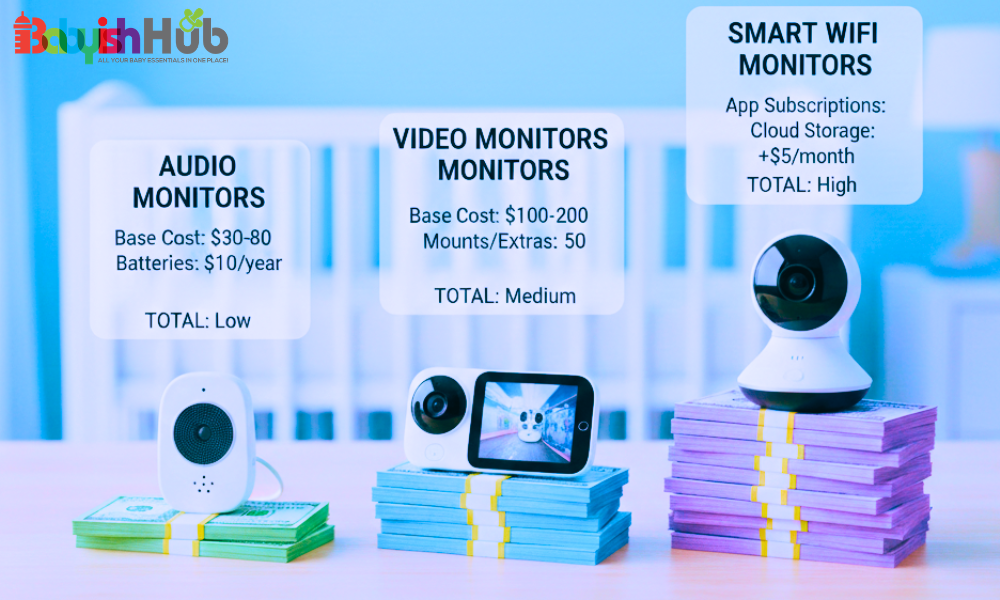
When you start shopping around for the best baby monitor, you’ll quickly realize that monitors generally fall into 4 different types, namely audio, Wi-Fi, non-Wi-Fi, and breathing. Let’s break down the average cost of each type:
Audio Baby Monitor Cost
Average price range: $20 to $60
Audio baby monitors are the “Old Faithful” of the parenting world. These usually run between $20 and $60 and are perfect for the minimalist mom who just wants to hear if the baby is stirring without being glued to a screen all night. If you live in a smaller home or an apartment where you’re never more than a few steps away, these are a total win for the budget.
Non-WiFi Baby Monitor Cost
Average price range: $60 to $200
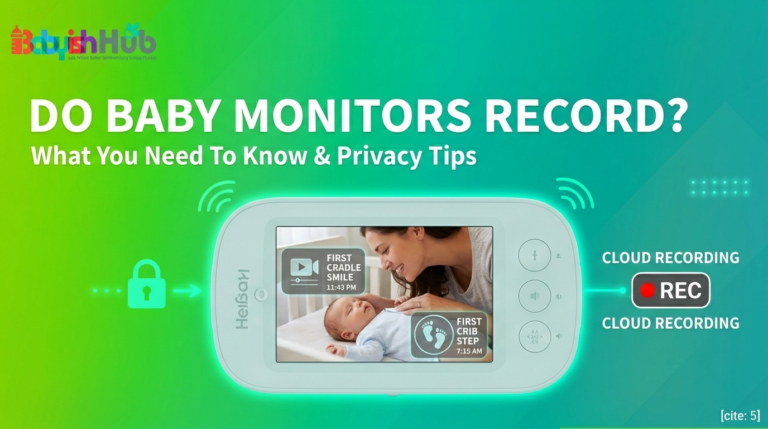
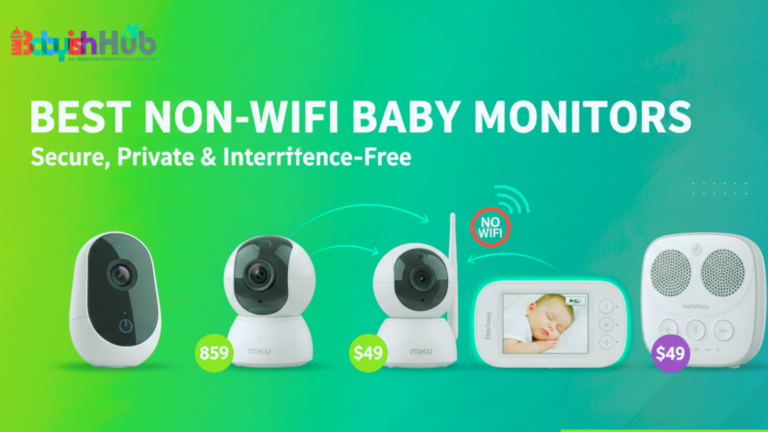
If you want eyes in your baby’s room without worrying about hackers or your WiFi cutting out, Non-WiFi Video Monitors are your best bet. These typically cost between $60 and $200 and use a dedicated handheld screen that works on a private, closed-circuit signal. The beauty here is that they don’t drain your phone battery or rely on your internet connection to work. You can usually find a “sweet spot” around $120 that gives you clear night vision and a decent range without paying for unnecessary bells and whistles. These monitors are essentially plug-and-play, making them a favorite for grandparents’ houses or when you’re traveling and don’t want to mess with a hotel’s guest WiFi.
WiFi Baby Monitor Cost
Average price range: $80 to $300+
Then we have the high-tech world of WiFi and smart monitors, which range from $80 to over $300. These models stream the video feed directly to an app on your smartphone. This allows for remote viewing, which is super-helpful if you want to check in on your little one while you’re at work or out for a rare date night. The catch here isn’t just the higher upfront price but the hidden “subscription trap” that many parents miss. A lot of the top brands today charge a monthly fee (often starting around $10 a month) just to save video clips or access those fancy sleep-tracking analytics. This is a great parenting tool with plenty of convenient features, but those recurring costs can really sneak up on you over the course of a year.
Movement & Breathing Monitor Cost
Average price range: $150 to $400+
Finally, there are the movement and breathing monitors, which are the heavy hitters of the market. These can range anywhere from $150 to well over $400, depending on the tech involved. Some use wearable socks or clips, while others use under-the-mattress pads or high-end AI cameras to track every rise and fall of your baby’s chest. While the upfront cost is high, you also must consider ongoing costs like replacement sensors or larger-sized wearables as your baby grows. This is a “peace of mind” purchase; for some moms, it’s the only way they can close their eyes at night, while for others, the frequent false alarms end up causing more anxiety than they solve.
What Factors Affect The Cost Of A Baby Monitor?
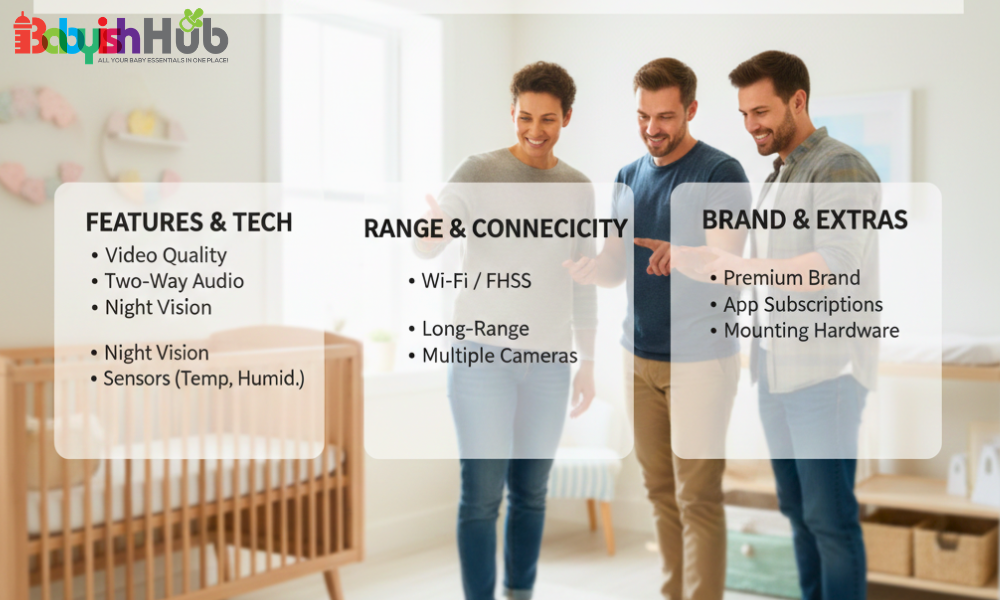
By now you’ve probably asked yourself… Why are baby monitors so expensive? Well, that’s because you are not just paying for another piece of hardware but a mix of specialized tech (and, let’s be honest, a bit of “parental peace-of-mind tax”).
In other words, the baby monitor cost is driven by the following factors that range from helpful to total marketing fluff:
Camera Quality and Night Vision
We live in a world of 4K TVs, so manufacturers assume we want 4K in the crib. High-definition (1080p or 2K) cameras drive up the price. While it’s nice to see every tiny eyelash of your infant, the real cost driver lies in the infrared night vision. Cheaper monitors can look like a grainy horror movie at 2:00 AM, whereas premium models use better sensors to give you a crisp, clear image even in pitch-black rooms.
Pro Tip: High resolution helps you see if their eyes are open or if the pacifier has fallen out, but you don’t need “cinematic” quality to do that. Stick to 1080p. Anything higher than that is usually overkill and just inflates the price.
Screen Size and Resolution
For non-WiFi monitors, the size of the “parent unit” screen is a huge price factor. Moving from a standard 2.8-inch screen to a 5-inch or even a 7-inch display can add $50 to $100 to the price tag. Right now, the 5-inch screen has become the standard size, but the price jumps significantly once you move into “UHD” or “IPS” display territory.
Pro Tip: A bigger screen is lovely if it’s sitting on a distant kitchen counter while you wash dishes, but if it’s right on your nightstand, a standard 5-inch screen will work perfectly well.
Range And Signal Strength
This is where the “hidden” engineering costs come in. Monitors that use FHSS technology (the private, non-WiFi kind) must work hard to punch through walls and floors without interference. If a monitor promises a 1,000-foot range, you’re paying for more powerful antennas and better signal processing to ensure that connection doesn’t drop the second you step into the backyard.
Pro Tip: If you have a large home or want to sit on the back deck while your baby naps, a long-range model is a must. But if you live in a cozy apartment, you don’t need to pay for “signal power” you’ll never use.
App Features and Smart Tracking
This is the biggest price jump in today’s market. We’re talking about AI that “identifies” a cry versus a coo, tracks sleep cycles, or monitors room humidity. This requires sophisticated software and cloud servers, which is why these monitors are the most expensive upfront and often come with those pesky monthly subscriptions for “insights.”
Pro Tip: This is mostly marketing fluff for 90% of parents. While sleep tracking sounds cool, you’ll usually know if your baby slept well based on how much coffee you need the next morning. Unless your doctor has recommended specific tracking, don’t feel pressured into these high-cost “AI” models.
Brand Reputation and Customer Support
Another reason the baby monitor cost can get crazy high is that you’re also paying for the name on the box. Brands like Nanit, Owlet, or Infant Optics charge a premium because they have established customer support and reliable warranties. You are paying for the security of knowing the company won’t disappear if your battery dies in six months.
Pro Tip: For a device that’s on 24/7, having a brand with a solid track record is worth an extra $20–$30. It’s “sanity insurance,” so you aren’t stuck with a broken monitor and a non-existent customer service line at 3:00 AM.
Multiple Camera Compatibility
If you’re thinking about “Baby #2” already, you’ll notice that systems capable of split-screen viewing or adding up to 4 cameras cost more. These units require more processing power to handle multiple video feeds simultaneously without lagging.
Pro Tip: Only pay for this feature if you’re planning on a multi-kid household soon. Otherwise, you’re paying for a feature you might never need to upgrade.
Are Expensive Baby Monitors Worth It?
If I had a nickel for every time a panicked mom asked if she really needed the $400 “smart” monitor, I’d have enough to buy us both a very fancy brunch. As a mom who has bought more and used more monitors than I can count (some for my 3 children and others as gifts for friends), I’ve realized that while premium monitors offer peace of mind for parents who love tracking sleep cycles, they aren’t a necessity for everyone. A high-end model makes sense if you have a massive home with thick walls or if you’re a working parent who wants to check the feed from your office. Otherwise, you’re often just paying for bells and whistles that won’t help you sleep better.
There is a point of diminishing returns around the $250 mark where you stop paying for safety and start paying for gadgetry. You don’t need 4K resolution to see a diaper blowout, and no AI can replace your own motherly intuition. For most of us, a mid-range, reliable video monitor does the job perfectly. Don’t let “Pinterest-perfect” marketing make you feel like a $60 monitor is less safe. Take this from me: Save that extra cash for the mountain of diapers heading your way!
Hidden Costs Parents Don’t Think About When Buying Baby Monitors
It’s easy to look at the price tag on the shelf and think that’s the end of the story. However, like a toddler with a hidden stash of markers, there are almost always “hidden” costs waiting to surprise you. Here is what I’ve learned from both my clinical practice and my own three kids about the true cost of ownership:
Subscription Plans (The Gift That Keeps Charging)
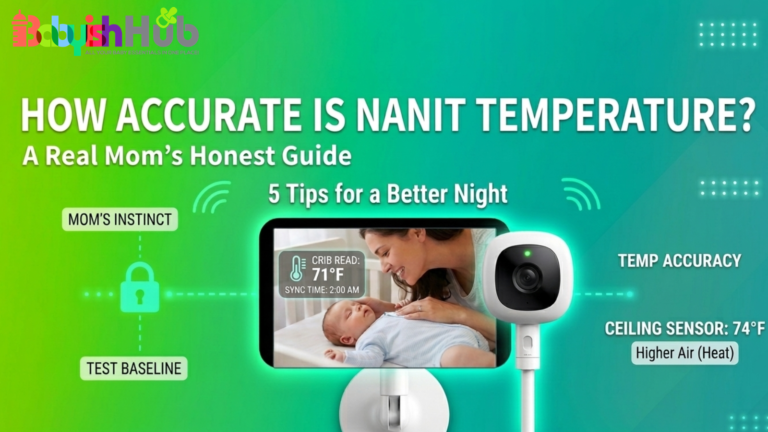
The biggest “gotcha” for baby monitors is the subscription model. Many smart monitors, like Nanit or CuboAi, offer you a free year of “Insights,” but once that birthday cake is cleared away, you’ll likely face a bill. Basic plans for sleep tracking and video history typically start around $50–$120 per year, but premium “Milestone” plans can soar as high as $300 annually. Before you buy such models, check if the features you want (like being able to see a video of that first time they stood up in the crib) are locked behind a monthly paywall.
Replacement Batteries
If you go with a non-WiFi monitor, you’ll be carrying that “parent unit” screen everywhere. Constant charging and discharging means that after about 12–18 months, you might notice the battery barely lasts through a nap. Most parents don’t realize that a replacement battery for a popular brand like Infant Optics or Eufy can cost between $15 and $30. It’s a small cost, but a frustrating one when you’re forced to stay tethered to a wall outlet because your “portable” monitor is officially a “stationary” one.
Wall Mounts and “Special” Accessories
You’d think for $200, they’d give you a way to see into the crib, right? Not always. Many high-end brands sell the camera alone, while the “Floor Stand” or “Multi-Stand” is sold separately for an extra $50 to $100. Even simple universal flexible mounts can run you $15–$25. If you’re renting and want to mount your baby monitor without drilling into the walls, or if your nursery layout is awkward, these mounting accessories aren’t “optional”—they’re a mandatory part of the price.
The “Expansion” Cost for Baby Number Two
If you’re planning on more kids, look at the cost of add-on cameras now. Often, the “bundle” with two cameras is a deal, but buying a second camera individually a year later can cost nearly as much as the original system ($80–$150 per camera). Plus, some WiFi monitors don’t allow you to view multiple cameras on a single screen without a higher-tier subscription. It’s worth checking the “second child” math before you commit to a brand.
How To Choose The Right Baby Monitor For Your Budget
The “right” monitor for you is simply the one that lets you sleep. To find the best budget baby monitor that fits your needs, consider these three realistic budget tiers:
- Budget (Under $100): You’re in the “Efficiency Zone.” Expect a reliable audio monitor or an entry-level video unit. This is perfect for smaller homes or apartments where you just need to see if the pacifier has fallen out.
- Mid-Range ($100–$200): This is the sweet spot for many families. Here, you get a larger 5-inch screen, crisp night vision, and two-way talk. This is the perfect balance of modern tech without the “over-engineering” that leads to false alarms.
- Premium ($200+): You’re paying for data and distance. These “smart” monitors stream to your phone and track breathing or sleep patterns. It’s worth it if you’re a working parent who wants to check in from the office or while on the go.
How To Save Money On A Baby Monitor

Raising a tiny human is expensive, but your monitor doesn’t have to break the bank. The smartest way to save on a baby monitor is by timing your purchase; always wait for your 15% registry completion discount or major sales like Prime Day and Black Friday.
If you have your heart set on a premium brand like Nanit or Owlet, check their official sites for “Certified Refurbished” models. These are often returns that have been sanitized and tested, saving you up to 40% while still carrying a warranty.
One method that has personally saved me a significant amount when shopping for monitors is brutally auditing the feature list. I usually ask myself: “Do I really need a monitor that plays lullabies and tracks humidity, or do I already have a sound machine and a thermostat?” Trust me, avoiding these “extras” can shave $50 off the price.
One more thing, don’t overbuy for the future that isn’t here yet. You don’t need a four-camera system today if you’re currently rocking your first newborn!
FAQs About Baby Monitor Costs
I know you’ve probably got more questions, so let’s look at some of the questions I hear most often from parents looking to buy baby monitors…
How much do baby monitors cost?
You should expect to pay between $20 and $400, depending on the technology. Basic audio models are the most affordable at $20–$60, while standard video monitors typically range from $80 to $200. Premium smart monitors with AI tracking and breathing sensors represent the high end, often exceeding $300 plus subscription fees.
What is the best cheap baby monitor?
For parents on a budget, the VTech Audio Monitor is considered the standard unit for reliability under $30. If you need video feed, the Eufy, SpaceView, or HelloBaby models often provide the best “bang for your buck,” offering you clear night vision and a dedicated handheld screen without the high-end “smart” price tag.
Which baby monitor is the best to buy?
The “best” monitor is the one that fits your home’s layout. For most families, a mid-range, non-WiFi video monitor like the Infant Optics DXR-8 PRO is the top choice. It offers a secure, hack-proof connection, excellent battery life, and interchangeable lenses without requiring a monthly app subscription or stable internet.
Is it worth getting a baby monitor?
Absolutely. A baby monitor allows you to regain your evening or finish chores without hovering at the nursery door. It provides the much-needed peace of mind by letting you distinguish between a baby who is just “nestling” and one who truly needs your comfort or intervention.
Is it better to have a WiFi or a non-WiFi baby monitor?
WiFi monitors are better if you’re a working parent and want to check in on your baby from anywhere via your smartphone. However, non-WiFi monitors are generally better for reliability and privacy. They don’t rely on your internet speed, they won’t lag if the WiFi drops, and they are significantly harder for outsiders to hack. Check out this Wi-Fi vs non-Wi-Fi baby monitors comparison article for more info on how the two models compare.
What should I consider when buying a baby monitor?
When buying a baby monitor, you should prioritize signal range and battery life first. Nothing is more frustrating than a monitor that dies mid-nap. Next, consider your home’s WiFi stability and whether you want a dedicated screen or a phone app. Finally, check for “hidden” costs like subscription fees for sleep data or the price of adding a second camera.
Final Takeaway
I know how heavy that “parental pressure” can feel when you’re staring at a $400 gadget and wondering if buying anything less makes you a bad mom. But here’s my professional and personal take: how much does a baby monitor cost in the long run? It costs exactly what you’re willing to pay for your own peace of mind. For some of us, that’s a basic $40 audio monitor; for others, it’s the high-tech smart cam. Most of us find our “just right” around $150. Don’t let fear-based marketing drive your budget. Choose the unit that helps you sleep better, because a well-rested mama is the best gift you can give your baby.