Do Baby Monitors Cause Sleep Problems At Night? The Truth:
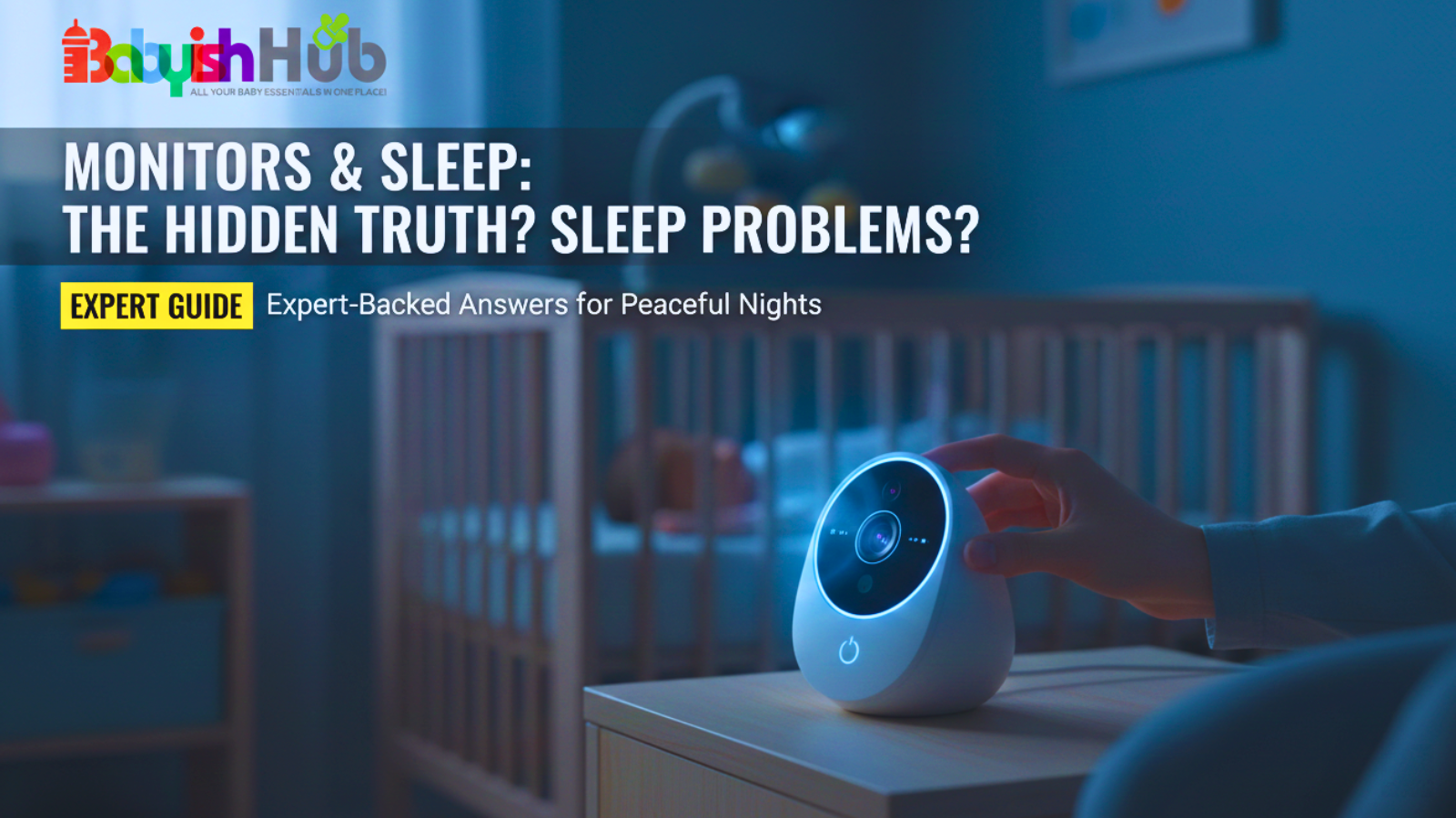
As a modern parent, the baby monitor is often the first item you add to the registry. It promises you a digital window into your nursery, offering the promise of peace of mind while your little one dreams.
But as we’ve moved from simple audio monitors to 4K video feeds and wearable biometric trackers, a nagging question has begun to circulate in pediatric sleep circles: Do baby monitors cause sleep problems?
I’ve been lucky to enough to witness the evolution of nursery technology from around 2018 when I had my first baby. And I’ve seen firsthand how these devices can be both a lifeline and a source of “techno-anxiety.”
To understand whether this very tool designed to help us rest is keeping us—and our babies—awake, we’ll look past the marketing and dive into the science of radiofrequency (RF) radiation, behavioral habits, and parental psychology.
TL;DR (Do Baby Monitors Cause Sleep Problems At Night?):
Baby monitors don’t appear to directly harm babies, but they can disrupt sleep for both parents and infants. Research suggests RF exposure may affect adult sleep quality, while constant monitoring increases anxiety, blue light exposure, and over-intervention. Used wisely and placed at a safe distance, monitors are helpful tools. Overused, they can quietly sabotage everyone’s rest.
How We Use Monitors Today:
In the early days of monitoring, you heard a cry, and you went to the room. Today, monitoring is a multi-sensory experience. We have high-definition video, Wi-Fi connectivity that beams footage to our smartphones at work, and sensors that track everything from room temperature to a baby’s blood oxygen levels.
There is a fundamental shift happening in the nursery. We have moved from useful supervision—knowing when a baby is awake and needs a feeding—to constant vigilance. This “always-on” connection changes the way we sleep. We aren’t just sleeping; we are “monitoring,” which keeps the brain in a state of low-level alertness that prevents deep, restorative rest.
Sleep and Radiofrequency Radiation: What Studies Suggest
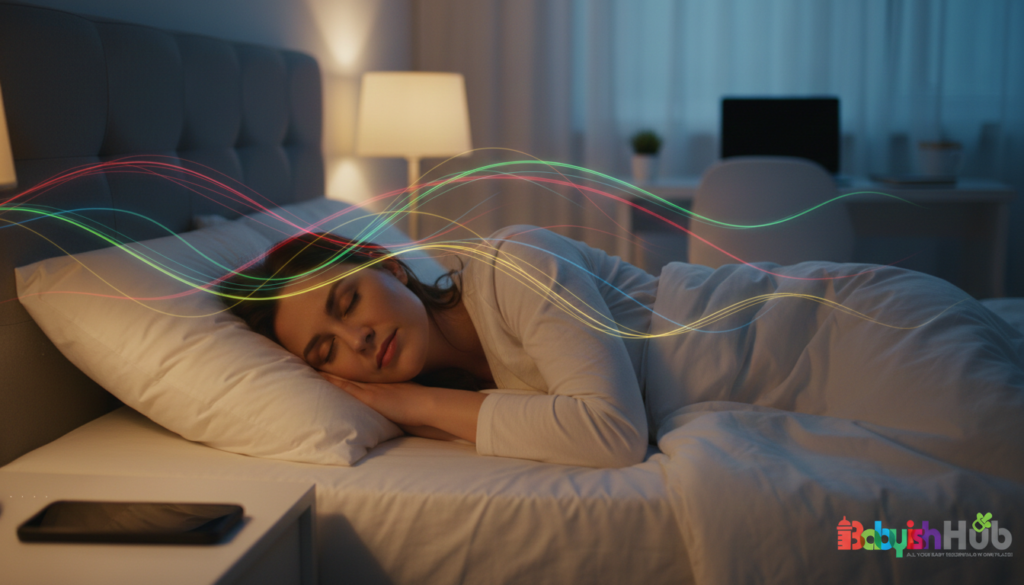
One of the most debated topics is whether baby monitors emit EMF (electromagnetic fields) and the physical impact the signals have on sleep. While baby monitors are generally low-power, they do emit radiofrequency electromagnetic fields (RF-EMF).
A recent baby monitor sleep study has given us reasons to pause…
A 2024 pilot study published in Frontiers in Public Health examined how 2.45 GHz RF radiation from baby monitors affects sleep quality. The findings were striking: adults exposed to these signals experienced significantly reduced sleep quality.
The researchers noted changes in brain activity during non-REM sleep and a higher risk of insomnia after just seven nights of exposure in 12 of the healthy adults who participated in the study.
The study’s authors were clear:
“Until further studies verify or provide evidence contrary to these findings, caution is advised when using RF-EMF devices in bedrooms.”
It is important to note that this specific study focused on adults. However, it raises a logical question: if an adult’s brain activity can be altered by a monitor on the nightstand, what does that mean for a developing infant?
What We Know (and Don’t Know) About Monitors and Infant Sleep
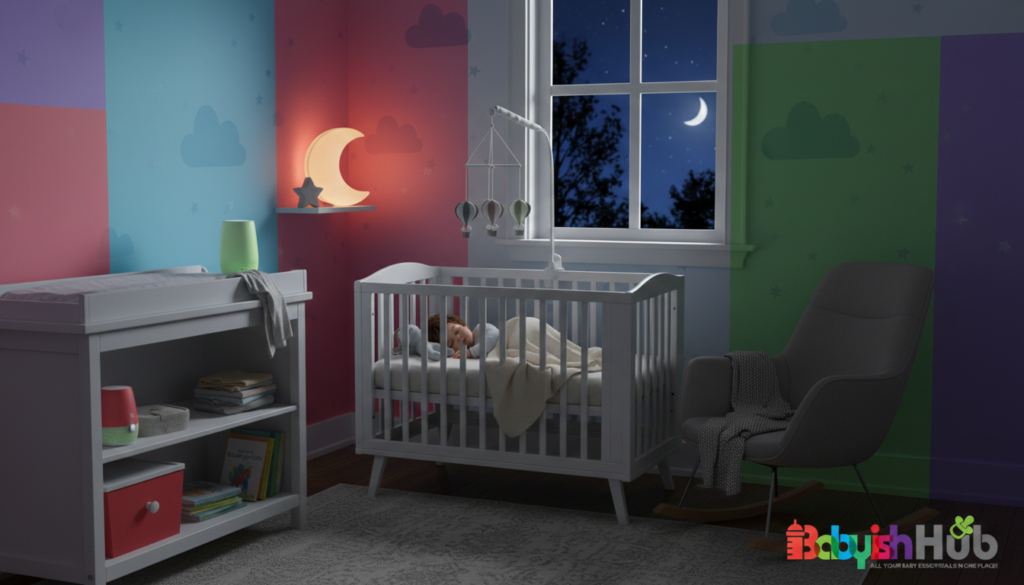
When parents ask me, “Is the monitor hurting my baby’s brain?” or “Is it bad to sleep next to a baby monitor?” I have to be honest with them: science is still catching up.
We currently have no conclusive longitudinal studies proving that monitors negatively affect infant sleep architecture or brain development.
However, we do know that infants have thinner skulls and higher neural plasticity than adults, meaning they may be more sensitive to environmental exposures.
While we wait for more research, the “precautionary principle” is your best friend. We don’t need to panic, but we should be mindful of the proximity of these devices.
How Baby Monitors Disrupt Sleep Patterns Through Behavioral Pathways
Beyond radiation, the most immediate “sleep thief” is behavioral. Monitors can inadvertently sabotage sleep through three main pathways:
The “False Alarm” Effect
Audio monitors are designed to pick up sound, but many are too sensitive. They broadcast every grunt, roll, and sigh—noises that are a normal part of active infant sleep. For a parent, these sounds trigger a spike in cortisol (the stress hormone), waking you up when the baby is actually still asleep.
The Blue Light Menace
Video monitors are essentially small tablets. When you wake up at 2 AM and stare at a bright screen to check on your baby, that blue light hits your retina and suppresses melatonin. This makes it significantly harder for you to fall back asleep once you see the baby is fine.
The Intervention Trap
This is the most critical impact on the baby. If a parent sees a baby move on the monitor and rushes in immediately, they may be interrupting a “partial arousal.” Babies often stir and moan as they transition between sleep cycles.
If we intervene too quickly, we prevent them from learning the vital skill of self-settling. Over time, the monitor can easily create a baby who cannot sleep through the night without some parental help.
Monitors Impact on Parent Sleep Quality and Anxiety
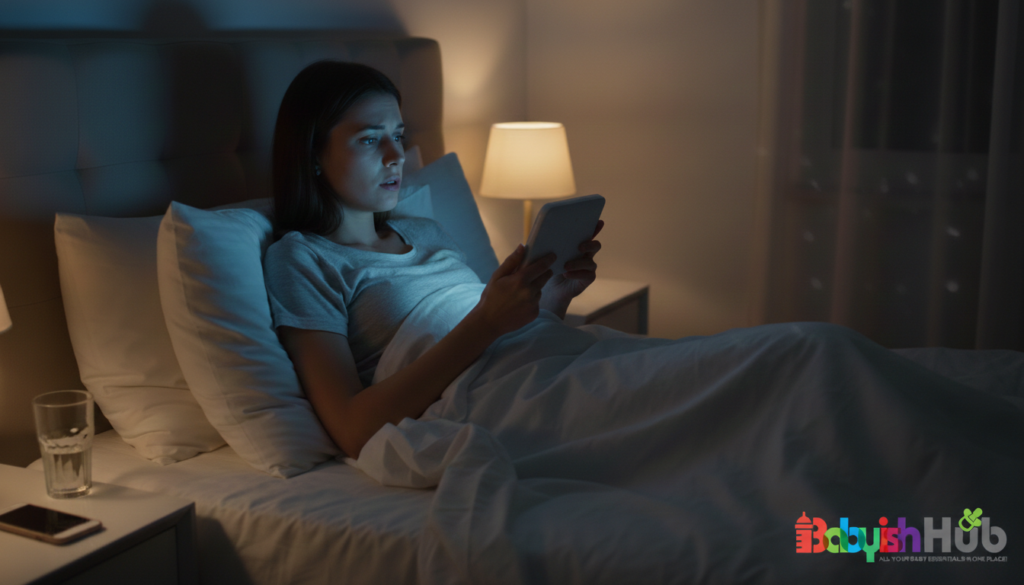
A recent study in BMJ Pediatrics Open looked at how “smart” sleep devices (including smart cameras, wearable socks, and under-mattress sensors) that track breathing and movement affect families.
The results were a mixed bag. When the devices worked perfectly, parents felt more relaxed. They enjoyed decreased anxiety and improved sleep quality.
However, when the technology had issues—think false alarms or “connectivity lost” pings—parental anxiety skyrocketed. Plus, infant sleep was disrupted.
I’ve personally met parents who developed a form of “monitor-induced insomnia,” where they found themselves compulsively checking the video feed even when the house was silent.
When the monitor becomes a source of stress rather than a tool for safety, it has outlived its usefulness.
How To Balance Sleep Safety With Monitor Use
It is a common misconception among parents that baby monitors can help prevent SIDS (Sudden Infant Death Syndrome). But the American Academy of Pediatrics (AAP) is quite clear: baby monitors are not life-saving medical devices.
The best way to ensure sleep safety for your little one is to follow the “Gold Standard” of safe sleep for babies:
- Room-sharing (but NOT bedsharing) for at least the first six months.
- A firm, flat sleep surface free of blankets, pillows, or bumpers.
- Placing the baby on their back to sleep.
The monitor is a convenience, not a safety requirement. If the monitor is making you a nervous wreck, you have permission to turn it off.
Practical Tips To Reduce Sleep Impact Caused By Baby Monitors
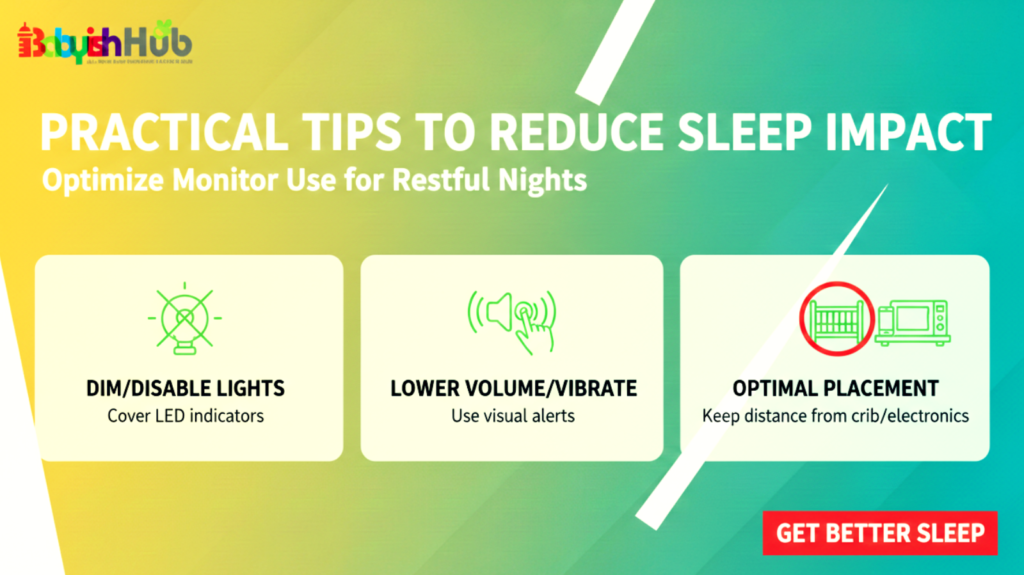
If you aren’t ready to go “monitor-free,” you can still optimize your setup to protect your sleep and that of your baby:
- The One-Meter Rule: Always place the baby monitor at least three feet (one meter) away from the crib. This significantly reduces RF exposure while still giving you a clear view and audio.
- Use VOX Mode: Most modern monitors have a “Voice Activated” (VOX) setting. This keeps the screen and audio off until a specific decibel level is reached. This prevents you from hearing every little wiggle and keeps the bedroom dark.
- Audio-Only Nights: If your baby is older (over 6 months) and has established a routine, try switching to the audio-only option. You’ll find you sleep much deeper when you aren’t tempted to “check the tape.”
- Kill the Lights: You can use a piece of electrical tape to cover any bright power LEDs on the camera unit that might be shining directly into the baby’s eyes and interrupting their sleep.
- Go for Low EMF baby monitors: If you want to keep off the EMF exposure of baby monitors, consider using low EMF monitor models. These types of baby monitors use technologies like non-WiFi, DSR (Digital Safe Radio), and wired Ethernet connection, which has significantly less EMF emissions compared to WIFI monitors.
Frequently Asked Questions About Baby Monitors And Sleep:
Let’s walk through some of the commonly asked questions about baby monitors and how they impact sleep:
Can baby monitors disrupt sleep?
Yes. Beyond physical RF-EMF exposure potentially altering brain activity, monitors often cause “techno-anxiety.” High-sensitivity audio broadcasts normal infant grunts, triggering parental cortisol spikes and unnecessary wake-ups. Furthermore, staring at a monitor’s blue light at 2 AM suppresses melatonin, making it harder for parents to fall back asleep after checking the feed.
Is it bad to sleep next to a baby monitor?
It is not recommended to sleep next to a baby monitor. Research suggests that adults sleeping near active RF-EMF devices experience reduced non-REM sleep quality and higher insomnia rates. To minimize these risks, you should keep the parent unit at least six feet away from your head and use “VOX” mode to ensure the screen and audio remain off until needed.
What are the risks of baby monitors?
Primary risks of baby monitors include sleep fragmentation for parents, potential RF-EMF exposure for infants, and security vulnerabilities in Wi-Fi models. Psychologically, they can create a “surveillance” habit that increases parental stress. Additionally, over-reliance on video feeds may lead parents to intervene too quickly, preventing babies from learning essential self-soothing skills during natural sleep transitions.
Do monitors cause insomnia in babies?
There is no evidence that baby monitors cause insomnia in babies. However, parental over-intervention caused by monitors can lead to “learned insomnia” in babies who never learn to self-soothe.
How long should you sleep with a baby monitor?
Most experts suggest weaning off the monitor once a child is six to twelve months old and has established a consistent sleep routine. By this age, the risk of SIDS significantly decreases, and the monitor often becomes a source of unnecessary parental wakefulness rather than a vital safety tool for overnight supervision.
Does my baby monitor emit EMF?
Yes, all digital baby monitors emit low-level radiofrequency electromagnetic fields (RF-EMF) to transmit data. Wi-Fi and DECT models emit these pulses continuously. While these levels fall within current regulatory limits, the “precautionary principle” suggests placing the camera unit at least three feet (one meter) away from the baby’s head to significantly reduce exposure.
Do pediatricians recommend baby monitors?
Pediatricians generally view monitors as a convenience tool rather than a medical necessity. They do not prevent SIDS and are not a substitute for safe sleep practices. Most doctors support their use for convenience, provided parents don’t let the technology increase their anxiety or lead to unsafe sleep habits like ignoring physical checks.
Do baby monitors cause sleep problems at night?
They can. For parents, “monitor-induced insomnia” occurs from hyper-vigilance and blue light exposure. For babies, the disruption is usually behavioral; if parents rush in at every sound caught on the monitor, the baby fails to connect sleep cycles independently. This creates a cycle of frequent nighttime wakings and a dependency on parental soothing.
Should I stop using my monitor?
If you find yourself checking the screen more than five times an hour, or if you feel a “jolt” of adrenaline every time the screen flickers, it might be time for a break.
Verdict—What You Should Take Away
Baby monitors are a tool, and like any tool, they can be used effectively or they can be overused. So, regarding your question “do baby monitors cause sleep problems at night?”, there is no definitive proof that they are “damaging” our babies, but the evidence suggests they are certainly impacting our sleep as parents.
By moving the monitor away from the crib, using smart settings like VOX, and trusting your baby’s ability to grunt and groan through a sleep cycle without your intervention, you can find the middle ground. Technology should serve your family’s sleep—not the other way around.
What’s your relationship with your baby monitor right now, helpful tool or sleep thief?