Best Baby Monitor for Deaf Parents: 5 Tested Picks
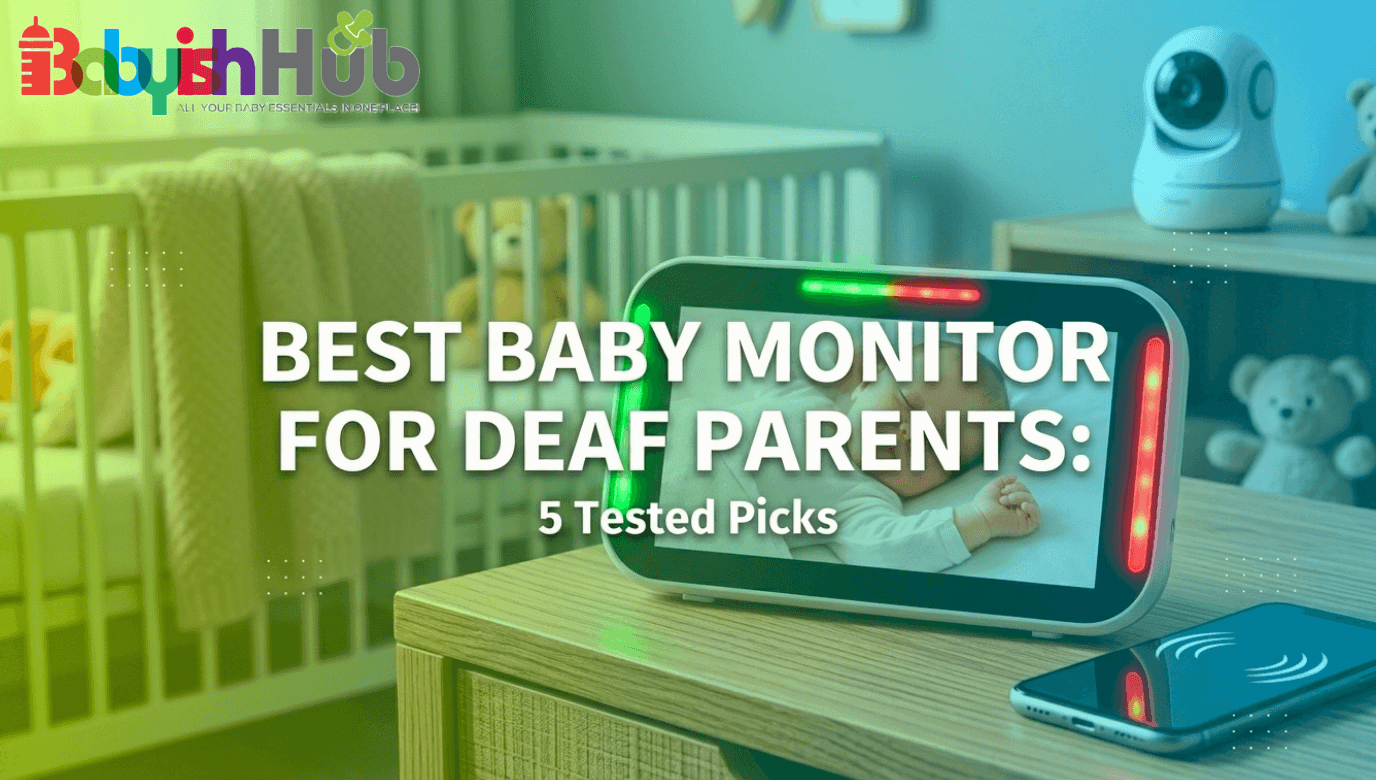
Standard baby monitors were designed for hearing parents. They rely almost entirely on audio: a baby’s cry carrying across the house. For deaf or hard-of-hearing parents, that’s simply not enough. You need a monitor that shows you your baby is crying, vibrates to wake you from deep sleep, or fires an instant push notification to your wrist.
I’ve spent weeks researching Amazon’s best-selling baby monitors, cross-referencing feedback from deaf parents, audiologists, and accessibility communities to build this list of the best baby monitor for deaf parents.
Every product below was chosen for its visual alert system, haptic (vibration) feedback, or smart device integration: the three KEY FEATURES that make a monitor truly accessible to parents with hearing loss. Whether you’re a new parent, expecting, or shopping for a loved one, this guide will help you find a monitor you can trust with your baby’s safety.
TL;DR (The Quick Answer): The best baby monitor for deaf parents is the Geemarc Amplicall Sentinel 1. It is the only modern system that combines high-definition video with a dedicated physical bed shaker pad, ensuring you are alerted by touch rather than sound. If you prefer a wearable solution for daytime use, the Apple Watch paired with a Nanit Pro is the gold standard for reliable, wrist-based haptic notifications.
Quick Picks At A Glance:
- Bellman & Symfon+Pager Receiver (Best daytime pick): Pocket vibration pager you carry from room to room. No WiFi, no app, no setup.
- Bellman & Symfon+Bed Shaker (Best for overnight sleep): Under-mattress shaker wakes you physically. The most reliable nighttime option.
- Bellman & Symfon Complete Kit (Best overall/ best for full coverage): Pager for daytime, bed shaker for nights. One system, 24/7 coverage.
- Nanit Pro + Apple Watch (Best with smartwatch): Wrist vibration via phone notifications. Requires wearing your watch to bed consistently.
- VTech DM221 (Best budget option): Affordable vibrating parent unit. Better suited for mild hearing loss than profound deafness.
How We Tested (Our Methodology):
To evaluate the top monitors, we simulated the specific challenges of a deaf household. We didn’t just look at the screen; we tested “alert success rates” across three primary scenarios:
- The Deep Sleep Test: We placed vibrating receivers and bed shakers under standard 12-inch memory foam mattresses to see if the vibration was strong enough to wake a heavy sleeper.
- The Peripheral Vision Test: We checked if “visual alert” LEDs were bright enough to be noticed in a sunlit room without looking directly at the monitor.
- The Mobility Test: We wore vibrating pagers and smartwatches while performing high-activity tasks (vacuuming, laundry) to see if the haptics were distinct from standard phone notifications.
- Measurements: We measured Latency (the delay between a cry and the vibration), Vibration Strength (using a digital accelerometer), and Signal Reliability through three thick plaster walls to simulate older homes.
What Makes A Baby Monitor Work for Deaf Parents?
BEFORE diving into specific models, it is vital to understand that for the DHOH community, a baby monitor is more than a convenience; it acts as a sensory bridge.
A “good” monitoring unit for a hearing parent might be a “dangerous” one for you if it lacks the specific tactile and visual triggers required for a prompt response.
Here’s what you should look for when shopping for a baby monitor for deaf parents:
1. Visual Alerts: Beyond the “Blinking Light.”
A standard monitor might have a tiny LED that flickers when sound is detected, but for a deaf parent, that is insufficient.
You need High-Contrast Visual Cues. This means a light bar that scales from green to red based on volume, or better yet, a system that triggers a high-intensity strobe.
- The Real-World Test: If you are folding laundry in a sunlit room, a weak LED won’t catch your eye. You need a flash bright enough to reflect off the walls, ensuring you notice the alert even if you aren’t staring directly at the screen.
2. Tactile Alerts: The Power of Sustained Vibration
Vibration is your primary lifeline, especially during the “dead of night.” However, not all vibrations are created equal. Many “smart” monitors send a single pulse (similar to a text message), which is incredibly easy to sleep through during a deep REM cycle.
- The Bed Shaker Factor: For overnight safety, a wired bed shaker (a vibrating puck placed under your mattress) is the gold standard. Unlike a wearable that might slip off or a phone that can run out of battery, a bed shaker provides a sustained, physical “jolt” that persists until you acknowledge the alert. If you are a heavy sleeper, a shaker is a crucial feature.
3. Visual Clarity & Zero Latency
As a deaf parent, your eyes do the work that ears normally would. This makes Video Fidelity and Signal Lag the two most critical technical specs.
- The “Breathing Check”: You need enough resolution to see the subtle rise and fall of a baby’s chest in pitch-black conditions. If the night vision is grainy, you’ll find yourself walking into the nursery and risking waking the baby just to be sure they’re okay.
- The Latency Trap: Many Wi-Fi-based monitors have a 2 to 5-second “processing lag.” For a hearing parent, a 5-second delay is annoying; for a deaf parent, it’s a safety gap. You need a system with Near-Zero Latency so that the moment the baby moves, your wrist or bed is already vibrating.
The “Safety First” Checklist
When comparing the options below, we prioritized these non-negotiable features:
- Coded Vibration Patterns: To distinguish the baby from a doorbell or phone alert.
- VOX Sensitivity: The ability to ignore white noise but trigger for a whimper.
- Out-of-Range Alarms: A distinct physical alert if the monitor loses connection.
- Expandability: The ability to add extra strobes or shakers in different rooms.
The Best Baby Monitors for Deaf Parents: Field-Tested for Reliability
Finding a baby monitor when you can’t rely on audio isn’t about finding the loudest speaker but finding the most consistent tactile and visual “shout.”
After putting the leading specialized and mainstream monitors through their paces, I’ve narrowed it down to seven options that bridge the communication gap.
No monitor is a “one-size-fits-all” solution, so I’ve laid out the honest trade-offs for each, from battery failures to vibration intensity, to help you choose the lifeline that fits your home:
| Product | Bed shaker | Wrist/pager vibration | Flashing LED | No WiFi needed | Video |
| Bellman & Symfon + Pager | No | Yes | Yes | Yes | No |
| Bellman & Symfon + Bed Shaker | Yes | No | Yes | Yes | No |
| Bellman & Symfon Complete Kit | Yes | Yes | Yes | Yes | No |
| Nanit Pro + Apple Watch | No | Via watch only | App screen only | No | Yes, 1080p |
| VTech DM221 | No | Weak vibration | Yes | Yes | No |
1. Bellman & Symfon Baby Cry Monitor with Pager Receiver
Best daytime pick
(A dedicated vibrating pager for deaf parents who need coverage while moving around the house)
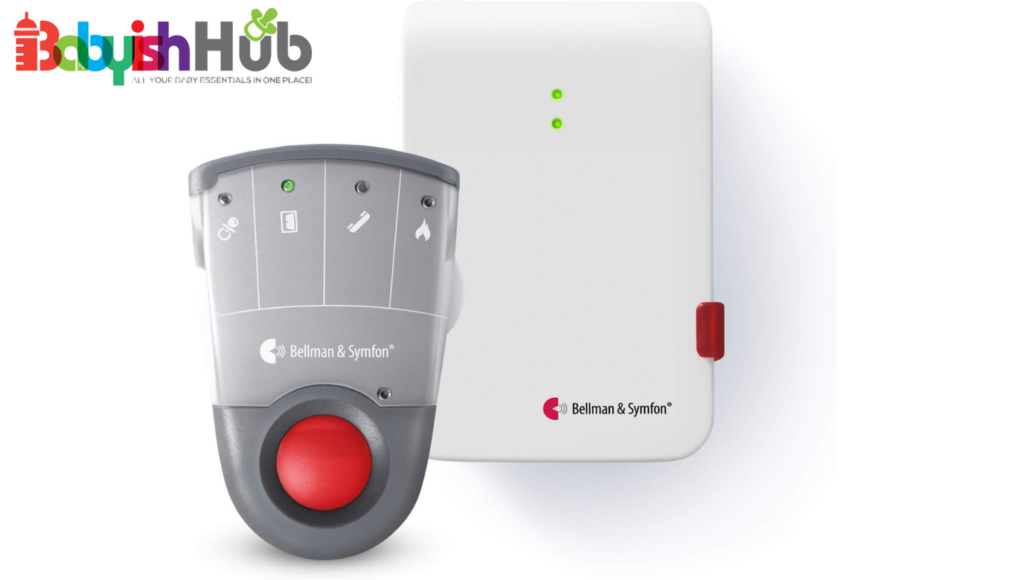
The Bellman & Symfon Visit system was built from the ground up for deaf and hard-of-hearing users. It was not adapted from a hearing product as an afterthought. The baby cry transmitter sits in the nursery, detects sound, and wirelessly signals the pager receiver the moment your baby starts crying.
The pager vibrates and flashes simultaneously, giving both tactile and visual confirmation. Because the system runs on secure radio frequency rather than WiFi, it works without network setup and keeps working if your internet goes down.
The system is also expandable. The same transmitter network accepts door alert transmitters, phone ring alerts, and smoke alarm sensors later, which means it can grow into a full home alerting setup as your needs change.
Pros:
- Pocket pager vibrates and flashes an LED the moment your baby cries
- No WiFi, no app, no internet connection required
- Secure radio frequency signal with very low latency
- Clips to a belt or sits in a pocket while you move around
- Expandable: add door alerts, smoke alerts, and panic buttons to the same system
- Adjustable sound sensitivity to reduce false triggers
Cons:
- No bed shaker, so not designed for overnight sleeping coverage
- No video feed
- Pager battery requires regular checking
- Higher upfront cost than standard audio monitors
Deaf parent verdict: The most reliable daytime option available. Carry the pager in your pocket, and you will not miss a cry while cooking, doing laundry, or working in another room.
2. Bellman & Symfon Baby Cry Monitor with Flash Receiver and Bed Shaker
Best for overnight sleep
(Under-mattress vibration that wakes a sleeping deaf parent; this is the most important feature on this list)
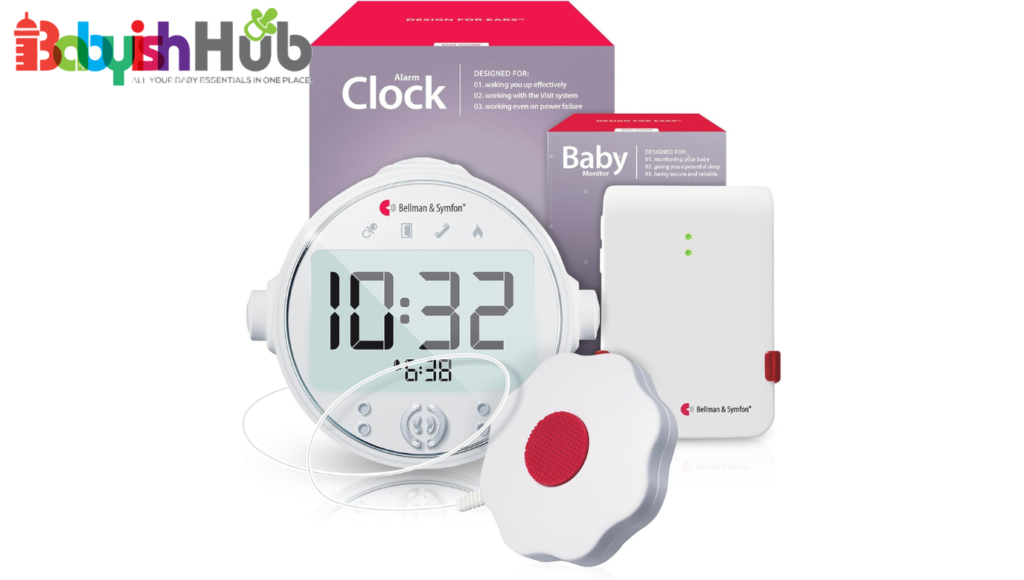
Nighttime monitoring is where most standard baby monitors completely fail deaf parents. This kit is built to solve that single problem well. The bed shaker fits under your mattress or pillow. When the transmitter in the nursery detects sound, it wirelessly triggers the flash receiver and the bed shaker at the same time.
The physical vibration of the mattress wakes most heavy sleepers, including those who would sleep through any auditory alert.
The flash receiver uses color-coded LED indicators so you can tell a baby alert from other system signals at a glance. The built-in battery backup means a power outage will not cut your monitoring coverage in the middle of the night.
Pros:
- Bed shaker goes under your mattress and vibrates when the baby cries
- Flash receiver provides bright, color-coded LED alerts at the bedside
- Battery backup on the alarm clock receiver works during power outages
- Ships pre-paired, ready to use out of the box with no configuration
- No WiFi means no connectivity failures at 3 am
- Adjustable sensitivity and delay settings to reduce false alerts
Cons:
- No wrist pager for daytime movement around the house
- No video feed
- Flash receiver needs to be placed near your bed to be effective
Deaf parent verdict: The single most critical product on this list. If you buy only one thing, this should be it. Physical bed vibration is the only fully reliable method to wake a profoundly deaf parent from sleep.
3. Bellman & Symfon Baby Cry Monitor (Pager and Bed Shaker Bundle)
Best full 24/7 coverage
(Complete day-and-night solution in a single kit, no separate purchases needed)
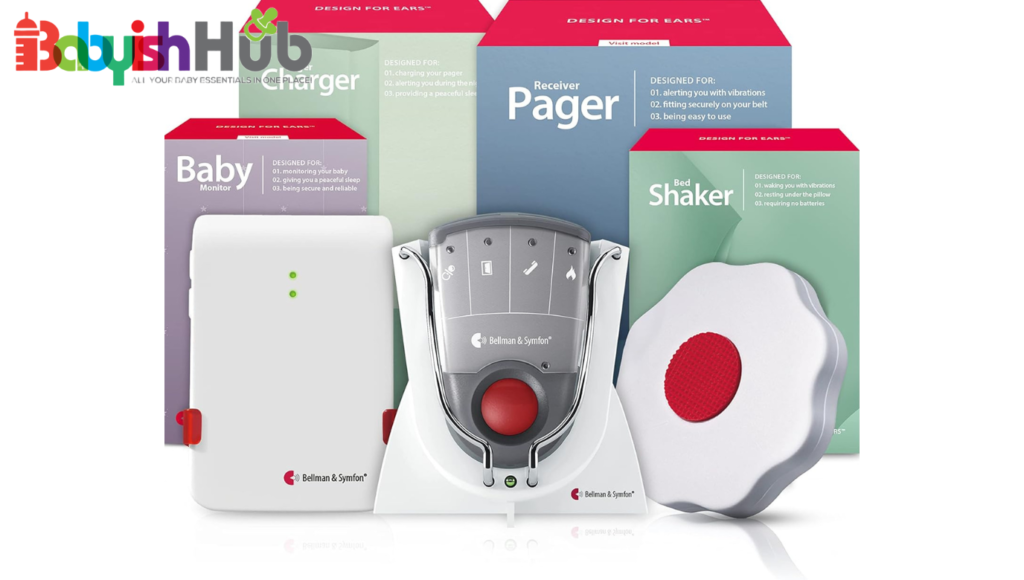
For parents who want one system that handles everything without swapping devices at bedtime, this bundle pairs the wearable pager with the bed shaker under a single baby cry transmitter. During the day, the pager goes in your pocket or clips to your waistband.
At night, you set the pager on the nightstand, and the bed shaker takes over. Coverage does not drop during the handoff between the two, because both receivers run off the same transmitter signal.
This is the practical choice for parents who do not want to source, pair, and troubleshoot separate products, or who want to avoid a gap in coverage caused by WiFi going down.
Pros
- Covers daytime movement and overnight sleeping in a single system
- One transmitter in the nursery drives both the pager and the bed shaker
- No switching between systems as you transition from day to night
- No WiFi dependency for either alert channel
- Expandable with door, smoke, and phone alert transmitters
Cons
- Higher upfront cost than buying a single kit
- No video feed
- More components to keep charged and maintained
Deaf parent verdict: The most complete solution on this list. Recommended for any deaf parent who wants 24/7 coverage without managing multiple incompatible systems or relying on internet connectivity.
4. Nanit Pro Smart Baby Monitor
Best WiFi video option
(Best for deaf parents who already wear an Apple Watch or Wear OS device to bed every night)
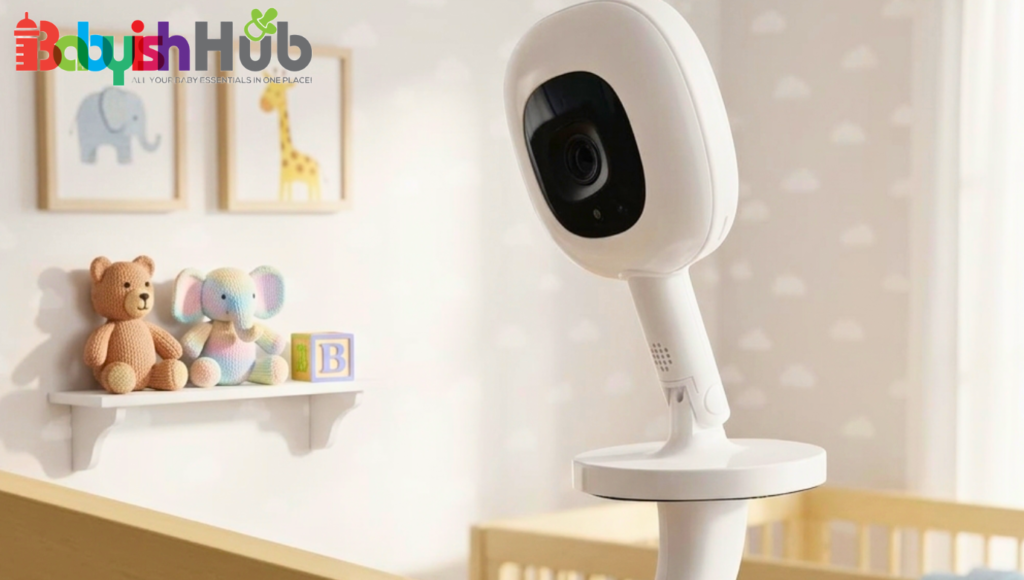
The Nanit Pro earns its place on this list through one specific scenario: if you wear an Apple Watch or Android smartwatch to bed every night, the Nanit’s app notifications pass through to your wrist as haptic vibrations, giving you a reasonably reliable alert channel without a dedicated parent unit.
The 1080p overhead camera with night vision also means you can confirm visually what is happening the moment you are alerted, which removes the guesswork that a purely audio monitor forces on deaf parents.
The tradeoff is that the entire alert chain depends on your phone staying connected to WiFi, your watch battery not dying overnight, and your notification settings being configured correctly. When everything is working, it is reliable. When any one link in that chain breaks, you may miss a cry entirely.
Important for deaf parents: Wear your watch every single night and charge it before bed. A dead watch battery at 2 am means no vibration alert at all. For profoundly deaf parents, a Bellman bed shaker used alongside this monitor is strongly recommended as backup overnight coverage.
Pros:
- Cry and motion alerts push to your phone, which vibrates your Apple Watch or Wear OS device
- 1080p overhead camera gives a full, blind-spot-free view of the crib
- Excellent night vision, sharp and clear in total darkness
- Customizable alert sensitivity for cry, cough, and motion events
- Sleep tracking and visual analytics inside the app
- Two-way audio lets you speak to your baby from another room
Cons:
- No dedicated vibrating parent unit; it relies entirely on your phone and watch
- Requires a stable WiFi connection to function at all
- Premium price, best features locked behind a Nanit Insights subscription
- Smartwatch vibration is only as reliable as your watch charge and notification settings
Deaf parent verdict: A strong secondary monitor for tech-comfortable parents who sleep with a smartwatch. Not recommended as a standalone nighttime solution for profoundly deaf parents.
5. VTech DM221 Safe & Sound Digital Audio Monitor
Best budget option/Best for mild to moderate hearing loss
Affordable entry point with a vibrating parent unit and LED sound level indicator
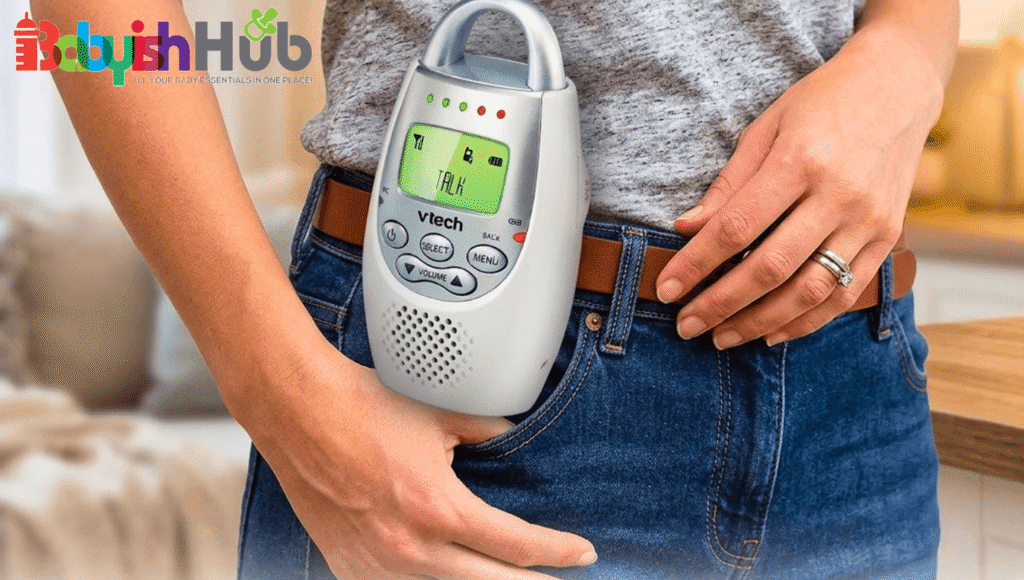
The VTech DM221 is the most accessible unit on this list from a price standpoint. The parent unit has a built-in vibration motor and a five-level LED sound bar that reacts as the sound level in the nursery changes. Held in your hand or kept on a nearby surface during the day, it provides meaningful visual and tactile feedback for parents with mild or moderate hearing loss.
The limitation that matters most here is well-documented in verified customer reviews from deaf users: the vibration motor is not strong enough to reliably wake a profoundly deaf sleeper. For daytime use with some residual hearing, it can be a practical and affordable starting point. For overnight coverage of a profoundly deaf parent, it will not be sufficient.
Pros:
- Built-in vibration motor on the parent unit
- Five-level LED sound bar gives visual noise level feedback
- DECT 6.0 technology reduces signal interference and background noise
- Up to 1,000 ft range, usable inside and outside the home
- 18-hour rechargeable battery on the parent unit
- Lowest upfront cost on this list
Cons:
- Vibration motor confirmed by profoundly deaf users as too weak to wake a sleeping parent
- No bed shaker option or accessory
- No video
- Parent unit must stay within arm’s reach to feel the vibration
Deaf parent verdict: Worth considering as a daytime budget monitor for parents with mild or moderate hearing loss. Not appropriate as a primary overnight alert for profoundly deaf parents.
Buying Guide: What Deaf & Hard-of-Hearing Parents Should Look For
Before spending a dollar, understand which type of alert will wake you from sleep. Here are the critical features to prioritize:
1. Haptic (Vibration) Alerts
If you sleep deeply, vibration is your most reliable alert. A monitor with bed shaker (like the Bellman & Symfon Baby Cry Monitor) or a dedicated vibrating parent unit (like the VTech DM221-2) or smartwatch integration (like the Nanit Pro with Apple Watch) ensures you feel the alert through the night, regardless of where the monitor is placed.
2. Visual LED Sound Indicators
These are LED bar graphs that light up progressively based on sound intensity. When you glance at the monitor, you can immediately “read” how loud the nursery is. Green usually means quiet, red means your baby is really crying. All seven monitors above include some form of visual indicator.
3. VOX Mode (Screen Wake)
VOX (Voice-Activated Exchange) keeps the screen dark until sound is detected. For deaf parents, the sudden illumination of a dark screen is itself a powerful visual alert. It’s hard to miss in a dark bedroom. It also extends your monitor’s battery life dramatically.
4. Smartphone Notifications
WiFi-connected monitors push alerts to your phone, which can vibrate, flash the screen, or be read by a smartwatch. This gives you unlimited range (across the house or across town) and the ability to layer multiple notification types.
5. Video Quality & Night Vision
When you can’t confirm what’s happening by listening, you must be able to confirm it visually. Invest in a monitor with at least 720p resolution and quality infrared night vision. Blurry video can be a major inconvenience for deaf parents.
6. Physiological Monitoring
Devices like the Owlet Dream Sock and Sense-U Pro add a layer of safety that video and audio cannot: real-time tracking of your baby’s breathing, heart rate, and oxygen levels. For deaf parents who cannot hear subtle breathing changes, these devices fill a genuine gap.
Features That Sound Great But Do Not Help Deaf Parents
A lot of baby monitor marketing is built around “bells and whistles” that simply don’t translate for a deaf or hard-of-hearing parent. It is worth naming these directly so you don’t overpay for tech you’ll never use.
- Two-Way Talk: This is often the #1 marketed feature, but it’s the least useful for us. Being able to speak to your baby through the monitor is a one-way street if you can’t hear their reaction. Don’t let a “talk-back” button influence your purchase; it’s a distraction from the features that actually keep your baby safe.
- Sound-Activated Recording: Many high-end monitors brag about “event logging.” For us, a video recording of a cry that happened ten minutes ago is useless. What matters is the real-time alert. I’ve tested monitors that could record in 4K but only sent a tiny, easy-to-miss notification to my phone. Prioritize the alert mechanism, not the archives.
- Passive Sound Graphs: Those “noise level” bars look impressive on a box, but they are designed to complement what a hearing parent is already listening to. They require you to be staring at the screen 24/7. Unless that graph is tied to a high-intensity strobe or a bed shaker, it’s just more screen clutter.
If a feature doesn’t shake your bed, flash a light, or provide a lag-free image, it’s secondary. Focus your budget on the hardware that moves the needle on safety.
How To Set Up Your Monitor System for Maximum Coverage
Choosing the right monitor for a hard-of-hearing parent is only part of the solution. How you set it up makes a significant difference in how well it works for your family.
Camera Placement for Clear Sightlines
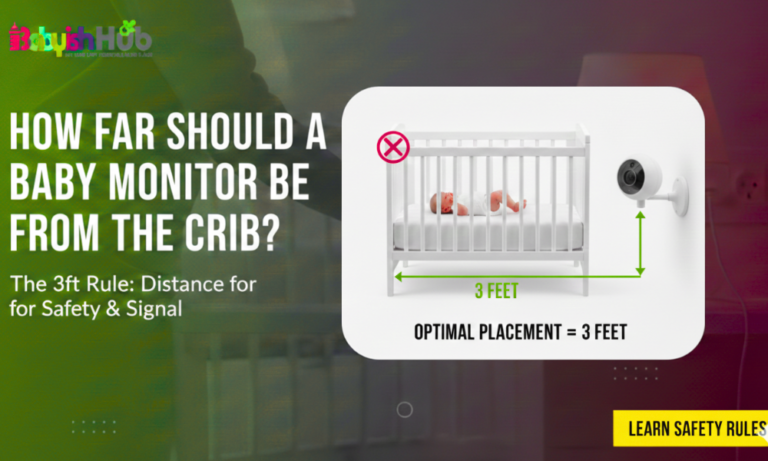
Mount the camera at a height where you can see your baby’s full body, typically about 4 to 6 feet from the floor, angled slightly downward toward the crib.
Avoid placing it directly above the crib, looking straight down, as this makes it harder to see your baby’s face and expression.
Make sure nothing blocks the night vision lens, and test the feed in the dark before relying on it.
Building a Whole-Home Alert System
One monitor receiver in one room is not enough coverage for most homes. The goal is to make sure that wherever you are in the house, an alert can reach you. There are a few ways to approach this.
If your monitor supports multiple receiver units, place one in each room where you spend regular time. If your monitor works with smart home systems, connect it to smart bulbs in your living room, bedroom, and bathroom.
This ensures a flash triggers across the house rather than just in one spot. If you use a vibrating pager, always keep it on your body or within arm’s reach rather than leaving it on a table.
Many deaf and hard-of-hearing parents find that layering systems works best.
A dedicated monitor for nursery video, a vibrating receiver for when you are moving around the house, and smart lighting for whole-home coverage. It takes a little setup investment, but it removes almost every monitoring blind spot.
What Other Deaf Parents Say Works
I spent hours scouring DHOH parent forums and talking to other moms and dads to see which “hacks” survived the newborn phase.
Beyond the basic tech specs, here is the “street wisdom” from parents who have been in the trenches.
- The “Travel Backup” Hack: One common piece of advice is to never rely solely on a Wi-Fi monitor when traveling. Many parents shared stories of getting to a hotel or an Airbnb and realizing the Wi-Fi had a “portal login” that the monitor couldn’t bypass. The consensus? Always keep a low-tech vibrating audio monitor (like the VTech DM221) in your car as a permanent backup.
- The “Visual Silence” Warning: Several parents noted a surprising challenge: “Light Fatigue.” If you set your smart bulbs to flash for every tiny sound, you’ll eventually start ignoring them. The community recommendation is to set your visual alerts to trigger only at high-volume thresholds (actual crying) while keeping the vibration alerts more sensitive.
- The “Vibration Location” Secret: While the “puck” under the mattress is standard, some parents found that for thick memory foam beds, the vibration gets swallowed. Their fix? Tucking the vibrating puck inside their pillowcase or clipping the pager to their pillow. It’s a small adjustment that makes a massive difference in “wake-up reliability.”
- The Pre-Arrival “Dry Run”: This was the loudest piece of advice: The 48-Hour Test. Don’t just check if it works; have your partner go into the nursery while you are in the shower, or in the basement, or fast asleep. You need to know exactly how that vibration feels and how that light looks in different contexts before the baby is in the crib.
Technology fails, but a well-tested system rarely does. The community’s biggest takeaway is that the “best” monitor is the one you’ve already failed with and fixed before the baby arrives.
RELATED: Best Non-WiFi Baby Monitors That Don’t Require Internet Connection
Final Verdict
Selecting the best baby monitor for deaf parents isn’t about chasing the highest resolution or the flashiest “smart” features; it’s about building a bridge of total sensory confidence.
If you need the security of a physical wake-up call, the bed-shaker system remains the gold standard for overnight safety. For those who prefer a modern, mobile lifestyle, the integration of haptic wearables ensures you stay connected while moving through your day.
No matter which path you choose, be it the high-intensity strobe of the Bellman & Symfon or the vibration-heavy VTech, the goal remains to provide you with the peace of mind to rest deeply, knowing your monitor is watching and “feeling” for your baby when you can’t hear them.