Best Baby Car Camera (5 Monitors Tested For Wireless, Night Vision & Safety)
The first time I drove home with a rear-facing newborn, I white-knuckled the whole twenty minutes. Every little whimper from the back seat sent my eyes darting to the rearview mirror, which, let’s be honest, shows you nothing useful when the car seat is angled away from you.
I remember pulling into a gas station parking lot just to lean back and check she was still breathing. She was fine. But I was not.
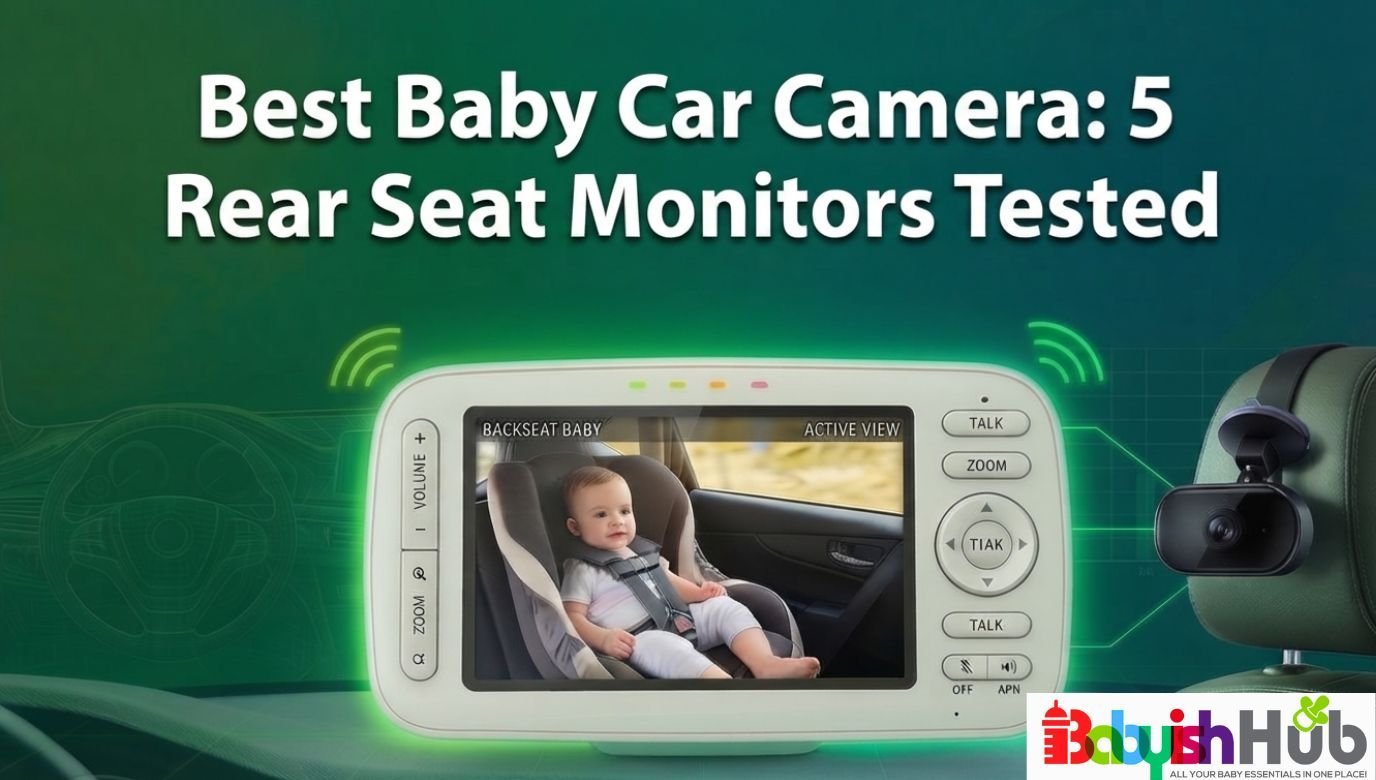
That’s the exact problem a baby car camera solves. Unlike the home nursery monitor stuffed into your glovebox, this is something built for a moving vehicle: a camera that clips to the headrest and a screen that gives you a quick, safe glance instead of a dangerous twist of your neck at 60 miles an hour.
If you’ve been scrolling through listing after listing trying to find the best baby car camera and getting more confused with every tab you open, I don’t blame you. The market is flooded with near-identical products, and most buying guides just repeat spec sheets without giving you solid choices.
So here’s my honest breakdown: five car baby monitors that are worth the money, what each one does well, where it falls short, and how to pick between them based on your car, your kids, and your budget.
Disclosure: This article contains affiliate links. If you make a purchase through these links, we may earn a commission at no extra cost to you.
Best Baby Camera For Car Quick Picks:
1. Babyvue BV7: Best Overall. Splits your CarPlay/Android Auto screen for a sharp 1080p feed with auto night vision, no extra screen needed.
2. OTTOCAST Cabin Care: Best Wireless. Overlays the baby feed on your wireless CarPlay display with invisible IR. iPhone and wired CarPlay only.
3. LUCKVIEW BM5PRO: Best for 2 Kids. Two cameras, one 7.2″ split screen, so you see both car seats at once.
4. Itomoro 2026 Dual Camera: Best Night Vision. 940nm infrared on both cams for a cleaner image after dark than most competitors.
5. Babyvue BV6PRO Wireless Dual: Best Fully Wireless, 2 Kids. Completely cordless dual-camera setup, no wiring across the back seat at all.
Quick Picks: Best Baby Car Camera At A Glance:
| Camera | Best for | Screen | Night Vision |
| Babyvue BV7 | Best overall | 7.2″ touchscreen | Auto IR |
| OTTOCAST Cabin Care | Best wireless, no extra screen | Your car’s own screen | No-glow IR |
| LUCKVIEW BM5PRO | Best for 2 kids | 7.2″ split-screen | Auto IR |
| Itomoro 2026 Dual Camera | Best night vision | 7″ ultrawide split | 940nm IR (both cams) |
| Babyvue BV6PRO Wireless Dual | Best fully wireless baby car camera, 2 kids | 5.2″ split-screen | Auto IR |
NOW let’s get into why each of these made the list, and what you need to know about each baby car camera to help you get the right one for your unique needs…
1. Babyvue BV7: Best Overall Baby Car Camera
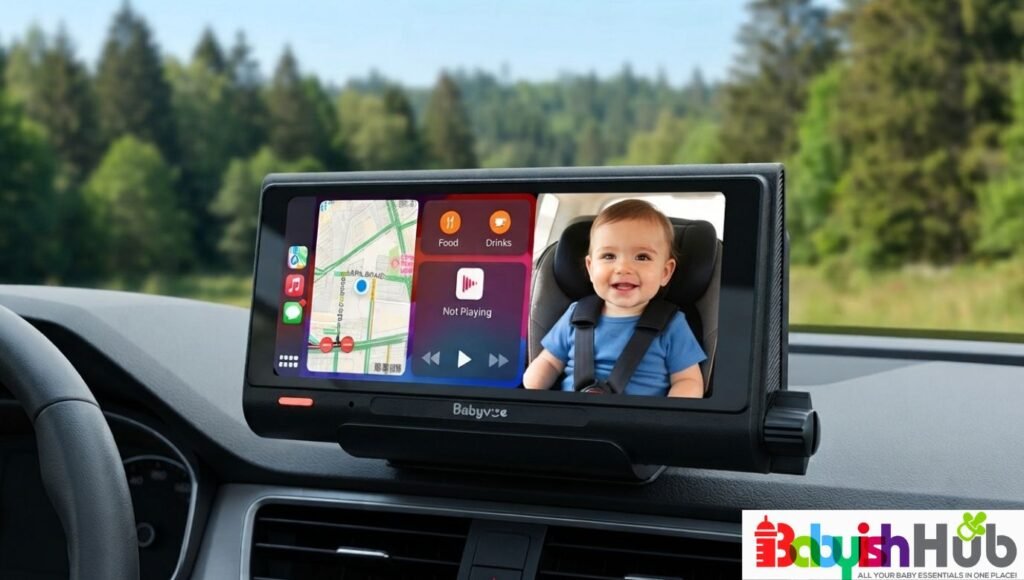
If you only read one section of this guide, make it this one. The BV7 is the pick I’d point most parents toward first, because it solves the two biggest complaints people have with car cameras in one device: cable clutter and a cheap-feeling screen.
Instead of adding yet another dashboard-mounted screen for your baby car camera monitor, the BV7 splits your existing CarPlay or Android Auto display. You get navigation, music, and your baby’s live feed on the same 7.2-inch touchscreen, so there’s nothing extra sticking out of your dash and nothing extra to steal your attention.
The 1080p feed stays clear enough to see whether your baby’s eyes are open or closed, even from the driver’s seat. And the automatic infrared night vision switches over cleanly once the light drops, with no manual toggling required.
Parents who’ve bought this baby car monitor keep mentioning the same thing in their reviews: it feels pricier than the average baby car camera, and it is, but people who paid for it say the lack of cables running across the cabin makes up for it.
One thing worth flagging, though: Because this unit draws power through your car’s system, you can’t leave it running with the car off, so if you want video capture while parked, this isn’t that camera.
VERDICT: This is a good fit if you already use CarPlay or Android Auto daily and want one clean screen instead of two. Skip it if: Your car doesn’t support CarPlay/Android Auto, or you want a monitor that stays on even with the engine off.
2. OTTOCAST Cabin Care: Best Wireless Baby Car Camera (No Extra Screen Needed)
The Ottocast Cabin Care earns a spot on any best baby car camera wireless list because it takes a completely different approach than everything else here.
Instead of giving you a dedicated monitor at all, the Cabin Care turns your wired CarPlay connection wireless and overlays the baby camera feed right on top of it. Tech reviewers who’ve spent real time with this camera describe the setup as almost suspiciously simple: You plug the adapter in, pair your phone once, and you’re done.
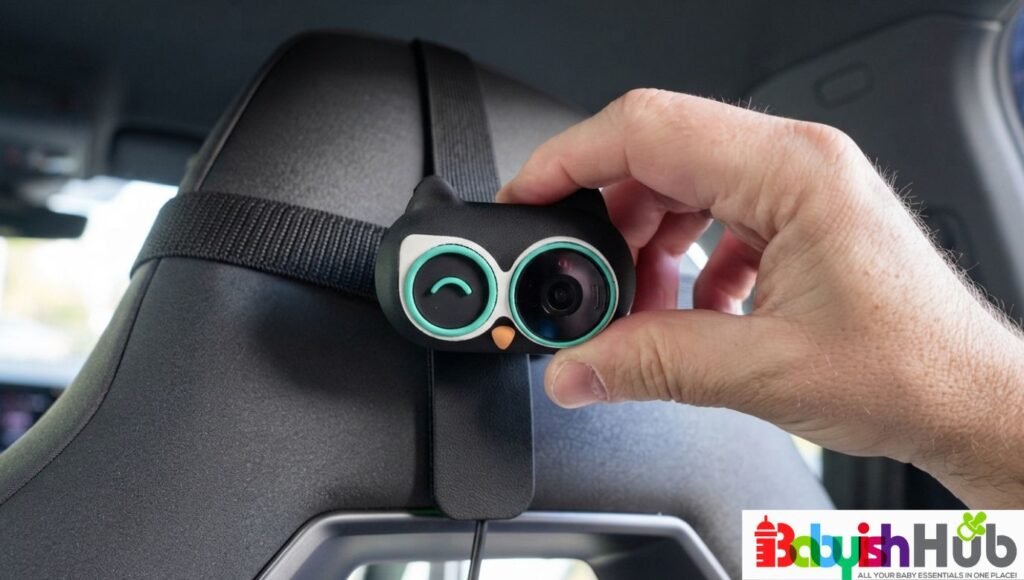
The camera itself uses a 150-degree lens with invisible infrared LEDs, so there’s no visible red glow near your baby’s face at night. This is quite important, especially if you have driven with a monitor that glows.
The owl-shaped camera housing is a small touch, but it’s the kind of detail that tells you someone thought about a parent using this thing, not just shipping a spec sheet.
The catch, and it’s a real one: This camera only works if your car has wired CarPlay support, and it’s iPhone-only. If you’re an Android family or your car’s infotainment doesn’t play nice with CarPlay, this pick isn’t for you, no matter how good it is otherwise.
VERDICT: This is a good fit if your car has wired CarPlay and you want the absolute cleanest dashboard setup available. It’s also a great choice if you’re looking for the best baby car camera that connects to Apple CarPlay. Skip it if: You’re on Android, or your vehicle doesn’t support CarPlay.
3. LUCKVIEW BM5PRO: Best Baby Car Camera for 2 Kids
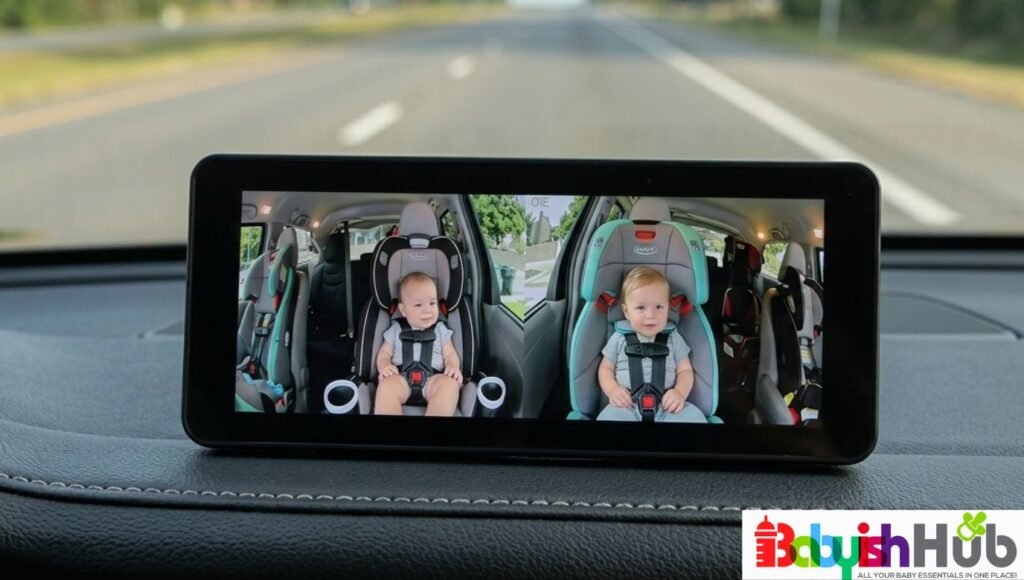
Once you’ve got two baby car seats in the back, a single camera stops being enough. You end up choosing which kid to watch, and inevitably the one you’re not looking at is the one who drops their pacifier.
This is the exact gap the BM5PRO fills, and it’s the most suitable choice I’d give anyone searching for the best baby car camera for 2 kids specifically.
The setup is straightforward: two cameras, one 7.2-inch monitor, split screen showing both seats at once with no need to toggle back and forth.
At 1080p, the image holds up well even on the smaller half of a split view, which is where a lot of cheaper dual monitors fall apart. The auto night vision kicks in per-camera, so if one side of your car is shaded and the other isn’t, both feeds still look right.
The 22-foot cable is long enough to reach three-row SUVs, minivans, or trucks without stretching, which is a detail a lot of competitors skip and then leave you improvising with zip ties.
The honest trade-off with any dual-camera setup is cable management. Two cameras mean two runs of wire, and in a smaller sedan that can start to feel busy. It’s not a dealbreaker, just something to plan for when you’re routing wires along the seams and trim rather than leaving them loose across the seat.
VERDICT: This baby car monitor is a great choice if you have two kids in car seats and want one screen that shows both without switching views. Skip it if: You’ve only got one child riding rear-facing right now (save the money and get a single-camera pick instead).
RELATED: Best Baby Monitors That Record
4. Itomoro 2026 Upgraded Dual Camera: Best Baby Car Camera with Night Vision
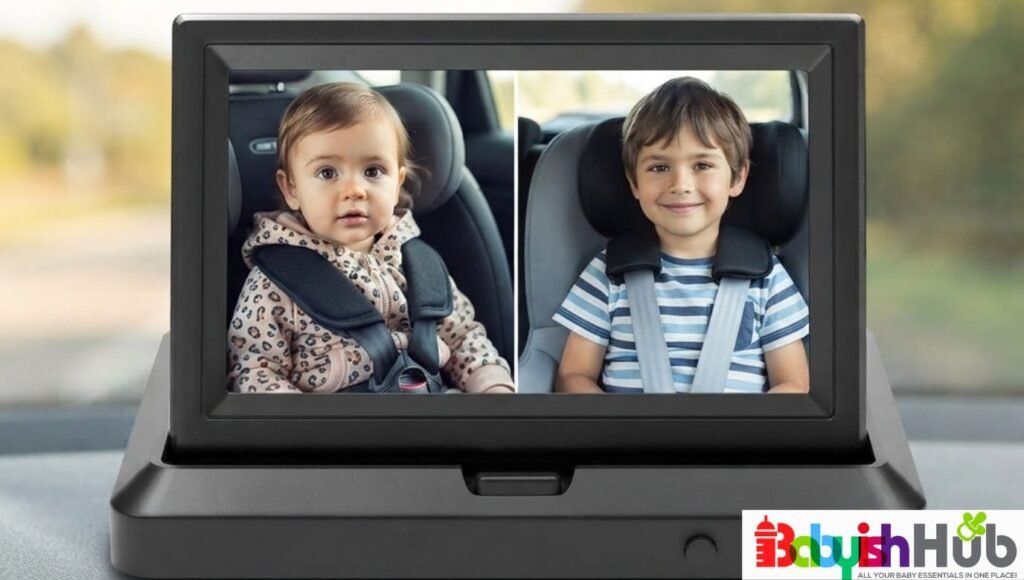
Night vision quality is one of those things that looks identical on a spec sheet until you’re driving home from a late pickup and squinting at a grainy, washed-out image.
This is where the Itomoro dual-camera system pulls ahead of a lot of the competition. And why it’s my ultimate pick if you’re specifically hunting for the best baby car camera with night vision.
Both cameras use 940nm infrared, which is a step up from the more common 850nm LEDs you’ll find on cheaper units. In plain terms, it means less of a visible glow near your baby at night and a cleaner, less grainy image once it’s fully dark.
Combined with the 150-degree wide lens and 360-degree rotation on each camera, you get full coverage of both seats without dead zones at the edges, which is more important than people expect once a baby starts wiggling sideways in their seat.
The 7-inch ultrawide display is quite bigger than most split-screen competitors, which helps at a glance, though it does eat up a bit more dash real estate. If your car has a shallow dashboard or you’re already running a dash cam display, measure before you buy.
VERDICT: This model makes a great choice if you drive frequently after dark, whether that’s early commutes, school pickup, or long evening drives. Skip it if you almost never drive at night and don’t need the extra spend on IR performance.
5. Babyvue BV6PRO Wireless Dual: Best Fully Wireless Camera for 2 Kids
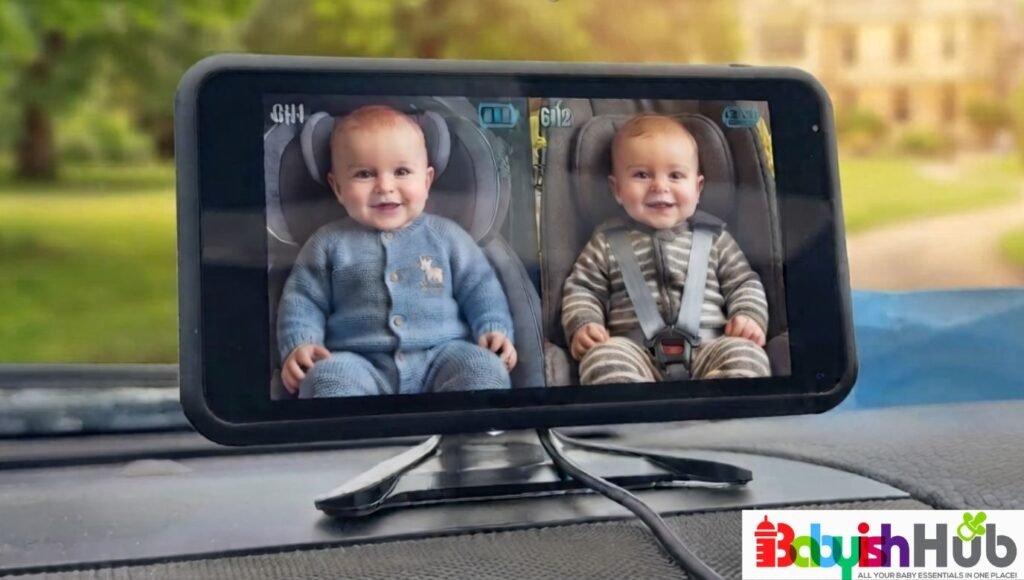
If the idea of running any cable at all across your back seat makes you tired just thinking about it, this is the right pick for you. The BV6PRO is a 100% cordless dual-camera setup; both cameras transmit to the 5.2-inch split-screen monitor over a stable 2.4G connection. No wiring between the back seat and the dashboard at all.
That wireless convenience is the whole selling point, and it delivers on it. Setup is close to just placing the cameras and turning everything on.
A major trade-off worth noting, and every wireless system has one, is that you’re relying on battery-powered cameras that need their own charge cycle rather than pulling continuous power.
For most daily driving, that’s a non-issue, but if you’re doing back-to-back long trips without a charging break, it’s worth keeping a charging cable in the glovebox as backup.
This model has a higher price tag, and that’s mostly the wireless tech tax. If a wired dual-camera system like the BM5PRO would work fine in your car, you’ll save some money going that route instead. But if a completely cable-free back seat is worth paying for, this is the one unit that delivers it.
VERDICT: This is a great choice if you want zero visible wiring and don’t mind the extra cost for it. Skip it if you’re budget-conscious and comfortable running a cable, or you take frequent multi-hour trips without charging stops.
Wireless Vs. Wired: Which Baby Car Camera Should You Get?
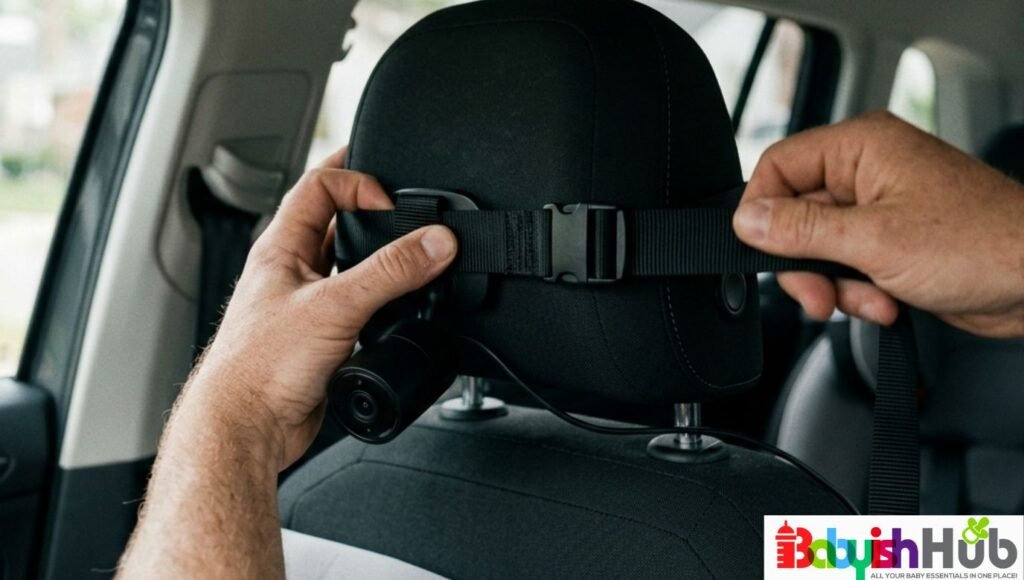
This is one of the questions that keeps coming up, so let’s discuss it… A wired baby car camera monitor runs a physical cable from the rear camera to your front display.
It’s not glamorous, but it’s the most reliable connection you can get: no dropped signal, no lag, no interference from your phone or other electronics in the car.
The only major downside is the cable itself, which needs to be tucked along the door seam or under trim so it doesn’t dangle across your baby’s seat.
A wireless baby car camera skips that cable entirely, transmitting video over its own signal instead. It’s cleaner to look at and faster to set up, especially if you swap the camera between two cars.
The trade-off is that wireless systems tend to cost more, and the cameras usually run on their own battery that needs regular charging rather than pulling continuous power from your car.
Overall, neither option is better than the other. If you’re installing this once and leaving it in the same car for years, wired options like the LUCKVIEW BM5PRO or Itomoro dual camera give you a rock-solid connection for less money.
If you split time between two vehicles, or the idea of a visible cable bothers you, a wireless pick like the BV6PRO or the CarPlay-based OTTOCAST is worth the extra cost.
What To Look For In A Baby Car Camera?
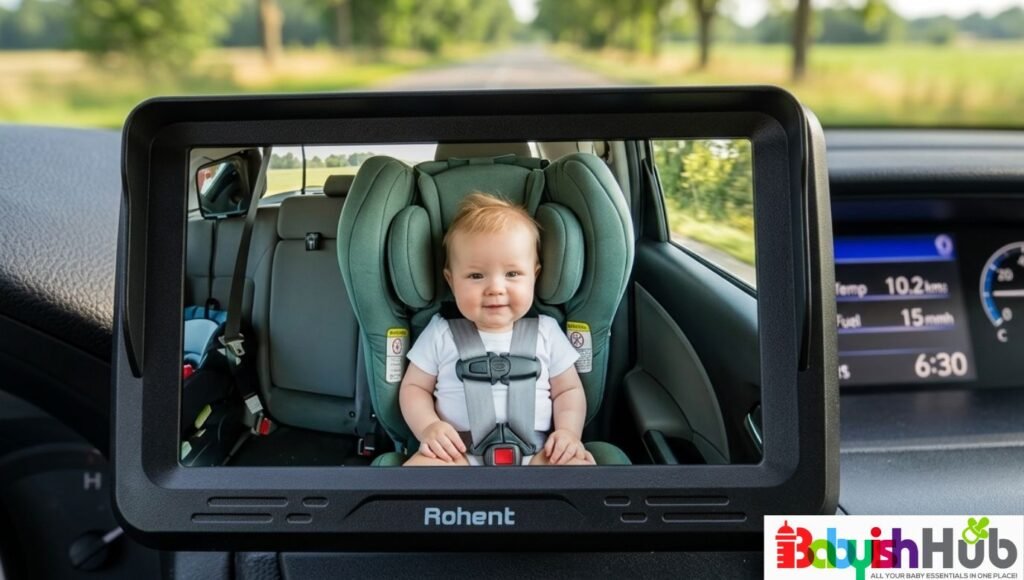
I’ve spent enough hours comparing baby monitors for cars to know that most buying guides list ten features when only about four of them change your day-to-day experience.
Here’s what I’d advise you to pay attention to:
- Screen Size and Placement: A 7-inch display is easier to read at a glance than a 4.3-inch one, but only if you have the dash space for it without blocking your windshield sightline. Measure your dash before you fall in love with the biggest screen on the list.
- Night Vision Type: Almost every camera in this price range claims to have night vision capabilities. The difference is whether it’s a basic low-light sensor (grainy, unreliable) or true infrared LEDs (clean, usable image regardless of ambient light). If you drive after dark regularly, this is worth paying extra for.
- One Camera vs Two: This sounds obvious, but people skip it constantly. If you have one child riding rear-facing, a single-camera system like the BV7 is all you need. And buying a dual-camera setup you don’t use is just wasted money and extra cable. If you’ve got two kids in the back, a split-screen dual camera earns its keep immediately.
- Mounting Stability: A camera that shifts every time you hit a pothole is worse than useless, because now you’re readjusting it at a red light instead of watching the road. Headrest straps tend to hold more securely over time than suction mounts, especially in hot climates where suction cups can lose their grip on warm glass.
- Cable Length (If you’re going wired): A short cable that barely reaches from a third-row seat to your dashboard is a real, common complaint. Anything under 15 feet is going to be tight in an SUV or minivan.
Best Baby Car Camera Monitor for Truck Drivers And Long Trips
A QUICK NOTE if you’re reading this and spend more time on the road than the average parent doing school runs…
If you’re a long-haul or rideshare driver with a baby along for extended stretches, there are a couple of things worth noting.
First, power reliability becomes more important than usual, since you can’t afford a monitor that dies from battery drain halfway through a shift.
Buying a wired option like the BM5PRO or Itomoro dual camera, both of which pull continuous power rather than relying on an internal battery, tends to hold up better than fully wireless systems on long days.
Screen brightness is also crucial, since you’ll pass through everything from bright open highway to deep shade to full dark on a single trip, so look for a display with manual or automatic brightness adjustment rather than a fixed setting.
Here’s a section that matches the tone and style of your existing article while adding useful SEO value.
RELATED: Best Affordable Baby Monitor for Every Budget (9 Picks)
Baby Car Mirror Vs Camera: Which Is Better?
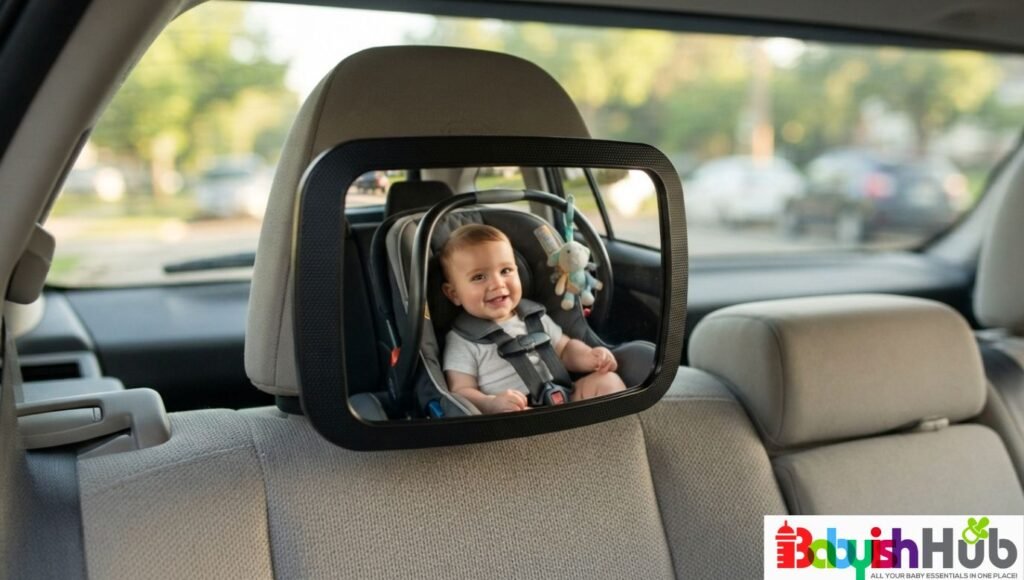
Here’s a quick comparison table to help you decide whether a car mirror or camera for baby is the right choice for you…
| Feature | Baby Car Mirror | Baby Car Camera |
| Visibility | Depends on mirror angle | Consistent live video |
| Night Driving | Poor to limited | Excellent with infrared night vision |
| Installation | Very easy | Slightly more involved |
| Power Required | No | Yes |
| Price | Lower | Higher |
| Best For | Occasional drivers | Frequent drivers and long trips |
| Overall Convenience | Good | Excellent |
For years, a baby car mirror was the go-to solution for checking on rear-facing babies. They’re affordable, simple to install, and don’t require power.
But as baby car cameras have become more common, many parents are finding they’re a much easier and safer way to keep an eye on their little one.
A baby mirror works by reflecting your baby’s image into your rearview mirror. While that sounds super-simple, it depends on having the perfect viewing angle, good daylight, and a clear line of sight.
At night, the reflection can become difficult to see, and bright sunlight can create glare that makes checking on your baby frustrating.
A baby car camera solves those problems by giving you a live video feed on a dedicated monitor or your vehicle’s infotainment screen. Many models include infrared night vision, so you can clearly see your baby even during evening drives or in poorly lit parking garages.
Instead of trying to line up multiple mirrors, you simply glance at the display for a quick check before returning your eyes to the road.
Another advantage the best baby car monitor has over a mirror is image quality. As babies grow, they tend to move around, drop pacifiers, or fall asleep in different positions.
A wide-angle camera makes it much easier to see their face and whether they’re comfortable, while a mirror can leave blind spots depending on the angle.
That said, baby car mirrors still have their place. They don’t require charging, batteries, or cables, and they’re generally less expensive than camera systems. If you only drive occasionally or want the simplest possible setup, a quality baby mirror can still do the job.
EVEN BETTER, a mirror enables your baby to see your face as well (and this can go a long way in calming them down!)
For parents who drive frequently, travel after dark, or simply want the clearest possible view without turning around, a baby car camera is usually the better investment.
The improved visibility, night vision, and convenience make it easier to check on your baby while keeping your attention where it belongs: On the road.
Best Baby Car Camera Frequently Asked Questions:
Here are quick answers to some of the most frequently asked questions about baby car monitors…
Is a baby car camera worth it?
Yes, a baby car camera is worth it, especially once your baby is rear-facing, which pediatric safety groups recommend keeping up as long as possible. A car camera removes the instinct to twist around while driving, which is a dangerous habit even at low speeds, and it gives you peace of mind as you don’t have to guess when your baby goes quiet or starts crying.
Are baby car cameras safe to use while driving?
Yes, baby car monitors are 100% safe to use when driving if you mount the screen somewhere you can glance at quickly without turning your head far from the road. Set the camera and screen angle before you start driving, not while you’re moving, and treat it the same way you’d treat a backup camera: useful for a quick check, not something to stare at.
What’s the difference between a baby car camera and a dash cam?
A dash cam records the road in front of you for documentation purposes, like accident evidence, and it isn’t built for a live, constant view. A baby car camera is built to show you a real-time feed of the back seat while you drive, and it’s usually not recording anything at all unless the specific model you bought includes that feature. Some parents run both at once since they serve completely different purposes.
Can I use a regular nursery baby monitor in my car instead?
You can, but it’s not ideal. Home baby monitors aren’t built to handle a moving vehicle’s vibration or the WiFi dead zones you get on the road, and battery life tends to be shorter than what a car-specific monitor offers. A dedicated car camera is a better investment if you’re going to use it regularly.
What is the best car seat camera for babies?
The best car seat camera for babies depends on your needs, but models with clear HD video, reliable night vision, a stable monitor connection, and an easy installation stand out. A camera that provides a wide viewing angle and stays securely mounted lets you check on your baby without constantly turning around while driving.
What car camera for babies can connect to my phone?
Some baby car cameras connect directly to your smartphone using Wi-Fi or Bluetooth, allowing you to view live footage through a dedicated app. These models can be convenient if you prefer using your phone instead of a separate monitor, though it’s important to use them only when the vehicle is safely parked.
How to choose the right car camera for a baby?
Choose a baby car camera by considering video quality, night vision performance, ease of installation, screen size, power source, and compatibility with your vehicle. Also look for a stable connection, adjustable camera angles, and durable mounting options that keep the camera securely positioned during every trip.
Where to put baby camera in car?
The best place to mount a baby car camera is on the rear headrest facing your child’s rear-facing car seat. Position it so your baby’s entire face and upper body remain visible without blocking the driver’s view or interfering with the proper installation of the car seat.
What is the best baby car camera with no cigarette lighter?
If you don’t want to use a cigarette lighter socket, choose a baby car camera powered by USB, a built-in rechargeable battery, or your vehicle’s USB port. These options reduce cable clutter and are especially useful in newer vehicles that have limited or no 12V outlets.
What is the best baby car camera for Tesla?
The best baby car camera for a Tesla is one that uses USB power, has a compact design, and installs without interfering with the vehicle’s clean interior. A model with reliable video quality, night vision, and an easy-to-position monitor works well while keeping your dashboard neat and uncluttered.
RELATED: 7 Best Travel Baby Monitor Picks for Hotels, Backpackers & On the Go Parents
Final Thoughts
Every camera on this list solves the same core problem in a slightly different way, and the right one for you really does come down to your specific situation. One kid or two. CarPlay or none. Wired reliability or wireless convenience. There’s no single best baby camera for car use across every family, just the one that fits how you drive.
Whichever model you land on, be sure to set it up before you need it. Test the angle, check the brightness in your specific car, and get comfortable glancing at it quickly before your baby is ever in the seat. That handful of minutes now is what makes your first real drive feel calm instead of chaotic.