Infant Optics DXR-8 Pro Review (My Honest Look After Using It Across Three Kids)
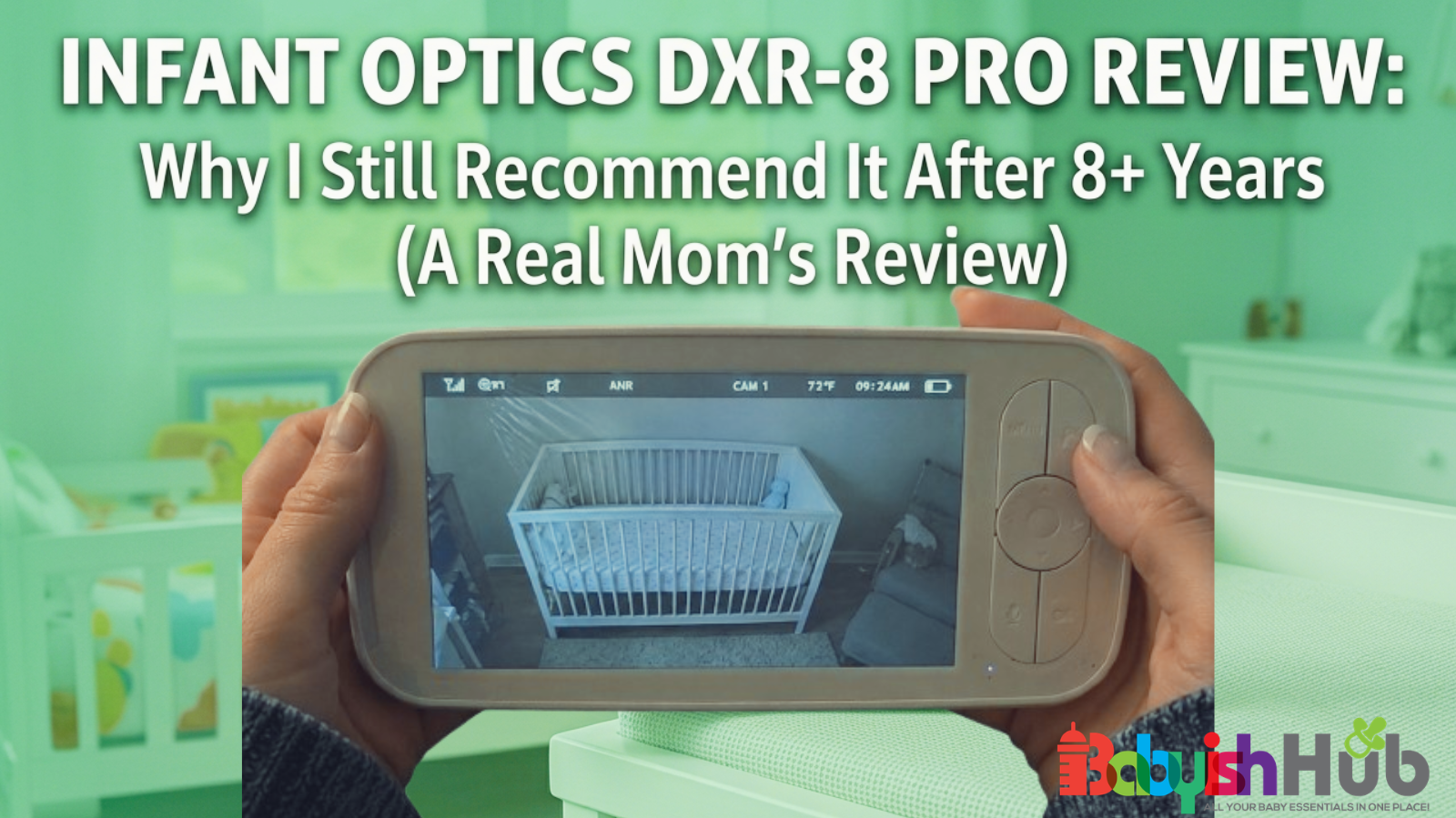
There are baby monitors that promise everything and deliver anxiety. And then there is the Infant Optics DXR-8 Pro, a monitor that does fewer things than half its competitors and somehow outperforms most of them where it counts.
I have used this monitor through three babies, across two homes, and through every stage from newborn nights to toddler nap transitions.
This Infant Optics DXR-8 Pro review covers everything you need to know about the monitor: the night vision, the connection reliability, the battery life, the honest tradeoffs, and who this monitor is ideal for.
In This Review:
What’s In The Box?
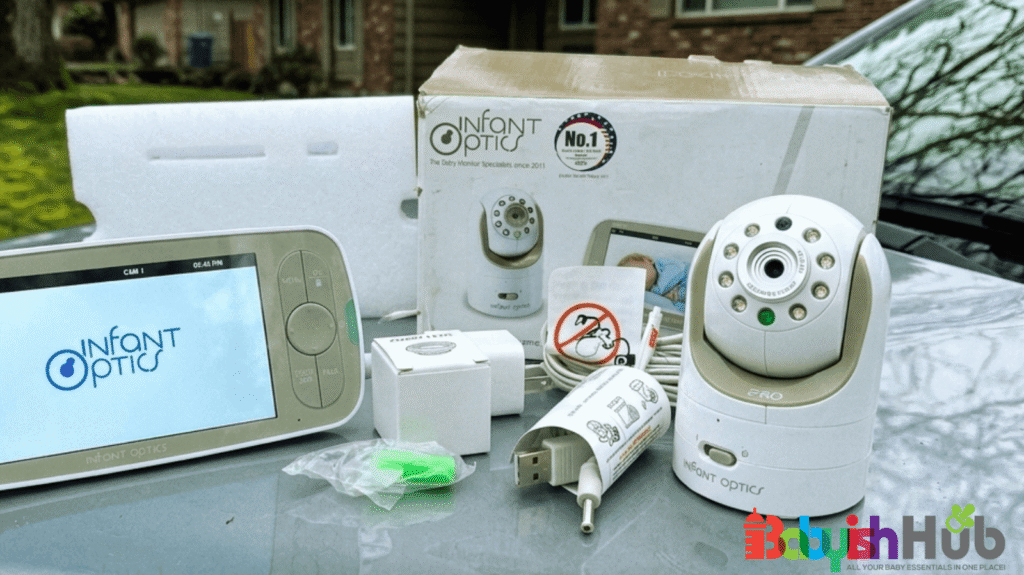
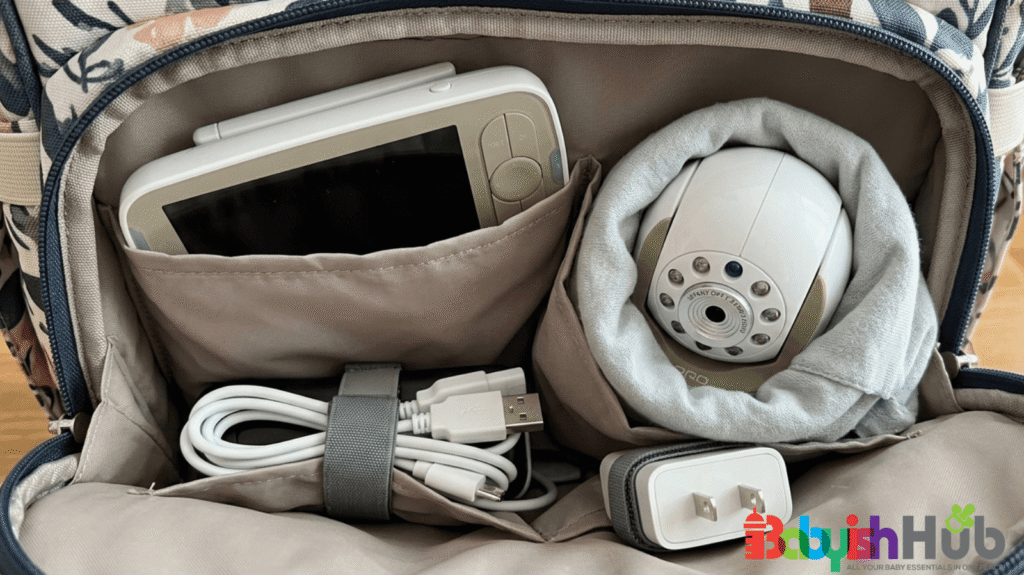
Before getting into performance, let’s first see exactly what arrives with the DXR-8 Pro so you get no surprises on setup day:
The box includes the following:
- Parent unit with the battery pre-installed
- One camera unit
- A zoom lens for far-away camera placements
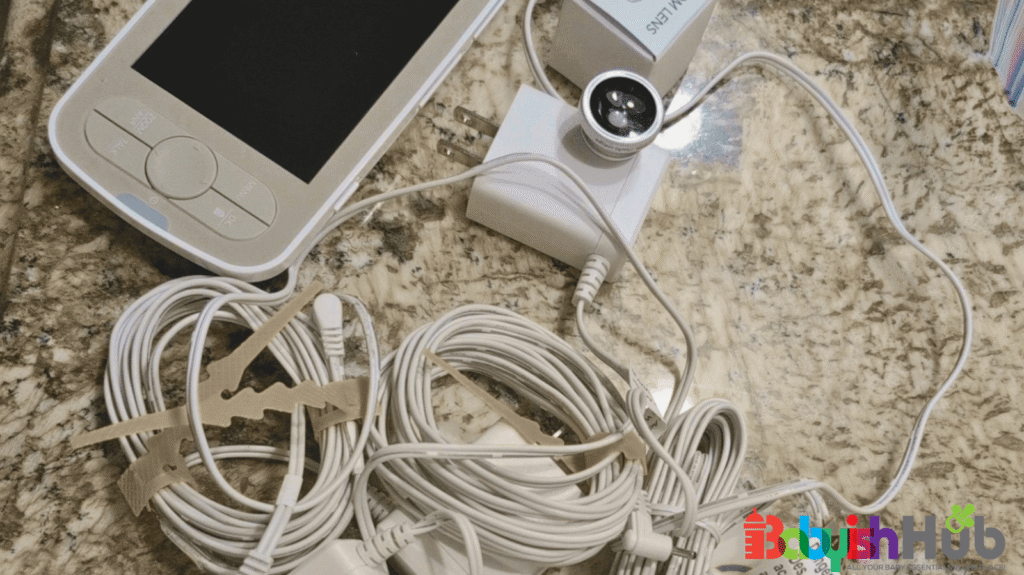
- A labeled power adapter for the parent unit
- A labeled power adapter for the camera
- An extra USB charging adapter for the parent unit
- Mounting screw with a wall anchor for the camera
Here are two details worth noting right away:
#1. The power adapters are labeled for a reason: one is calibrated for the parent unit and one for the camera, so make sure you use the correct one for each device. The extra USB charging adapter is a genuinely useful addition because it lets you charge the parent unit from any standard USB source, which matters when you take the monitor to a hotel, a grandparent’s house, or anywhere without easy access to the dedicated plug.
#2. The wide-angle lens is the one item not included in the standard box. If your camera needs to mount close to the crib and cover the full frame, that lens sells separately for around ten dollars and is worth picking up alongside the monitor.
Why So Many Parents Are Choosing Non-WiFi Monitors Right Now
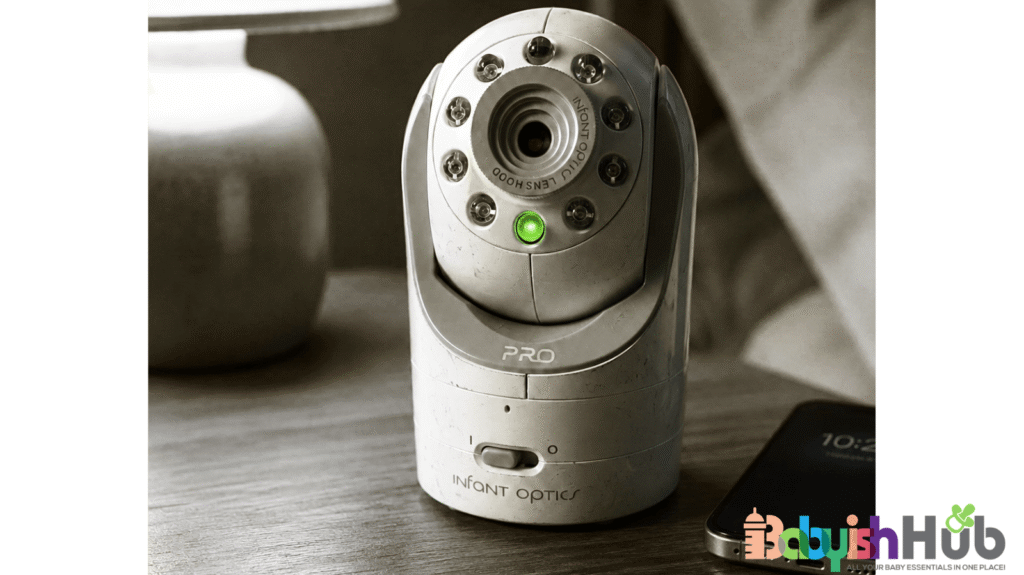
Before getting into the specifics of this monitor, it helps to understand why non-WiFi baby monitors have experienced such a strong resurgence among parents who previously would have defaulted to an app-based system.
The WiFi monitors are highly appealing on paper….You get to check on your baby from your phone, from anywhere, at any time. But parents who have lived with those systems long enough know the frustrations that come with them.
It’s not uncommon to come across forum posts of moms complaining of the following in relation to WiFi-based monitors:
- Feeds that freeze during the exact moment you need clarity
- Connection drops tied to router restarts
- Apps that require updates at midnight, and the persistent, low-level worry about who else might have access to a camera pointed at your sleeping child’s room.
- Security researchers have also repeatedly documented vulnerabilities in internet-connected baby cameras, and those findings have made their way into mainstream parenting conversations.
For a growing number of families, a monitor that operates entirely on a closed, private frequency without touching your home network or any cloud server has gone from being the budget option to being the best choice.
The Infant Optics DXR-8 Pro is built around exactly this philosophy. It uses a second-generation FHSS (Frequency Hopping Spread Spectrum) system, which means the signal hops continuously across frequencies in a closed loop between the camera and the parent unit.
As such, nothing leaves your home, and nothing connects to the internet. For this baby monitor, you need no account, cloud storage, and you’ve got no digital footprint to worry about.
This foundation is what shapes everything else about how this monitor performs.
What the Infant Optics DXR-8 Pro Improved Over the Original DXR-8
It is worth being honest about where the original DXR-8 stood before the Pro arrived. The original built a large and devoted following on Amazon, but parents who used it long-term documented these consistent complaints:
- Battery degradation that came earlier than expected
- Occasional signal interference from nearby WiFi routers
- A 3.5-inch screen that felt cramped for overnight use.
While the popularity of the original DXR-8 was crazy, it had its own set of limitations.
Luckily, the Pro model, which launched in November 2020, addressed the most meaningful of those weaknesses rather than simply adding features for a product refresh.
Here are the KEY improvements of PRO over the original model:
- The screen grew to a 5-inch TFT LCD panel, which makes a significant difference during overnight checks when your eyes are half-open.
- The resolution moved from VGA to 720p, delivering a noticeably sharper image.
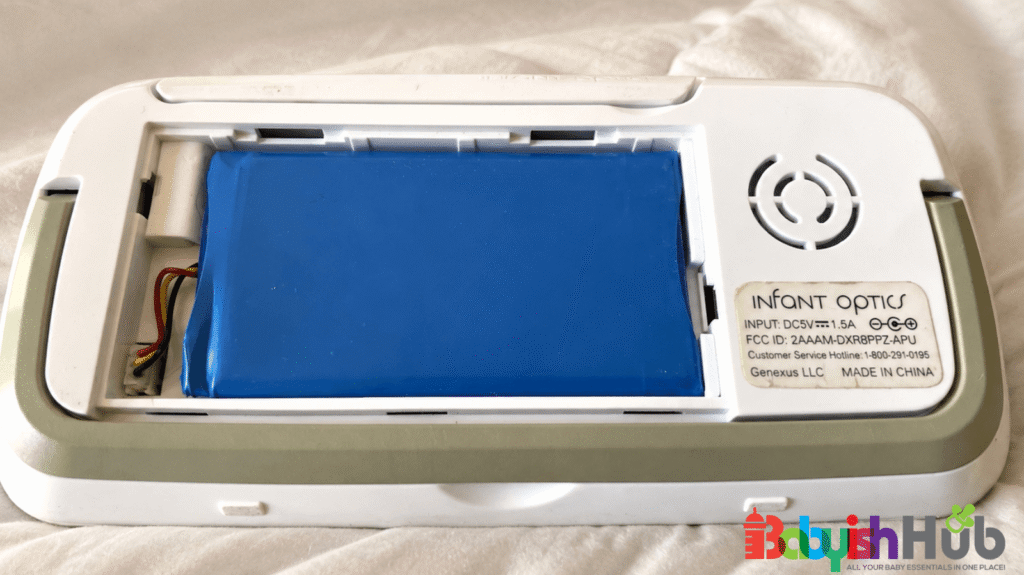
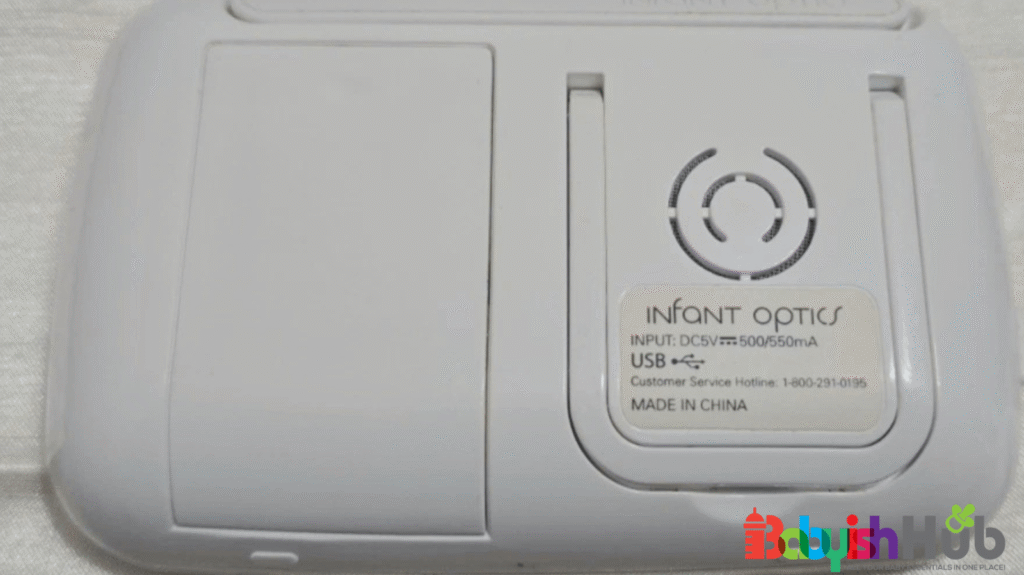
- The battery capacity increased to 2,800mAh and became user-replaceable through a door on the back of the parent unit rather than being sealed into the device.
- The FHSS connection was strengthened for improved range and stability through walls, and the night vision received a dedicated low-light sensor alongside the infrared LEDs.
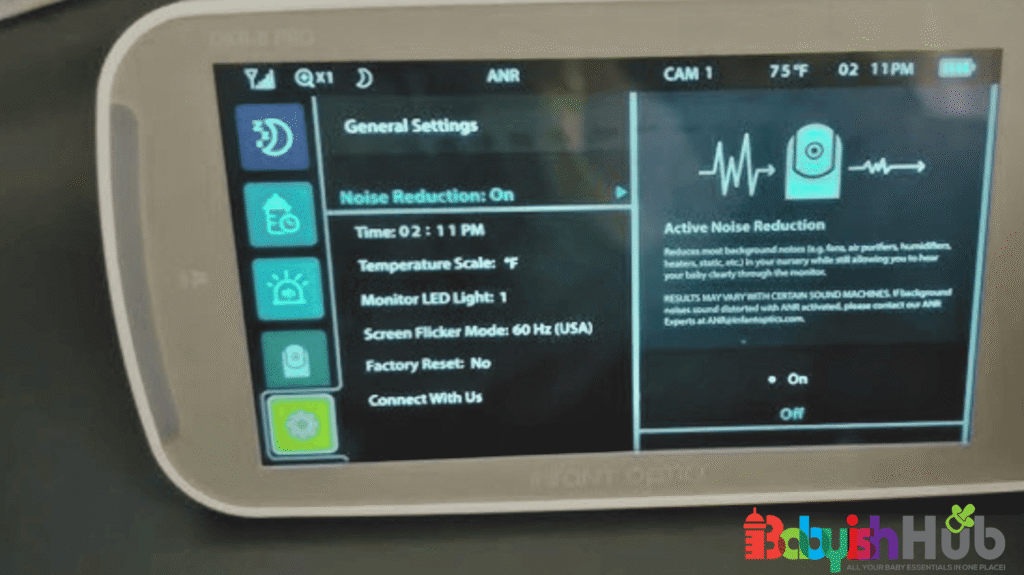
- The MOST significant addition was Active Noise Reduction. The original DXR-8 would pick up everything in the nursery: the white noise machine, the humidifier, the fan, the ambient hum of a quiet room. The Pro’s ANR system filters out that constant background noise so the parent unit transmits your baby’s sounds clearly without competing with the room’s static.
For parents who monitored overnight without this feature, the difference in listening fatigue over a long night is highly noticeable. You stop second-guessing whether that faint sound was your baby or just the monitor doing its job.
Infant Optics DXR-8 Pro Review: What It Actually Does Well
After using the Infant Optics DXR-8 PRO with all three of my babies, I feel like I’ve really seen the good, the frustrating, and everything in between with this monitor.
There were definitely moments when it drove me crazy, but overall, it’s been one of the few baby products I’ve continued to use through every stage of motherhood.
Below, I’m sharing my honest experience and the areas where this monitor truly worked well for our family.
Connection Reliability That Holds Through Your Home
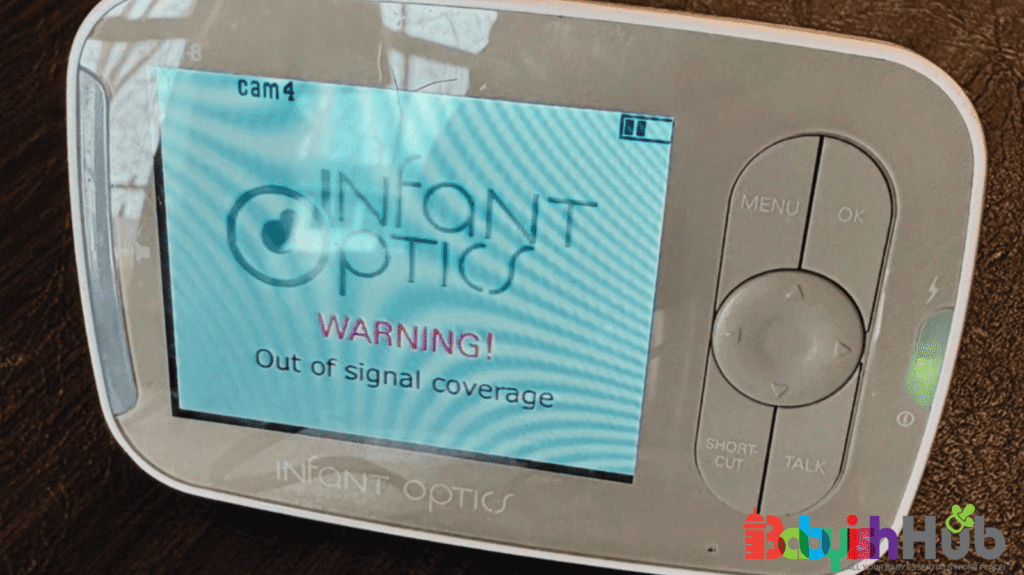
The DXR-8 Pro’s FHSS system delivers something that WiFi monitors genuinely cannot: a live, instantaneous video feed with no buffering delay. WiFi monitors introduce a small lag between what happens in the nursery and what appears on your screen, because the signal travels through your router and back.
This delay might go unnoticed on a normal night, but not during a moment when you need to see what your baby is doing right now.
The FHSS connection also means the monitor has no dependency on your home network. Your router can restart, your internet can go down, your WiFi can be saturated with streaming devices, and it has no effect on the monitor’s performance. The camera and parent unit communicate directly.
The advertised open-space range is 1,000 feet. However, you should expect considerably less in real homes with walls and floors between the camera and the parent unit. Independent testing has put reliable in-home coverage at roughly 190 feet through multiple walls in controlled conditions.
In practical terms, that covers most standard single-family homes comfortably, including multi-story layouts. Homes with older plaster walls, concrete construction, or significant interference from other 2.4GHz devices may see more reduction.
In my own home, which has thick plaster walls that reliably degrade WiFi signals, the DXR-8 Pro maintained a clean connection across floors and through the full length of the house across three children and multiple years of overnight use.
Night Vision That Performs When You Need It The Most
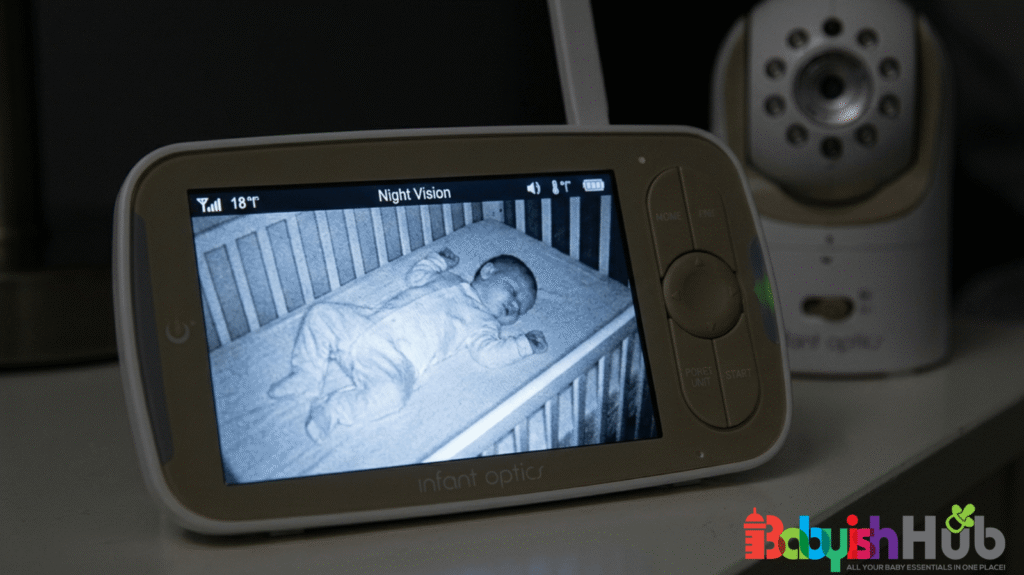
Night vision is the feature that only gets evaluated at the worst possible moment, which is why it matters more than daytime image quality for most parents. The DXR-8 Pro uses eight infrared LEDs combined with a dedicated low-light sensor that transitions automatically when the room dims below a set threshold.
The transition happens without any manual input and without any visible disruption to anyone in the room. The infrared lights themselves are completely invisible to the human eye, which means no red glow reaches the crib and no light source that could disturb a sensitive sleeper.
One detail that concerns parents when they first read about the camera is that there is a small green power indicator light on the front of the camera unit. The good news is that this light automatically switches off when the room goes dark. The nursery stays exactly as dark as you set it up to be, with no glow from the monitor hardware.
The resulting night image is monochrome, which is standard across all infrared night vision systems. What distinguishes the DXR-8 Pro is the evenness of illumination across the full frame. Many cheaper infrared systems produce a bright center with washed-out, dark edges.
The DXR-8 Pro maintains consistent lighting across the image, which matters when your baby has shifted to the edge of the crib, and you need to see them clearly without adjusting the camera angle.
At typical nursery distances of six to ten feet, the image provides enough clarity to confirm sleeping position, check whether a pacifier is still in place, and see whether your baby’s chest is moving. In rooms with a dim nightlight or light coming under a door, image quality improves noticeably. The low-light sensor performs particularly well in mixed low-light conditions compared to complete blackout.
The Parent Unit’s Sleep Mode and Lights-Out Feature
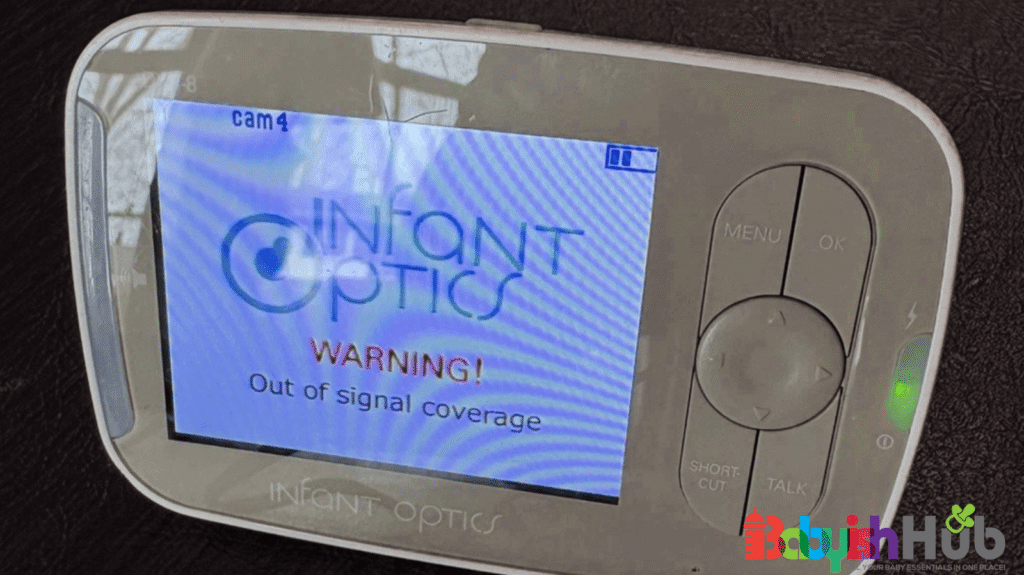
This small detail does not make it into most reviews, but it is quite useful for light-sensitive parents doing overnight monitoring.
The DXR-8 Pro parent unit allows you to independently dim and fully disable two separate indicator lights: the status light on the right side of the unit and the noise indicator light on the left. This means you can run the parent unit in full sleep mode with the screen off and no visible indicator lights at all.
For parents who are sensitive to light during sleep, or who share a bedroom with a partner who is, this level of control over the parent unit’s light output is not a small thing. It is the kind of feature you search for after one too many nights of a glowing indicator keeping you awake.
The Interchangeable Lens System

No competing baby monitor offers this. The DXR-8 Pro uses a modular lens mount that accepts a standard lens, a wide-angle lens, and a zoom lens as separate attachments. The standard lens covers a typical nursery crib at mid-range distance.
The included zoom lens provides up to 6x optical enhancement for situations where the camera needs to be mounted farther from the sleep area. The wide-angle lens, sold separately for around ten dollars, provides full-room coverage for close-mounted installations.
Swapping lenses requires going into the nursery to physically change the attachment, which is a minor inconvenience compared to the flexibility the system provides. This is the kind of solution that screams useful product design based on how nurseries vary.
The Pan, Tilt, and Zoom Range in Practice
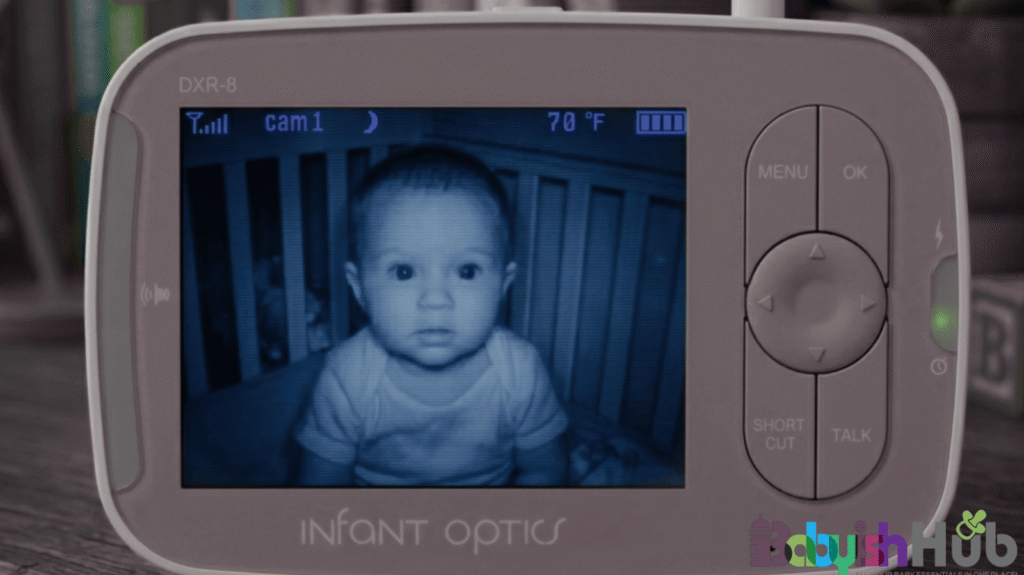
The camera offers remote-controlled pan and tilt from the parent unit, and the movement range is usefully wide. Vertical tilt covers approximately 95 degrees upward and 25 degrees downward. Horizontal pan covers approximately 135 degrees side to side.
Combined with the zoom lens capability, this means you can reframe the camera view to follow a baby who has moved in the crib without going into the nursery.
The remote pan movement is smooth, though parents who use the feature heavily over an extended period occasionally note some choppiness developing in the pan motion after sustained long-term use.
You Can Check on Your Baby Without Fully Waking Yourself Up
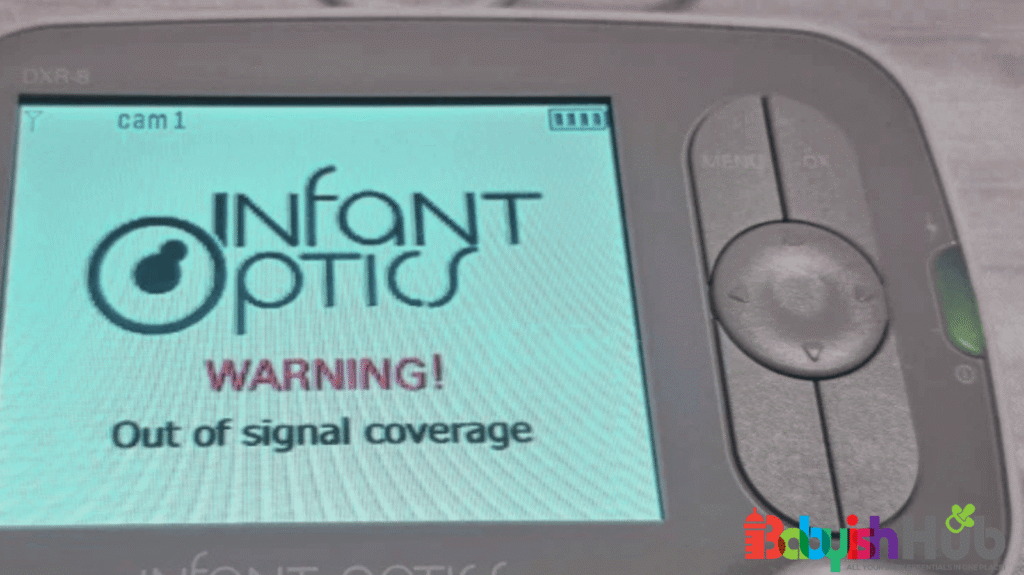
One thing I did not quite appreciate until I became a mom is how important simple controls are in the middle of the night.
Picture yourself at night, when your baby makes a noise, and you’re half asleep, the last thing you want is to unlock your phone, open an app, wait for the video to connect, and try to adjust settings while barely awake.
With the Infant Optics DXR-8 PRO, I could literally reach over, grab the parent unit, and press the buttons by feel without even turning on a light.
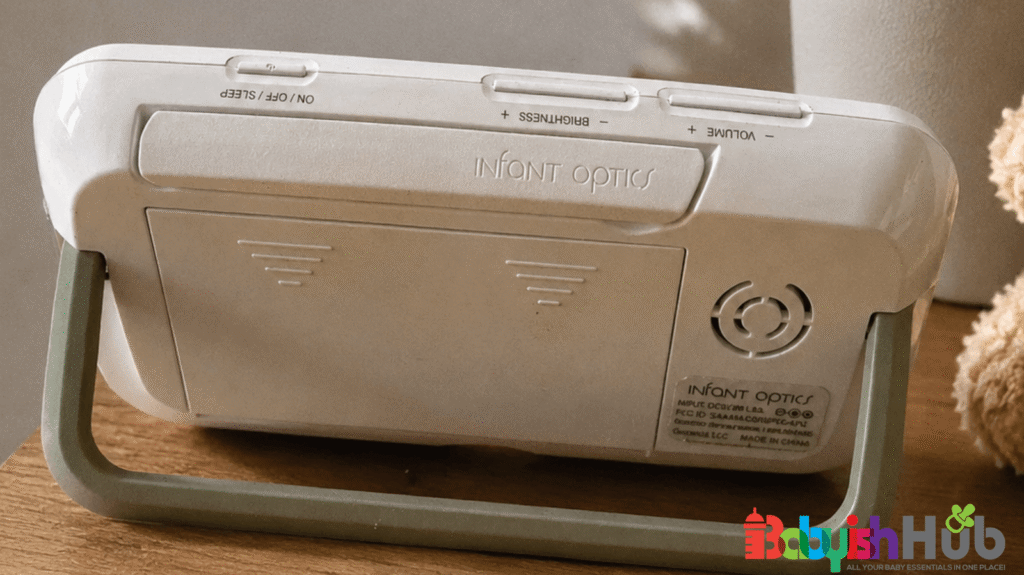
After a while, muscle memory kicks in, and you know exactly where the volume and brightness controls are. That may sound minor, but during those exhausting newborn months, it honestly made nighttime check-ins feel less stressful.
I also really liked how dim the screen could get at night. Some baby monitors feel like a flashlight in a dark bedroom, but this one can be adjusted low enough that it doesn’t wake you or your partner up completely. Then, during the daytime, the screen gets bright enough that you can still see everything clearly.
It’s one of those features that doesn’t seem exciting at first, but when you’re living through sleepless nights with a baby, it makes a bigger difference than you’d think.
Using the DXR-8 Pro for Travel
This is a use case most reviews overlook, and it is one where the DXR-8 Pro has a meaningful advantage over WiFi monitors that rarely get discussed.
WiFi monitors are inconvenient to use away from home. They need to connect to a network, which means dealing with hotel WiFi login pages, different network names at a grandparent’s house, or the frustration of a monitor that will not connect because it does not recognize the new network.
All this setup friction at the start of a trip, often with a tired baby and a stressed parent, is a real recurring problem.
The DXR-8 Pro requires no network at all. You plug in the camera, turn on the parent unit, and the two devices pair directly. The same setup that works at home works in a hotel room, in a vacation rental, or at any family member’s house, with no configuration changes required.
The extra USB charging adapter included in the box makes it easy to charge the parent unit from any available USB source rather than hunting for a specific outlet.
The camera does need to stay plugged in during use, so camera placement in a hotel room requires some thought, but the monitor’s zero-network-dependency makes travel use smoother than most app-based alternatives.
If you’re comparing travel-friendly monitors, I put together a full guide on the best baby monitors for travel and what makes them easier to use on the go.
A Few Tradeoffs You Should Know Before Buying
As much as I’ve relied on the Infant Optics DXR-8 PRO over the years, I also think it’s important to be honest about where it feels a little outdated compared to newer baby monitors…
No Remote Viewing Away From Home
This is the most significant limitation of the DXR-8 Pro and the one most likely to make it the wrong choice for certain families.
Because the system operates on a closed FHSS loop, the feed exists only between the camera and the parent unit within range of each other. There is no way to check on your baby from your phone while you are at work, traveling, or in another building.
For parents who need or want that capability, a WiFi monitor is the appropriate choice regardless of the other tradeoffs. The DXR-8 Pro excels at in-home and in-room monitoring, and that is the scope it is designed for.
720p Resolution in a 1080p Market
The DXR-8 Pro delivers a clear, usable image at 720p, but several competitors at similar or lower price points now offer 1080p resolution.
On a 5-inch screen, the difference is subtle in normal daylight conditions, but becomes more apparent when you use digital zoom or are checking fine detail at low light.
If maximum image sharpness is your priority and you are comparing closely at this price range, the resolution gap is worth acknowledging.
Battery Life in Extended Video Mode
The parent unit delivers approximately 10 hours of battery life in continuous video mode. For most overnight use with the parent unit plugged in beside the bed, this is not a practical limitation.
For parents who prefer to use the monitor completely unplugged through the night, 10 hours is adequate for a full night but shorter than several competitors at comparable prices.
Pairing the parent unit with an external portable battery pack extends runtime to approximately 24 hours, which handles travel and extended unplugged use.
No Built-In Sound Machine or Lullabies
The DXR-8 Pro focuses on monitoring, not nursery ambience. It does not include white noise options, lullabies, or a nightlight. For families who already use a dedicated white noise machine, this is not a gap. For parents who want an all-in-one nursery device, the DXR-8 Pro will require a companion product.
Split Screen Requires the SS Model
Viewing two camera feeds simultaneously requires the DXR-8 Pro SS (Split Screen) variant, which is sold separately at a higher price. The standard Pro cycles between cameras rather than displaying them side by side. For parents monitoring twins or needing simultaneous two-room coverage, the SS model is the appropriate version to purchase.
Who Is The Infant Optics DXR-8 Pro Right Fit For?
This monitor performs best for parents who prioritize connection reliability and audio clarity over app connectivity.
The DXR-8 Pro is a great choice for you if:
- If you spend most of your monitoring time in the same home as your baby
- If you have experienced frustrating WiFi dropouts with a previous monitor
- If you live in an older home with walls that weaken wireless signals
- If you travel regularly and want a monitor that sets up without network configuration
- If security concerns about internet-connected nursery cameras factor into your decision
It is also a strong choice for parents using the same monitor across multiple children. The replaceable battery means the parent unit does not become e-waste when the original battery degrades.
I have heard from readers who are on their third child with the same parent unit, having simply ordered a replacement battery rather than buying an entirely new system.
The monitor suits parents less well if they need remote access while away from home, want a complete nursery solution with sound machine features included, or prioritize maximum image resolution at this price point.
How The DXR-8 Pro Compares To Key Competitors
At its current price point, the DXR-8 Pro shares shelf space with several strong alternatives worth knowing about.
The Momcozy BM01 offers 1080p resolution at a lower price, which makes it competitive on image sharpness. It does not offer interchangeable lenses or the same FHSS connection stability, and it lacks the ANR audio system.
The HelloBaby HB6550 provides longer battery life in continuous video mode and comes in at a lower price. It lacks the lens system, the ANR, and the build quality of the Infant Optics unit. For parents whose primary concern is overnight battery life without plugging in, it is worth comparing directly.
The Nanit Pro is the primary smart monitor competitor at a higher price. It offers app-based remote viewing, sleep tracking, and breathing monitoring, which the DXR-8 Pro cannot match. For parents who want those features and are comfortable with cloud connectivity, the Nanit is a genuinely different product for genuinely different priorities.
For parents specifically prioritizing non-WiFi operation, the DXR-8 Pro remains one of the top-rated options in the category. The combination of FHSS reliability, interchangeable lenses, ANR audio, lights-out mode, and a replaceable battery is not matched by any single competitor at this price.
FAQs About The Infant Optics DXR-8 Pro:
Before buying the Infant Optics DXR-8 PRO, I had many of the same questions most parents have about range, battery life, travel use, and whether it’s still worth buying today.
Here are the answers based on my real experience using it with three kids:
Is the DXR-8 Pro compatible with original DXR-8 cameras?
No, the two systems are not cross-compatible. The DXR-8 Pro and the original DXR-8 use different hardware and pairing protocols, so original cameras cannot pair with a Pro parent unit. Parents upgrading from the original system need to purchase new Pro-compatible cameras. Budget for this cost before committing to the upgrade.
How many cameras can connect to one DXR-8 Pro parent unit?
The DXR-8 Pro parent unit supports up to four cameras simultaneously. You can cycle between cameras manually or set the monitor to auto-scan all paired feeds. Each additional camera is added through the parent unit’s pairing menu with no additional hardware required, making multi-room coverage straightforward to set up.
Does the Infant Optics DXR-8 Pro record video footage?
No. The DXR-8 Pro streams a live feed to the parent unit in real time but does not record or store footage anywhere, locally or in the cloud. For parents who want the ability to review overnight recordings, a recording baby monitor with SD card or cloud recording capability is a more appropriate choice. For parents who prefer no footage of their baby stored anywhere, this design is a deliberate feature.
Does the DXR-8 Pro work well in a home with thick or older walls?
The DXR-8 Pro performs notably well in homes with challenging wall construction. The advertised open-space range is 1,000 feet, and independent real-home testing has put reliable coverage at approximately 190 feet through multiple walls. Homes with older plaster or concrete may see range reduction, but in my own testing through thick 1920s plaster walls, the DXR-8 Pro maintained a reliable connection where competing monitors dropped signal entirely.
What is the difference between the standard DXR-8 Pro and the DXR-8 Pro SS?
The standard DXR-8 Pro cycles between camera feeds sequentially. The DXR-8 Pro SS (Split Screen) displays two feeds simultaneously on the same screen. The SS variant is sold separately at a higher price. For parents monitoring twins or requiring true simultaneous two-room visibility, the SS model is the version to buy rather than the standard Pro.
My Honest Verdict On The Infant Optics DXR-8 Pro
After using this monitor across three children and spending years evaluating nursery tech, the DXR-8 Pro earns its recommendation by doing a specific job exceptionally well rather than trying to do everything adequately.
The FHSS connection is the most reliable I have tested in the non-WiFi category. The ANR audio genuinely reduces listening fatigue during overnight monitoring. The interchangeable lens system solves a real problem for nurseries with unusual layouts.
The ability to fully disable all indicator lights on the parent unit is a detail that matters far more at 2 AM than it looks on a spec sheet. The replaceable battery extends the product’s useful life across years and multiple children. And the physical interface, simple as it is, works better in the dark than any app-based system I have used.
The tradeoffs are real and worth repeating. No remote viewing. No lullabies. 720p resolution in a market that has largely moved to 1080p. Split-screen only on the more expensive SS model. Whether those limitations matter depends entirely on how you plan to use the monitor.
For in-home overnight monitoring with privacy as a priority, this Infant Optics DXR-8 Pro review reaches the same conclusion across years of use: this is one of the most dependable monitors available, and its reliability under pressure is what parents need at the moments that matter most.
You do not need a monitor that does everything. You need one that works when it counts. This one does.