Can A Baby Sleep In A Swing? Safe Sleep Guide (2026)
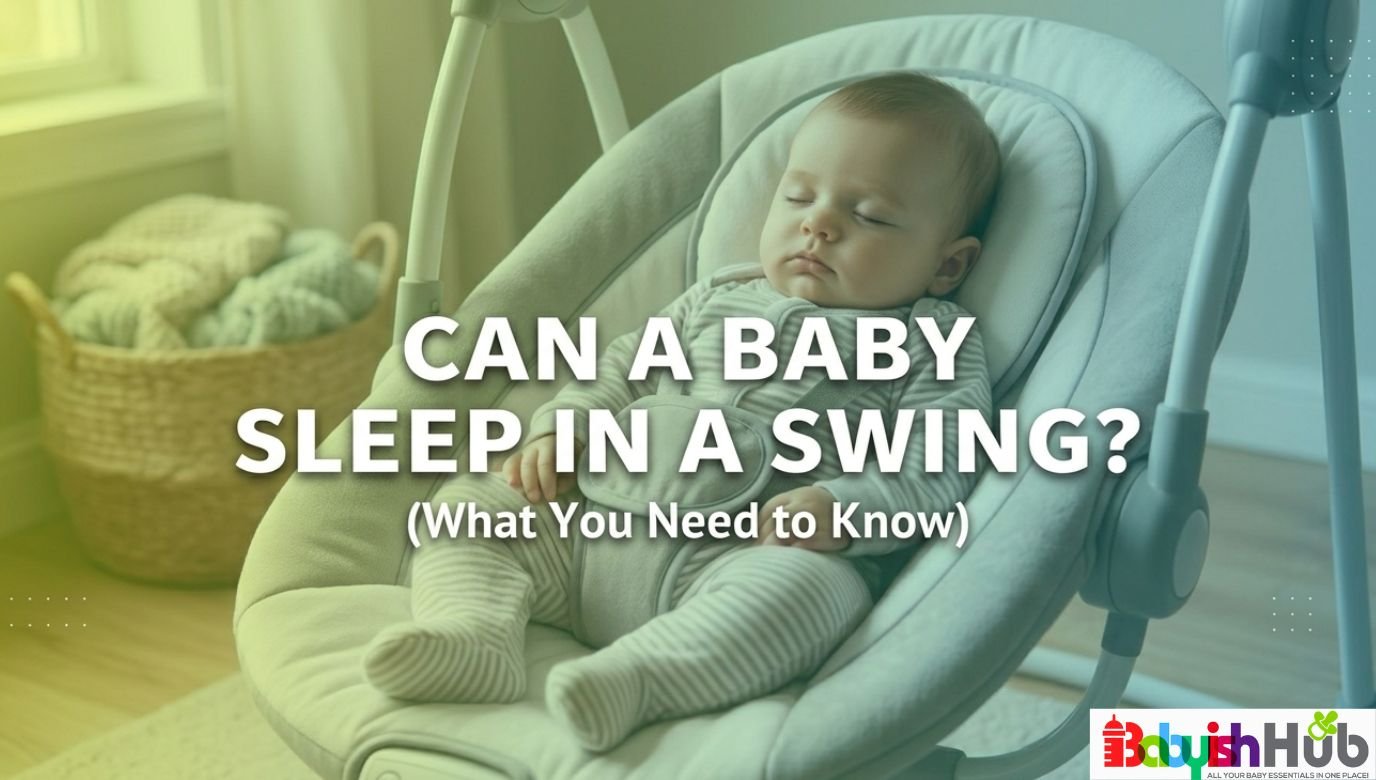
If you’ve ever watched your baby drift off within minutes of the swing starting, you’ve probably wondered, can a baby sleep in a swing? I asked myself the same question during those exhausting newborn weeks when the swing felt like the only thing that could calm my overtired baby.
As tempting as it is to let them keep sleeping, the safest answer is NO. Your baby should not sleep in a swing for naps or overnight sleep. Baby swings are designed for supervised, awake soothing time, not safe sleep. If your baby falls asleep in a swing, move them to a firm, flat sleep surface, such as a crib or bassinet, as soon as it’s safe to do so.
Here’s the part that’s easy to miss in the moment: just because a swing helps your baby fall asleep doesn’t mean it’s a safe place for them to stay asleep. This guide covers why swings aren’t built for sleep, what to do if your baby dozes off in one, and best alternatives for safe, restful sleep.
Key Takeaways:
- Baby swings aren’t safe sleep spaces for naps or overnight.
- If your baby falls asleep in a swing, transfer them to a crib or bassinet.
- Babies should always sleep on a firm, flat surface, regardless of how well they’re sleeping elsewhere.
- Swings work well for short stretches of supervised, awake, soothing time.
- Motion can calm a fussy baby, but it shouldn’t replace safe sleep practices.
Can A Baby Sleep In A Swing?
The short answer is no, not safely. There’s an important difference between a swing helping your baby calm down or doze off briefly while you’re right there and a swing serving as an actual sleep space for a full nap or overnight stretch.
Baby swings are built for supervised, awake use: soothing a fussy baby, providing entertainment, or offering a change of scenery while you’re within reach. They weren’t engineered to the same safety standards as cribs and bassinets are.
And this explains why the current American Academy of Pediatrics (AAP) safe sleep recommendations point parents toward a firm, flat surface for any planned sleep, not a swing’s reclined, cushioned seat.
Why Is It Unsafe for Babies To Sleep In A Swing?
Let’s break down the physical risks that make baby swings unsafe for infant sleep:
Inclined Sleeping Position
Most baby swings hold a semi-upright, reclined position rather than a flat one. That incline can allow a baby’s chin to tip toward their chest, which may partially narrow their airway, particularly before they’ve developed strong head and neck control.
Risk of Positional Asphyxia
When a baby’s head tips forward or to the side in a way they can’t correct on their own, breathing can become more difficult. This is sometimes called positional asphyxia, and it’s part of why safe baby sleep guidelines steer parents away from inclined or unsupported sleep positions, including swings, bouncers, and similar gear.
Head Falling Forward
Newborns, in particular, have limited neck strength and can’t reposition their head if it slumps forward during sleep. That vulnerability fades as babies grow, but it’s most pronounced in exactly the early months when swings tend to get the heaviest use.
Harnesses Are Not Designed for Sleep
A swing’s harness helps keep your baby secure during supervised, awake use, not to support them safely through an extended sleep stretch. It holds your baby’s body in place, but it doesn’t address the head and airway positioning concerns that come with unsupervised sleep in a reclined seat.
What Should You Do If Your Baby Falls Asleep In A Swing?
Here’s exactly what you should do if your baby dozes off in a swing, step by step:
- Let the swing stop, if possible, rather than continuing the motion once your baby has drifted off.
- Gently move your baby to a crib or bassinet as soon as you reasonably can.
- Place your baby on their back on the new sleep surface.
- Use a firm, flat mattress with a fitted sheet only, free of extra padding or bedding.
- Resume your normal bedtime or nap routine if they wake during the transfer, rather than returning them to the swing.
Why Do Babies Sleep So Well In Swings?
The gentle, rhythmic motion of a swing can be highly soothing for a lot of babies, and it’s easy to see why. That back-and-forth sway is, in a way, like the constant movement babies experience in the womb, which can help settle a fussy baby faster than stillness ever could.
Many swings also come with built-in white noise or nature sounds, which mask household noise the same way a sound machine does at home. Combine the motion, the sound, and the cozy, contained feeling of the seat, and it’s no surprise a swing can knock a baby out fast. None of that changes the safety picture, though. Soothing and safe sleep are two different things.
RELATED: How To Put A Baby To Sleep In 40 Seconds
Is It Ever Okay for A Baby To Nap In A Swing?
No, a baby should never nap in a swing, even under close parental supervision. The American Academy of Pediatrics states that any sleep on an inclined surface increases the risk of airway obstruction. (Source). This means you MUST transfer your sleeping infant to a flat crib or bassinet immediately.
I recall how I would sit on my living room rug during my oldest’s first month, watching her eyelids droop while the swing hummed at level two. I thought my presence made the nap safe. But the truth I came to learn later is that eyes-on supervision cannot alter physics.
An infant’s heavy head can drop forward silently, compressing the windpipe without making a sound or showing outward distress. While a swing works beautifully to calm a crying baby before dinner, you must treat it strictly as an awake activity station.
Always move your sleeping baby to a flat surface to guarantee open airways throughout their nap.
How Long Can A Baby Stay In A Swing?
For supervised, awake time, shorter stretches are better than long ones. Many pediatric guidelines suggest limiting time in any container-style seat, including swings, bouncers, and similar gear, to relatively short periods and changing your baby’s position regularly throughout the day.
Extended time in a swing, even while awake, can limit the kind of movement and floor time that supports your baby’s physical development. Rotating between supervised swing time, tummy time, and other positions throughout the day serves your baby better than relying on one seat for long stretches.
How To Transition A Baby Who Only Sleeps In A Swing
If your baby will only sleep while in motion, moving them to a stationary crib can feel daunting. But you can make the switch safely and smoothly with these few gentle steps:
Recreate the Soothing Routine
Identify what’s calming your baby, whether it’s motion, sound, or both, and bring pieces of that into their crib or bassinet routine, such as gentle rocking before you lay them down.
Use White Noise
A separate white noise machine can replicate the swing’s sound without needing the motion itself, giving your baby a familiar audio cue in their crib.
Swaddle or Sleep Sack (Age Appropriate)
A swaddle for younger babies, or a sleep sack once swaddling is no longer appropriate, can offer some of the cozy, contained feeling a swing provides.
Put Baby Down Drowsy but Awake
Laying your baby down while drowsy but not fully asleep helps them learn to settle in the crib itself, rather than only associating sleep with the swing’s motion.
Be Patient and Consistent
I’ll be honest with you: the swing-to-crib transition rarely happens overnight. You should expect some pushback for the first several days, and stick with the new routine consistently rather than going back to the swing on the harder nights.
What Are Safe Alternatives To A Baby Swing for Baby Sleep?
If a baby swing isn’t a safe place for sleep, what should your baby sleep in instead? Here are the safer alternatives:
- Crib: A crib with a firm, flat mattress and a fitted sheet is appropriate for both naps and overnight sleep from birth through toddlerhood.
- Bassinet: A bassinet offers the same firm, flat sleep surface as a crib in a smaller, more portable size, well suited to the first several months, particularly for room-sharing.
- Play Yard With a Firm Mattress: A play yard with its own firm mattress works well for naps or overnight sleep, especially while traveling or when a full crib isn’t practical.
- Contact Naps (When You Are Awake): Holding your baby for a nap while you’re awake and alert is a safe option in the moment, as long as you stay awake and attentive rather than allowing yourself to fall asleep along with them.
Quick Comparison Table of Common Baby Sleep Locations
| Sleep Space | Safe for Overnight Sleep? | Safe for Naps? | Supervision Needed? |
| Crib | Yes | Yes | No |
| Bassinet | Yes | Yes | No |
| Play Yard (firm mattress) | Yes | Yes | No |
| Baby Swing | No | No | Yes, awake use only |
| Baby Bouncer | No | No | Yes, awake use only |
| Car Seat (outside travel) | No | No | Yes |
MYTH Vs. FACT:
Myth: It’s safe for my baby to sleep in a swing if I’m watching them.
Fact: Supervision lowers some risk, but it doesn’t eliminate the concerns tied to a swing’s reclined position and lack of a firm, flat surface.
Sleep Mistakes To Avoid With Baby Swings
Many parents use swings with the best intentions, but some common habits can create unsafe sleep situations or make healthy sleep routines harder to establish. These include
- Letting your baby finish out a full nap in the swing once they’ve fallen asleep
- Assuming supervision alone makes swing sleep safe
- Using a swing as an overnight sleep space
- Relying on car seats or bouncers for routine sleep outside of travel
- Depending on the motion for every single nap, which makes transitioning to a crib harder later
Can A Baby Sleep In A Swing? Frequently Asked Questions:
Let’s take a closer look at some of the most common questions parents ask about baby swings and sleep.
Can a newborn sleep in a swing?
No. Newborns have the least head and neck control of any age, which makes a swing’s reclined seat especially unsuitable for sleep. A flat bassinet or crib is the appropriate space for newborn sleep.
Is it okay if my baby accidentally falls asleep in the swing?
It happens to most parents at some point and isn’t a cause for alarm. Simply transfer your baby to a crib or bassinet as soon as it’s safe to do so, rather than letting the nap continue in the swing.
Why does my baby only sleep in the swing?
Motion and sound are naturally soothing, and swings combine both. Babies can develop a strong association between the swing and sleep, which is worth gradually shifting toward the crib with a consistent routine.
Can babies sleep in an electric swing?
No. The type of swing, electric or manual, doesn’t change the underlying safety concern. The reclined position and lack of a firm, flat surface apply regardless of how the swing operates.
Are supervised swing naps safe?
Supervision reduces some risk but doesn’t eliminate the concerns tied to the swing’s design. A firm, flat surface remains the safer choice for both supervised and unsupervised sleep.
How do I move my sleeping baby from the swing without waking them?
Support their head and neck fully during the transfer, move slowly, and keep their body close to yours as you lower them into the crib. Some babies stir regardless, and that’s normal.
Is a swing safer than a car seat for sleep?
Neither is considered safe for routine sleep. Both hold a baby in a reclined position that isn’t appropriate for unsupervised sleep, so a crib or bassinet remains the safer choice in either case.
At what age should babies stop using a swing?
Most swings have their own weight and age limits set by the manufacturer, but regardless of that limit, a swing should only ever be used for supervised, awake time, not sleep, at any age.
RELATED: Why Won’t My Baby Sleep In Bassinet? Causes and Fixes:
Final Thoughts
Now you have the answer to your question: Can a baby sleep in a swing? A baby swing can be such a lifesaver for calming and entertaining your little one during supervised, awake stretches, but it isn’t built for safe sleep. If your baby dozes off mid-swing, gently move them to a firm, flat surface as soon as you can. Building your baby’s sleep habits around a crib or bassinet keeps them safe while still leaving plenty of room for the swing to do what it does best during the day.