When Can Baby Sleep With Lovey? Safe Age Guide
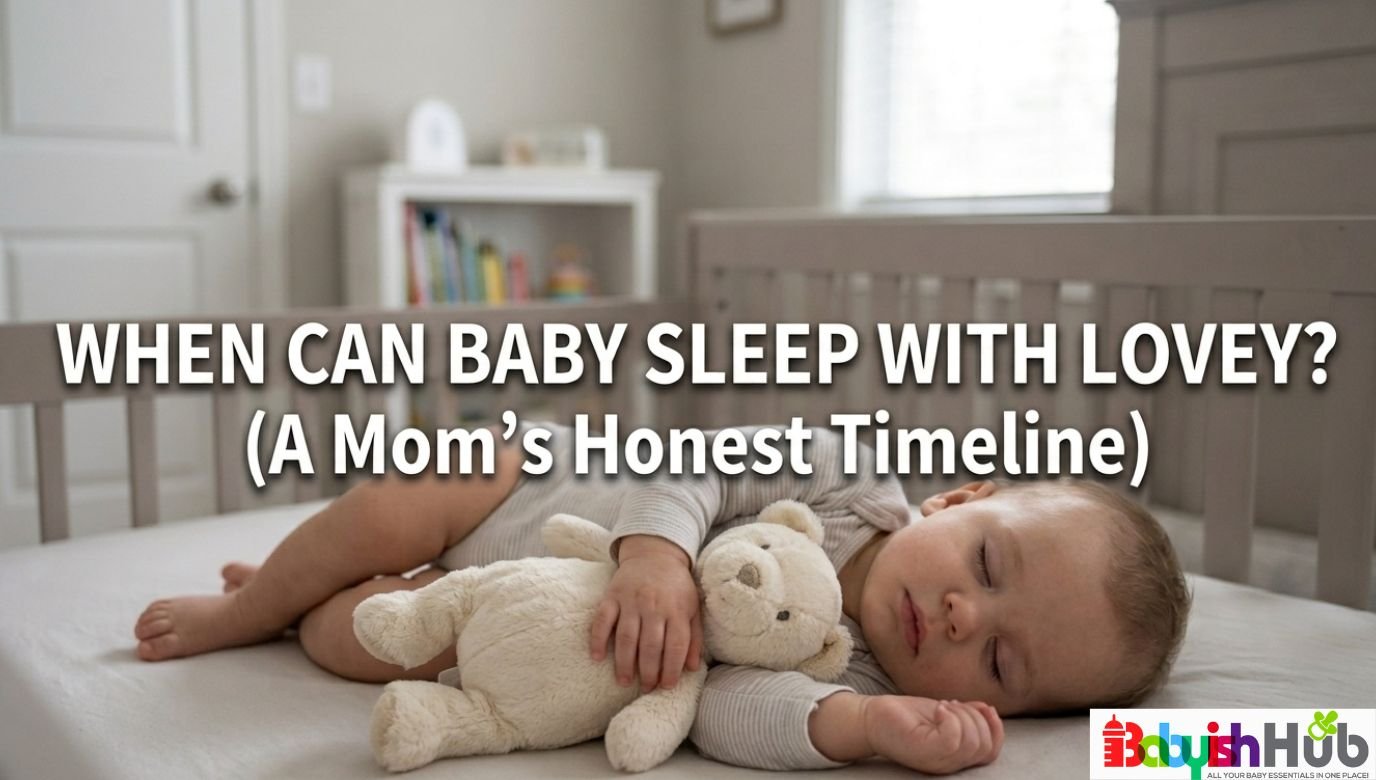
The tiny elephant lovey my daughter’s grandmother gave her became the center of many late-night decisions I never expected to make as a new mom. I always kept wondering if it was safe to just leave it in there so she’d stop crying every time it slipped out of reach.
At the time, I had no idea there was a bigger safety question behind that tiny stuffed animal.
Three kids later, I’ve read the guidelines, talked to two different pediatricians about it, and tested more sleep loveys than I care to admit. If you’re asking when can baby sleep with lovey, you’re not overthinking it. You’re doing exactly what a careful parent should do before adding anything soft to a crib.
Here’s The Short Answer: Most experts recommend waiting until around 12 months before allowing your baby to sleep with a lovey in the crib. Until then, keep the crib free of loose soft objects and use the lovey only during supervised awake time.
Below, I’ll break down everything you need to know about your baby safely sleeping with a lovey, plus a few tips to keep in mind.
What Is A Lovey For A Baby?
A lovey is a small comfort object that babies and toddlers become attached to for comfort, especially during naps, bedtime routines, or stressful moments. It may be a small blanket, fabric square, or soft toy designed for little hands to hold.
Also called a security blanket or comfort object, a lovey can help some babies feel calm and familiar as they grow. However, not every baby needs or bonds with one. The most important thing is introducing it at the right age and keeping your baby’s sleep space safe.
When Can Baby Sleep With Lovey Safely?
Most experts consider 12 months a safe age to introduce a lovey into the crib, based on AAP safe sleep guidance that recommends keeping soft objects out of an infant’s sleep space during the first year. (Source).
Before 12 months, I advise you to keep your baby crib completely bare aside from a fitted sheet, and let your baby bond with the lovey during awake, supervised moments instead.
The AAP doesn’t single out loveys by name, but the guidance is clear on the category: no pillows, blankets, bumpers, stuffed animals, or other soft, loose items in the sleep space until a baby turns one.
The reasoning is straightforward once you understand infant motor skills. A newborn or young infant can’t reliably turn her head or push an object away from her face if it ends up over her nose and mouth. That changes gradually over the first year as neck strength, rolling, and self-rescue reflexes develop.
With my first, I didn’t fully grasp this until our pediatrician walked me through it at the four-month checkup, right after I’d asked about the exact stuffed bunny sitting in a gift bag on our nursery shelf.
She told me to keep it there, out of the crib, until closer to the first birthday, and to let my daughter hold it during tummy time or in my arms instead. This one conversation changed how I set up every crib after that, including for my twins.
The main challenge here is that waiting can feel hard when your baby is fussy and a lovey seems like the obvious fix (but in reality, it isn’t a fix worth rushing).
Signs Your Baby May Be Ready To Sleep With A Lovey
Age is the biggest factor when deciding when to introduce a lovey for sleep, but your baby’s development matters too. Before adding any comfort object to the crib, look for signs that your baby has stronger mobility and can reposition their body independently.
SIGNS your baby may be ready include:
- Your baby is at least 12 months old.
- Your baby can roll in both directions.
- Your baby can move around the crib independently.
- Your baby can push up, turn their head, and change positions easily.
Every baby develops at their own pace. If your baby was born prematurely or has developmental delays, talk with your pediatrician about whether waiting longer is the safer choice.
How Do You Introduce A Lovey Safely Once Your Baby Is Ready?
To introduce a lovey to your little one, start by offering it first during supervised awake time, like tummy time or feeding, for several weeks before it ever enters the crib. Then, add it to overnight sleep only after your baby shows both the rolling and head control that pediatricians look for. This gradual approach builds familiarity without adding early risk.
Start by letting your baby hold, mouth, and explore the lovey while you’re in the room. This builds the comfort association pediatric sleep experts describe where a specific texture or scent becomes linked with calm, without that object being anywhere near her face during unsupervised hours.
Once your baby hits the readiness signs, add the lovey to naps first, in a room where you can check in easily, before trusting it for a full overnight stretch.
This staged method caught an issue for us the second time around, when our son kept batting his lovey completely across the crib during his first few naps with it, which told us he wasn’t quite ready to keep it near him overnight yet, even though he’d technically hit the calendar mark.
However, this method takes more patience than just placing the lovey in the crib on the exact day your baby turns one. It’s worth the extra few weeks for the added peace of mind it gives you.
Which Lovey Should You Choose?
Look for a simple, lightweight lovey with minimal stuffing and no loose parts, ribbons, or attachments. Flat designs are often preferred because they are less bulky than larger plush toys. Beyond safety, comfort and durability matter for long term use.
Some popular lovey brands like Jellycat, Angel Dear, and Little Unicorn make flat-style loveys with minimal stuffing, which many parents prefer over full plush animals since a flat design has less surface area to cover a baby’s nose and mouth.
I’ve tested loveys from all three of those brands across my kids, and the honest field test note is that the flat, minimal-stuffing styles hold up far better in the wash after six months of nightly use than the fuller plush versions, which tend to get lumpy and lose shape.
This single detail counts for more than it sounds, since a lovey washed weekly needs to survive dozens of cycles without falling apart in your baby’s hands.
Unfortunately, flat loveys sometimes feel less huggable to a toddler who wants something substantial to squeeze, especially past 18 months of age.
If that becomes an issue, you can simply add a second, larger stuffed animal for daytime play while keeping the flat lovey as the designated nighttime object.
The Key Takeaway: Prioritize the smallest, flattest design that still gets your baby excited to hold it.
What If Your Baby Isn’t Interested In A Lovey?
Some babies simply don’t bond with a lovey, and that’s a completely normal and not a sign you introduced it wrong or too late. Pediatricians don’t consider a lovey attachment necessary for healthy sleep development, so there’s no need to force one.
Attachment to a transitional object is influenced by individual temperament as much as anything a parent does.
My oldest carried her elephant lovey everywhere until she was four, while my youngest barely glanced at his and instead bonded with a pillowcase texture we hadn’t chosen for that purpose at all.
If your baby ignores the lovey at first, try rotating it out for a few weeks and reintroducing it later, or try a different texture or size altogether. Sometimes the issue isn’t timing at all. It’s simply that particular object.
When Can Baby Sleep With A Lovet FAQs:
Now let’s answer the most common questions parents have about introducing a lovey into their baby’s sleep routine…
Can a 4 month old sleep with lovey?
No. At 4 months old, your baby is still too young to safely sleep with a lovey in the crib. At this age, babies are still at higher risk of suffocation and SIDS from loose soft objects in their sleep space. You can offer a lovey during supervised awake time or cuddles, but keep it out of the crib until your baby is older.
Can I give my 8 month old a lovey to sleep with?
No, it’s best not to let an 8-month-old sleep with a lovey in the crib. Babies under 12 months should have a clear sleep space without soft objects due to the risk of suffocation and other sleep-related hazards. You can introduce a lovey during supervised play or cuddles, then consider adding it to sleep time after your baby’s first birthday.
Can I let my 10 month old sleep with a lovey?
No, it’s best to wait before letting a 10-month-old sleep with a lovey in the crib. Babies under 12 months should sleep in a clear crib without soft objects because of the risk of suffocation and other sleep-related hazards. You can use the lovey for supervised cuddles and comfort, then introduce it for sleep after your baby turns 1.
Will a lovey help a baby sleep?
A lovey may help some babies feel comforted and settle more easily, especially as they get older and form attachments to familiar objects. However, it is not a guaranteed sleep solution, and it should not be used in the crib before the recommended age. For younger babies, focus on safe sleep routines and consistent bedtime habits instead.
Can a lovey help with sleep regressions?
A familiar lovey can offer comfort during a sleep regression once your baby is old enough to have it in the crib, though it won’t resolve the underlying developmental changes driving the regression. Consistency in your bedtime routine tends to help more than any single object.
When can baby sleep with lovey blanket instead of a stuffed lovey?
The same 12-month rule applies to lovey blankets as it does to stuffed loveys, since any loose fabric in the crib carries the same suffocation risk before that age. Choose a small, thin blanket piece over a full-size one once your baby reaches that milestone.
What age can baby sleep with lovey if born premature?
Pediatricians typically recommend using your baby’s adjusted age, based on her original due date rather than her birth date, when deciding on lovey readiness. This often pushes the safe window a few weeks to a couple of months later than the standard 12 month mark.
Should the lovey smell like me or stay unwashed for comfort?
Many parents keep a lovey unwashed briefly so it carries a caregiver’s scent, which some pediatric sleep consultants say can support the comfort association during the introduction phase. Once your baby sleeps with it regularly, wash it on a normal schedule for hygiene.
Is one lovey enough, or should I have backups?
Most parents keep at least one identical backup lovey in case the original gets lost or needs washing, since a sudden swap to an unfamiliar object can unsettle an attached toddler. Introduce the backup early and rotate both so neither one feels unfamiliar later.
Final Word
Here’s my simple advice for parents wondering when can baby sleep with lovey: Don’t rush it. I know how tempting it can be to introduce anything that helps your baby feel calm and secure, especially during those tough bedtime moments.
A lovey can become a sweet source of comfort, but your baby’s crib should stay simple and safe for now. Until your little one is at least 12 months old, save the lovey for supervised cuddles and playtime. Once your baby reaches that milestone, you can feel more confident introducing that special bedtime companion.