How To Prepare For Your Baby’s First Road Trip (Tips From A Mom Who Has Done It Countless Times)
Our first road trip with a baby was supposed to be four hours. It took seven. We stopped three times, had a blowout in a gas station parking lot that required an outfit change for both the baby and me, and arrived at our destination well after dark with a completely overstimulated infant who had no interest in sleeping in an unfamiliar place. We also had a genuinely lovely time. Both of those things were true.
This is what I know now that I wish I had known then: to prepare for a baby’s first road trip is less about eliminating chaos and more about being set up to handle it without losing your mind. The stops, the feeding breaks, the schedule disruptions: those are all going to happen. And the question is: are you prepared enough to take them in stride rather than feeling like the trip is falling apart?
Here is how to prepare for road tripping baby’s first road trip from someone who has worked out the hard lessons so you do not have to learn all of them the same way I did.
Start With Realistic Expectations About Timing
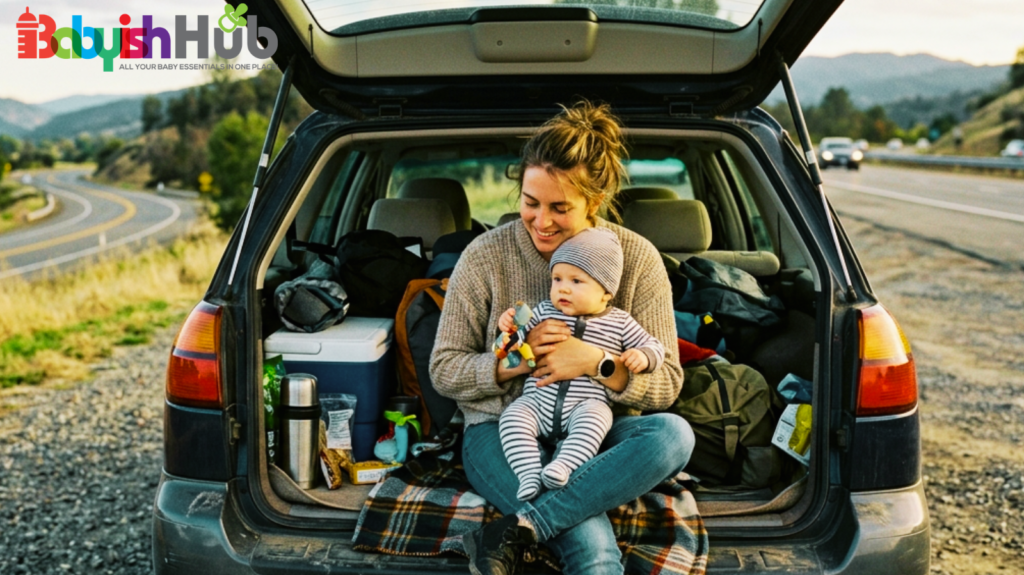
The first thing to let go of is the idea that your pre-baby road trip timing still applies. Whatever your usual drive time is, I’d suggest you add a significant buffer. How much? That depends on your baby’s age, temperament, and feeding schedule… but a reasonable mental model is to expect the trip to take noticeably longer than your GPS says it will.
Young babies need to feed frequently, and feeding in a moving car is not safe. That means stopping. Babies also reach a limit of how long they can tolerate being in a car seat before they need to come out, stretch, and decompress from the vibration and motion. Building in planned stops every two to three hours is realistic planning. (Source). And it tends to produce a better experience for everyone because you are stopping before the baby reaches a breaking point rather than in response to one.
You might convince yourself that you will just push through and stop as little as possible. But get it from me: that almost always backfires!
A baby who has been in a car seat past their tolerance point is not going to settle back down just because you are close to the destination. Factor in those stops from the beginning, and they stop feeling like setbacks.
Choose The Right Time To Drive
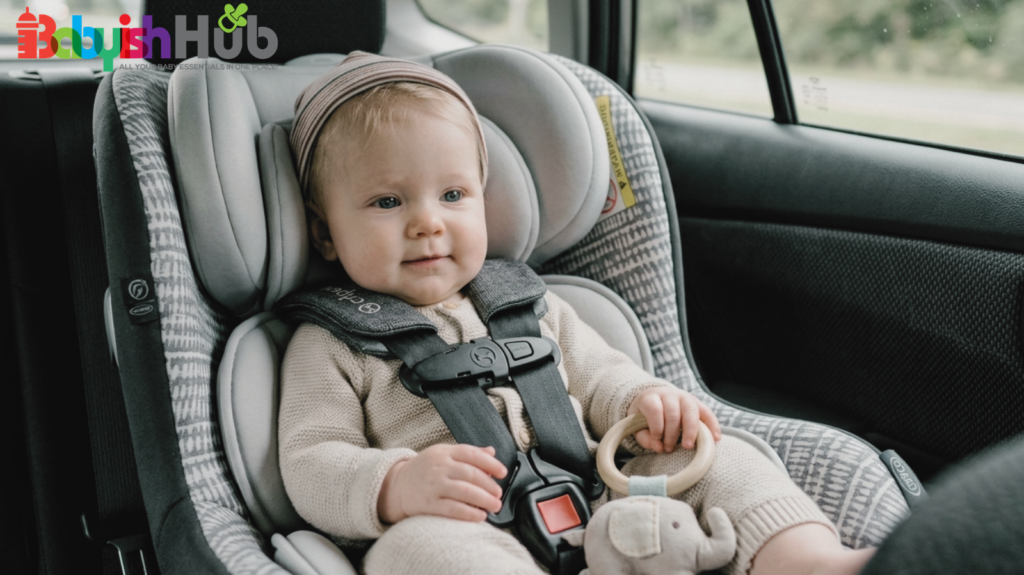
Timing your departure strategically is one of the best decisions you can make when preparing for your baby’s first road trip, and it costs you nothing except a little planning.
Many parents with young babies swear by driving during nap time or overnight. A baby who sleeps through a significant portion of the drive is a genuinely different road trip experience than one where the baby is awake, bored, and communicating their displeasure at volume.
If your baby has a reliable morning nap, leaving just before it starts can carry you through the first two hours in peace. If overnight driving is manageable for the adults, some families find their babies sleep through almost the entire journey.
Early morning departures, before six or seven in the morning, tend to work well for babies who wake early anyway. During this time, the roads are quieter, your baby is often in a calm post-wake window, and you can cover a significant distance before the day really gets going.
AVOID departing right at the edge of the baby’s overtired threshold. A baby who is already running on empty before you even pull out of the driveway is going to struggle far more with the transition to the car and the disruption to routine.
Prepare Your Car Before You Leave
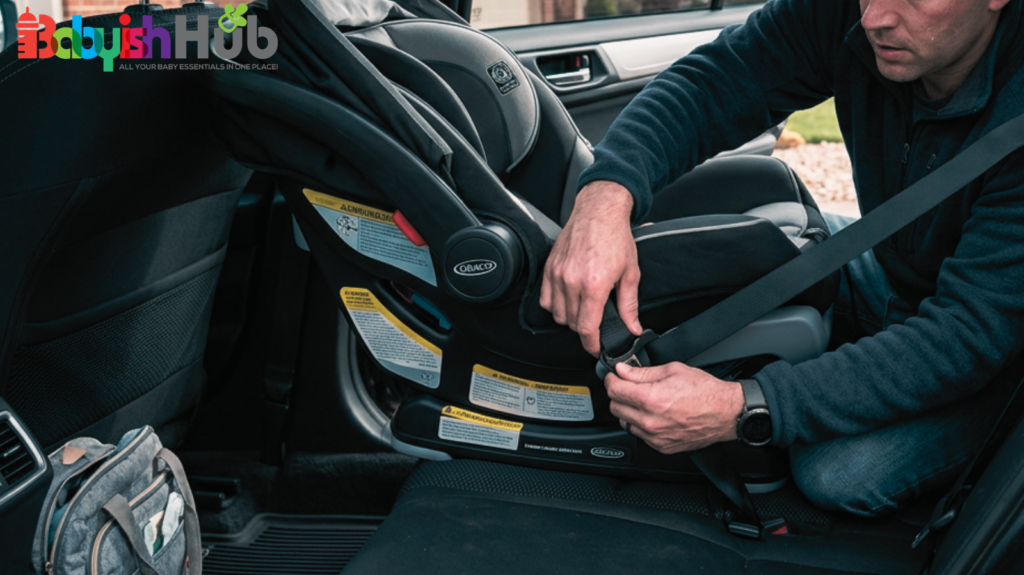
Once you start thinking about road tripping with a baby, you realize pretty quickly that your car setup alone can make the whole trip feel easier or ten times harder. I learned after one trip that having wipes buried under suitcases is enough to ruin everyone’s mood fast.
Here’s how I’d suggest you prepare your car for the long drive:
1. Conduct A Quick Car Seat Safety Check
Before any road trip with your baby, the car seat deserves a dedicated check rather than an assumption that it is fine because you use it every day:
- Confirm the installation is still correct and secure.
- Check that the harness fits properly for your baby’s current size, since babies grow quickly and a harness that fitted correctly three months ago may need adjusting.
If you have any uncertainty about the installation, most local fire stations and many pediatric hospitals offer free car seat checks by certified technicians. Trust me; this is worth doing, especially before a long trip.
Make sure you position your baby’s car seat so they are not in direct sunlight during the drive. Extended sun exposure through a car window can overheat your baby surprisingly quickly. A car seat sunshade that attaches to the window is a simple and inexpensive fix for this.
2. Organize Your Car for Easy Access
How you load your car is quite important when thinking about how to road trip with a baby. The items you will need during the drive should not be buried in the boot under everything else. Think through what you will need to reach while parked at a stop or while a passenger tends to the baby mid-trip, and keep those things easily accessible.
A backseat organizer that hangs from the headrest is genuinely useful. It keeps wipes, snacks, small toys, a spare pacifier, and other frequently needed items within arm’s reach of whoever is sitting with the baby. Not having to unpack a bag in a parking lot every time you need a wipe is one of those small things that adds up to a meaningfully less stressful drive.
Pack a separate, clearly marked bag for stop supplies: the changing mat, spare diapers and wipes, a fresh outfit for the baby, and a spare top for you. This is the bag that comes out at each stop. Everything for the actual drive lives within reach. Keeping those two categories physically separate makes your stops less chaotic.
3. Temperature Management
Car interiors tend to heat up faster than most parents realize, especially when you have parked your car in the sun. NEVER leave your little guy in a parked car, even for a moment.
Also, always ensure the car is cooled down before placing your baby inside after stops. Rear-facing babies are particularly vulnerable because they cannot communicate discomfort as clearly and are farther from the vents in most vehicles.
Dress your baby in light, breathable layers for a road trip. Personally, I go with a thin onesie with a light blanket, as I can easily add or remove it as the temperature fluctuates in the car. I usually find this more practical than heavier clothing that is harder to adjust.
What To Pack For Your Baby’s First Road Trip
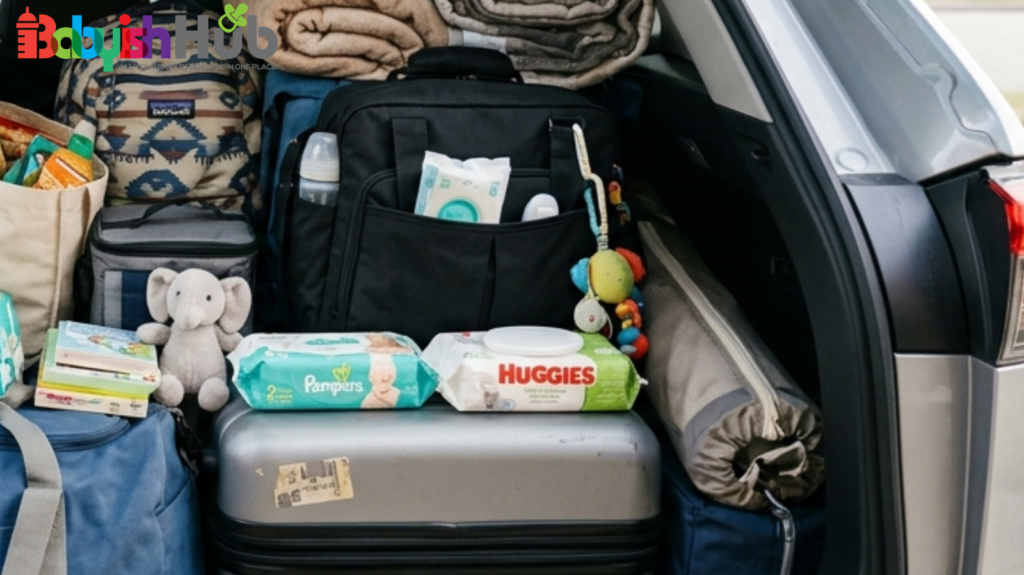
This is usually the point where parents start wondering how one tiny person suddenly needs so much stuff. After a few trips, though, you figure out which things you truly use and which things stay untouched in the bag the whole weekend.
That said, the travel essentials to consider include:
1. The Diaper and Changing Kit
For a road trip, you have access to the car at every stop, which gives you significantly more flexibility than air travel with a baby. That said, do not use that flexibility as an excuse to underprepare for the changing supplies.
Be sure to pack enough diapers for the number of hours you expect to travel, plus a generous buffer. Include a portable changing mat, a full travel wipe case, a small supply of nappy bags for disposal, and at least two complete outfit changes for your little one.
A changing mat that folds flat and can be wiped clean is more practical for road trip stops than a fabric one that absorbs everything. Gas station changing tables exist, but their quality is unpredictable. Having your own clean surface means you are never dependent on what you find.
2. Feeding Supplies on the Road
For breastfeeding families, the good news is that road trips offer something flights cannot: the ability to pull over and feed in the car at any point. You are not subject to the timeline of an aircraft. You stop when you need to stop. A nursing pillow that works well in the car, if you have one you like, and breast pads are the main additions to think about for longer drives.
If you are formula feeding, pre-portioned powder dispensers are the most practical solution for you (I’ve done a guide earlier on how you can travel with formula). A thermos of hot water can keep water warm for several hours, covering most of your road trip feeding windows. A room-temperature formula is a useful backup skill to have established before the trip rather than introducing it when you are out of hot water options.
For babies on solids, simply pack a combination of pouches for easy in-car feeding at stops and a few more substantial snacks for longer travel days. A small soft-sided cooler bag can keep yogurt, cut fruit, or other refrigerated foods fresh for a day of driving if you keep it topped up with an ice pack.
3. Sleep Support Away From Home
Recreating familiar sleep conditions as closely as possible is the secret to getting any sleep at your destination on a road trip. Bring whatever your baby associates with sleep: their sleep sack, their white noise machine, their familiar lovey, if they have one. A portable travel bassinet or travel crib gives you a safe baby sleep surface that goes with you rather than relying on whatever the accommodation provides.
Some babies nap beautifully in the car and then refuse to sleep anywhere else once you arrive. Setting up the sleep environment at your destination to be as close to home as possible, same sounds, same sleep sack, same pre-sleep routine, even if it is abbreviated, gives you the best chance of a workable first night.
RELATED: Best Baby Travel Sleep Options
4. Entertainment and Comfort for Awake Windows
Babies under six months are often content with the motion and novelty of being in a car for shorter stretches. Older babies and those approaching the toddler stage need more active engagement during awake windows.
Having a small selection of familiar toys within reach, a board book or two, and a backseat mirror so your baby can see their own reflection and your face are all low-effort, high-return additions to the car setup.
Avoid introducing a device or screen for the first time on a road trip if your baby has not used one before. New things introduced under stress do not always land the way you hope. Stick to what your baby already finds comforting and engaging.
How To Plan Stops On A Road Trip With A Baby

Stops on a road trip with your little one are part of the journey, and planning them intentionally makes them feel that way rather than reactive.
Look at the route ahead of time and identify where the good stops are. Some of the best spots to consider include:
- Rest stops with a patch of grass where you can put the baby down on a blanket.
- Service stations with adequate changing facilities.
- A park or play area if the drive is long enough that the baby needs a proper stretch and some movement, rather than just a diaper change and back in the seat.
Stopping at a place where your baby can have a genuine break, roll on grass, look at trees, interact with the world for twenty minutes, tends to produce a much better second leg of the drive than a hurried five-minute stop in a concrete parking lot.
Those twenty-minute stops feel counterintuitive when you want to make progress. But your baby who comes back to the car rested and stimulated will typically give you more peaceful driving time on the other side of it.
I advise you to feed at stops rather than trying to manage feeding while driving when possible. If your baby is properly fed and comfortable before getting back in the seat, he/she will be set up for a much calmer stretch of driving than if they’re hungry but belted in because you wanted to push through.
How To Stay Calm During A Road Trip With A Baby
Preparing for your baby’s first road trip involves logistics, but it also involves preparing yourself mentally for what the experience feels like.
Long stretches of listening to a baby fuss while you cannot do very much about it are genuinely hard. The helpless feeling of being in a moving vehicle with a distressed baby who cannot tell you what is wrong is something worth acknowledging before you experience it, instead of when you’re in the middle of it.
If you are traveling with a partner, take turns sitting in the back with the baby. The parent in the back seat can respond to needs, offer the pacifier, engage with the baby during awake windows, and provide the physical comfort that goes a long way toward keeping a baby calm. Drivers cannot do this safely.
Rotating who is in the back seat means neither adult is stuck with the harder job for the entire trip.
Give yourself permission to stop earlier than planned if the baby is genuinely struggling. Your destination will still be there. A rigid adherence to the original timeline at the cost of a completely depleted baby and two exhausted parents is not a trade worth making. Flexibility is the real skill that gets you through road trips with babies.
What To Do The Night Before the Trip
Getting a few things ready ahead of time helps the morning feel calmer, especially when your baby wakes up earlier than expected, or somebody spills breakfast five minutes before leaving.
- Load the car the night before, wherever security allows: Getting bags, the travel crib, the stroller, and all the non-perishable supplies into the car the evening before means departure morning is about feeding the baby, getting yourselves ready, and leaving. This saves you the hassle of frantically packing the car while your partner tries to keep the baby entertained.
- Charge all your devices: This includes the white noise device, travel baby monitor, tablets, your own phone, etc. Set out the diaper bag and the stop kit in a visible spot so they are not forgotten in the morning rush. Check the car seat one more time. Look at the route and remind yourself where the good stops are.
- And lastly, try to get some sleep yourself: A road trip with a newborn is a marathon, not a sprint. Starting it rested makes every decision, every stop, every unexpected moment easier to handle.
RELATED: 25 Hacks for Traveling With A Baby!
How To Prepare For A Baby’s First Road Trip FAQs:
Here are some common questions parents ask before a baby’s first road trip:
How old should a baby be before their first road trip?
There is no strict minimum age for a baby to travel by car, since car travel itself is something babies do from the day they leave the hospital. What changes with longer road trips is the consideration around feeding frequency, time in the car seat, and the baby’s tolerance for schedule disruption. Many families take their first longer road trip when the baby is around six to eight weeks old, and feeding has become more established, but there is no universal right answer. Talk to your pediatrician if you have specific concerns about your baby’s age or health status relative to a planned trip. If you are still in the planning stage, it can help to think through how to plan your first family vacation with a baby before locking in travel dates.
How often should I stop on a road trip with a baby?
A general guideline is every two to three hours, which accounts for feeding windows, diaper changes, and the baby’s tolerance for extended time in a car seat. Some babies do well for longer stretches, particularly if they are sleeping. Others need more frequent breaks. Use your knowledge of your specific baby rather than a rigid number. Stopping before your baby reaches their limit tends to produce better results than waiting until they are already distressed and then stopping.
What is the safest way for a baby to travel in a car on a long trip?
Rear-facing in an age and weight-appropriate car seat, correctly installed with a properly adjusted harness, is the safest position for any baby in a car. On longer trips, ensure the harness fits snugly, and the car seat angle is correct for your baby’s age and head control. Avoid heavy coats or thick padding under the harness, as these can compress in a crash and reduce the harness’s effectiveness. Regular stops to take the baby out of the seat are highly recommended since extended time in a semi-reclined car seat position is not ideal for young babies’ airways.
What should I do if my baby cries the whole road trip?
First, rule out the practical causes like hunger, a dirty diaper, discomfort from the harness, being too hot or too cold, or simply needing to be held. If you can safely pull over and address the issue, do that first. If your baby is fed, clean, comfortable, and still distressed, it may simply be that they have reached their tolerance limit for the car seat and need a proper breakout of it. Sometimes the most effective thing you can do is a full stop where you hold your baby, walk him/her around, and give them time to decompress before returning to the seat. A distressed baby who needs a stop will not settle from motion alone. Stopping is often faster than trying to push through.
Can a baby sleep in the car seat overnight on a road trip?
Sleeping in a car seat is generally considered safe while the car is in motion and a responsible adult is present in the vehicle. However, extended sleeping in a car seat outside of a moving vehicle, such as leaving a baby to sleep in a parked car overnight, is not recommended. The semi-reclined position can affect a young baby’s airway over extended periods, and a parked car is not a safe sleep environment. When you reach your destination for the night, always transition your baby to a firm, flat sleep surface as soon as practical.
The Trip Will Be What It Is, and That’s Enough
Every parent who has taken a road trip with a baby has a story about the thing that did not go to plan. The stop turned into an hour because the baby refused to go back in the seat. The destination that looked great in photos but turned out to have one functioning public bathroom. The stretch of highway with nothing for forty miles when you really needed a stop.
Preparing for your baby’s first road trip well means going in with good systems and a loose grip on the itinerary. The preparation handles what it can handle. The rest is adaptability, and that is something you are already building just by doing this.
First road trips with babies are rarely smooth. They are also often surprisingly joyful, full of small moments you did not plan for and cannot recreate. The gas station stop, where your baby discovers the sound of wind for the first time. The way they look out the window at trees moving past. The particular satisfaction of pulling into your destination knowing you navigated the whole thing together.
You are more ready than you think. Trust the preparation, trust your instincts, and enjoy the ride.