Rules For Flying With A Baby: Ultimate 2026 Travel Manual
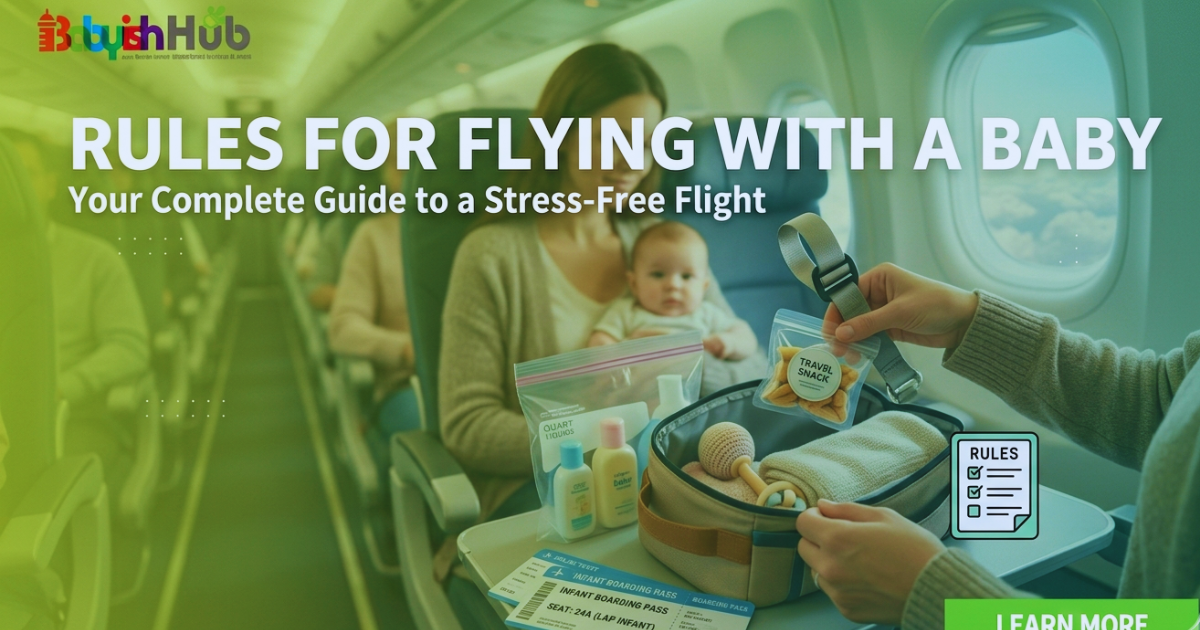
I remember one week before my first flight with my daughter, Chloe, I spent an embarrassing amount of time on airline websites trying to piece together what rules for flying with a baby I needed to observe. What I found was a scattered mix of vague policy pages, outdated forum posts, and advice that contradicted itself depending on which airline or country was being discussed. Long story short: I found nothing helpful.
If you are in that same research spiral right now, this article is the clear, straightforward answer you are looking for. Here are the rules for flying with your little one. I have covered everything from age requirements to what you can bring through security, so you can walk into that airport knowing exactly where you stand.
Let’s get into the details…
What Are The Basic Age Rules for Flying With A Baby?
Most major airlines will not allow babies younger than seven days old to fly, and some set the minimum age at fourteen days. A small number of airlines require infants to be at least two weeks old, regardless of health status.
These minimums exist because the pressurized cabin environment and the immune system vulnerability of a newborn in those earliest days present real risks that airlines take seriously.
For babies with health complications or those born premature, many airlines require a physician’s letter confirming the baby is fit to fly.
Even if your airline does not explicitly require this, it is worth getting one from your paediatrician if your baby has had any complications after birth. It protects you at the gate and gives you peace of mind.
Beyond the minimum age, there are no upper age rules for infants. Babies up to their second birthday can fly as lap infants on most airlines.
Lap Infant Rules: What Flying Free Means
On most airlines, a baby under the age of two can travel as a lap infant, sitting on a parent or guardian’s lap for the duration of the flight. For domestic flights, this is typically free.
For international flights, airlines usually charge a percentage of the adult fare, often around ten percent, plus applicable taxes. This varies significantly by airline and route, so check specifically when booking rather than assuming.
As a lap infant, your baby does not have their own seat and is not secured by a seatbelt during the flight. This is legal and widely practiced, but it is worth understanding that aviation safety authorities, including the FAA in the United States, recommend that all children fly in their own seat with an approved child restraint whenever possible.
The lap infant option exists and is commonly used, but it is not the safest configuration available. Knowing this helps you make an informed decision for your family.
One important rule that catches many parents off guard: Only one lap infant is permitted per adult passenger. If you are traveling with twins under two, you either need a second adult in your travel party or you need to purchase a seat for at least one of the babies.
Buying A Seat for Your Baby: Car Seat Rules on Planes
If you purchase a separate seat for your baby and want to use a car seat on the plane, then the car seat must be approved for aircraft use (this is a requirement, not a suggestion).
Look for a label on your car seat that reads “FAA Approved for Use in Aircraft” if you are in the United States, or the equivalent certification for your country. Not all car seats qualify, and if yours is not approved, the gate agent can prevent you from installing it on the plane.
Even with an approved car seat, there are placement rules you need to observe. First, the car seat must be installed in a forward-facing aircraft seat only, and it cannot be placed in an exit row under any circumstances.
Exit rows are legally reserved for passengers who can assist in an emergency evacuation, and an infant car seat disqualifies that row for that purpose.
Pro Tip: It is worth measuring your car seat before your flight and checking airline seat width specifications if possible. Some larger car seats do not fit well in standard economy seats, which creates a frustrating situation mid-boarding.
Documentation Rules: What ID Does Your Baby Need?
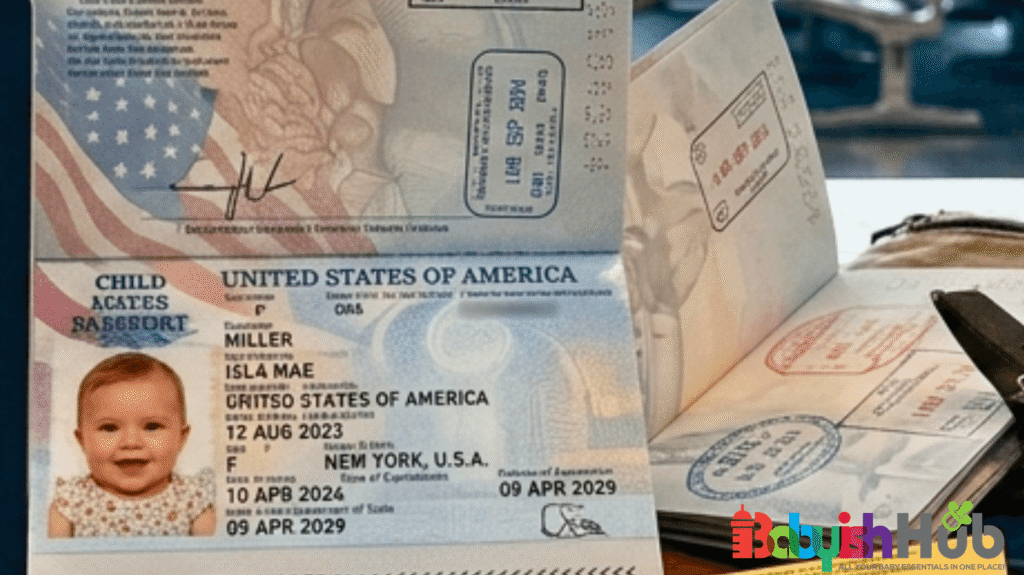
For domestic flights within most countries, babies and young children are not required to show identification. However, you may be asked to provide proof of age if your baby is flying as a lap infant close to the age-two cutoff, so having a birth certificate or passport accessible is wise if your baby is approaching eighteen months or older.
For international travel, the rule is absolute: Every passenger, including a baby who is days old, requires their own valid passport. There are no exceptions. As such, you would want to apply for your baby’s passport well in advance of your travel date because processing can take several weeks, and during busy periods, the wait can be longer.
If you are a single parent traveling internationally without the other parent or traveling with a child who has a different surname, some countries at the border will ask for documentation proving your right to travel with that child.
In such a case, a notarized letter of consent from the absent parent, a custody agreement, or a birth certificate showing your relationship to the child can all be helpful here. Research the entry requirements for your specific destination, as this is taken seriously at certain borders and handled inconsistently if you arrive unprepared.
Liquid Rules for Baby Supplies At Security
This is where the standard rules get a meaningful exception, and it is one that every parent flying with a baby needs to know clearly.
The standard liquid rule, that all liquids must be in containers of 100ml or less and fit in a single small clear bag, does not apply to baby essentials. (Source).
Breast milk, formula, and baby food, including purees and pouches, are exempt from this restriction and can be carried in quantities that are reasonable for the journey. You do not need to limit yourself to 100ml of formula for a transatlantic flight. (See how you can travel with baby formula stress-free).
However, you do need to declare these items at the security checkpoint. Remove them from your bag and present them separately.
The security officer may test them with a liquid testing device, which is a routine process that takes an extra minute or two. This is not something to be alarmed about. It is standard procedure.
That said, here are a few practical notes to keep in mind:
- Pre-mixed liquid formula in individual ready-to-feed bottles is absolutely permitted.
- Water you have pre-prepared for mixing the formula is also permitted in quantities appropriate for the flight.
- Gel teethers and ice packs that are frozen solid at the time of screening are generally permitted, though a partially melted ice pack may be subject to the standard liquid rules depending on the security officer and airport. Freezing them solid before you leave home is the safest approach.
Stroller And Gear Rules At the Airport
Most airlines allow you to bring a stroller to the gate and check it there at no additional cost. This is called gate-checking, and it means you can use your stroller through the entire airport, hand it over at the jetway just before you board, and collect it again right as you exit the plane at your destination. Gate-check tags are available from the gate agent when you arrive at your departure gate.
Strollers that are gate-checked travel in the cargo hold. They are generally returned to the jetway rather than the baggage carousel, but not always, and it depends on the airline and the airport. Confirm this when you check in or ask at the gate, so you know where to collect it on arrival.
Car seats checked as luggage are counted as one of your checked bag allowances on most airlines, though some airlines carry them free. Confirm your specific airline’s policy.
Baby carriers and wraps are permitted through security and can typically be worn while going through the screening process, though you may be asked to undergo additional screening or remove your baby from the carrier briefly, depending on the airport. Policies vary, so be prepared for either scenario.
In-Flight Rules Worth Knowing When Flying With Your Baby:
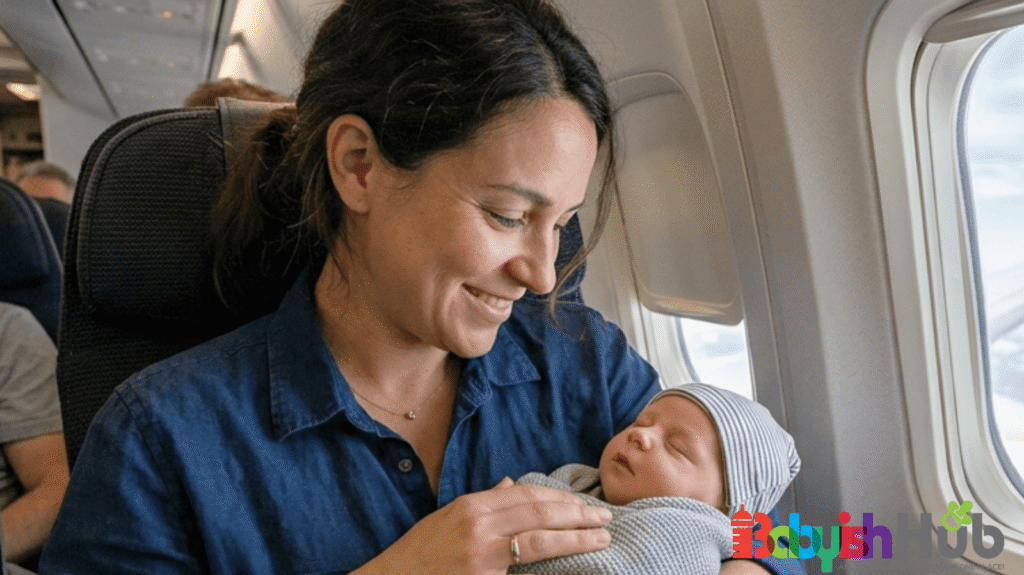
Here’s a quick guide to the key in-flight rules when you’re flying with your baby:
Holding Your Baby During The Flight
Your baby must be held in your arms or secured in their car seat whenever the seatbelt sign is illuminated. This is an FAA rule on US carriers and a standard rule on most international airlines. Flight attendants will ask you to hold your baby securely during turbulence, and they are right to do so.
Where To Change Diapers
Changing diapers should be done in the lavatory on the fold-down changing table, not in your seat. This is not always explicitly stated as a rule, but it is considered standard courtesy on flights, and most airlines expect it. The lavatory changing surface is small and awkward, but it is there, and it works.
Using Baby-related Devices
Electronic devices, including white noise machines and baby monitors, may be subject to the same device rules as other electronics during takeoff and landing. Airplane mode and Bluetooth-only operation are typically permitted. Check with your airline if you are unsure about a specific device.
Check out this article for tips on how to protect your baby’s ears when flying.
A Quick Summary of Rules for Flying With Baby for Easy Reference:
Before you fly, these are the most important rules to have clear:
- Check your airline’s minimum age requirement for infants, which is typically seven to fourteen days.
- Know whether you are flying as a lap infant or purchasing a seat, and if bringing a car seat, confirm it is aircraft-approved.
- For international travel, your baby needs their own passport.
- Declare breast milk, formula, and baby food at security. Gate-check your stroller for the easiest airport experience.
Most airlines publish their infant travel policies on their websites, and it is always worth reading your specific carrier’s policy rather than assuming the rules are identical across all airlines.
The rules are mostly similar, but knowing the subtle difference beforehand is highly recommended. Discovering them at the airport is not the ideal moment.
Overall, walking into the airport informed is the single best thing you can do. It helps everything feel calmer and more under control instead of stressful and confusing. And don’t worry, the flight itself will be just fine.