Flying with A Baby for the First Time (Everything New Moms Need To Know)
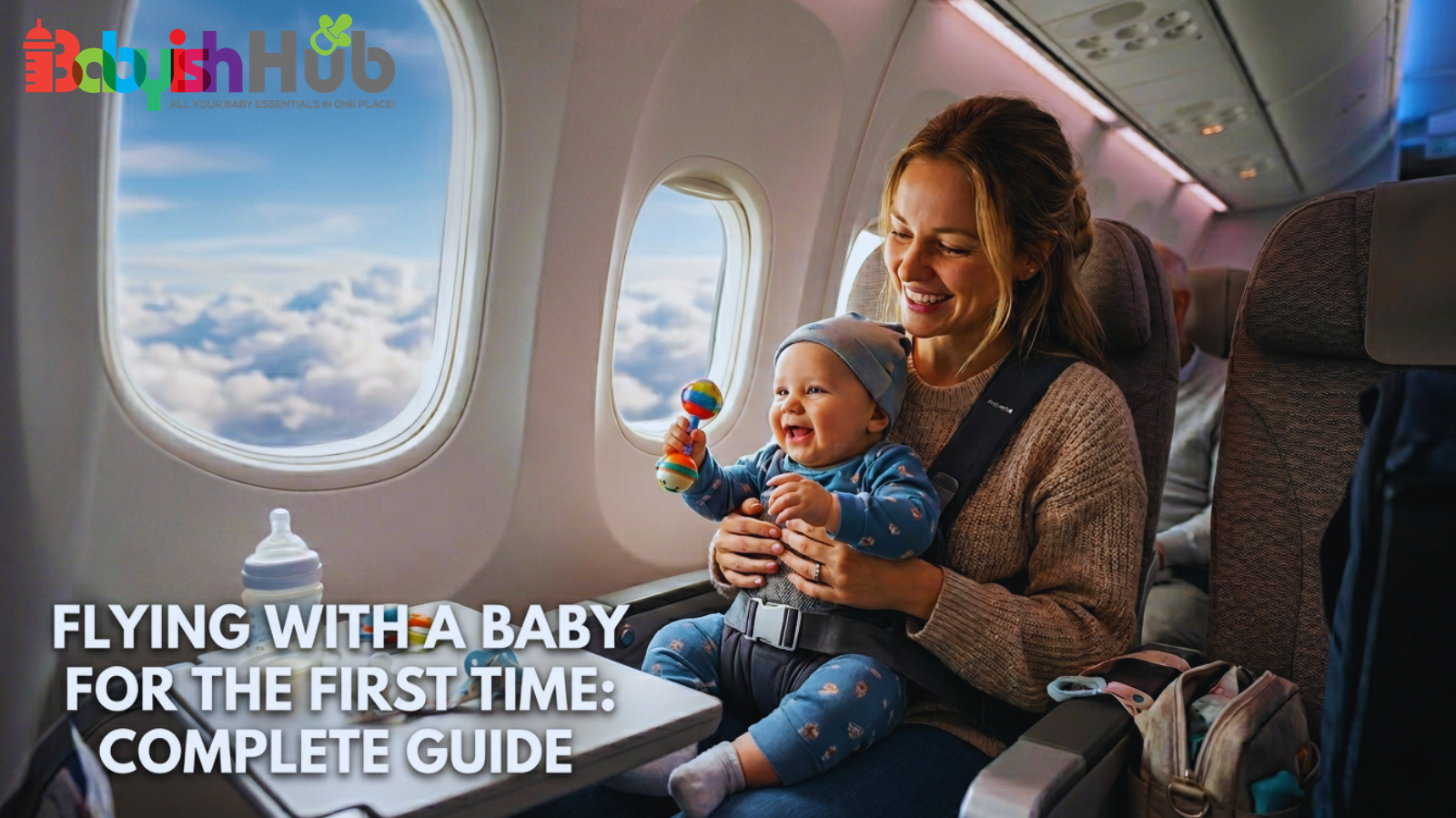
I remember sitting in the departure lounge with my four-month-old strapped to my chest, watching a gate agent make an announcement I could not fully hear over the sound of my own heartbeat.
I had a carry-on bag stuffed with more diapers than a small daycare, a portable sound machine I was not sure I was allowed to use on a plane, and a level of nervous energy that probably registered on airport security equipment.
Nobody had given me a genuinely useful, honest guide to flying with a baby. Most of what I found online was either cheerfully vague or written by someone who seemed to be describing a completely different experience than the one I was having.
So I am writing the guide I needed. If you are a new mom about to take your first flight with your baby, this is for you (If you are still in the planning stage, you may also find this helpful: how to plan a family vacation with a baby).
Why Flying with A Baby Feels So Scary (And Why It Is Usually Better Than You Expect)
The fear of flying with a baby is almost always bigger than the reality. This is not because it is easy, exactly. It is because the thing you are afraid of, which is your baby screaming the entire flight while strangers glare at you, is much rarer than you think.
Babies cry. Babies also sleep, nurse, stare at overhead lights, chew on teethers, and get distracted by the person across the aisle. Flights end. And most people on planes have either had a baby or were once a baby and are more understanding than the internet would have you believe.
What makes flying with a baby hard is logistics. The packing, the security, the timing, the feeding in a confined space, the nap that does not happen when you need it to. That is the stuff worth preparing for. And that is exactly what this guide covers.
Before You Book: Choosing The Right Flight
The decisions you make before you even pack a bag have a significant impact on how your first flight with a baby goes. Flight selection matters more than most new moms realize.
Choose A Direct Flight Whenever Possible
This is the single most important booking decision you can make. Layovers with a baby are genuinely difficult. You are managing a nap schedule, a feeding schedule, all your gear, and yourself through a connection that may or may not be on time, in an airport that may or may not have a decent family room.
A direct flight removes an enormous amount of complexity. Pay the extra cost if you can. It is worth it. If a direct flight is not available or not affordable, look for the longest possible connection time, at least ninety minutes, and ideally two hours. You will need time to deplane, get through any transfers, possibly change a diaper and feed your baby, and get to your next gate without sprinting. Short connections with a baby are a recipe for missed flights and genuine panic.
Think Carefully About Your Departure Time
Choosing the right flight time can make traveling with a baby significantly easier or much harder:
- Early Morning Flights (Best overall option): Early morning flights are often cited as the best option for flying with a baby, and there is real logic to this: Flights are less likely to be delayed early in the day. Airports are quieter. Babies who wake early are often in their best mood in the morning. The downside is that you will be up extremely early preparing and getting to the airport, which is its own kind of hard when you are already sleep-deprived.
- Mid-morning Flights (Good compromise): Mid-morning flights can work well if they align with your baby’s first nap window, giving you a decent chance of a sleeping baby for some portion of the flight.
- Late Afternoon/early Evening Flights (Avoid if possible): Avoid late afternoon and early evening departures if possible. This is the fussy zone for most babies, the time of day when they are overtired, overstimulated, and least equipped to handle the sensory overload of an airport and a plane. I took a 4 p.m. flight with my son at eight months old. I will spare you the details. Just avoid it if you have any alternative.
Lap Infant Vs Buying A Seat
In most countries, babies under two can fly as a lap infant, either free or at a small percentage of the adult fare. Buying a separate seat for your baby and bringing your car seat onto the plane is safer, because your baby is secured in a crash-tested restraint rather than held in your arms, but it is also significantly more expensive.
If you do purchase a separate seat for your baby, make sure your car seat is approved for aircraft use before you get to the airport. Look for a label on the car seat that says “FAA Approved for Use in Aircraft” or the equivalent certification in your country. Not all car seats qualify, and discovering this at the gate is a stressful experience nobody needs.
If you are flying as a lap infant, know that you will be holding your baby for the duration of the flight with no seatbelt securing them to you. This is manageable on shorter flights. On flights longer than three or four hours, it becomes physically demanding in a way that catches many moms off guard. Your arms will ache. Your back will ache. Plan for this.
What Documents Does Your Baby Needs To Fly?
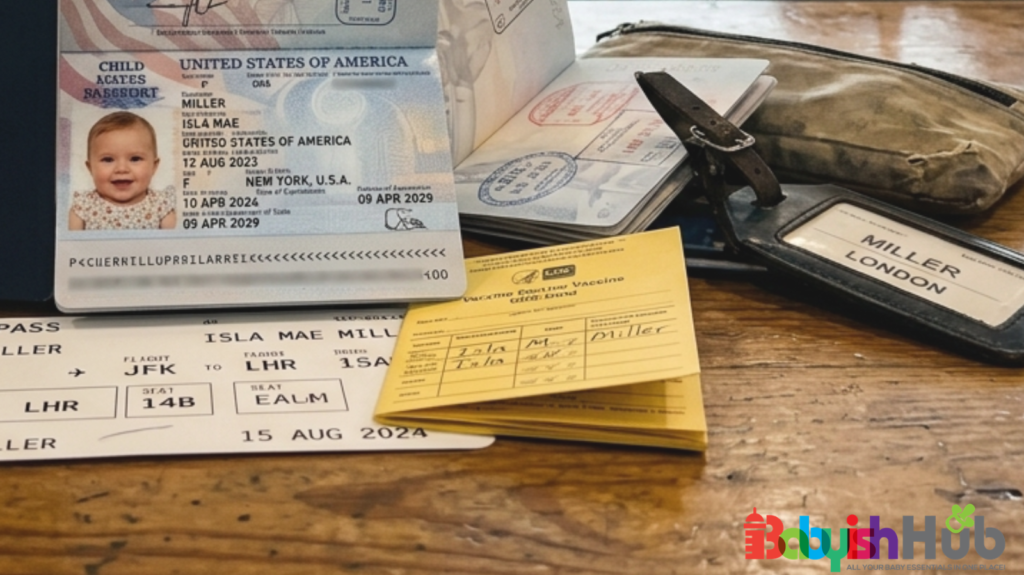
For domestic flights within your country, most airlines do not require identification for babies. However, it is worth checking your specific airline’s policy before you go, because requirements do vary.
For Domestic Flights:
- Most airlines do not require ID for babies
- Some airlines may still have their own rules, so confirm before travel
For International Flights:
- Your baby must have their own passport (no exceptions)
- Apply early, since processing can take weeks
- Both parents may need to be present or provide consent for the passport application
Read this guide on how to smoothly adjust your baby to time change travel for international travels
If Traveling Without the Other Parent:
- You may need a notarized consent letter from the other parent
- This confirms permission for the child to travel
- Requirements vary by country, so check your destination rules carefully
- Some borders enforce this strictly
Quick Tip: Always double-check airline rules and destination entry requirements before you travel. It saves a lot of stress at the airport.
How To Pack for Flying With A Baby
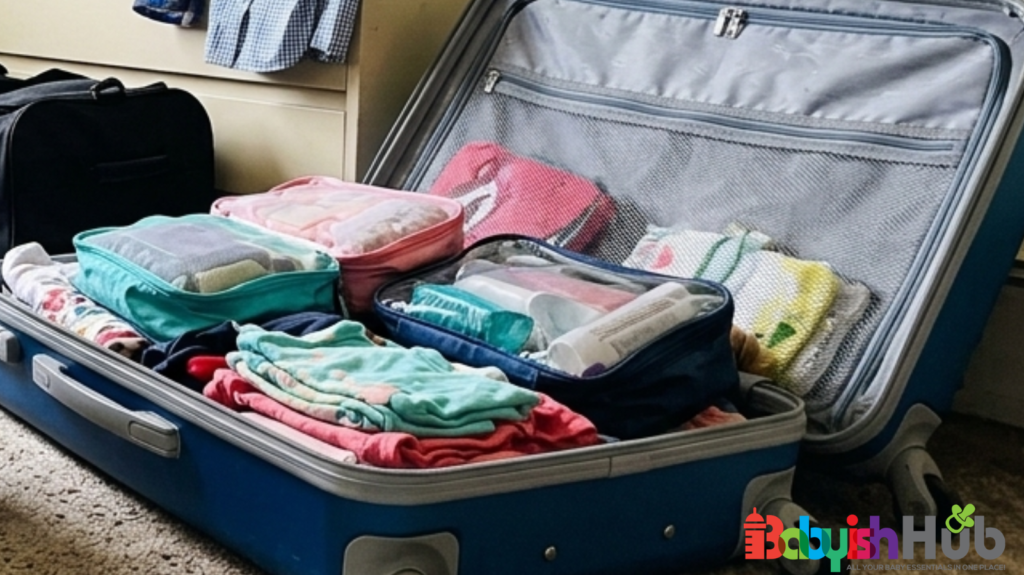
Packing for travelling with a baby is a balance between having everything you need and not creating so much luggage that managing it becomes its own ordeal. The goal is a well-organized carry-on bag that you can access with one hand while holding a baby with the other.
This is What Goes in Your Carry-On:
- Diapers: Bring more than you think you need. The rule of thumb is one diaper per hour of travel time, plus several extras for delays, blowouts, and the general chaos of airports. I always added at least five beyond what I calculated. Running out of diapers mid-flight is a situation you want to avoid with absolute certainty.
- Wipes: A full pack, not a travel size. They are useful for approximately one thousand things beyond diaper changes while traveling.
- A change of clothes for your baby: At least two full outfits, because blowouts on planes happen at statistically improbable rates. Also, bring a spare top for yourself. A milk-soaked or spit-up-covered shirt worn for a five-hour flight is its own particular misery.
- Feeding supplies: If you are nursing, you are mostly set. A nursing cover, if you use one, nipple cream, and nursing pads. If you are formula feeding, bring pre-measured formula in a dispenser or individual packets, plus enough water or a plan for accessing water to prepare bottles. Baby food and pouches for babies on solids go in an easy-access pocket. All of these are exempt from standard liquid restrictions in most countries, but you will need to declare them at security.
- Your baby’s comfort items: This includes a sleep sack if your baby uses one, a familiar lovey or small blanket, and a pacifier if your baby takes one. These are essential tools for soothing your baby in an unfamiliar, overstimulating environment.
- A white noise app or portable sound machine: Airplane cabin noise is quite consistent and relatively soothing for some babies. But having your own white noise available gives you control over the situation.
- Teethers and a small selection of toys: Novel toys work better than familiar ones for keeping a baby engaged. Bring two or three things your baby has not seen in a while, or save a new toy specifically for the flight.
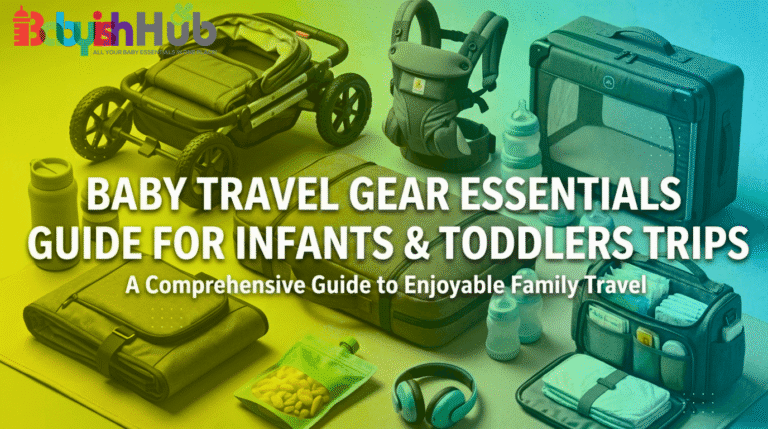
- A light baby carrier or wrap: Invaluable in airports for keeping your hands free and your baby contained and often soothed (More on this shortly).
Things To Check Rather Than Carry:
Your stroller is best gate-checked rather than checked with your main luggage. Gate-checking means you can use it all the way to the jetway, hand it over just before boarding, and collect it again right as you exit the plane.
This is free on most airlines and keeps your hands free through the airport. Ask the gate agent for a gate-check tag when you arrive at your gate.
Bulky items like a pack-and-play, if you are bringing one, go in checked luggage. Most airlines count this as one of your checked bags. Confirm your airline’s policy when booking.
Related: How To Travel With Your Baby Car Seat And Stroller
How To Get Through The Airport with Your Baby
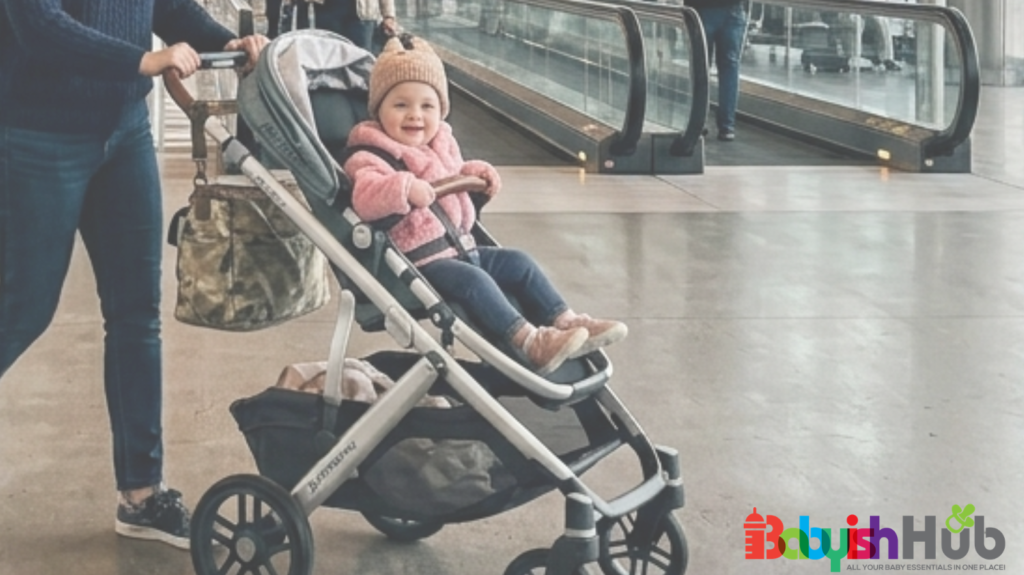
Navigating the airports with a baby requires you to adopt a systems mindset. You are managing yourself, your baby, your gear, and a schedule, often while running on too little sleep. Having a clear approach before you arrive makes an enormous difference.
How Early To Arrive
Give yourself more time than you think you need. For domestic flights, arriving two hours before departure when traveling with a baby is a reasonable minimum. For international flights with a baby, three hours is a good timing. You will move more slowly than you are used to. Security takes longer. Your baby will choose this exact moment to have a blowout, or to need an urgent feeding, or to be unusually interested in people-watching and refuse to be moved.
How To Go Through Airport Security With A Baby
Going through airport security with a baby is one of those things that sounds intimidating and then turns out to be manageable once you have done it.
Here is what helps:
- Know before you get in line what needs to come out of your bag. Liquids, gels, and any electronics. Breast milk, formula, and baby food are exempt from the 100ml liquid rule in most countries, but should be declared to the security officer and placed separately for screening. They may be tested with a liquid testing device. This is routine and takes an extra minute or two.
- Baby carriers: Most carriers can go through security while your baby is in them, but you may be directed to a separate screening line or asked to undergo additional screening. Some airports ask you to remove the baby from the carrier for the actual X-ray moment. Prepare for variability here, depending on the airport and officer.
- Your stroller goes through the X-ray belt. I advise you to fold your stroller before you reach the front of the line, not at the belt where everything backs up. The same goes for car seats.
Pro Tip: I will advise you to put everything you might need immediately after security, your nursing cover, a diaper, and your baby’s pacifier into the very top of your bag or a small pouch so you are not rummaging through a repacked bag while managing a baby on the other side.
How To Use A Baby Carrier in the Airport
A soft-structured carrier or a ring sling is genuinely one of the most useful tools for airport navigation with a baby. It keeps your baby close and content while leaving both your hands free for managing bags, boarding passes, and all the other physical demands of airport transit.
Many babies settle immediately in a carrier because the closeness and your heartbeat and movement are soothing, which means you may arrive at your gate with a calm or even sleeping baby. That is a gift.
Finding Family Amenities At The Airport
Most major airports have family restrooms with changing tables, nursing rooms or pods, and sometimes dedicated family security lanes. Look for them on the airport map before your trip so you are not searching while managing a screaming baby. Some airports have dedicated nursing lounges with comfortable chairs, outlets, and privacy. These are worth seeking out if you have time.
Flying With Your Baby: Boarding The Plane
Most airlines offer priority boarding for families with young children, and you should absolutely use it. Do not let social politeness make you wait in the general boarding queue. Just board early and use the extra time productively.
Get settled in your row first. If you have a car seat to install, do it before the aisle fills with other passengers. Organize your under-seat bag so that everything you might need during the flight is reachable. This includes essentials like diapers, wipes, feeding supplies, a toy, the pacifier. Set this up while you have space and calm.
If you did not pre-select seats, ask the gate agent if any rows have an open middle seat that you could move to. Having an extra buffer seat makes a meaningful difference in comfort when you are managing a baby.
Where To Sit on The Plane
When flying with a baby, the bulkhead row (the row directly behind a cabin wall) is often recommended because it has no seat in front of it, giving you more floor space and sometimes access to a bassinet attachment on long-haul flights. Book these seats in advance if you want them, as they are popular with families.
The back of the plane is closer to the lavatories, which matters when you need to change a diaper. The back is also generally louder, which some babies find soothing because of the consistent engine noise. The front of the plane boards first and deplanes first, which matters when you are exhausted and just want to get off.
Avoid exit row seats. These rows legally cannot be used by passengers traveling with infants because the seat is meant for someone who can assist in an emergency evacuation.
Surviving the Flight: What Really Helps
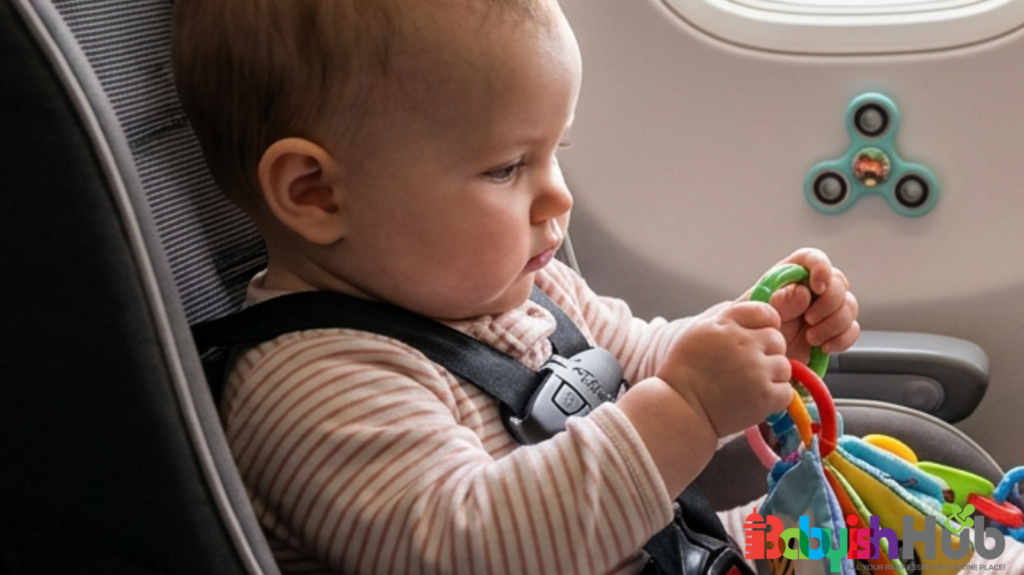
This is the section most new moms are reading everything else to get to. How do you get through the flight without losing your mind?
Takeoff and Landing
Ear pressure changes during takeoff and especially descent are a common reason babies cry on planes. During cabin pressure changes, the middle ear must equalize pressure through the Eustachian tube. Because infants have smaller and less mature Eustachian tubes, they may struggle more than adults, causing real discomfort or pain. (Source).
The good news is that swallowing helps equalize pressure, which means nursing, bottle feeding, or giving a pacifier during takeoff and landing is genuinely effective at reducing or preventing the ear discomfort that causes so much crying.
Start nursing or offering a bottle or pacifier as the plane begins to taxi for takeoff, and again when you feel the descent beginning (usually about twenty to thirty minutes before landing). You do not need to wait until you feel your own ears pop. Starting earlier is better.
Feeding During the Flight
Nursing on a plane is something many moms feel anxious about before they do it and then find surprisingly manageable once they are doing it. The tight space is real. A nursing pillow is not practical in an airplane seat, but a rolled-up blanket or a travel neck pillow can give your arm some support.
A nursing cover gives privacy if you want it, though the close quarters of a plane mean most people around you are looking at their screens rather than at you.
Formula feeding on a plane requires a little planning. Flight attendants can provide hot water if you need it to warm a bottle, though warm water from the lavatory sink also works in a pinch. Ask early rather than waiting until your baby is in a full hunger spiral, because getting assistance takes a few minutes.
For babies on solids, pouches are the single most convenient option for feeding on a plane. Easy to open, no utensils needed, self-contained. Pack them in an accessible spot.
Managing Naps Mid-Flight
If your flight timing is working in your favor, your baby may sleep during part of the journey. A sleeping baby in a carrier worn in your lap is one of the better outcomes for a first flight.
Some babies also sleep in a car seat installed in their own purchased seat. What most babies do not do particularly well is sleep held in arms in the reclined but not truly flat airplane seat, though it does happen.
If your baby will not sleep, accept it and move to Plan B: manage awake time by following these quick tips:
- Take a walk up and down the aisle
- Let your baby look out the window if you have a window seat
- Engage them with the novel toys you brought
- Change the scenery by moving to the back galley if the flight is not full and the flight attendants permit it
Many flight attendants are surprisingly warm and helpful toward traveling moms, and some will hold a baby for a few minutes while you eat or collect yourself. Do not be afraid to ask.
What To Do When Your Baby Cries on the Plane
It will probably happen. Most babies cry on flights at some point, whether from ear discomfort, hunger, overstimulation, exhaustion, or simply the injustice of being contained in a loud metal tube.
When it happens, here is the most important thing to know: it is temporary, it is normal, and most of the passengers understand this.
If your baby starts crying, take a breath and run through this quick checklist calmly:
- Could they be hungry or ready for a feed?
- Are they tired and needing sleep?
- Could their ears be hurting from takeoff or landing pressure changes?
- Are they too hot or uncomfortable in their clothes?
- Do they need a diaper change?
- Are they overstimulated and needing a calmer, darker space with a blanket or cover?
This kind of systematic troubleshooting while staying as calm as you can is genuinely the most effective approach.
If you have tried everything and your baby is still crying, take a breath. Stand in the back galley if the flight attendants allow it, and your baby is not yet secured for landing. Acknowledge any nearby passengers with a look that communicates you are aware and trying. Most will nod in solidarity. The ones who don’t are not your concern.
You are not a bad mom because your baby cried on a plane. You are a mom on a plane with a baby. Those are simply the same thing sometimes.
How To Change Your Baby’s Diaper On A Plane
Yes, the airplane lavatory changing table is as small and awkward as you are imagining. But yes, you will manage. Most lavatories have a fold-down changing surface. It is not comfortable, but it works.
What To Bring With You:
Keep diaper changes simple and take only the essentials:
- 1 clean diaper
- Small packet of wipes
- Portable changing pad
- Plastic bag for the dirty diaper
- Hand sanitizer (optional but helpful)
A portable changing pad is especially useful since you do not want your baby directly on the surface.
Change your baby before boarding if possible, and then again when the seatbelt sign first turns off in the air, so you are not scrambling during turbulence or a descent. Keep your diaper changes lean: one diaper, a small packet of wipes, a changing pad, and a plastic bag for the dirty diaper.
What to Avoid:
- Avoid changing your baby in the seat if possible
- Avoid waiting until the diaper is leaking or urgent
- Avoid bringing your whole diaper bag into the tiny lavatory
Changing in your seat may seem easier, but it is often harder than expected and uncomfortable for nearby passengers.
PRO TIP: Honestly, the airplane lavatory setup is cramped, awkward, and nobody enjoys changing a diaper in an airplane bathroom. But in most cases, it’s still the better option than trying to do it in your seat. Once you accept that it won’t be glamorous, the whole thing feels easier. Go in with just the essentials, work quickly, and get back to your seat. It’s one of those parenting moments that feels stressful before you do it, then totally manageable once it’s done.
How To Keep Your Baby Comfortable and Settled During the Flight
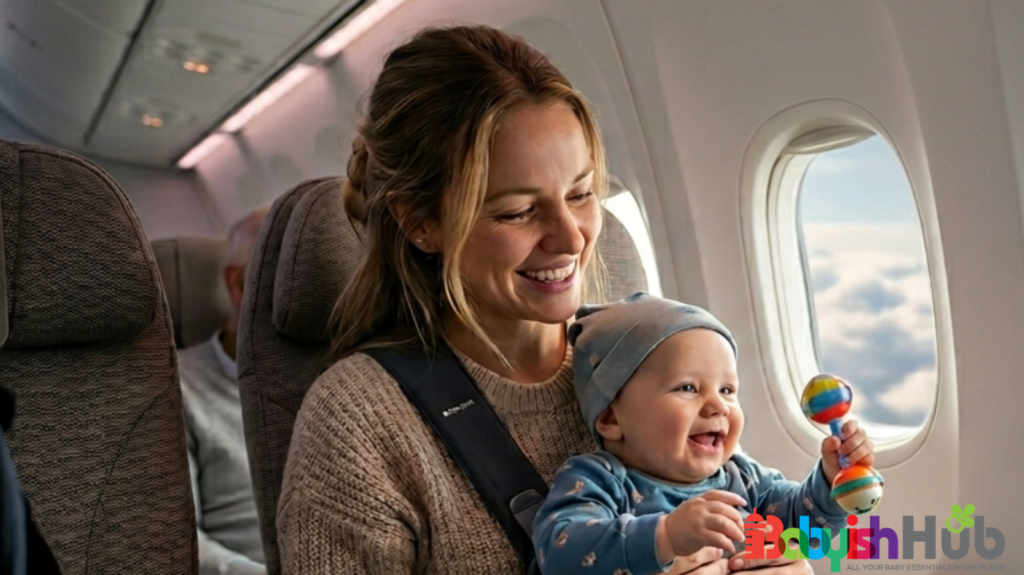
Beyond feeding and diaper changes, a few small things can make a big difference in how calm and comfortable your baby feels on the plane, as explained below:
Watch the Cabin Temperature
Temperature is something many parents overlook. Airplane cabins can get quite cold, especially on longer flights. Dress your baby in a layer they can add and remove easily, and bring a light blanket. Conversely, some planes run warm, and babies can get too hot, which makes them fussy and hard to settle. Feel the back of your baby’s neck as your guide:
- Warm and slightly sweaty means too hot.
- Cool and comfortable is the target.
Being Close to You Helps More Than Any Item
Familiar sensory cues matter more than any single item you could pack. The smell of your skin, the sound of your heartbeat when you hold them close, the voice they know best, your calm, or at least your attempted calm.
Your presence is regulating for your baby in a way no product can replicate. Being close to you is genuinely soothing for them, even when everything else feels new and overwhelming.
Bring Extra Pacifiers
If your baby uses a pacifier, bring more than one and secure them with a clip so they do not end up on the floor. A pacifier that hits an airplane floor is not a pacifier you want anywhere near your baby’s mouth.
Long-Haul Flights With A Baby: Extra Tips for Comfort and Easier Travel
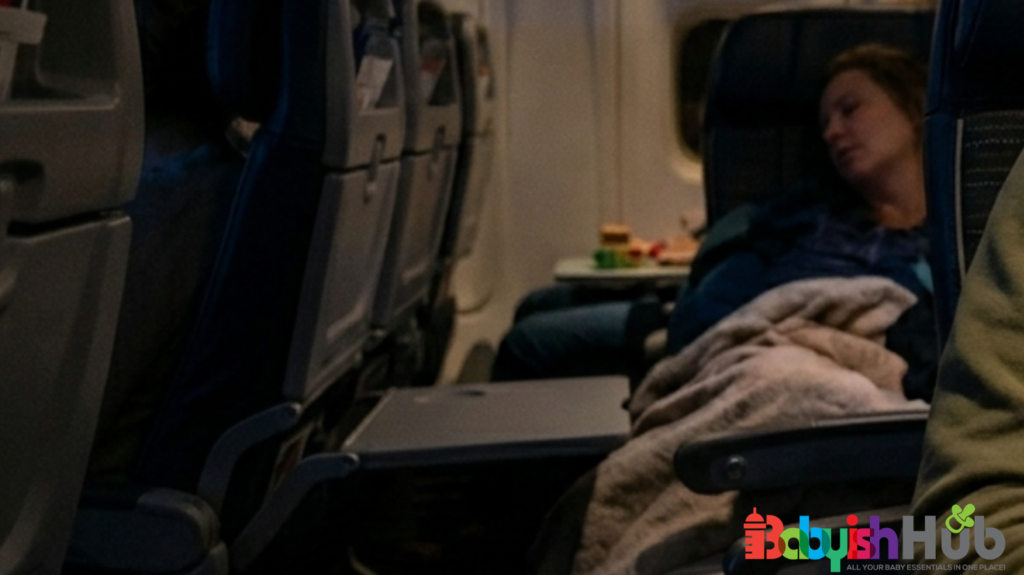
If your first trip with a baby is a long international flight, all the above advice still applies. But longer flights come with a few extra things to plan for:
Request a Bassinet Early
Many long-haul aircraft have bulkhead bassinets available for infants under a certain weight, typically around 18 to 22 pounds (8 to 10 kg), depending on the airline.
These attach to the wall in front of the bulkhead row and give your baby a flat sleeping surface while you sit directly in front of them.
They are not universally available and must be reserved in advance, so call your airline before departure to request one. These are worth their weight in gold on a long overnight flight.
Change Activities Often
On very long flights, built-in planned activity changes every hour or two. An awake baby who has been expected to sit quietly for eight hours is a baby building toward a full breakdown.
Rotate between the following activities:
- Baby carrier time
- Sitting in your lap or seat
- Walking the aisle
- Feeding time
- Diaper change
- A different toy or book
- Looking out the window
Movement and variety can help prevent meltdowns.
Expect Less Sleep on Long Flights With a Baby
You need to be realistic about what sleep will look like for you. Long-haul flights with an infant in a lap are not restful. You will sleep in fragments, if at all.
Accepting this rather than fighting it, and adjusting your expectations for the days immediately after arrival, makes the whole experience easier to handle for you.
RELATED: 25 Best Hacks for Traveling With Your Baby!
What To Expect After Landing With A Baby: First Hours At Your Destination
Getting off the plane is its own logistical process…you’ll need to collect your gate-checked stroller on the jetway, reload your bag, and navigate through baggage claim or transfer to your onward transport. With a baby at hand, this takes longer than it did before you had a baby. That is just the reality.
Your Baby May Be Tired or Overstimulated
Yes! Your baby is likely to be either deeply asleep or strung out from the stimulation of the flight, and possibly both in rapid succession. Feed and change them as soon as you are in a settled spot, whether that is a family room in the arrivals hall, your car, or a hotel lobby.
Expect Longer Immigration Time
For international arrivals with a baby, customs and immigration lines can be long. Check whether the airport has a family lane or priority immigration channel, because many international airports do offer this. Ask when you get to the queue if you are unsure.
Give Your Baby Time To Reset
Give yourself and your baby a recovery window after a flight, especially a long one. A quiet afternoon, familiar comfort items, your normal feeding and sleep cues, and your calm, reassuring presence are some of the best tools you can use to reset your baby who has had a big sensory day.
Related: Best Places To Travel With A Baby
Flying with A Baby When You Are Also Sick or Exhausted
This deserves its own mention because new moms do not always have the luxury of being in peak condition for a flight. If you are dealing with postpartum fatigue, a cold, or just the general depleted state that comes with early parenthood, flying with a baby is harder but still entirely doable.
Here are some quick tips to help you through:
- Accept Help: Accept help more readily than you normally would. From gate agents, flight attendants, and fellow passengers who offer to hold a bag while you buckle your baby. People are generally kind to a new mom who clearly needs a hand.
- Lower your expectations for yourself during the flight: You do not need to be reading or working or doing anything beyond managing your baby and your own basic needs. The flight is just the flight. It ends. Give yourself full permission to focus only on that.
- Ask for help if you feel overwhelmed: If you are traveling solo with a baby for the first time and feeling genuinely overwhelmed, tell a flight attendant. This doesn’t mean you’re failing. Remember, the flight attendants are trained to assist, and most are genuinely happy to help a solo traveling mom however they can.
What To Do If Something Goes Wrong When Flying With a Baby
Flights get delayed. Connections get missed. Bags get lost. Babies develop unexpected fevers the morning of departure. These things happen to traveling parents, and knowing you can navigate them when they happen is more useful than hoping they will not.
If Your Flight Is Delayed:
For delays, I advise you to find a quiet corner of the airport away from the main boarding areas where your baby can kick on a blanket, or you can nurse in relative peace. Bring enough supplies in your carry-on to cover several extra hours beyond your planned travel time. This is always the right call.
If Your Baby Is Sick:
For a sick baby, trust yourself. If your baby woke up with a mild cold but is otherwise acting normally, most pediatricians would say flying is generally okay. A very sick baby, one with a high fever, difficulty breathing, an ear infection, or obvious distress, is a different situation. If in doubt, call your pediatrician before heading to the airport. Rescheduling a flight is stressful and potentially costly. It is sometimes the right call.
If You Miss a Connection:
For a missed connection, go directly to your airline’s customer service desk with your baby and your bags, speak to a real agent rather than using the kiosk, and ask what your options are. Airlines deal with families with babies in these situations regularly, and most agents work to find solutions. Advocate for yourself clearly and politely.
How To Feel More Confident Before Your First Flight with A Baby

Confidence for a first flight with a baby does not come from reading everything possible, though being informed certainly helps. It comes from accepting that you are going to figure it out as you go, the way you have figured out every other part of this new parenthood thing you never did before.
Here are a few simple ways to feel more prepared:
- Pack only what you truly need, not everything possible
- Arrive at the airport early so you are not rushing
- Remind yourself that most problems on flights are manageable
- Expect some messy or imperfect moments; that is normal
- Break the journey into small steps instead of thinking about the whole flight at once
- Trust that the next flight will feel easier than this one
Pro Tip: Think back to other parenting moments that felt hard at first, like bath time or night feeds. They are much easier now because you learned by doing. Flying is the same. The first time feels big, but it quickly becomes familiar.
Flying With A Baby For New Moms FAQs:
Here are some of the commonly asked questions by new parents about flying with a baby:
What are the rules for flying with a baby?
Here’s a quick summary of rules for flying with a baby: Babies under two fly free as lap infants on most airlines, or at a reduced fare. They do not need an ID for domestic flights, but require a passport for international travel. Breast milk, formula, and baby food are exempt from liquid restrictions but must be declared at security. Always confirm your airline’s specific infant policy before booking.
How long should you wait to fly with a baby?
Most pediatricians recommend waiting until your baby is at least two to three months old for non-essential travel. By this point, their immune system is slightly stronger, and initial vaccinations are underway. For premature babies or those with health complications, always consult your pediatrician before flying, regardless of age.
How to protect baby ears during flight?
To protect your baby’s ears during flight, I advise you to nurse, bottle feed, or offer a pacifier during takeoff and descent. Swallowing helps equalize the pressure in your baby’s Eustachian tubes, which is the main cause of ear discomfort during flights. Start before you feel your own ears pop. For older babies, a teether or snack works the same way.
What is the hardest age to fly with a baby?
The hardest age to fly with a baby for most parents is the eight-to eighteen-month range. Babies this age are mobile, easily bored, too aware to sleep through stimulation, and too young to reason with. They want to move constantly but must stay contained. Newborns and young infants are often surprisingly easier because they sleep more.
Can flying affect a baby’s ears?
Yes, flying affects a baby’s ears. Babies are more sensitive to cabin pressure changes than adults because their Eustachian tubes are smaller and less effective at self-regulating. This causes discomfort, particularly during takeoff and landing, and is a common trigger for in-flight crying. Feeding or offering a pacifier during pressure changes reliably helps reduce this discomfort.
How do I prepare my baby for a flight?
To prepare your baby for a flight, you should pack more diapers and feeding supplies than you think you need. Time your departure around your baby’s natural sleep window if possible. Bring familiar comfort items like a sleep sack and lovey. Practice any new travel baby gear, like a carrier or travel bassinet, at home first. And lower your expectations for perfection. Flexibility matters most.
What are the risks of flying with a 2-month-old?
The primary risk of flying with a 2 month old is exposure to airborne illness in a recirculated cabin environment, as a two month old’s immune system is still immature. Pressure changes can also cause ear discomfort. Most healthy two month olds tolerate flying reasonably well, but consult your pediatrician beforehand, particularly if your baby was premature or has any health concerns.
Can we travel with a 1 month old baby in flight?
Technically, yes, you can travel with a 1 month old in a flight. Most airlines allow it, but most pediatricians advise caution. A one-month-old has a very immature immune system and limited ability to regulate body temperature. If travel is essential, speak to your pediatrician first, choose a direct flight, minimize airport exposure time, and keep your baby away from visibly unwell passengers.
When can a newborn fly internationally?
Most airlines permit international travel from seven to fourteen days old with a doctor’s note, but medical guidance generally recommends waiting until at least two to three months. International flights involve longer exposure times, more crowded environments, and greater logistical demands. Your baby also needs a passport, which takes several weeks to process.
What is the best time of day to fly with a baby?
The best time of the day to fly with a baby is the early morning flights (this works well for most families). During this time, airports are quieter, delays are less likely, and many babies are at their calmest and most alert in the morning. A flight that overlaps with your baby’s longest nap window is also a smart choice. Avoid late afternoon and evening departures, which typically fall during peak fussiness hours.
What if my baby cries on the plane?
If your baby cries on the plane, stay calm and work through the basics: hunger, ear pressure, an overdue diaper, overtiredness, or overstimulation. Nurse, offer a pacifier, walk the aisle, or dim stimulation with a blanket. Most passengers are understanding. Flight attendants can also help. Crying is temporary, normal, and does not make you a bad mother. The flight will end.
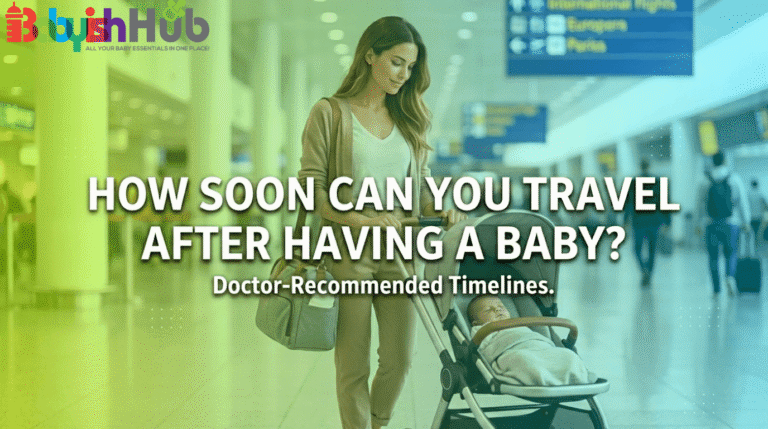
Check This Out: How soon can you travel after having a baby?
A Final Word for First-Time Flying Moms
Flying with a baby for the first time is one of those parenting milestones that sits in your imagination as much larger and more frightening than it usually turns out to be in reality. Is it simple? No. Does it require preparation, patience, and a certain willingness to surrender to the unpredictability of traveling with a very small person? Yes, absolutely.
But you are already doing something harder every single day. You are raising a human being. You are showing up exhausted and doing it anyway. You are figuring out, in real time, one of the most demanding and meaningful things a person can do. A flight is just a flight. You have got far more complicated things handled already.
Take a breath, pack those extra diapers, and go wherever it is you are going. You and your baby are going to be just fine.