
How Long Should Baby Sleep In A Bassinet? (Safe Age Limits)
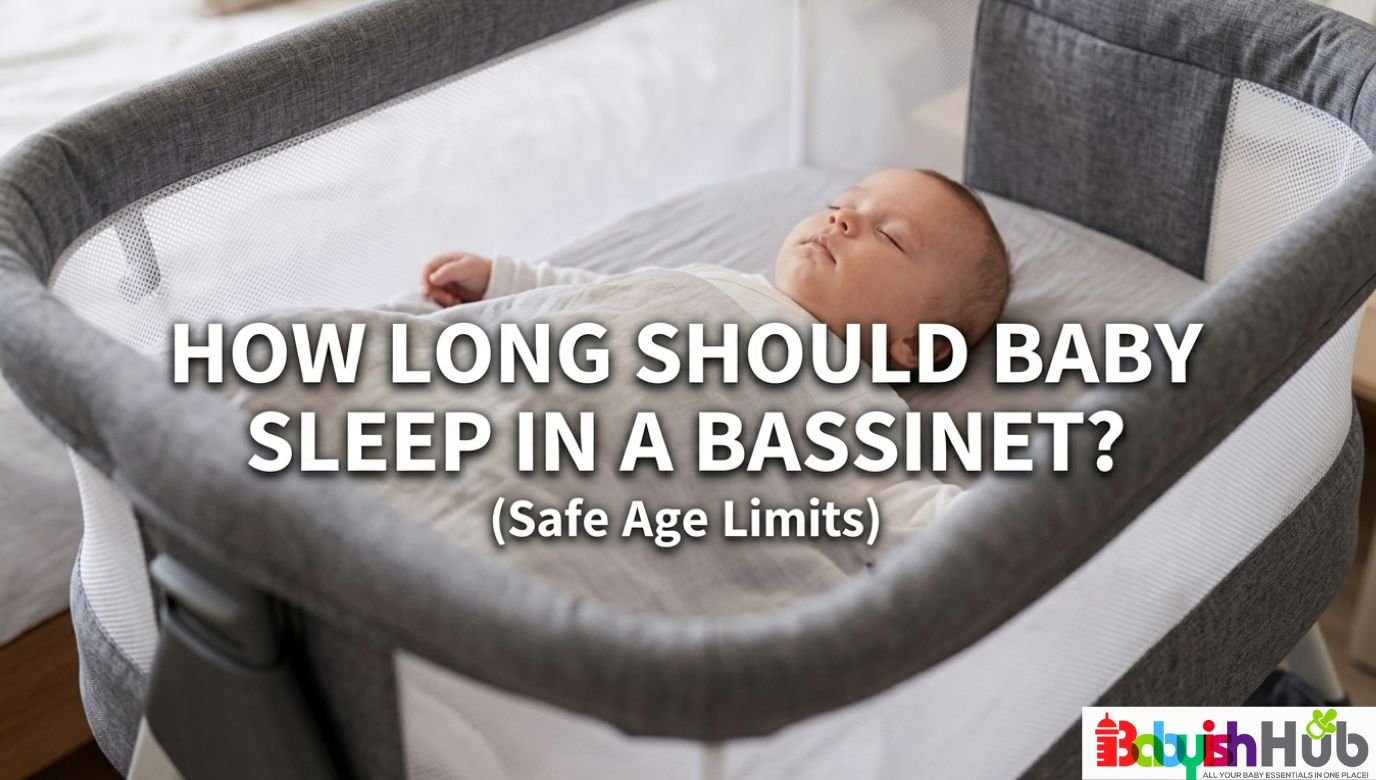
During those early, sleep-deprived months, I used to hear this question constantly from exhausted new parents, usually right around week ten. You look into the bassinet and suddenly realize your baby seems twice the size they were at birth, looking a little too snug for comfort. I’ve been there, and that sudden “outgrown overnight” panic is quite real.
So, how long should baby sleep in a bassinet? While most babies can sleep safely in a bassinet until around 4 to 6 months old, there is no single, magic number that applies to every family. The ideal timeline depends entirely on a mix of your baby’s physical milestones, their size, and the strict safety limits set by your specific bassinet manufacturer. If your little one is already nearing those limits, rolling over, or pushing up on their hands, it’s officially time to make the switch.
This guide walks through exactly how to spot the signs that it’s time to move on and how to make the transition to a crib as smooth and tear-free as possible for both of you.
Key Takeaways:
- Most babies outgrow a bassinet by 4 to 6 months old.
- Always follow the manufacturer’s height and weight limits over a general age guideline.
- Rolling over or pushing up on hands and knees are immediate signs to stop bassinet use.
- A crib is the safer long-term sleep space once your baby outgrows the bassinet.
- Transitioning before your baby fully outgrows the bassinet tends to make the move easier for everyone.
How Long Should Baby Sleep In A Bassinet?
Four to six months is the general window most families work within, but that range is a starting point, not a hard rule. Babies grow at different rates, and a baby in the 90th percentile for length might need to transition well before six months, while a smaller baby might comfortably use their bassinet a bit longer.
The manufacturer’s guidelines play a bigger role here than any generic age range. Every bassinet on the market comes with its own weight and height limits, and those numbers exist because the product was tested and rated for safety within them, not beyond.
Developmental milestones are just as important as the numbers on the label. A baby who’s hit the weight limit and a baby who’s started rolling over are both signaling the same thing: time for a crib, regardless of what the calendar says.
What Determines When It’s Time To Stop Using A Bassinet?
Instead of guessing based on your baby’s age, you need to check these four KEY safety limits to know if it’s time to switch to a crib.
Weight Limit
Most bassinets are rated for somewhere between 15 and 20 pounds, though this varies by model. I’d caution you against exceeding that weight limit. Why? Because the bassinet’s structure, stability, and mattress support are all designed around that maximum. And as such, going beyond it can compromise how safely the bassinet holds your baby through the night.
Height Limit
Length is another crucial determinant of when it’s time to transition from a bassinet to a crib. Once your baby’s head nears the top of the bassinet or their feet reach the bottom, they’ve outgrown the safe boundaries of that sleep space, even if they haven’t hit the weight limit yet. A cramped bassinet also just makes for a less comfortable night, for what it’s worth.
Rolling Over
Rolling over is one of the clearest, most immediate signs to stop bassinet use, regardless of your baby’s age or size. Once your baby can roll, they need the extra space and stability a crib provides, since a bassinet’s smaller footprint isn’t built to accommodate that new mobility safely.
Pushing Up or Sitting
Once your baby can push up onto their hands and knees or pull themselves toward sitting, the tipping risk in a compact, lightweight bassinet increases. Cribs are built with a taller, more stable frame specifically to handle this stage of increased movement.
Signs Your Baby Has Outgrown The Bassinet
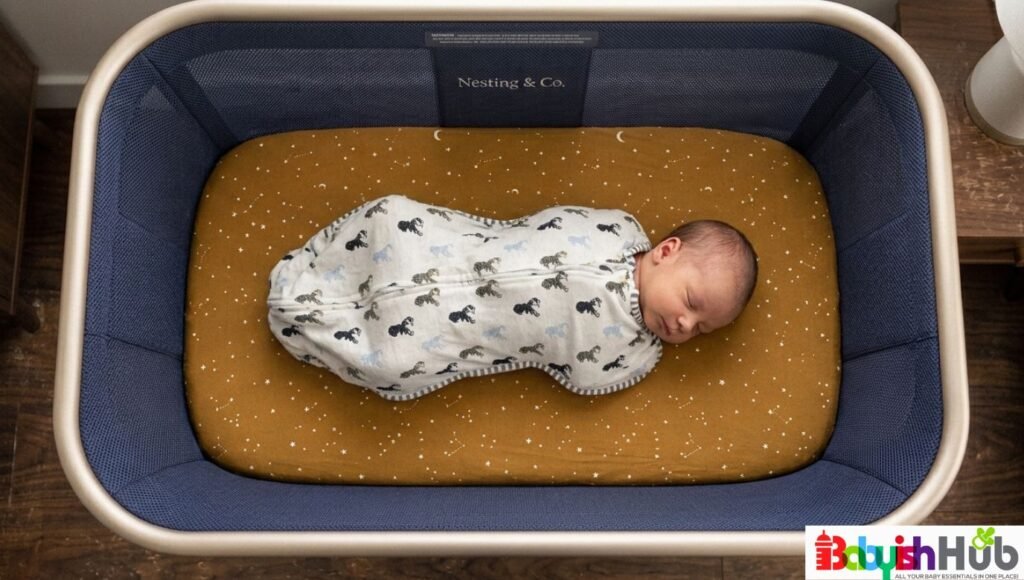
If your baby is showing even one of the following physical or structural signs, it means they have officially outgrown the bassinet and need to be moved to a crib:
- Rolling over, even just once
- Pushing up onto hands and knees
- Sitting up independently or attempting to
- Touching or pressing against the sides of the bassinet
- Reaching or exceeding the manufacturer’s weight or height limit
- Looking visibly cramped, with limited room to stretch out
If you notice even one of these signs, that’s a strong signal to start the crib transition rather than waiting for several to show up at once.
Bassinet vs. Crib: What’s the Difference?
To help you weigh your options, this quick breakdown walks you through how a bassinet stacks up against a crib in terms of safety, size, and long-term use.
| Feature | Bassinet | Crib |
| Best Age | Birth to 4 to 6 months | Birth to toddler |
| Portability | High | Low |
| Size | Compact | Larger |
| Longevity | Short-term | Long-term |
| Safe Sleep | Yes, within limits | Yes |
A bassinet’s biggest advantage over a crib is how easily it moves from room to room, which makes those early weeks of frequent night feeds and room-sharing more manageable. A crib trades that portability for the space and stability your baby needs as they grow and become more mobile.
When Should You Transition To A Crib?
The safest window to transition is before your baby reaches the bassinet’s weight or height limit, not after. Waiting until your baby has clearly outgrown the space increases the risk of a compromised sleep setup, right around the time your baby is also becoming more mobile.
The American Academy of Pediatrics (AAP) safe sleep guidelines recommend room-sharing, without bed-sharing, for at least the first six months of your baby’s life. This guideline holds whether your baby is sleeping in a bassinet or has already moved to a crib in your room, so the transition doesn’t need to mean moving your baby to a separate nursery right away.
Moving before sleep becomes disrupted also tends to go more smoothly. A baby who’s already restless and cramped in an outgrown bassinet has a harder adjustment ahead than one who moves to a crib while things are still going relatively well.
RELATED: Can Your Baby sleep In A Swing? Safety Considerations
How To Transition Your Baby From A Bassinet To A Crib
When my oldest, Chloe, hit four months, I was terrified that moving him out of his cozy bassinet would ruin our hard-won sleep schedule. I braced myself for a brutal week, but by using the exact tips I have shared below, he adjusted in just three days.
Start With Daytime Naps
Introduce the crib for a nap or two before making it the overnight sleep space. This gives your baby a low-stakes first experience with the new environment.
Keep the Same Bedtime Routine
Whatever steps your baby associates with winding down (it could be a warm bath, a final feeding, a specific lullaby, etc.), keep them exactly the same through the transition. I always tell parents to view the routine as the anchor; familiar cues carry huge psychological weight for an infant, helping them feel secure even when their actual sleep surface changes.
Use Familiar Sleep Cues
DON’T try to change everything at once. Keeping the exact same sleep sack, the same white noise machine, and the same pitch-black room will help bridge the gap between the old bassinet and the new crib. Keeping these sensory details identical gives your little one something instantly recognizable in an otherwise unfamiliar setup.
Give Your Baby Time To Adjust
I won’t sugarcoat it: a few rocky nights during the transition are completely normal, and it doesn’t mean the crib is a failure. In my experience, most babies settle beautifully into their new environment within a few days to two weeks, so try not to panic if night one feels a little bumpy.
Commit and Stay Consistent
Once you make the executive decision to switch, stick with it. It can be quite tempting to put them back in the bassinet at 3:00 AM just to get a quick stretch of sleep, but moving back and forth only creates confusion in your tiny human. Consistency helps your baby build a strong association between the crib and a good night’s rest.
RELATED: How To Prepare Your Baby’s Room For Better Sleep
Can A Newborn Sleep In A Crib Instead Of A Bassinet?
Yes. A crib that meets current safety standards is safe to use from birth. A bassinet is convenient for its smaller size and portability, especially for room-sharing, but it isn’t required. Plenty of families skip the bassinet stage entirely and start their newborn in a crib without any safety concerns.
What Are The Safe Sleep Guidelines To Observe for Babies?
Whether your baby is sleeping in a bassinet or a crib, the same core safe sleep principles apply:
- Place your baby on their back for every sleep
- Use a firm, flat mattress designed for that specific bassinet or crib
- Use only a fitted sheet made for the sleep surface
- Skip pillows, blankets, and stuffed animals in the sleep space
- Room-share without bed-sharing, particularly for the first six months
- Follow the manufacturer’s instructions and weight or height limits exactly
What Common Bassinet Mistakes Are You Making With Your Baby?
Here are the most common bassinet mistakes you need to avoid to keep your baby safe and sleeping soundly:
- Waiting until your baby is visibly too big before transitioning
- Ignoring the manufacturer’s weight limit because the bassinet still looks fine
- Continuing bassinet use after your baby has started rolling over
- Adding extra padding or a thicker mattress to extend the bassinet’s use
- Using sleep positioners, which aren’t recommended in any sleep space
- Moving your baby to a crib only after sleep problems have already started
How Long Should Baby Sleep In A Bassinet FAQs:
Here are some quick answers to some of the most common questions parents ask about how long a baby should sleep in a bassinet
How long should a newborn sleep in a bassinet?
Newborns can typically use a bassinet from birth up until around 4 to 6 months, depending on the specific product’s weight and height limits and how quickly your baby grows and develops.
Can my baby sleep in a bassinet after rolling over?
No. Once your baby can roll over, it’s time to move to a crib, regardless of their age or how close they are to the bassinet’s weight or height limit.
What happens if my baby exceeds the bassinet weight limit?
Exceeding the weight limit can compromise the bassinet’s stability and the safety of the sleep surface. Transition to a crib as soon as your baby nears or reaches that limit.
Is 6 months too old for a bassinet?
For most babies, yes. By 6 months, many babies are rolling, pushing up, or close to outgrowing the bassinet’s size limits, which makes a crib the safer choice.
Can a baby skip the bassinet and sleep in a crib?
Yes. A crib meeting current safety standards is appropriate from birth, so skipping the bassinet stage entirely is a safe and common choice for many families.
Should I transition to a crib before sleep regression?
Transitioning before your baby’s sleep becomes disrupted, whether by a regression or by outgrowing the bassinet, tends to make for an easier adjustment than waiting until sleep is already unsettled.
What if my baby sleeps better in the bassinet?
Comfort in the bassinet doesn’t outweigh safety limits. If your baby has outgrown the bassinet by weight, height, or mobility, move to a crib and give them time to adjust, even if the first few nights feel rockier.
Can I use a bassinet for naps only?
Yes, as long as the bassinet remains within its weight and height limits and your baby hasn’t started rolling. The same safe sleep guidelines apply to naps as to overnight sleep.
RELATED: Can Baby Sleep In A BabyBjörn Bouncer?
Final Thoughts
That’s it on how long should baby sleep in a bassinet. Most babies sleep safely in a bassinet until around 4 to 6 months old, but the number on the calendar is only part of the picture. The safest time to transition is when your baby reaches the bassinet’s weight or height limit, starts rolling over, or shows signs of increased mobility, whichever comes first. Planning the move early and keeping your bedtime routine steady can turn what feels like a big change into a fairly smooth one for both of you.