How To Get A Teething Baby To Sleep: 12 Sleep Hacks
You have probably already experienced this: your baby finally falls asleep, only to wake crying an hour later. If your once-solid sleeper suddenly fights bedtime or wakes more through the night, teething may be part of what’s going on.
How to get a teething baby to sleep: The best way to help your teething baby sleep is to soothe their sore gums before bedtime with a chilled teether or gentle gum massage, follow a consistent bedtime routine, keep the room cool and calm, and use pain relief only as recommended by your child’s healthcare provider.
The good news is that teething sleep disruption is usually temporary and tends to ease as the tooth erupts. This guide covers why teething tends to hit hardest at night, gentle ways to ease your baby’s discomfort, and when it’s time to call your pediatrician.
Key Takeaways:
- Teething discomfort often feels worse at night than during the day.
- A calming bedtime routine helps your baby settle even on rough nights.
- Chilled teethers and gentle gum massage can ease sore gums.
- Skip unsafe remedies and numbing gels unless your provider recommends them.
- Occasional night waking during teething is common and usually passes.
- Call your pediatrician if symptoms feel severe or don’t fit typical teething.
Does Teething Really Cause Sleep Problems?
Erupting teeth press against the tender gum tissue of your little one, and that soreness can flare up right around the time a tooth breaks through. Some babies barely notice, while others wake more often for a few nights in a row.
Not every sleep disruption comes down to teething, though. Illness, a developmental leap, or a shifting nap schedule can look similar, so it’s worth checking for other symptoms before assuming a new tooth is the cause.
Why Does Teething Get Worse At Night?
During the day, activity and distraction pull your baby’s attention away from sore gums. At night, with fewer distractions and a tired body, that same discomfort becomes harder to ignore.
Moreover, fatigue tends to lower your baby’s ability to shake off minor pain, which is part of why teething flare-ups often show up most at bedtime and during overnight wake-ups.
12 Safe Tips On How To Get A Teething Baby To Sleep
Here are 12 safe, practical ways to help soothe your teething baby and encourage better sleep:
- Offer a chilled teether before bed: Cold helps numb sore gums. Keep it in the fridge, not the freezer, since overly hard teethers can hurt more than help.
- Gently massage your baby’s gums: Use a clean finger and light pressure along the gum line for a minute or two before your baby’s sleep routine begins.
- Stick to a consistent bedtime routine: Familiar steps signal to your teething that sleep is coming, which can ease anxiety layered on top of physical discomfort.
- Offer extra comfort without creating new habits: A bit more rocking or holding is fine during a rough patch, but try to return to your usual routine once the discomfort passes.
- Dress your baby comfortably for sleep: Breathable, appropriately warm sleepwear prevents overheating from adding to an already uncomfortable night.
- Keep the room calm, cool, and dark: A steady sleep environment supports settling, especially when your baby is already having a harder time than usual.
- Feed if appropriate: Sucking can offer brief comfort, but I advise that you first check with your pediatrician before adding extra night feeds solely for teething relief.
- Use pain relief if recommended: Age-appropriate pain relief, only as directed by your child’s healthcare provider, may help on particularly tough nights.
- Encourage daytime naps: Overtiredness makes any discomfort harder to manage, so protecting daytime sleep supports better nights too.
- Watch for other signs of illness: Fever, ear-pulling, or rash shouldn’t be brushed off as teething without checking with your provider.
- Stay patient during night wakings: Offer reassurance while keeping your response consistent with your baby’s usual sleep habits.
- Return to your normal routine once teething passes: Most babies settle back into their regular sleep pattern within a few nights of the tooth coming through.
Safe Teething Remedies For Your Baby
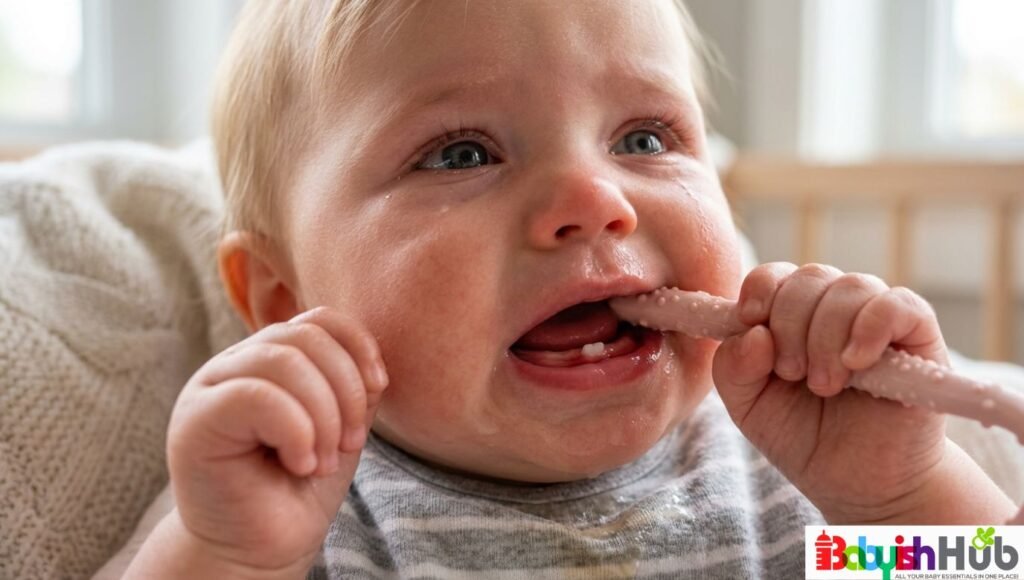
While you can’t stop teething, there are several safe ways you can help ease your baby’s discomfort. The safest teething remedies are simple, gentle, and designed to provide temporary relief without unnecessary risks. They include chilled teethers, gentle gum massage, and a cold, damp washcloth, which can help soothe sore gums before naps or bedtime.
If your baby is experiencing even high levels of teeth-related discomfort, your pediatrician may recommend an age-appropriate pain reliever. Because teething symptoms usually come and go over a few days, these comfort measures are often all that’s needed until the tooth breaks through.
It’s also important to note that the American Academy of Pediatrics recommends these drug-free approaches first and advises speaking with your child’s healthcare provider before using pain medication.
Teething Remedies To Avoid
Not every teething remedy is safe for your baby. To help protect your little one, I strongly advise you against these common products and practices:
- Amber teething necklaces: These can pose choking and strangulation hazards and aren’t recommended for soothing teething pain.
- Frozen teethers: Choose teethers that are chilled in the refrigerator rather than frozen solid, as overly hard teethers can injure sensitive gums.
- Numbing gels: Benzocaine-containing teething gels and other oral numbing products aren’t recommended for young children unless specifically advised by your pediatrician.
- Unproven home remedies: Avoid herbal products, alcohol-based remedies, or other treatments that aren’t safe or effective for babies.
The idea here is to stick with simple, evidence-based comfort measures instead. As I always advise you, talk to your pediatrician if you’re unsure whether a teething remedy is appropriate for your baby.
Sample Bedtime Routine For A Teething Baby
Keeping the same bedtime routine each night provides comfort and consistency while giving your baby a few extra opportunities for teething relief before sleep. Here’s a simple bedtime routine to consider:
- Warm bath
- Feeding
- Gentle gum massage
- Chilled teether
- Story or lullaby
- Sleep sack
- Into the crib while drowsy
How Long Does Teething Affect Sleep?
For most babies, teething-related sleep disruption lasts just a few days before and after a tooth breaks through the gums. During this time, sore gums may make it harder to fall asleep, stay asleep, or settle back down after waking.
Every baby is different, though. Some babies barely seem bothered by teething, while others may have a few rough nights with increased fussiness and more frequent wake-ups. Larger teeth, such as molars, can sometimes cause more noticeable discomfort than the first front teeth.
If your baby’s sleep problems continue for more than a week or two, or they’re accompanied by symptoms that don’t fit typical teething, it’s worth checking with your pediatrician to rule out other causes. Most babies return to their usual sleep routine once the tooth has fully erupted.
Signs Your Baby’s Sleep Problems Are Teething-Related
It isn’t always easy to tell whether teething is behind your baby’s restless nights. While sore gums can make it harder to settle or stay asleep, many other things, like illness, hunger, or developmental changes, can disrupt sleep too.
Your baby’s sleep troubles are more likely to be related to teething if you also notice:
- Swollen or tender gums
- Increased drooling
- Chewing on fingers, toys, or anything within reach
- Mild fussiness that comes and goes
- Rubbing their cheeks or ears
- A visible tooth just beneath the gum or beginning to break through
If your baby has a high fever, persistent vomiting, diarrhea, or seems unusually unwell, those symptoms are unlikely to be caused by teething alone and should be discussed with your pediatrician.
How Do You Know If It’s A Sleep Regression Or Teething?
Teething and sleep regressions often happen around the same age, which can make it difficult to know what’s causing your baby’s nighttime wake-ups.
Teething usually comes with physical signs like swollen gums, drooling, and chewing. Sleep tends to improve once the tooth breaks through.
A sleep regression, on the other hand, is more closely tied to your baby’s development. Your little one may suddenly resist bedtime, wake more often, or take shorter naps without showing signs of sore gums.
It’s also possible for both to happen at the same time. In that case, sticking to your baby’s usual bedtime routine while offering extra comfort for teething can help them get through the rough patch.
How To Tell If Your Baby Has An Ear Infection Or Just Teething?
Some babies pull at their ears while teething, which can make you wonder if they have an ear infection instead. Because the nerves in the gums, jaw, and ears are connected, teething discomfort can sometimes seem like ear pain.
Here are a few KEY differences to watch for:
| Teething | Ear Infection |
| Swollen gums | Persistent ear pain |
| Increased drooling | Fever, especially above 101°F (38.3°C) |
| Chewing on objects | Drainage from the ear |
| Mild fussiness | Crying that worsens when lying down |
| Symptoms improve after the tooth erupts | Symptoms continue or worsen |
If you’re unsure what’s causing your baby’s discomfort, or they develop a fever or other concerning symptoms, it’s best to contact your pediatrician.
Should You Wake Your Baby for Teething Pain Relief?
In most cases, NO. If your baby is sleeping comfortably, there’s usually no need to wake them just to give pain relief for teething.
If your pediatrician has recommended pain medication because your baby has been especially uncomfortable, follow their instructions on when and how to give it.
Otherwise, letting your baby sleep is often the best approach, since restful sleep can help them feel better.
Can Babies Sleep With A Teether?
No. While chilled teethers can be very helpful before bedtime, they shouldn’t stay in the crib once your baby falls asleep. Teethers are only meant to be used while your baby is awake and supervised.
BEFORE placing your baby in the crib, remove the teether and follow safe sleep guidelines by keeping the sleep space free of toys, pillows, blankets, and other loose items.
RELATED: When Can Baby Sleep With Lovey?
What Teeth Usually Cause the Most Sleep Disruption?
Some teeth tend to cause more discomfort than others in babies because they’re larger or take longer to erupt.
Here’s a general timeline to keep in mind:
| Age | Teeth |
| 4 to 7 months | Lower central incisors (first teeth) |
| 8 to 12 months | Upper central incisors |
| 9 to 16 months | Side incisors |
| 13 to 19 months | First molars |
| 16 to 23 months | Canines |
| 23 to 33 months | Second molars |
Molars are often the teeth parents say cause the most nighttime fussiness because of their larger size, although every baby experiences teething differently.
When Should You Call A Doctor?
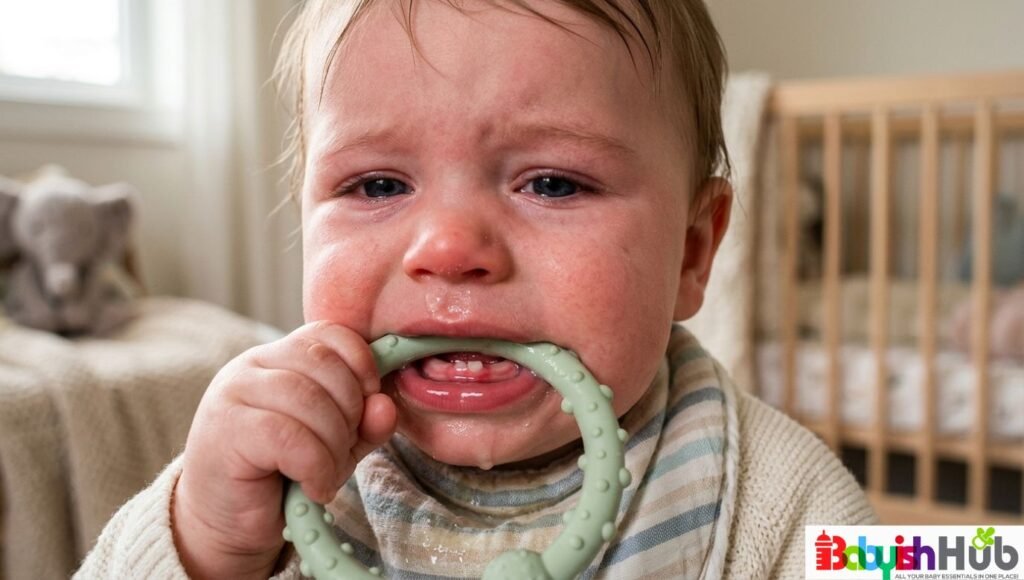
Most teething symptoms are mild, and you can easily manage them at home with comfort measures. However, you should NEVER assume that every change in your baby’s behavior is caused by teething.
Contact your pediatrician if your baby:
- Has a high fever (above 101°F or 38.3°C)
- Refuses to eat or drink for an extended period
- Seems unusually difficult to comfort or cries inconsolably
- Has persistent vomiting, diarrhea, or a widespread rash
- Shows signs of an ear infection, such as ongoing ear pain or drainage
- Has sleep disruption that lasts longer than expected or is accompanied by other concerning symptoms
Trust your mom instincts, too. If something doesn’t seem right or your baby’s symptoms feel more severe than typical teething discomfort, it’s always okay to call your pediatrician for guidance. It’s better to have your concerns addressed than to overlook an illness that’s unrelated to teething.
How To Get A Teething Baby To Sleep FAQs
Here are answers to some of the most common questions parents have about teething and sleep.
How long does teething keep babies awake at night?
Usually just a few nights around when a tooth is actively erupting. If disrupted sleep continues well beyond that window, check with your pediatrician to rule out other causes.
Why does teething seem worse at bedtime?
Fewer daytime distractions and accumulated fatigue make gum soreness harder to ignore once the lights go out, even if the discomfort was there all day.
Can teething cause sleep regression?
Teething can temporarily disrupt sleep patterns that were previously solid, though this usually resolves once the tooth comes through and doesn’t reflect a lasting change in your baby’s sleep skills.
What is the fastest way to soothe a teething baby?
A chilled teether or gentle gum massage tends to offer the quickest relief, especially combined with the calm, familiar steps of your usual bedtime routine.
Should I feed my baby every time they wake while teething?
Not necessarily. Sucking can soothe your baby briefly, but adding new night feeds solely for teething isn’t always needed. Talk with your pediatrician if you’re unsure.
Can teething make babies cry all night?
Occasional teething discomfort rarely causes true all-night crying. Persistent, inconsolable crying is worth a call to your pediatrician to rule out other causes.
Is it okay to sleep train your baby during teething?
Many parents pause new sleep training during an active teething flare-up, then resume once the discomfort passes. There’s no single right answer, so factor in your baby’s comfort level.
What age do teething sleep problems usually start?
Teething and related sleep disruption often begin around 4 to 7 months, though timing varies widely from baby to baby.
Final Thoughts
That’s it on how to get a teething baby to sleep. The process often comes down to combining gentle comfort measures, patience, and a consistent bedtime routine. While teething can temporarily disrupt your baby’s sleep, this phase doesn’t last forever.
By soothing sore gums, maintaining healthy sleep habits, and seeking guidance from your pediatrician when needed, you can help your little one rest more comfortably until the discomfort passes. Better nights are ahead for both you and your baby.