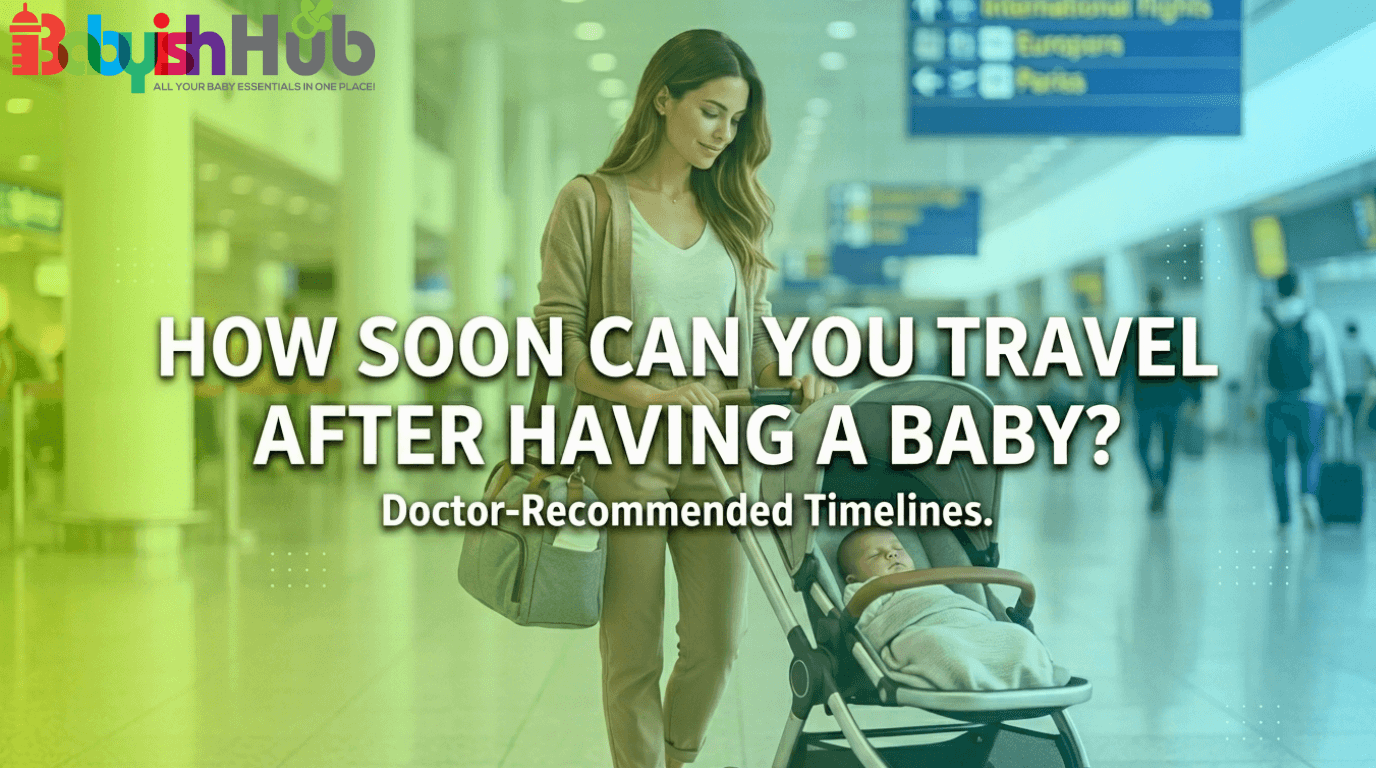
How Soon Can You Travel After Having A Baby? Doctor-Recommended Timelines:
Somewhere around week three postpartum, my sister called me from the airport. She had a six-week-old strapped to her chest and was flying across the country to visit a friend. I remember thinking she was either very brave or completely unhinged. By the time my third baby arrived, I understood completely.
The question of how soon you can travel after having a baby has layers to it: what’s safe for your baby, what’s realistic for your body, and what your family’s specific circumstances allow. The answer looks different for everyone, and it’s worth understanding all of it.
TL;DR (How Soon Can You Travel After Having A Baby):
TL;DR: Most healthy newborns can take short road trips within the first few weeks, but many pediatricians recommend waiting 4 to 6 weeks before flying. If you’ve had a C-section, you may need 6 weeks or longer to recover before traveling comfortably. The right timing depends on your baby’s health, your recovery, and the type of trip you’re planning.
How Soon Can You Travel With A Newborn According To Medical Guidelines?
For full-term, healthy newborns, most pediatricians advise waiting until at least two weeks before any travel, and many recommend closer to four to six weeks before air travel specifically. (Source).
Why this age limit? Newborns have immature immune systems in the early weeks, and their bodies are still regulating temperature, feeding patterns, and basic physiological functions.
As such, exposing them to crowded airports, recycled cabin air, and prolonged periods away from a controlled home environment can make the early weeks harder to manage.
The American Academy of Pediatrics doesn’t set a hard universal rule for when babies can fly, but most pediatricians land in the four to six week range for air travel as a general guideline for healthy, full-term infants.
For premature babies or newborns with any medical complications, the timeline extends further and requires direct guidance from your baby’s care team.
For car travel with a healthy newborn, short trips are generally fine from the earliest days as long as your baby is properly secured in a rear-facing car seat and you plan for frequent stops on longer drives.
Newborns shouldn’t stay in a semi-reclined car seat position for extended periods without breaks, so stop every hour to ninety minutes to take them out, feed, and let them lie flat if needed.
How Does Postpartum Recovery Affect Travel After Having A Baby?

The baby conversation is the one most parents focus on, but the postpartum recovery piece matters just as much when you’re deciding how soon to travel.
After a vaginal delivery, most care providers clear you to resume normal activities gradually over the first two to four weeks. That said, “cleared for activity” and “ready to navigate an airport with a newborn” are two completely different things.
The physical demands of travel, carrying a baby and a diaper bag, sitting in a car or plane seat for hours, managing your baby’s travel gear through a terminal, ask a lot of a body that just went through labor and delivery. Bleeding, pelvic floor strain, soreness, and sheer exhaustion are all key factors in the early weeks.
After a cesarean delivery, the recovery timeline extends. A c-section is major abdominal surgery, and most care providers recommend waiting at least six weeks before significant travel, and longer before anything physically demanding.
Lifting heavy bags, walking long distances through terminals, and sitting in cramped airplane seats all put strain on an incision that needs time to heal properly.
Beyond the physical, postpartum hormones create a kind of emotional volatility that most new parents underestimate before they experience it.
The sleep deprivation, the hormonal crash after delivery, the anxiety that comes with keeping a new human alive—all these layers onto the stress of travel in ways that can feel overwhelming even when the trip itself is short and simple.
But this should not be a reason to never travel. Rather, it’s upon you to be honest with yourself about how you’re doing before you book something.
How Soon Can You Travel After Having A Baby By Plane?
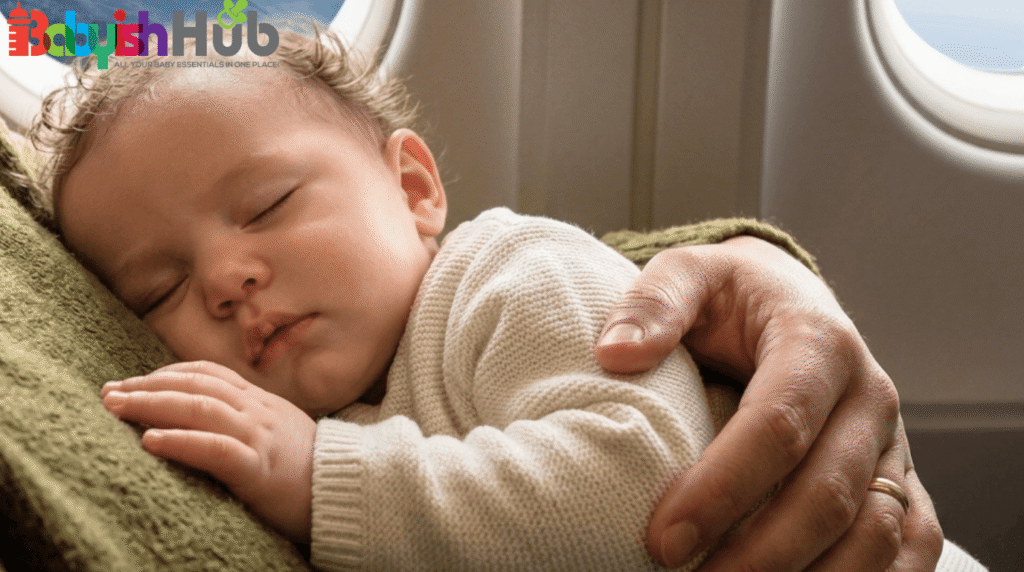
For most healthy, full-term babies, the practical answer is four to six weeks for domestic air travel and closer to eight to twelve weeks for long-haul international flights.
The longer timeline for international travel accounts for extended time in airports, longer time in cabin air, potential time zone disruption, and reduced access to familiar medical care if something comes up.
Some airlines have their own policies about newborns on flights. A handful of carriers require a doctor’s note for babies under a certain age, often two weeks.
Check your specific airline’s policy when you book, particularly for international travel, because the requirements vary, and discovering a policy conflict at the check-in counter with a newborn is not a situation anyone wants.
Before any air travel with a baby under three months, a quick conversation with your pediatrician is worthwhile. They know your baby’s specific health picture and can give you guidance that’s more tailored than general timelines.
For healthy babies with no complications, most pediatricians will support travel at the four-to-six-week mark with standard precautions.
When Can You Take a Road Trip With a Newborn?

A road trip with a baby generally allows more flexibility on timing than air travel because you control the environment in the sense that:
- You can stop as often as you need to.
- You’re not in a pressurized cabin breathing recycled air with strangers
- You can turn around if something goes wrong.
Short road trips of two to three hours are manageable within the first few weeks for healthy newborns, assuming the parent driving has recovered sufficiently and has another adult along to manage the baby during the drive.
Solo driving with a newborn in the early postpartum weeks is genuinely hard, not impossible, but worth planning around carefully.
Longer road trips of four or more hours work better from around six to eight weeks when you’ve established more of a feeding rhythm, and you have a slightly better sense of how your baby responds to the car.
Some newborns sleep beautifully in the car, and some cry the entire time, and you won’t know which you have until you’ve driven with them a few times.
How Long Should You Wait To Travel After A C-Section?
C-section recovery introduces specific travel considerations beyond the general postpartum recovery window.
The most immediate concern with air travel after a C-section is blood clot risk. Surgery and extended immobility both raise the risk of deep vein thrombosis, and sitting in an airplane seat for several hours combines both factors.
Most care providers advise waiting until your incision has healed and your mobility has returned to something close to normal before flying. For most people, that’s a minimum of six weeks, often longer.
Driving after a C-section also requires caution. Most providers recommend waiting until you can perform an emergency stop without pain or hesitation before driving.
That’s a practical safety standard, not just a general guideline. If you’re traveling by car after a C-section in the early weeks, ride as a passenger rather than driving.
Lifting is the other limitation that affects travel specifically. Car seats, strollers, and luggage all require lifting that strains core muscles and the incision site.
Having a travel partner who can handle the heavy lifting after a C-section is quite important.
What Factors Determine Whether You’re Ready To Travel With a Newborn?
Beyond the timing, the factors that make early travel with a newborn work or fall apart come down to a few practical realities…
1. Having a second adult makes a big difference
Solo travel with a newborn under two months is doable but significantly harder, and the margin for error is smaller. A partner, a family member, or even a close friend traveling alongside you changes the equation substantially.
2. Short is easier than long in the early months
A two-hour flight is a different undertaking than a twelve-hour one. A weekend trip is a different undertaking than two weeks abroad.
If you want to travel soon after having a baby, start with something short and manageable before attempting something ambitious.
This helps build your confidence and helps you understand how your specific baby travels before you’re deep into a longer trip.
3. Destination is equally important
Traveling somewhere with familiar medical infrastructure, access to baby supplies, and a support network at the other end removes a lot of anxiety from early travel. Visiting grandparents two states away is a different risk profile than an international adventure in a country where you don’t speak the language.
How Do You Know If You And Your Baby Are Ready To Travel?

Sometimes readiness doesn’t have to be about hitting a specific week mark. It may come down to other factors such as:
- Whether your baby has established a feeding pattern, you understand,
- Whether you’re sleeping enough to function
- Whether your physical recovery feels solid
- Whether the trip you’re considering is important, it justifies the effort.
A baby who feeds predictably, sleeps in decent stretches, and travels well in the car is a baby who’s likely to manage a trip.
A parent who has healed adequately, feels emotionally grounded, and has realistic expectations about what a trip with a newborn looks like is a parent who’s ready to travel.
The question you should ask yourself before any early trip is whether the value of the trip outweighs the effort and disruption for your specific family at this specific moment.
Sometimes it does, and sometimes it doesn’t. And both answers are valid.
Key Takeaways: When Is It Safe To Travel After Having A Baby?
How soon you can travel after having a baby depends on your delivery, your recovery, your baby’s health, and what kind of trip you’re considering. For most healthy families, short road trips work within the first few weeks, domestic flights make sense for around four to six weeks, and longer international travel fits better from eight to twelve weeks out. Talk to your care team, be honest about how you’re feeling, and trust yourself to know when you’re ready. There’s no medal for traveling early, and there’s nothing wrong with waiting until it genuinely feels right.