10 Best Baby Travel Sleep Options For Every Age
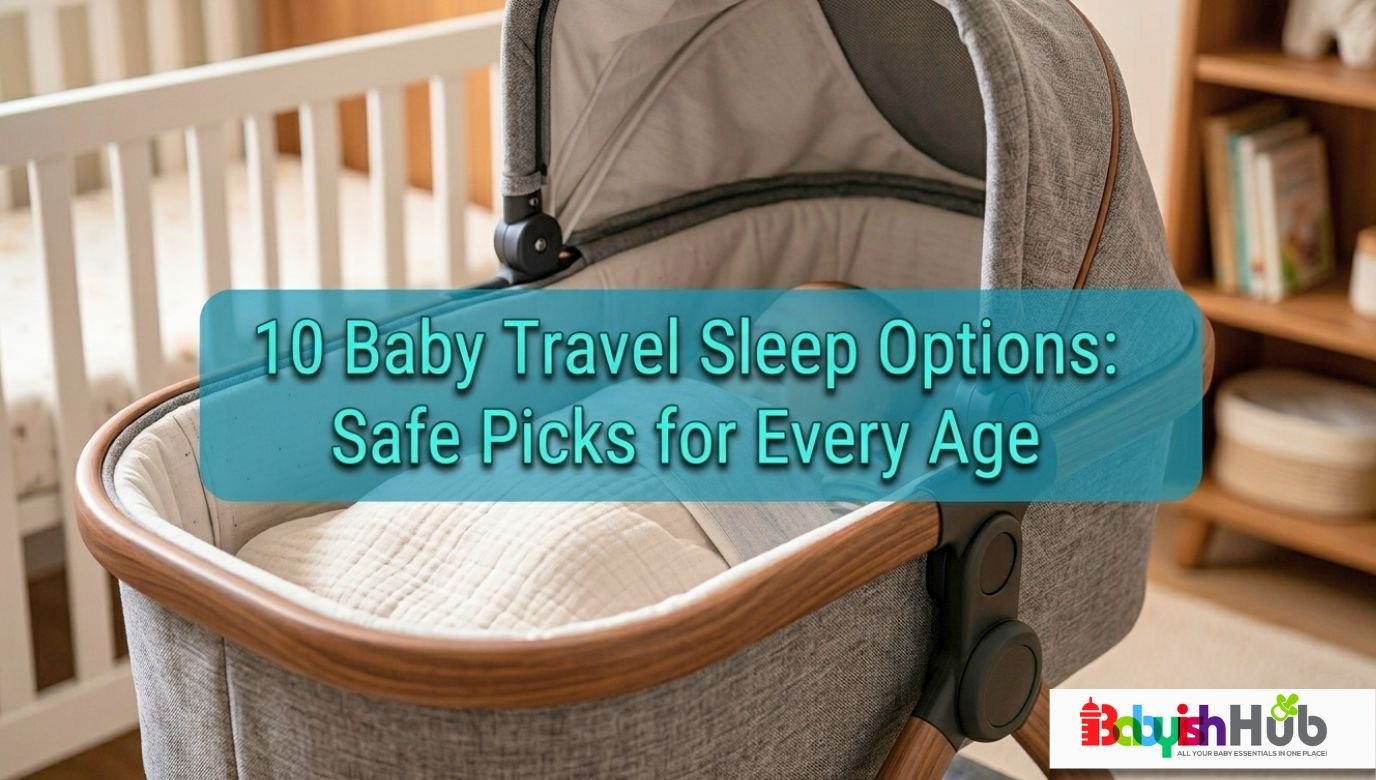
Baby travel sleep options are the portable sleep setups parents use away from home, including travel cribs, pack and plays, portable bassinets, and hotel cribs. The right choice depends on your baby’s age, the length of your trip, and whether the surface meets current safe sleep guidelines.
Key Takeaways:
- The safest baby travel sleep options are firm, flat, and free of loose bedding, no matter where you’re staying.
- Newborns do best on a portable bassinet or bedside sleeper, while infants and toddlers usually move into a travel crib or pack and play.
- Hotel cribs vary widely in condition and age, so inspect them before your baby sleeps in one overnight.
- Practicing naps in the travel sleep space before your trip cuts down on bedtime resistance once you arrive.
- Sofas, car seats, and soft-sided travel nests are not appropriate for unsupervised overnight sleep.
- Packing light matters less than packing right. One reliable sleep surface beats three half-solutions.
- A familiar bedtime routine, even a shortened one, helps your baby settle faster in an unfamiliar room.
Where Should My Baby Sleep While Traveling? (Quick Answer)
The best baby travel sleep options include:
- Travel crib
- Pack and Play
- Portable bassinet
- Hotel crib
- Mini crib
- Travel play yard
- Bedside bassinet (for newborns)
- Inflatable toddler bed (for older toddlers)
- Floor mattress (when developmentally appropriate)
- Parent-provided crib alternatives that meet safe sleep guidelines
The right pick comes down to your baby’s age, your destination, how you’re getting there, and how much space you have to work with.
I’ve packed for flights with a newborn who barely fit into her infant seat, and I’ve wrestled a toddler travel bed into a rental car trunk that was already full. I learned one thing from these two trips: The sleep setup you choose shapes the whole trip, not just bedtime.
Whether you’re heading to a hotel, staying with grandparents, flying overseas, or pitching a tent, choosing the right baby travel sleep option can mean the difference between a rested family and a week of short tempers.
This guide walks you through the safest baby travel sleep options for every age, when each one makes sense, and how to help your baby settle into sleep away from home.
Why Choosing the Right Baby Travel Sleep Option Is Important
Sleep away from home is never easy for your baby. Picture a new room, unfamiliar sounds, and a disrupted schedule. All these can easily throw off even a baby who normally sleeps well. The travel sleep surface you choose for your baby either supports that adjustment or works against it.
A safe, familiar sleep space helps your baby settle faster and stay asleep longer, which means fewer overnight wake-ups for everyone in the room. It also reduces the odds of an overtired baby melting down the next day, since missed or fragmented sleep tends to snowball over a trip.
There’s a safety piece here too. Hotel rooms, Airbnbs, and relatives’ guest rooms were not initially designed with infant sleep in mind. Choosing a sleep surface that follows safe sleep guidelines, rather than improvising with couch cushions or a shared adult bed, protects your baby the same way your setup at home does.
And honestly, having a sleep plan before you leave takes one decision off your plate once you’re jet-lagged and unpacking in a strange room. That peace of mind is worth the extra ten minutes of planning at home.
Baby Travel Sleep Options by Age
Your baby’s age greatly influences the safe, practical travel sleep options you can choose. Here’s how it breaks down:
Newborn (0 to 3 months)
Best options: portable bassinet, travel bassinet, hotel bassinet, bedside sleeper
Newborns need a completely flat, firm sleep surface. Their neck and back muscles aren’t developed enough to reposition themselves if they end up in an awkward position, so anything with an incline or soft give isn’t appropriate for sleep, even for naps.
A portable bassinet or travel bassinet provides a flat surface in a compact, lightweight form. Many fold down small enough to fit in a suitcase side pocket, which makes them a strong pick for hotel stays or visits to family.
Bedside sleepers work well too, especially if you’re room-sharing, since they attach to or sit next to the adult bed while keeping your baby on their own firm surface.
I used a portable bassinet for both of my younger two on early trips, and my biggest relief was knowing they were sleeping on the same type of surface they used at home, just smaller.
Infants (3 to 12 months)
Best Options: travel crib, pack and play, mini crib
Once your baby is rolling, sitting, or pulling to stand, a bassinet is no longer appropriate, and a travel crib or pack and play becomes the more practical option. These give your baby room to move safely through the night without the risk of rolling off an elevated surface.
Travel cribs tend to be lighter and more compact, which suits families who are flying or dealing with limited trunk space. Pack-and-plays are usually sturdier and come with more features, like bassinet attachments or changing table inserts, but they weigh more and take up more room to pack.
Mini cribs sit somewhere in between. They’re not as portable as a fold-up travel crib, but they offer a more stable, crib-like sleep experience for longer stays, such as a month with grandparents or an extended work relocation.
Toddlers (12+ months)
Best Options: portable toddler bed, inflatable toddler mattress, floor bed, portable cot
Once your baby transitions out of a crib at home, travel sleep options open up. Portable toddler beds and inflatable toddler mattresses give your older toddler a low-to-the-ground surface that feels similar to a floor bed, without needing much floor space.
Floor beds work well for toddlers who already sleep this way at home, but they require some extra prep in an unfamiliar room. Outlets need to be covered, cords need to be tucked away, and anything within reach should be toddler-safe, since your toddler will likely be more mobile at night than they are in their usual crib.
Portable cots, a step up from an inflatable mattress, offer a bit more structure and are worth considering for toddlers who move around a lot in their sleep.
10 Best Baby Travel Sleep Options
Let’s take a closer look at the 10 best baby travel sleep options, including when each one works best and the pros and cons to consider before you pack.
1. Travel Crib
- Best for: Infants and toddlers on trips involving flights or limited packing space
- Pros: lightweight, folds compact, sets up quickly, widely available
- Cons: Thinner mattress pad than a crib at home, some models feel less sturdy on hard floors
A travel crib is often the first purchase most parents make once they start traveling regularly with a baby. Designed for children from around 3 months to 3 years, most models weigh between 13 and 20 pounds, making them light enough for travel while still providing a safe, sturdy sleep space.
Travel cribs strike a good balance between portability and safety, and most fold into a compact carrying bag that’s easy to check with your luggage or bring through the airport.
2. Pack and Play
- Best for: Extended stays, road trips, and families who want extra features
- Pros: Sturdy, often includes a bassinet attachment and changing station, doubles as a play space during the day
- Cons: Heavier and bulkier than a travel crib, less practical for flying
The main difference between a pack and play and a travel crib comes down to weight and versatility. A pack-and-play tends to do more, with bassinet inserts and storage pockets, but that extra functionality adds bulk.
If you’re driving to your destination, the added weight isn’t much of an issue. If you’re flying, a dedicated travel crib is usually the better call.
3. Portable Bassinet
- Best for: Newborns up to about 4 to 6 months, depending on the model’s weight limit
- Pros: Ultra-lightweight, compact fold, ideal for flights and hotel rooms
- Cons: Short usable window before your baby outgrows it
A portable bassinet gives newborns their own flat, firm sleep space without adding much bulk to your luggage. It’s one of the easiest travel sleep options to justify buying, even if you only use it for a few months, since the alternative during those early trips is often a lot less safe.
4. Hotel Crib
- Best for: Short hotel stays when you’d rather not travel with your own gear
- Pros: No packing or setup required
- Cons: Condition and age vary widely by hotel, and availability isn’t guaranteed
Hotel cribs can work well, but they need to be inspected before your baby sleeps in one overnight. Before your trip, call ahead to confirm the hotel has one available and ask about its age. When you arrive, run through this quick checklist:
- The mattress fits snugly against the crib sides with no gaps
- There’s no visible damage, rust, or loose hardware
- The crib meets current safety standards (many older hotel cribs do not)
- Only a fitted sheet is provided, with no extra bedding, bumpers, or pillows
If anything feels off, ask for a different crib or fall back on a travel bassinet or crib you brought yourself.
5. Mini Crib
- Best for: Extended stays, such as a month or more with family
- Pros: More stable and crib-like than a travel crib, suitable for a longer age range
- Cons: Not practical for short trips or flights due to size and weight
A mini crib works best when “travel” really means “temporarily living somewhere else.” It’s not something most parents pack for a weekend trip, but for a longer stay, it offers a sleep experience much closer to what your baby is used to at home.
6. Travel Play Yard
- Best for: Families who want one product that covers sleep and daytime containment
- Pros: Doubles as a safe play space, often includes a bassinet insert
- Cons: Bulkier than a dedicated travel crib
A travel play yard is essentially a pack-and-play built with portability in mind. It’s a great option if you want one piece of gear to handle both sleep and supervised playtime in an unfamiliar space, like a relative’s living room.
7. Portable Moses Basket
- Best for: Newborns on short trips
- Pros: Lightweight, cozy, easy to move from room to room
- Cons: Very short usable window, not appropriate once your baby starts rolling
A Moses basket offers the same flat sleep surface as a portable bassinet, in a slightly more traditional style. It’s worth considering if you already own one and plan to travel only during the newborn stage, but the short window of use means it’s not usually worth buying just for travel.
8. Bedside Sleeper
Best for: Newborns in families who plan to room-share
Pros: Keeps baby close while maintaining a separate, firm sleep surface
Cons: Setup depends on having a compatible adult bed nearby
Room-sharing is recommended by pediatric safety guidelines for at least the first six months, and a bedside sleeper makes that easier to do away from home. It keeps your baby within arm’s reach overnight without bringing them into the adult bed.
9. Inflatable Toddler Bed
- Best for: Toddlers over 2 years old on hotel or Airbnb stays
- Pros: Packs down small, sets up fast, comfortable for older toddlers
- Cons: Not suitable for babies or younger toddlers; can deflate slowly overnight if not fully sealed
Inflatable toddler beds are a favorite for families with older toddlers because they take up almost no luggage space. They’re best suited to toddlers who are already out of a crib and sleeping independently on a low bed at home.
10. Floor Mattress
- Best for: Toddlers who already sleep on a floor bed at home
- Pros: Low to the ground, no fall risk, easy to set up with a portable mattress topper
- Cons: Requires childproofing the room, not appropriate for babies who aren’t yet mobile-safe sleepers
A floor mattress can work well for a toddler, but it does mean treating the whole room like a toddler bedroom. Cover outlets, move cords out of reach, and check for anything a curious toddler might pull down in the middle of the night before you turn off the lights.
Best Sleep Options Comparison Table:
| Option | Age | Travel Type | Portability | Safe for Overnight Sleep |
| Travel crib | 3 months to 3 years | Air, hotel | High | Yes |
| Pack and Play | Birth and up | Car, hotel | Moderate | Yes |
| Portable bassinet | Newborn | Air, hotel | Very high | Yes |
| Hotel crib | Birth and up | Hotel | None (provided) | Usually, if inspected |
| Inflatable toddler bed | 2 years and up | Hotel | High | Yes, age appropriate |
How To Choose The Right Baby Travel Sleep Option
With so many baby travel sleep options available, choosing the right one can feel overwhelming. Focus on these key factors to make the decision much easier:
Baby’s Age
Age is the most important consideration. A newborn needs a flat bassinet-style surface; an infant needs a crib-style option with room to move. A toddler has the widest range of choices, from a floor mattress to a portable cot.
Destination
Yes, where you plan to spend time with your baby away from home is another crucial consideration. The most common destinations to keep include:
- Hotel: Ask about crib availability ahead of time, or bring a travel crib as backup
- Airbnb: Don’t assume a crib will be provided, even if one is listed
- Family house: Ask what they already have on hand before you pack duplicate gear
- Camping: Look for a travel crib or play yard rated for outdoor use, paired with a blackout tent for daytime naps
- RV: Measure your available floor space before choosing gear, since RV bedrooms are often tighter than hotel rooms
Length of Trip
A weekend trip usually calls for the lightest, most compact option you own. A one-week trip or a vacation with your baby can justify a slightly bulkier pack-and-play if you’re driving. For extended travel periods, say a month or longer, getting a mini crib or a borrowed crib at your destination is worth the extra effort.
Transportation
Before you pick a travel sleep setup, think about how you’ll get to your destination. The best option is one that’s easy to transport and suits the type of trip you’re taking, as outlined below:
- Car: Weight and fold size matter less, so a pack and play is often the easiest choice
- Plane: Prioritize lightweight, compact gear that fits in a gate-check bag
- Train: A lightweight travel crib or portable bassinet keeps you from wrestling bulky gear through narrow aisles
- Cruise: Many cruise lines offer pack-and-plays on request, so check before you pack your own
Safe Sleep Tips While Traveling
Travel changes the room, but it shouldn’t change the safe sleep guidelines you follow at home. Pediatric organizations, including the American Academy of Pediatrics, recommend this list of important practices no matter where your baby sleeps:
- Place your baby on their back on a firm, flat mattress
- Use only a fitted sheet designed for that specific sleep surface
- Skip pillows, blankets, bumpers, and stuffed animals in the sleep space
- Room-share, without bed-sharing, especially for babies under 6 months
- Keep the room at a comfortable temperature and dress your baby in a sleep sack instead of loose blankets
- Avoid sofas, armchairs, and cushioned surfaces for any sleep, including naps
- Never use a car seat as a substitute sleep space outside of active travel
These guidelines are important in an unfamiliar room, since you won’t have the same visual cues you’re used to at home for spotting a setup that’s off.
How To Help Your Baby Sleep Better While Traveling
Follow these quick tips to help your baby adjust to a new sleep environment more quickly.
- Practice naps beforehand: Set up the travel crib or bassinet at home for a few naps before your trip so your baby isn’t meeting it for the first time at bedtime in a new place.
- Bring a familiar sleep sack: The same sleep sack your baby wears at home carries a scent and feel they already associate with sleep.
- Use white noise: A small portable white noise machine helps mask unfamiliar sounds, like hallway noise in a hotel or a barking dog at a relative’s house.
- Pack portable blackout curtains: Hotel curtains rarely block out enough light, especially during early summer sunrises.
- Maintain a shortened bedtime routine: Even a five-minute version of your usual routine gives your baby a cue that sleep is coming.
- Don’t chase perfection: Some nights will be rougher than usual. That’s part of travel, not a sign you did something wrong.
- Allow an adjustment day: Babies often need a night or two to settle into a new sleep environment, especially across time zones.
Common Baby Travel Sleep Mistakes To Avoid
Traveling with a baby comes with a learning curve, and a few small mistakes can have a big impact on their sleep. Here are the most common mistakes parents make and how to avoid them:
- Using soft travel nests for overnight sleep: These are designed for supervised lounging, not unsupervised sleep, and you should not use them overnight.
- Skipping naps to sightsee: A missed nap often leads to a harder bedtime and a rougher next day.
- Changing bedtime dramatically: Pushing bedtime back by hours to fit the day’s plans usually backfires with an overtired baby.
- Overpacking sleep gear. Bringing three backup options often creates more stress than it solves. One reliable setup is usually enough.
- Not checking hotel crib availability in advance: Hotels can run out of cribs, especially during busy travel seasons.
- Waiting until bedtime to introduce a new sleep space: Setting up the travel crib earlier in the day gives your baby a chance to see and touch it before it’s time to sleep in it.
Baby Travel Sleep Frequently Asked Questions
Still have questions? Here are answers to some of the most common concerns parents have about baby travel sleep:
Where should a baby sleep while traveling?
Newborns do best in a portable bassinet or bedside sleeper, while infants and toddlers typically sleep in a travel crib or pack and play. The safest choice is always a firm, flat surface free of loose bedding, regardless of your destination.
Can my baby sleep in a Pack and Play every night?
Yes. A pack and play meets current safe sleep standards and can be used as a regular sleep surface, whether you’re traveling or setting one up at home for extended use.
Are hotel cribs safe?
They can be, but their age and condition vary widely. Inspect the mattress fit, hardware, and overall condition before your baby sleeps in one, and don’t hesitate to ask for a replacement if anything seems off.
Is a travel bassinet safe overnight?
Yes, as long as it’s used within the manufacturer’s weight and age limits and your baby hasn’t started rolling yet. Once rolling begins, it’s time to move to a travel crib or pack and play.
Can a baby sleep in a stroller while traveling?
A stroller can work for a short, supervised nap, but it isn’t designed or recommended for unsupervised overnight sleep.
What is the lightest baby travel bed?
Portable bassinets and lightweight travel cribs are typically the lightest options, often weighing under 15 pounds and folding into a compact carrying bag.
What do I do if the hotel doesn’t have a crib?
Bring a lightweight travel crib or portable bassinet as backup, or ask if a nearby hotel or a baby gear rental service can provide one for your stay.
Can my baby sleep in bed with me while traveling?
Bed-sharing isn’t recommended, even while traveling. Room-sharing with a separate, firm sleep surface offers the closeness many parents want without the added risk.
At what age can a toddler use an inflatable travel bed?
Most inflatable toddler beds are designed for children over 2 years old who are already sleeping independently on a bed at home, rather than in a crib.
RELATED: 7 Baby Travel Essentials For Flights, Road Trips, Hotels & More
Final Thoughts
The best baby travel sleep option is the one that’s safe, age-appropriate, comfortable, and easy for you to transport, while still feeling familiar to your baby. There’s no universal option for every family or every trip.
Before you leave, set up your chosen sleep space at home and let your baby get a few naps in it. This small step often makes the biggest difference once you’re unpacking in an unfamiliar room.
Trust the setup you’ve chosen, give your baby a night or two to adjust, and know that a little extra planning now means calmer nights once you’re away from home.