Best Car Seat For 40 lbs And Up (6 Safe Options For 2026)
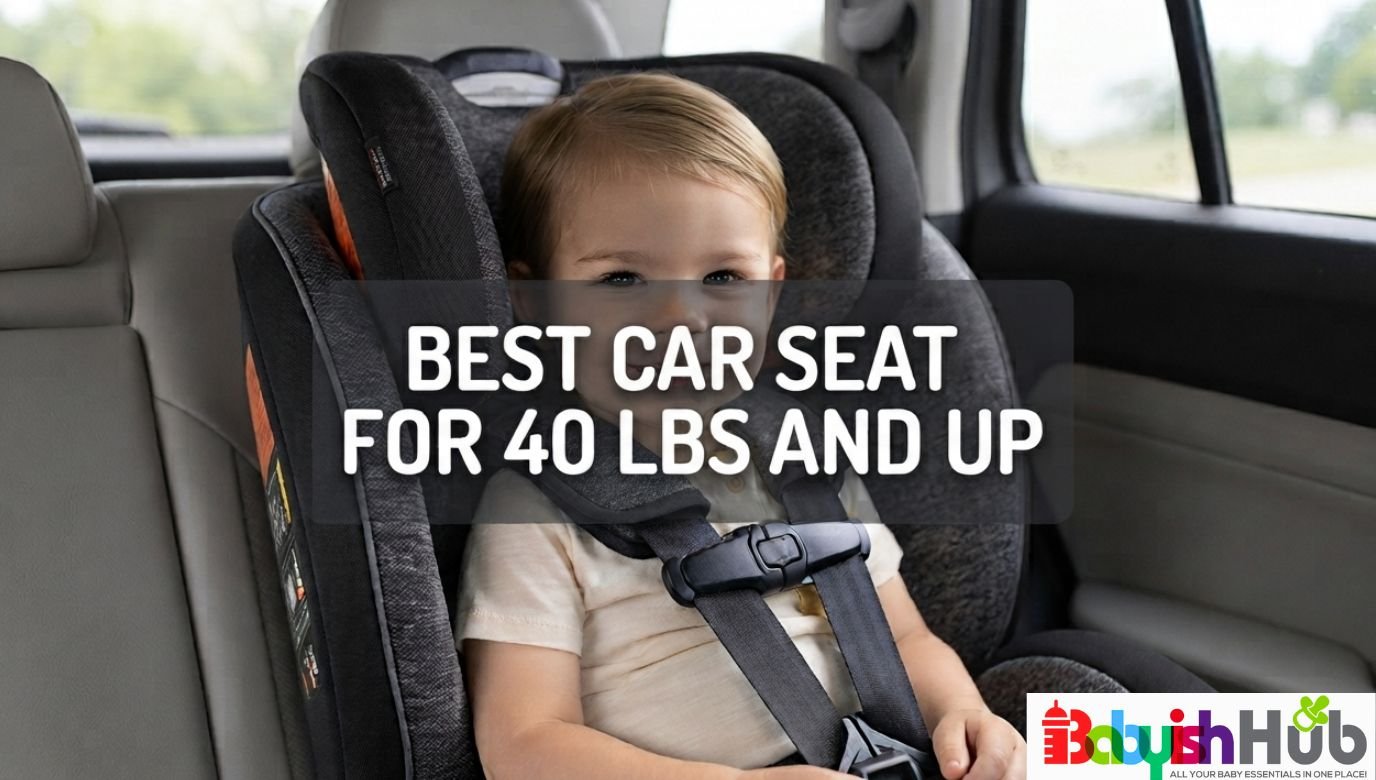
Once your child crosses the 40-pound mark, car seat shopping suddenly feels more complicated. You’re no longer choosing between a handful of infant seats. You are weighing convertible seats, all-in-one seats, harness-to-booster models, and high-back boosters, all of which claim to be the right next step. Reaching 40 pounds is a huge milestone (literally), but it does not automatically mean your child is ready to leave a harness behind.
Choosing the best car seat for 40 lbs and up is not just about matching a number on the box. It comes down to your child’s height, torso length, maturity, and how the seat fits your vehicle. After comparing dozens of options that claim to serve this weight range, one pattern stands out: the seat that gets installed correctly every single trip is almost always the safer choice, even over a seat with a longer feature list.
This guide walks you through seats that solve different problems, from families who want one seat for a decade to parents who need something narrow enough for three-across seating, so you can match a seat to your specific situation instead of guessing.
Affiliate Disclosure: Some links on this site are affiliate links. If you buy through them, I may earn a small commission at no extra cost to you.
Best Car Seat for 40 lbs and Up At A Glance:
- Graco 4Ever DLX 4-in-1 Car Seat: Best Overall. A single seat that carries a child from rear-facing infant through backless booster.
- Britax One4Life ClickTight All-in-One Car Seat: Best Premium. Ideal for parents who want top-tier installation confidence and extended rear-facing capacity.
- Diono Radian 3RXT: Best for Small Cars and Multiple Car Seats. Built for families who need three seats to fit across one row.
- Graco Extend2Fit 3-in-1 Car Seat: Best Value for Extended Rear-Facing. A great pick for parents prioritizing rear-facing safety without a premium price tag.
- Graco TurboBooster 2.0 LX Highback Booster: Best for the Harness-to-Booster Transition. Suited to children who have outgrown a harnessed seat but still need a highback booster.
- Chicco KidFit ClearTex Plus 2-in-1 Booster: Best Lightweight and Travel-Friendly Booster. A good match for families who often move a booster between cars.
Quick Recommendations Table:
| Product | Best For | Biggest Win | Major Drawback |
| Graco 4Ever DLX 4-in-1 | Overall/one-seat-for-years families | Grows from rear-facing to backless booster in one seat | Bulky footprint in smaller back seats |
| Britax One4Life ClickTight | Premium buyers who want easy, confident installs | ClickTight belt installation and extended rear-facing to 50 lbs. | LATCH weight limits are lower than the seat belt limits |
| Diono Radian 3RXT | Three-across installs and multi-kid households | Narrow, steel-reinforced shell fits tight back seats | Heavy, and the fixed recline can feel firm on sloped seats |
| Graco Extend2Fit 3-in-1 | Budget-conscious extended rear-facing | Legroom extension panel supports rear-facing up to 50 lb | Booster mode has a lower weight ceiling than all-in-one rivals |
| Graco TurboBooster 2.0 LX | Kids transitioning off a harness | Front-adjust LATCH keeps it steady when empty | No harness option, so it is only appropriate once a child is ready |
| Chicco KidFit ClearTex Plus | Lightweight, movable booster | Easy to shift between vehicles, comfortable padding | Booster-only, so it is not a fit for children still needing a harness |
How We Chose These Products
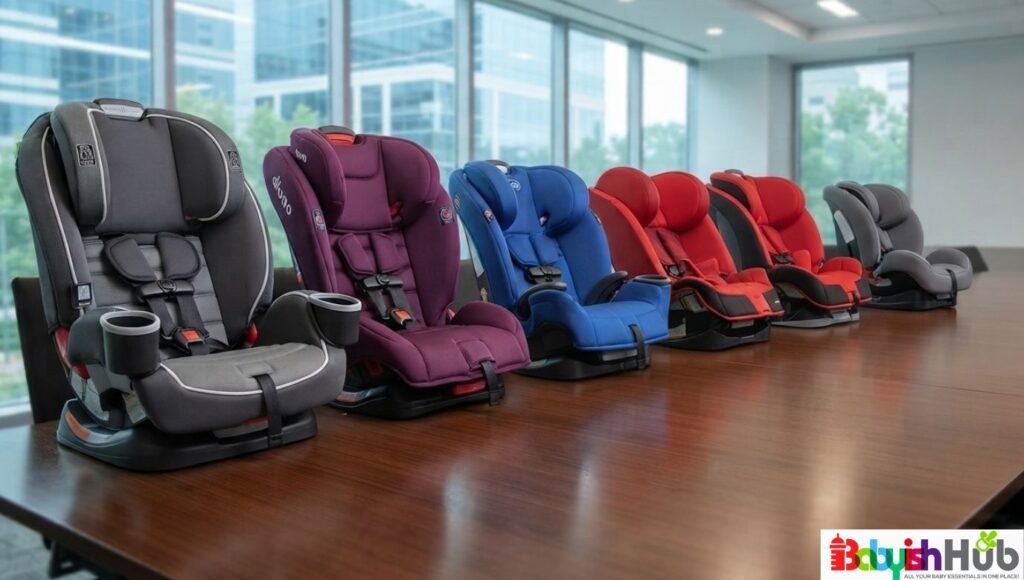
Every seat on this list met a baseline of strong safety engineering, real parent feedback, and practical usability for children who weigh 40 pounds or more.
We prioritized products with strong customer satisfaction and consistent availability, and we avoided including near-duplicate seats from the same product line just to pad the list.
- Instead, each recommendation earns its place by solving a different problem:
- Some parents want a single seat that lasts a decade
- Some need a narrow shell for three-across seating
- Some are working with a tighter budget, and
- Some are shopping specifically for the harness-to-booster transition.
We also excluded a few categories of seats on purpose. We left out infant-only carriers, since those seats are designed for much smaller children and are not built to serve a 40-pound child safely.
We also skipped seats with a documented history of confusing installation instructions or unusually low review consistency, since a seat that is hard to install correctly loses much of its safety advantage in real-world use.
Feature balance was also an important consideration, just as any single spec: a seat with an impressive rear-facing limit is not much of a win if parents cannot install it correctly without help every time.
Our 6 Top Picks For The Best Car Seat for 40 lbs And Up:
Here’s our list of the top 6 best car seats that are ideal for babies weighing 40lbs and higher:
1. Graco 4Ever DLX 4-in-1 Car Seat
- Rear-facing: 4–40 lbs
- Forward-facing harness: 26.5–65 lbs
- High-back booster: 40–100 lbs
- Backless booster: 40–120 lbs
- Harness type: No-rethread (Simply Safe Adjust)
- Installation: LATCH (InRight, rear-facing to 40 lbs / forward-facing to 45 lbs) or seat belt with integrated lock-off
- Seat weight: ~23 lbs
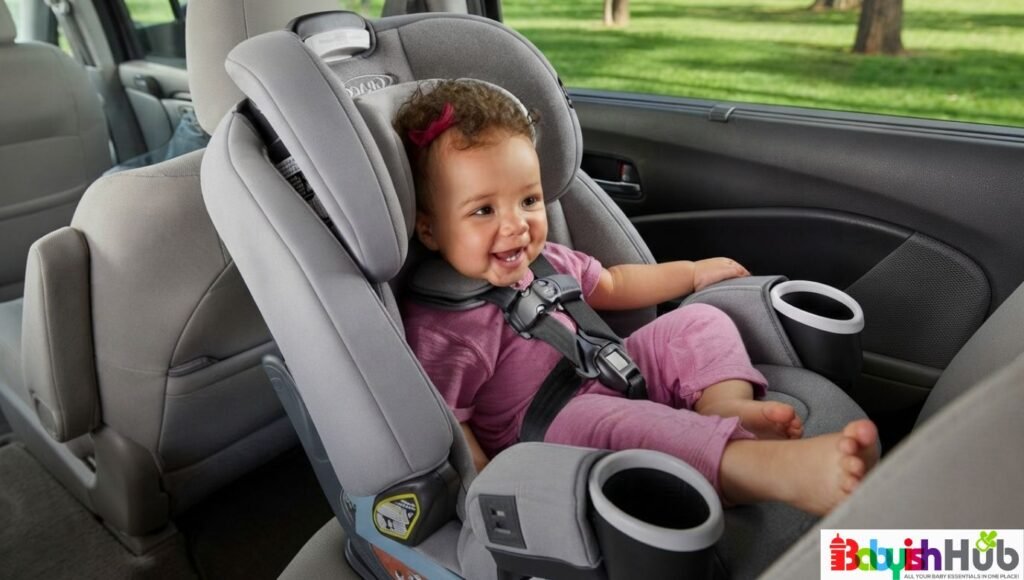
The 4Ever DLX earns its spot on this list because it covers the entire span of your child’s car seat years in one purchase. It transitions from a rear-facing harness, to a forward-facing harness, to a highback booster, and finally to a backless booster.
This means a family buying it for a 40-pound toddler could plausibly use the same seat until that child is ready to ride with just a seat belt.
The seat fits families who want to stop shopping for car seats altogether and would rather make one solid investment. It also suits parents who like the reassurance of a no-rethread harness system, since adjusting the harness height and headrest together in one motion removes a common source of installation error.
Families with a small back seat or a compact sedan may want to look at a narrower option instead, since the 4Ever DLX is on the larger side.
The Graco 4Ever DLX’s biggest strength is how little maintenance it requires. The cover comes off in about a minute for washing (this will prove helpful the day your toddler spills juice or gets carsick on long drives).
The belt lock-off and structured LATCH system make installation fairly intuitive, and the recline positions help the seat sit level in vehicles with sloped seat cushions.
The seat’s biggest tradeoff is size. Because it’s designed to accommodate a child from toddlerhood through the booster years, the shell itself is wide, and parents installing three seats across a back row often find it does not leave enough room for a third seat beside it.
Pros:
- One purchase can realistically outlast several stages of car seats, which saves you money.
- The no-rethread harness system reduces a common installation mistake where parents forget to re-lace the harness after raising it.
- Washable, quick-remove padding makes it far easier to keep clean through toddler messes.
- Booster mode allows the seat to keep serving the family well past the point most convertible seats are retired.
Cons:
- The seat’s width can crowd smaller back seats and makes three-across installs difficult in compact vehicles.
- It’s heavier than slimmer convertible options, which might be inconvenient if you move it between cars often.
- Some parents find the six-position recline adjustment stiff compared to seats with a simpler lever mechanism.
OUR VERDICT: If your priority is buying one seat and being done with car seat shopping for years, the Graco 4Ever DLX is a dependable, well-rounded choice, as long as your back seat has room for its footprint.
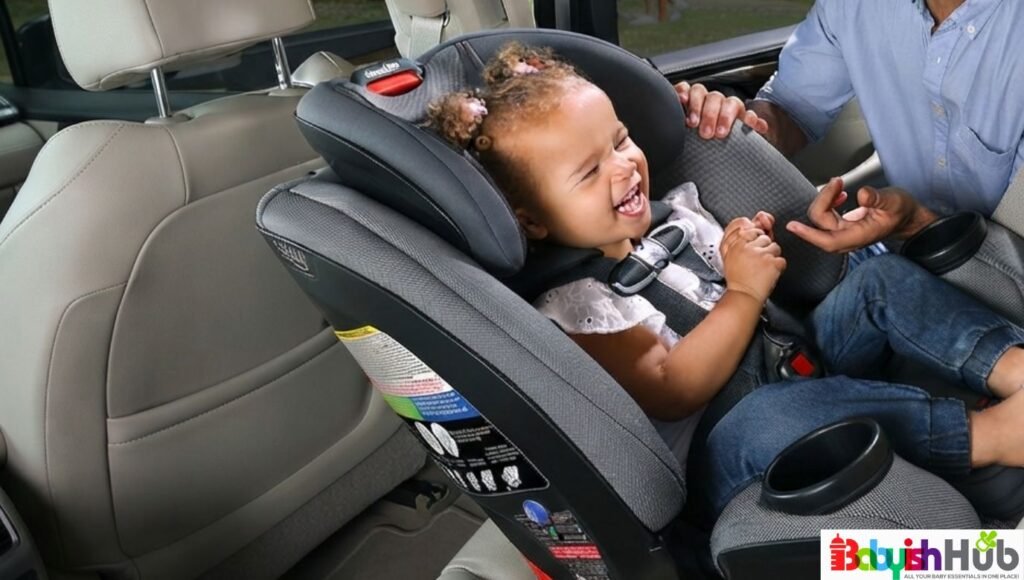
2. Britax One4Life ClickTight All-in-One Car Seat
- Rear-facing: 5–50 lbs
- Forward-facing harness: 30–65 lbs
- High-back booster: 40–120 lbs
- Backless booster: N/A (high-back booster mode only; it does not convert to backless)
- Harness type: No-rethread (15-position)
- Installation: ClickTight seat belt system, or LATCH (limited to 30 lbs rear-facing / 35 lbs forward-facing)
- Seat weight: ~30 lbs
The One4Life stands out for its ClickTight installation system, which is designed to remove much of the guesswork from securing the seat with a vehicle seat belt.
Parents open the seat, thread the belt, and close it, and the seat’s own tensioner does the tightening. For families who have struggled with getting a seat belt installed snug enough on their own, that difference is significant.
This seat is a strong match for parents who prioritize ease of installation above almost everything else, and for families who plan to rear-face their child for as long as possible, since it accommodates rear-facing up to 50 pounds.
It’s a less natural fit for parents who rely heavily on LATCH connectors rather than the seat belt, since the LATCH weight limits here are lower than the seat belt limits.
The steel frame and additional side-impact layers give the One4Life a sturdier feel than many convertible seats, and the recline adjustment uses a push-button mechanism rather than the foot-lever style found on many competitors, which several parents find easier to operate one-handed.
Cleaning is easy thanks to a washable, breathable fabric designed to help regulate temperature on warm days.
The main drawback shows up with the LATCH connectors, which use a hook style that some parents find fiddly to detach compared to the simpler push-button connectors on other premium seats.
Pros:
- ClickTight installation makes seat belt installs dramatically easier to get right on the first try.
- Extended rear-facing capacity up to 50 pounds supports keeping younger kids rear-facing longer, which most safety experts recommend.
- The 15-position no-rethread harness adjusts quickly as a child grows.
- Breathable, moisture-wicking fabric holds up well on long trips and in hot climates.
Cons:
- LATCH-based installation is more limited by weight than the seat belt method, so you’ll eventually switch to belt installation regardless of preference.
- It carries a higher price point than most other seats on this list.
- The hook-style LATCH connectors can be more difficult to detach than push-button designs.
OUR VERDICT: Families who want the smoothest possible installation experience and don’t mind paying more for it will likely be happiest with the Britax One4Life.
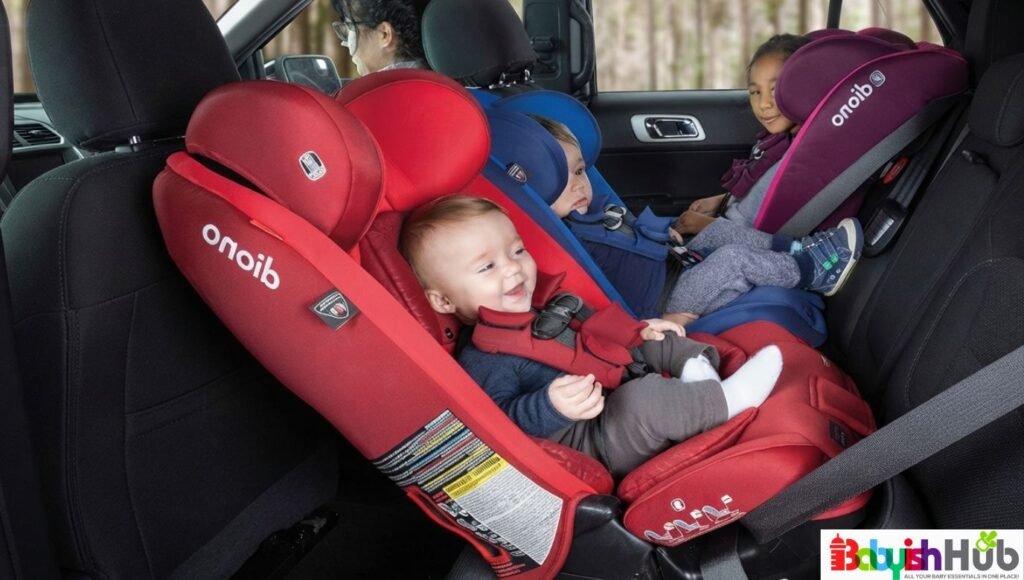
3. Diono Radian 3RXT
- Rear-facing: 5–50 lbs
- Forward-facing harness: 22–65 lbs
- High-back booster: 40–120 lbs
- Backless booster: N/A (booster mode is high-back only)
- Harness type: Rethread (harness slots require rethreading; headrest adjusts separately)
- Installation: SuperLATCH (rear-facing limit 35 lbs/forward-facing limit 40 lbs) or seat belt
- Seat weight: ~28–34 lbs (varies by cover/finish, one of the heaviest on this list)
The Radian 3RXT solves a problem most other seats on this list do not: fitting three car seats across one back row.
Its narrow, steel-reinforced shell is one of the slimmest profiles among convertible and all-in-one seats, which makes it the go-to option for parents of twins, triplets, or three closely spaced children who all need car seats at once.
This seat is built for families juggling multiple children in car seats simultaneously, or anyone driving a smaller sedan where a standard-width convertible seat simply will not fit next to another seat.
It is a less natural choice for parents whose primary concern is a quick, effortless install, since the SuperLATCH system and belt routing take more practice to get comfortable with than some competitors.
The narrow shell is the seat’s defining trait, and it delivers on that promise in real-life garages and back seats, not just on a spec sheet. The tradeoff for that slim profile is weight.
The steel-reinforced frame that makes the seat so protective also makes it heavier than plastic-shelled convertible seats, which becomes an issue if you are the parent moving it between two vehicles regularly.
The seat also folds flat, a detail that stands out for families who travel with it or need to store it in tight spaces between uses.
Installation, particularly the rear-facing base attachment, takes a bit more attention to detail than plug-and-play seats, so you may want to watch the manufacturer’s video guide rather than relying on the printed manual alone.
Pros:
- One of the narrowest convertible or all-in-one shells available, making three-across installs realistic in many midsize vehicles.
- Steel-reinforced construction adds a reassuring sense of durability for parents who prioritize build quality.
- The seat folds for easier transport and storage, an advantage for travel-heavy families.
- Long usable range from rear-facing infant through booster mode extends the seat’s lifespan.
Cons:
- Heavier than most competitors.
- Installation has a steeper learning curve, particularly for the rear-facing base and LATCH routing.
- The fixed internal recline angle can feel more upright than desired on some sloped vehicle seats.
OUR VERDICT: If your main challenge is fitting multiple car seats side by side, the Diono Radian 3RXT is worth the extra installation learning curve.
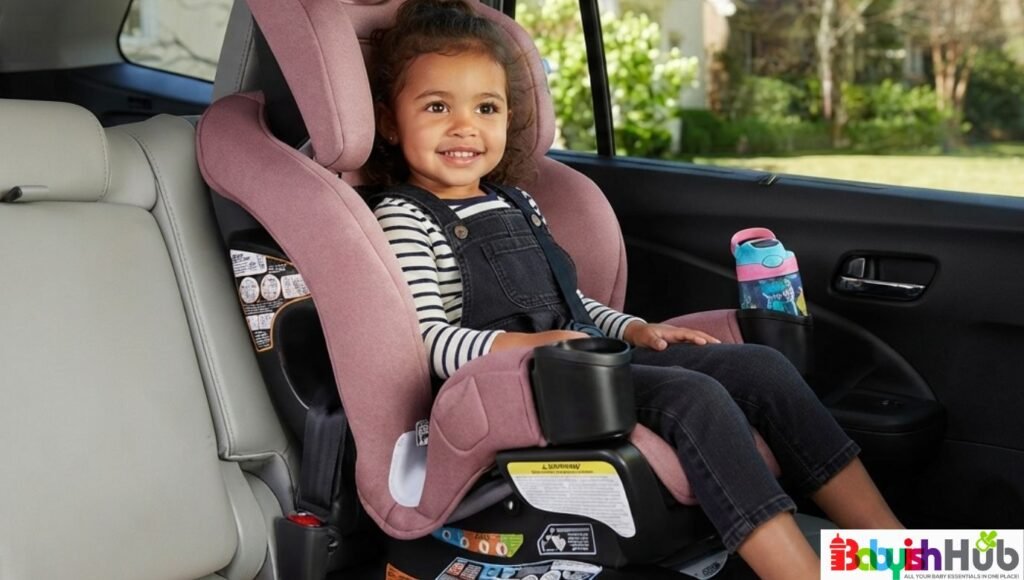
4. Graco Extend2Fit 3-in-1 Car Seat
- Rear-facing: 4–50 lbs
- Forward-facing harness: 26.5–65 lbs
- High-back booster: 40–100 lbs
- Backless booster: N/A (no backless mode on the 3-in-1)
- Harness type: No-rethread (Simply Safe Adjust)
- Installation: LATCH (InRight, rear-facing limit 45 lbs) or seat belt
- Seat weight: ~20.6 lbs
The Extend2Fit earns its place by solving a specific, common problem: giving a growing child more rear-facing legroom without forcing an early switch to forward-facing.
Its four-position extension panel adds up to five inches of extra leg space, which lets many children stay rear-facing, considered the safer orientation for as long as possible, up to 50 pounds, all at a more approachable price than premium convertible seats.
This seat suits budget-conscious parents who still want to prioritize extended rear-facing, plus families with a tall toddler who has been complaining about cramped legroom in a standard convertible seat.
It is less ideal for parents specifically hoping for a true all-in-one experience through the teen years, since its booster mode tops out at a lower weight than seats like the 4Ever DLX or One4Life.
The extension panel is the standout feature in daily use, and parents of long-legged toddlers consistently notice the difference it makes in comfort during rear-facing rides.
The no-rethread harness system and push-button LATCH attachment keep day-to-day adjustments simple, and the six-position recline helps with achieving a solid installation angle.
However, this seat falls a bit short of other pricier all-in-one seats in longevity in booster mode. Once your child outgrows the harness, the booster stage here has a lower weight ceiling than dedicated all-in-one seats. This means you’ll eventually need a separate booster seat down the line.
Pros:
- The extension panel meaningfully improves rear-facing comfort and supports safer, longer rear-facing use.
- Has more pocket-friendly pricing than the premium convertible seats while covering similar rear- and forward-facing ranges.
- Push-button LATCH and a no-rethread harness simplify everyday adjustments.
- Machine-washable padding makes cleanup manageable for families with young toddlers.
Cons:
- Booster mode weight limit is lower than true all-in-one competitors, so it may not be the last seat you buy.
- It is fairly heavy for a mid-priced seat, which can make swapping it between vehicles a two-person job.
- The extension panel adds bulk to the seat’s overall footprint when fully extended.
OUR VERDICT: If you want an extended rear-facing without a premium price tag, and are comfortable buying a separate booster later, the Extend2Fit is a practical middle-ground choice.
5. Graco TurboBooster 2.0 LX Highback Booster with LATCH

- Rear-facing: N/A (booster only, no harness mode)
- Forward-facing harness: N/A
- High-back booster: 40–100 lbs
- Backless booster: 40–100 lbs
- Harness type: N/A (uses vehicle seat belt, not a 5-point harness)
- Installation: Front-adjust LATCH (stabilizes booster, doesn’t restrain child) + vehicle seat belt
- Seat weight: ~10.5–10.8 lbs
Not every 40-pound child still needs a harness. If your kid can stay seated properly and meet their current seat’s forward-facing limits, a highback booster like the TurboBooster 2.0 LX is the appropriate next step.
And this model made it to our list because of its front-adjust LATCH system, which keeps the booster anchored in place even when it is empty.
This seat works great if your child has outgrown a forward-facing harness by height or weight and can sit properly for the whole ride. It’s not ideal for a child who still needs the security of a five-point harness, since a booster relies entirely on the vehicle’s own seat belt for restraint.
The LATCH connectors here do double duty: they don’t restrain the child directly, since that job belongs to the vehicle seat belt, but they do keep the booster from sliding around the seat when unoccupied, which matters more than it sounds once you’re loading kids in and out at school pickup.
The open-loop belt guides help position the shoulder belt correctly across a child’s chest instead of near the neck, a detail that directly affects comfort and safety.
Parents consistently mention how lightweight the seat feels compared to a full harnessed seat, which makes moving it between cars or on errands far less of a hassle.
The seat converts from highback to backless as a child grows, extending its usable life by a couple of years.
Pros:
- Front-adjust LATCH keeps the booster stable and properly positioned even when a child isn’t in it.
- Converts from highback to backless booster, stretching its usable years without buying a second seat.
- Lighter and easier to move between vehicles than a harnessed convertible seat.
- Storage compartment and cup holder add everyday convenience for road trips and school runs.
Cons
- No harness option means it is only appropriate once a child is ready for a booster.
- Comfort and belt fit both depend on your vehicle’s seat belt geometry, which varies by car.
- The highback shell adds some bulk compared to backless-only boosters.
OUR VERDICT: For a child who has fully outgrown a harness, the Graco TurboBooster 2.0 LX offers a stable, comfortable, and long-lasting booster solution.
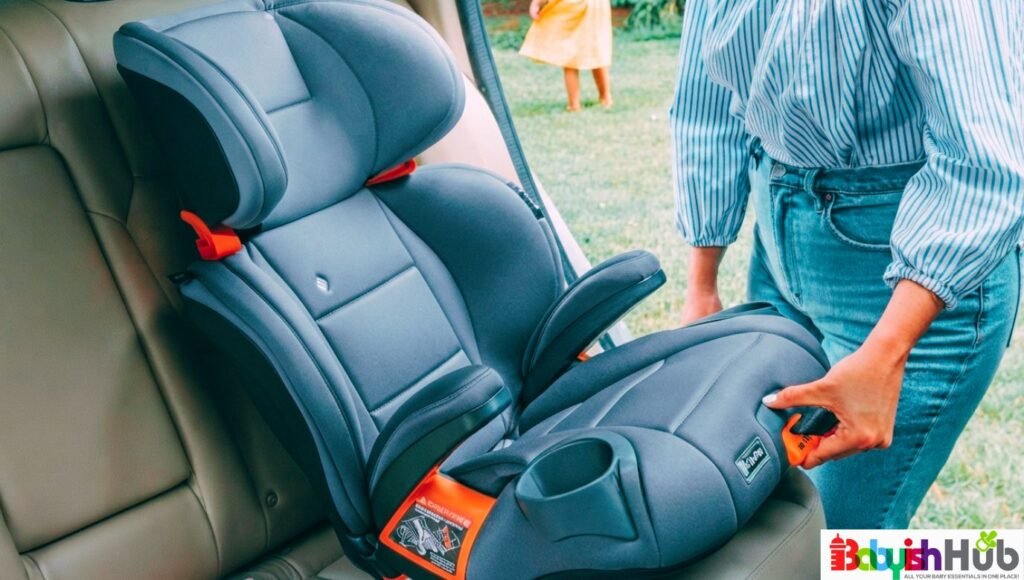
6. Chicco KidFit ClearTex Plus 2-in-1 Booster
- Rear-facing: N/A (booster only)
- Forward-facing harness: N/A
- High-back booster: 40–100 lbs
- Backless booster: 40–110 lbs
- Harness type: N/A (vehicle seat belt with belt guides)
- Installation: Quick-release LATCH + vehicle seat belt
- Seat weight: ~10 lbs
This booster consistently earns strong marks from parents, holding a 4.7 out of 5 rating from over 100 reviewers on Chicco’s own product page. It made this list for how well it balances comfort, portability, and ease of moving between vehicles.
Its quick-release LATCH connectors make it quite fast to detach and carry, which stands out for families who split time between two cars or use rideshares with their own booster in tow.
This seat is great for families who need a booster that moves easily between grandparents’ cars, carpools, or a second vehicle, and for parents who value flame-retardant-free materials.
It’s not built for children who still need a harnessed seat, and its dishwasher-safe cup holders and lighter build make it feel less heavy-duty than a steel-reinforced option like the Diono Radian.
The SuperCinch one-pull tightener and quick-release LATCH deliver on the promise of fast installation and removal, which matters most on days when you’re shuffling car seats between vehicles before school or shared custody drop-offs.
The double-layer foam padding holds up comfortably on longer drives, and the fabric is designed to help regulate temperature, which several parents mention noticing on hot afternoon pickups.
Because the backrest is removable, the seat converts to a backless booster as a child grows and needs less support, extending its useful life for a couple more years.
Pros:
- Quick-release LATCH makes it fast to swap between vehicles, a key advantage for split households or multi-car families.
- ClearTex fabric avoids added flame-retardant chemicals, which some parents specifically look for.
- Comfortable double-foam padding holds up well on longer road trips.
- Converts from highback to backless, adding useful years to the seat’s lifespan.
Cons:
- Booster-only design means it isn’t an option for a child who still needs harness protection.
- Some parents note the printed instruction manual could be clearer on proper positioning.
- The narrower base may not suit every child’s build as comfortably as a wider booster shell.
OUR VERDICT: The Chicco KidFit ClearTex Plus is a dependable, well-reviewed pick for families who need a booster that travels easily between cars without sacrificing comfort.
Buying Guide: How To Choose A Car Seat For A 40 lb Child

Shopping for a car seat for your 40lbs+ child brings up questions that go beyond the number on the scale. Here’s what to weigh before you buy:
Weight Is Only Part of the Equation
Reaching 40 pounds does not automatically mean height and harness readiness have caught up. Always check the seat’s forward-facing harness height limit and booster height requirements alongside the weight limit.
This is important because a child can hit the weight threshold while their shoulders are still below the harness slots or their ears are still below the top of the seat. Height limits often become the main deciding factor before weight does, especially for tall toddlers.
Extended Harness Use Beats An Early Booster Switch
A five-point harness distributes crash forces across the hips and shoulders far more effectively than a booster relying solely on a seat belt. (Source).
Most child passenger safety technicians recommend keeping a child in a harnessed seat for as long as the seat allows by both height and weight, rather than moving to a booster the moment a weight minimum is technically met. Readiness for a booster depends on more than size.
A child should also be able to sit still with proper posture for the entire ride, since a booster only works correctly when the seat belt stays positioned across the shoulder and hips.
Installation Method Changes the Experience
LATCH systems are convenient but often have lower weight limits than installing with the vehicle’s own seat belt, especially in harnessed convertible and all-in-one seats.
Once your child’s weight exceeds the LATCH limit, most seats require a seat belt installation instead. Look for features like belt lock-offs, tensioning systems, and clear level indicators, since these details make the difference between an install that’s tight and one that only looks secure.
A seat with excellent crash ratings is only as protective as its installation, so prioritizing a seat you can install correctly every time matters just as much as any spec sheet.
Convertible Vs. Harness-To-Booster: Which One To Choose?
| Feature | Convertible / All-in-One Seat | Harness-to-Booster Seat |
| Best for | Toddlers still benefiting from a harness | Preschoolers and older kids ready for booster mode |
| Harness use | Often extends rear- and forward-facing for years | Forward-facing harness only, transitions to booster |
| Lifespan | Multiple years across several stages | Shorter window before moving into pure booster mode |
| Space | Generally bulkier | Often more compact and lighter |
Choosing between a convertible and harness-to-booster comes down to your child’s current developmental stage.
If your child still fits comfortably in a forward-facing harness with room to grow, then they don’t need to rush into a booster just because they’ve crossed 40 pounds.
On the other hand, if your child has already outgrown their harnessed seat by height and can sit properly, then they’re ready for the booster stage.
Safety Features Worth Considering:
A properly adjusted five-point harness with a correctly positioned chest clip remains one of the most protective features available in a harnessed seat.
Side-impact protection, whether through extra padding, energy-absorbing foam, or a deeper shell, adds a meaningful layer of head and torso protection in side collisions.
Steel-reinforced frames add structural durability, though they also add weight, which is a tradeoff for families who move seats between vehicles often.
Finally, proper recline and head support prevent a sleeping child’s head from slumping forward, which matters for both comfort and airway positioning on long drives.
Frequently Asked Questions About Car Seats for 40 lbs. and Up
Here’s a quick look at some of the commonly asked questions about car seats for babies weighing 40lbs and up…
What car seat should a 40 lb child be in?
A 40-pound child may still belong in a rear-facing or forward-facing harnessed car seat, depending on their height, age, and the seat’s limits. Reaching 40 pounds does not automatically mean it’s time for a booster. If the child still fits their harnessed seat correctly, they can generally continue using it until reaching its height or weight limit.
What car seat should a 45-pound child be in?
A 45-pound child may still use a forward-facing harnessed car seat if they remain within its height and weight limits. Some seats allow harness use beyond 45 pounds, while others do not. If the child has outgrown the harness and can sit properly throughout the ride, a high-back booster may be appropriate.
Can a 40 lb 5 year old be in a booster seat?
Yes, a 40-pound 5-year-old may be ready for a booster, but weight alone does not determine booster readiness. The child should have outgrown their harnessed seat or reached its limits and be mature enough to sit upright without leaning, slouching, or moving the seat belt out of position throughout the entire ride.
What kind of car seat for a 50 lb child?
A 50-pound child may need a forward-facing harnessed seat or a booster, depending on their age, height, maturity, and the limits of their current seat. Some all-in-one and harness-to-booster seats accommodate children around 50 pounds in harness mode. Always check the specific seat’s height, weight, and harness requirements before switching modes.
Is there a booster seat that can hold 45 pounds?
Yes. Many high-back booster seats have minimum and maximum weight ranges that include 45 pounds, and some also convert to backless boosters as a child grows. However, a 45-pound child should not move to a booster based on weight alone. They also need to be developmentally ready and able to maintain proper seat-belt positioning.
What car seat is appropriate for a 40-pound 4-year-old child?
A 40-pound 4-year-old may still be best suited to a forward-facing harnessed car seat if they fit within its height and weight limits. Four-year-olds often benefit from the structure of a five-point harness because booster readiness depends on maturity and behavior, not simply reaching a particular weight.
RELATED: Best Side-by-Side Double Stroller (7 Top Picks for Twins and Siblings Close In Age)
Final Verdict
There’s no single best car seat for every 40-pound child. The right choice depends on your child’s height, age, maturity, current seat limits, and your vehicle. If your child still fits their harnessed seat, there’s usually no need to switch just because they reach 40 pounds. For children who have outgrown their harness, a properly fitted booster may be the next step if they can sit correctly throughout every ride. Consider your family’s needs, including space, installation, budget, and how long you want the seat to last. The safest choice is one that fits your child, vehicle, and everyday routine correctly.