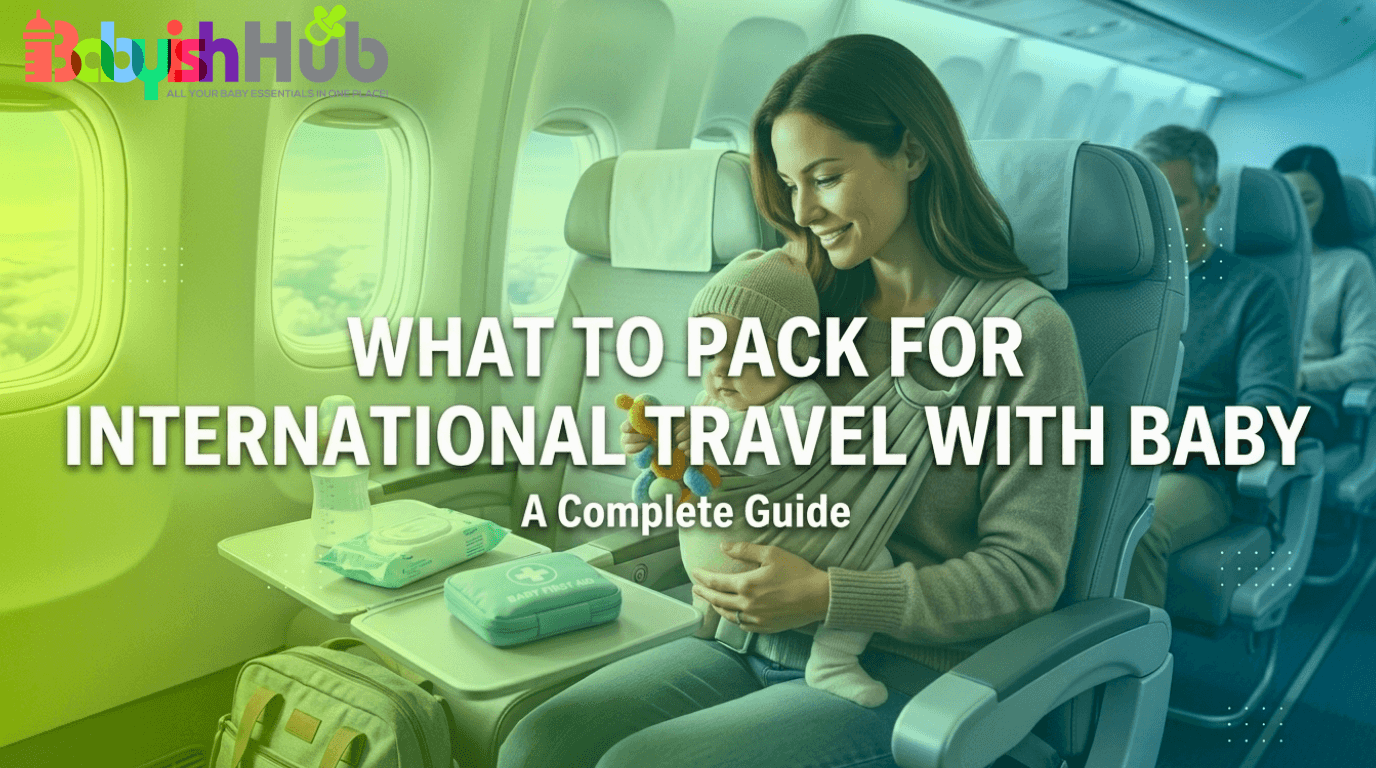
What To Pack For International Travel With Baby: The Ultimate Packing Checklist
The first time I took my daughter Chloe overseas, she was seven months old, and I packed like I was moving to another country. Two checked bags, a carry-on, a diaper bag the size of a small suitcase, and a stroller that barely fit through the airport doors.
By the time we landed, I was sweaty, exhausted, and had somehow forgotten saline drops. If you’re figuring out what to pack for international travel with baby, let me save you from my early mistakes and help you pack smarter from the start.
In This Guide:
Start With The Right Mindset About Baby Gear
The biggest packing mistake parents make when traveling internationally with a baby is over-packing out of anxiety. The fear of being unprepared in a foreign country drives us to bring duplicates of everything, gear for every scenario, and backup items for the backup items.
Here’s the truth: Most countries have pharmacies, grocery stores, and baby supply shops. Formula, diapers, wipes, and basic medications exist almost everywhere you’ll travel. So, you don’t need to pack every contingency.
What you do need is enough to get through the flight, a day or two of adjustment, and any situations that are genuinely harder to solve abroad. That’s your packing filter.
What To Pack for International Travel With Baby: Documents and Essentials First
Before anything else, your documents need to be in order, and this category is non-negotiable. You’ll need:
- Your baby needs a valid passport for international travel: Many countries also require that parents traveling alone with a child carry a notarized letter of consent from the absent parent. Even if it’s not required at your destination, having one protects you from being delayed or turned away at immigration. Check the specific entry requirements for your destination country well before departure.
- Pack your baby’s immunization records in a waterproof document holder: Some countries ask for proof of vaccinations at entry, and you’ll almost certainly need them for any medical visit while abroad. Travel insurance documentation lives in this same folder. Choose a policy that covers emergency medical care for infants specifically, and read the fine print before you go.
Keep one complete set of photocopies separate from your originals. If a bag gets lost or a passport goes missing, those copies become invaluable.
Related: 7 Best Diaper Bags For International Travel (Parent-Tested)
How Many Diapers and Wipes Should You Pack for an International Flight?
Diapers are available in most countries, but sizing systems vary, and some brands run small. Pack enough diapers to last the full flight plus two or three days at your destination. After that, plan to buy locally.
For a ten-to-twelve-hour international flight, plan on eight to ten diapers minimum for a newborn or young infant. Older babies who diaper less frequently need six to eight.
Bring more than you think you’ll need for the plane because delays happen, and airplane bathrooms are not a relaxing place to realize you’ve run out.
Wipes pack easily and dry out if you don’t seal them properly, so use a hard-sided travel wipes case.
A portable changing mat is worth its light weight because not every airport or restaurant has a usable changing station. Diaper cream in a small travel-sized container rounds out this category.
Baby Feeding Essentials for International Travel: Breastfeeding, Formula & Solids
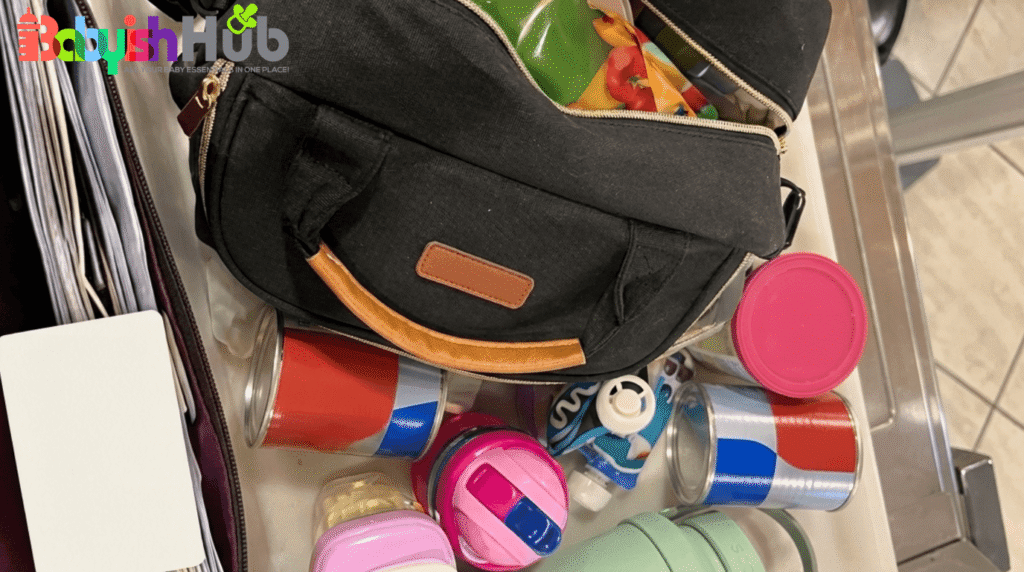
What you pack here depends entirely on how you feed your baby.
If you breastfeed, your main concern is comfort and access during the flight and in transit. A lightweight nursing cover or a large muslin swaddle that doubles as one gives you flexibility in any environment.
A manual breast pump in your carry-on covers you if you’re separated from your checked bags or if your electric pump has a power compatibility issue abroad.
Formula-feeding parents need to think carefully. Most countries outside the US carry international formula brands, but the formulas you find abroad may differ in composition from what your baby currently uses.
If your baby is sensitive to formula changes, carry enough formula to last the full trip, or research specific brands available at your destination before you go. Single-serve formula packets are travel gold. They take up minimal space and remove any measuring stress on the plane.
For babies eating solids, pouches are your best friend for travel days. They don’t require refrigeration, they’re easy to feed anywhere, and they pack flat. Bring more than you think you need for travel days, then plan to buy fresh food locally once you’re settled.
A good, insulated bottle bag with ice packs covers you for any feeds during transit. One or two extra bottles, a bottle brush, and a small bottle of dish soap that you’ll use nightly to wash up rounds this out.
How Many Baby Clothes Should You Pack for International Travel?
Pack seven to ten full outfits for a one-week trip, regardless of your destination’s laundry situation. Babies spit up, blowouts happen at the worst possible times, and you will use every outfit.
Layers are your best tool for climate management. Even if you’re traveling somewhere warm, planes and air-conditioned restaurants get cold. A few lightweight long-sleeve layers and a thin zip fleece take up almost no space and eliminate a lot of discomfort.
One warm sleep outfit, like a wearable blanket or sleep sack, is worth bringing from home because sleep associations matter when you’re trying to get a baby down in an unfamiliar place. Using familiar sleep gear helps signal bedtime to a baby whose schedule is already disrupted by time zones.
Pack one or two extra outfits in your carry-on so you’re covered if your checked bag gets delayed.
Baby Sleep Essentials for International Travel: What to Pack for Better Sleep

Sleep is arguably the hardest part of international travel with a baby, and what you pack can either support it or make it harder.
Your accommodation situation determines a lot. If you’re staying in a hotel, call ahead and request a crib or a pack-and-play. Most international hotels in major cities have them.
If you’re staying in a vacation rental or with family, a portable travel crib like the BabyBjörn Travel Crib is well worth its packing footprint for the sleep quality it buys everyone.
Bring a fitted sheet from home if your baby is used to a specific texture or if you use a breathable mattress cover. Hotel crib mattresses vary hugely. A small white noise machine or a white noise app on your phone helps with unfamiliar sounds in new environments.
Blackout curtains don’t pack well, but a large dark swaddle or blanket held up with a few binder clips over a curtain rod can block enough light to help an overtired baby settle.
Related: What Can I Put My Baby To Sleep On When Travelling?
Baby Travel Health Checklist: Medications, First Aid & Safety Essentials
This is the category where packing a little extra genuinely pays off…
Infant acetaminophen and infant ibuprofen (for babies over six months) are worth bringing in proper travel sizes. Not every country carries the same formulations, and you do not want to troubleshoot medication dosing in a foreign pharmacy at midnight with a sick baby.
Make sure your baby’s first aid kit has the following basics:
- Saline nasal drops
- A nasal aspirator
- Gas drops if your baby uses them
- A digital thermometer.
A baby-safe sunscreen rated SPF 50, especially if you’re traveling to a sunny destination, like Mexico, is worth bringing from home because international formulations and availability vary. Anti-itch cream and any prescription medications your baby takes are non-negotiable additions.
If your baby is prone to ear pain during flights, ask your pediatrician before you go about safe approaches to managing discomfort. Nursing or offering a bottle during takeoff and landing helps most babies by encouraging them to swallow, which relieves ear pressure.
Best Baby Travel Gear for International Trips (And What You Can Leave at Home)
A lightweight umbrella stroller earns its place on international trips for older babies who aren’t happy being worn all day.
For newborns and young infants, a structured carrier like the Ergobaby or Lillebaby is often more practical than a stroller because it keeps your hands free in tight spaces, on cobblestones, and on public transit, where strollers are awkward.
Your car seat decision depends on your ground transportation plans. If you’re renting a car or taking taxis regularly, bring a travel-friendly car seat or research rental availability in advance.
A portable high chair strap or a clip-on travel high chair weighs very little and makes restaurant meals infinitely easier once your baby is eating solids.
Leave the full-size baby monitor, the bouncer, and the full bath gear at home. A small rubber bath seat and a little-used travel towel handles bath time in any sink or tub.
Hotels almost always provide towels you can use, and your baby will survive one trip without their specific hooded duck towel.
What To Pack for International Travel With a Baby: Carry-On Breakdown
Your carry-on and diaper bag are your lifeline during transit. They need to survive a full travel day independently of your checked luggage. Keep the following essentials in your carry-on bag:
- Enough diapers and wipes for the flight plus one day
- A change of clothes for your baby (plus one for you)
- Feeding supplies for the full trip duration
- All medications
- All documents
- Your baby’s sleep sack or lovey (if they have one)
- A pacifier backup (if your baby uses one)
- A small toy or two that your baby genuinely engages with
- A teether if they’re in that stage. Baby-approved snacks if they’re eating solids.
Everything other travel essentials you have with you can go in checked luggage.
Final Packing Tips for International Travel With A Baby
Packing for international travel with a baby feels overwhelming until you realize most of the world has babies, too. You need documents, diapers for the journey, feeding supplies you can’t easily source abroad, a solid sleep setup, and health basics. The rest you can figure out when you land. Every trip teaches you what your family needs, and you’ll pack better every time. Trust yourself. You’re more prepared than you feel right now.