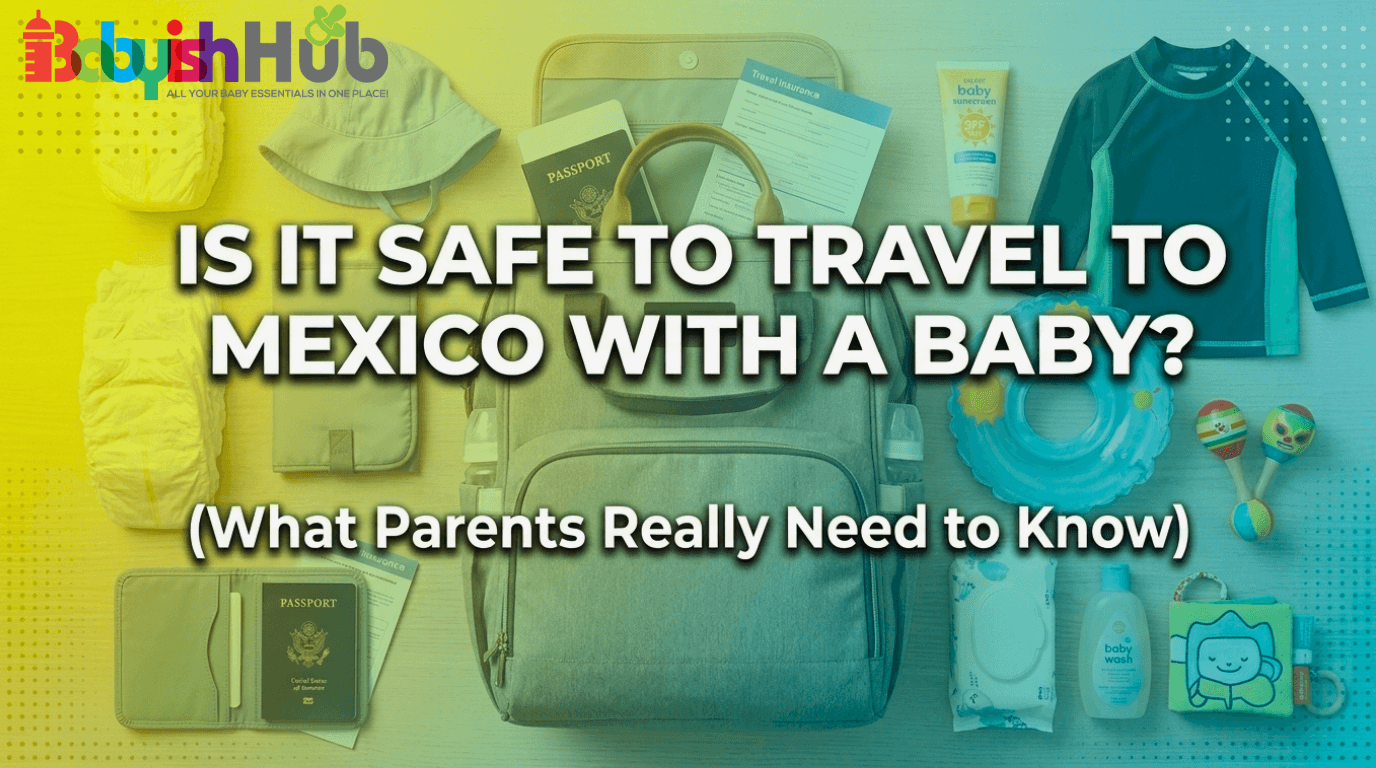
Is It Safe To Travel To Mexico With A Baby? What Parents Really Need To Know
Mexico is one of the most popular travel destinations in the world, and for good reason. It has beautiful beaches, extraordinary food, warm weather, and, for many families, a relatively short and affordable flight from home.
It is also a country that raises real questions for parents traveling with a baby for the first time: water safety, health risks, crime, medical care, and whether the whole idea is reasonable or completely reckless.
The honest answer to “Is it safe to travel to Mexico with a baby?” can absolutely be safe, and many families do it every year without incident.
It can also go wrong in ways that are more serious when you have an infant who cannot communicate symptoms clearly, cannot wait out discomfort the way an adult can, and who needs specific things like safe water and temperature control that are not always easy to guarantee in every setting.
What makes the difference is not whether you go, but how you prepare and where exactly you are going.
Mexico is such an enormous, geographically and socially diverse country. And the risk profile of a resort hotel in Los Cabos is quite different from a rural village with limited medical infrastructure.
This article helps you think through that distinction clearly and honestly.
What Are The Risks Of Traveling To Mexico With A Baby?
Before getting into the practical preparations, it is worth naming the actual risks clearly, because vague anxiety is less useful than specific, addressable concerns.
Water Safety
This is the most significant and most consistently relevant health risk for babies traveling to Mexico. Tap water in Mexico is not safe to drink, and this applies to your baby with even greater urgency than it applies to you as an adult. (Source).
Your baby’s digestive system is immature and far more vulnerable to the bacteria and parasites that can be present in untreated or undertreated water.
The risk is not limited to drinking water directly from the tap. It extends to water used to prepare formula, water used to rinse feeding equipment, ice cubes in drinks, water used to wash fruit and vegetables, and any food that has been prepared using tap water.
This sounds overwhelming, but it is manageable with a consistent approach that becomes second nature quickly.
Use bottled water for everything related to your baby, from preparing formula to rinsing bottles, washing pacifiers, everything! Stick to bottled water yourself while breastfeeding as well, since severe dehydration or illness in a nursing mother affects her milk supply.
In resort hotels, bottled water is typically provided and readily available. In more independent accommodations, factor the cost of bottled water into your planning and make sure your accommodation has a reliable supply before you commit to it.
Traveler’s Diarrhea and Stomach Illness
Traveler’s diarrhea is the most common illness affecting visitors to Mexico, and it is caused by consuming contaminated food or water. In a healthy adult, it is deeply unpleasant but typically self-limiting.
In a baby, especially one under twelve months old, it can become dangerous quickly because infants dehydrate much faster than adults, and dehydration in babies can escalate to a medical emergency in a matter of hours.
Signs of dehydration in a baby include a dry mouth, no tears when crying, significantly fewer wet diapers than usual, sunken eyes, or unusual lethargy. If you see these signs in combination, seek medical care immediately rather than waiting to see if things improve.
Prevention is everything here. You should be extremely selective about where and what your baby eats. Avoid raw fruits and vegetables that cannot be peeled. Stick to freshly cooked, hot food rather than buffet items that have been sitting out.
In resort settings with well-managed kitchens, the risk is considerably lower than in roadside food stalls or local markets where food hygiene is harder to assess.
Heat And Sun Exposure
Mexico’s climate, particularly in coastal resort areas, involves intense sun and heat that pose real risks for babies.
Infants under six months old should not have sunscreen applied to their skin according to most pediatric guidelines, which means sun avoidance through shade, protective clothing, and timing of outdoor activities is the primary protection strategy for very young babies.
For babies over six months, a mineral-based sunscreen with an SPF of 30 or higher can be applied to exposed skin. Reapply frequently, especially after water exposure.
Keep your baby as cool as possible during the hottest parts of the day, typically between 10 a.m. and 4 p.m. Schedule outdoor beach or pool time for early morning and late afternoon.
Make sure your accommodation has reliable air conditioning and test it before you commit to a room. In the Mexican heat, air conditioning in your baby’s sleep environment is not a luxury. It is a meaningful safety consideration.
Safety and Crime Concerns
Mexico does have regions with significant security concerns, and it would be dishonest to dismiss this. The US State Department, UK Foreign Office, and equivalent agencies in other countries publish travel advisories for Mexico that rate different states by risk level.
Some states, particularly those with active cartel presence or high violent crime rates, carry advisories recommending against travel entirely or against non-essential travel.
Popular tourist destinations, including Cancun, Los Cabos, Puerto Vallarta, and Mexico City’s main tourist areas, are in different risk categories than the states that receive the most serious advisories.
That does not make them risk-free, but it does reflect a meaningfully different reality. Tourist areas in these destinations receive a heavy security presence, and most visitors travel without any safety incidents.
The practical guidance is to check the current travel advisory for your specific destination from your home country’s foreign affairs department before booking. Not the general Mexico advisory, but the advisory for the specific state you are visiting.
Plan to stay in reputable, well-reviewed accommodations. Use pre-arranged airport transfers or established rideshare apps rather than unmarked taxis. Avoid traveling at night outside of resort or hotel areas. Stay in areas where other tourists and families are present.
Health Preparations Before You Go
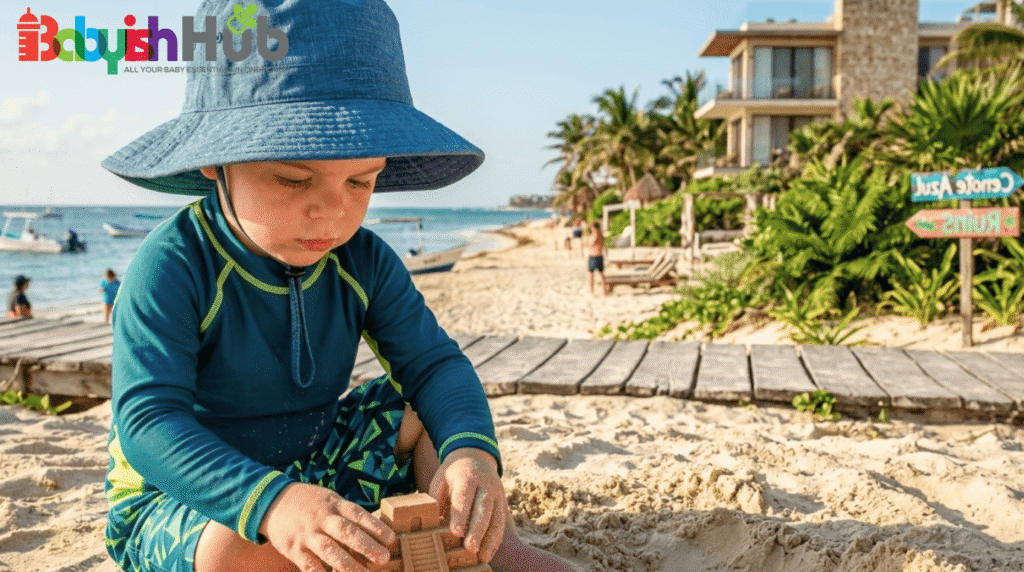
Getting your preparations right before departure is the most effective thing you can do for your baby’s health and safety on a trip to Mexico.
Talk To Your Pediatrician First
Book an appointment with your baby’s pediatrician at least four to six weeks before your travel date. This is to ensure your baby is up to date on all age-appropriate vaccinations, to discuss any destination-specific health risks, and to get professional guidance tailored to your baby’s age and health history.
For travel to Mexico, your pediatrician may discuss hepatitis A vaccination depending on your baby’s age and itinerary. They can also advise you on what to do if your baby develops diarrhea or a fever during the trip, and may provide guidance on oral rehydration solutions to bring with you.
Vaccinations
Routine childhood vaccinations protect against many illnesses that are more prevalent in some international travel settings than at home. Ensuring your baby is current on their vaccination schedule before travel is straightforward preventive care.
Hepatitis A, which is transmitted through contaminated food and water, is more of a concern in Mexico than in many higher-income countries. The hepatitis A vaccine is typically given starting at twelve months of age. For babies younger than this who are traveling to higher-risk areas, your pediatrician can advise on any available options or precautions.
No vaccinations are officially required for entry into Mexico from most countries, but the above reflects what is worth discussing with your doctor before you go.
Pack A Baby Health Kit
Your travel health kit for Mexico should be more thoughtful than what you might bring to a domestic destination. Include infant pain reliever and fever reducer in the correct formulation for your baby’s age and weight.
Bring a reliable digital thermometer, since knowing your baby’s temperature accurately matters more in a travel context where you are deciding whether a situation requires medical care.
Oral rehydration solution sachets are one of the most important items you can pack for traveling with baby to Mexico, specifically. They replace the fluids and electrolytes lost through diarrhea or vomiting far more effectively than water alone.
Pedialyte or an equivalent is widely available in Mexico, but having your own supply means you are not scrambling to find a pharmacy in an unfamiliar area at an inconvenient moment.
Zinc-based diaper cream for heat rash, saline nasal drops, and any prescription medications your baby takes regularly round out the essentials. Bring more of any prescription medication than you think you need.
How Do You Choose The Right Destination In Mexico for A Baby?
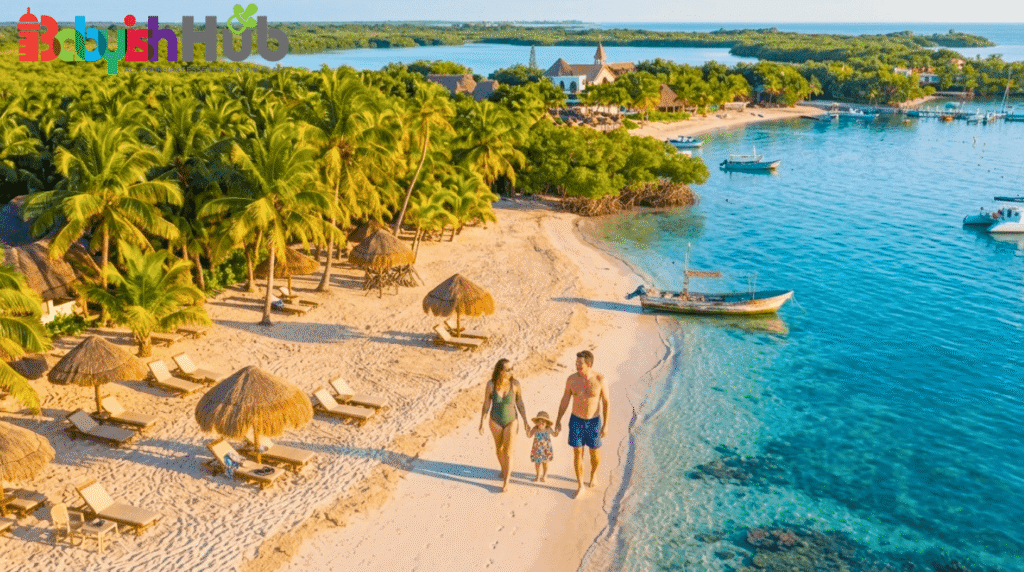
Not all of Mexico presents the same experience or the same risk profile for a family with a baby, and where you choose to go matters enormously.
All-Inclusive Resort Areas
Destinations like Cancun, the Riviera Maya, Los Cabos, and Puerto Vallarta have established, well-resourced tourist infrastructures that make them significantly more manageable for families with babies. All-inclusive resorts, in particular, offer you several practical advantages:
- Filtered or bottled water is standard
- Food is prepared in professionally managed kitchens with hygiene standards that cater to an international clientele.
- Medical facilities or on-site nurses are often available
- Air conditioning is reliable
- You have a consistent, contained environment rather than navigating an unfamiliar city with a baby.
This does not mean staying in your resort room the entire trip. Rather, it means using the resort as a safe, well-resourced home base and venturing out for day trips and experiences from there with appropriate precautions.
Mexico City
Mexico City is such a fascinating destination and one that many experienced travelers love. For a first trip to Mexico with a baby, it presents more complexity than a resort destination. Altitude is one consideration that is often overlooked.
Mexico City sits at over 2,200 meters above sea level, and altitude can affect babies differently than adults. Some babies adjust without issue. Others experience fussiness, disrupted sleep, or breathing changes at altitude. Discuss this with your pediatrician if you are considering Mexico City specifically.
The city also requires more active navigation, more decisions about food and water safety in a wider variety of settings, and more general vigilance than a self-contained resort environment.
It is entirely doable, particularly for parents who have traveled internationally before and are comfortable with urban travel logistics. For a first trip with a baby, the resort areas offer a gentler introduction.
Smaller Towns and Rural Areas
The further you travel from well-resourced tourist infrastructure, the more important your preparation becomes. Medical facilities in rural Mexico vary enormously in quality and accessibility.
If your baby needed urgent medical care in a remote area, getting to adequate treatment could take significant time. For a first trip with a baby, staying within a reasonable distance of a city with good hospital facilities is a sensible boundary to set.
What Should You Do If Your Baby Gets Sick In Mexico?
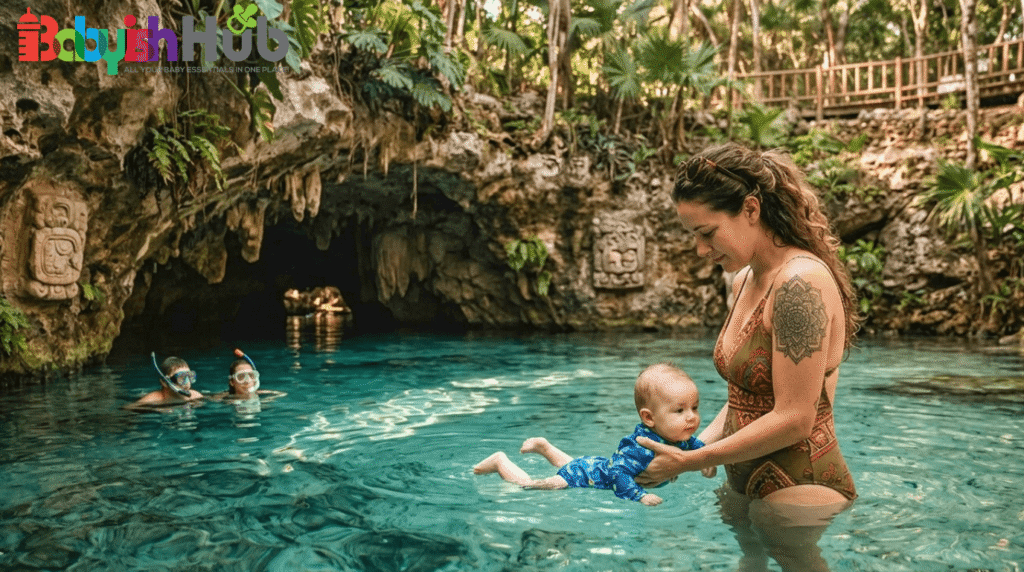
Despite careful preparation, babies get sick sometimes. Knowing what to do in advance is better than trying to figure it out in a moment of panic.
Major resort hotels typically have doctors on call or on-site medical staff who can assess your baby and either treat minor issues or advise on where to seek further care. Ask about this when you check in rather than waiting until you need it.
For more serious situations, the IMSS and ISSSTE public hospital systems exist throughout Mexico, but private hospitals in tourist areas generally offer better-equipped facilities and staff who are more likely to speak English.
Hospital Angeles and Star Medica are private hospital groups with locations in several major tourist cities and are the most recommended facilities for visiting families.
Have your travel insurance documents and emergency contact number immediately accessible, not buried in your luggage.
Know your policy’s process for authorizing treatment before it is administered, since some insurers require pre-authorization for non-emergency care, and the process can affect how you are billed.
The Bottom Line: Is it safe To Travel To Mexico With A baby?
Traveling to Mexico with a baby is not inherently dangerous, and framing it that way does a disservice to the many families who have wonderful, safe, memory-making trips there every year.
It does require more preparation than a domestic trip, more vigilance around food and water, more thought about your specific destination, and a health kit that reflects where you are going.
Choose your destination thoughtfully. Prepare with your pediatrician. Take the water safety rules seriously every single day you are there. Have travel insurance that covers medical care for your baby. Know where the nearest adequate medical facility is before you need it.
Done that way, Mexico can be a genuinely beautiful first international trip for your family. The beaches are worth it. The food, prepared safely, is extraordinary.
And watching your baby experience the warmth and color of that part of the world for the first time is the kind of thing you will remember long after the logistical stress of getting there has faded completely.