Best Toddler Headphones for Plane Travel: 7 Safe and Comfortable Picks for Flying
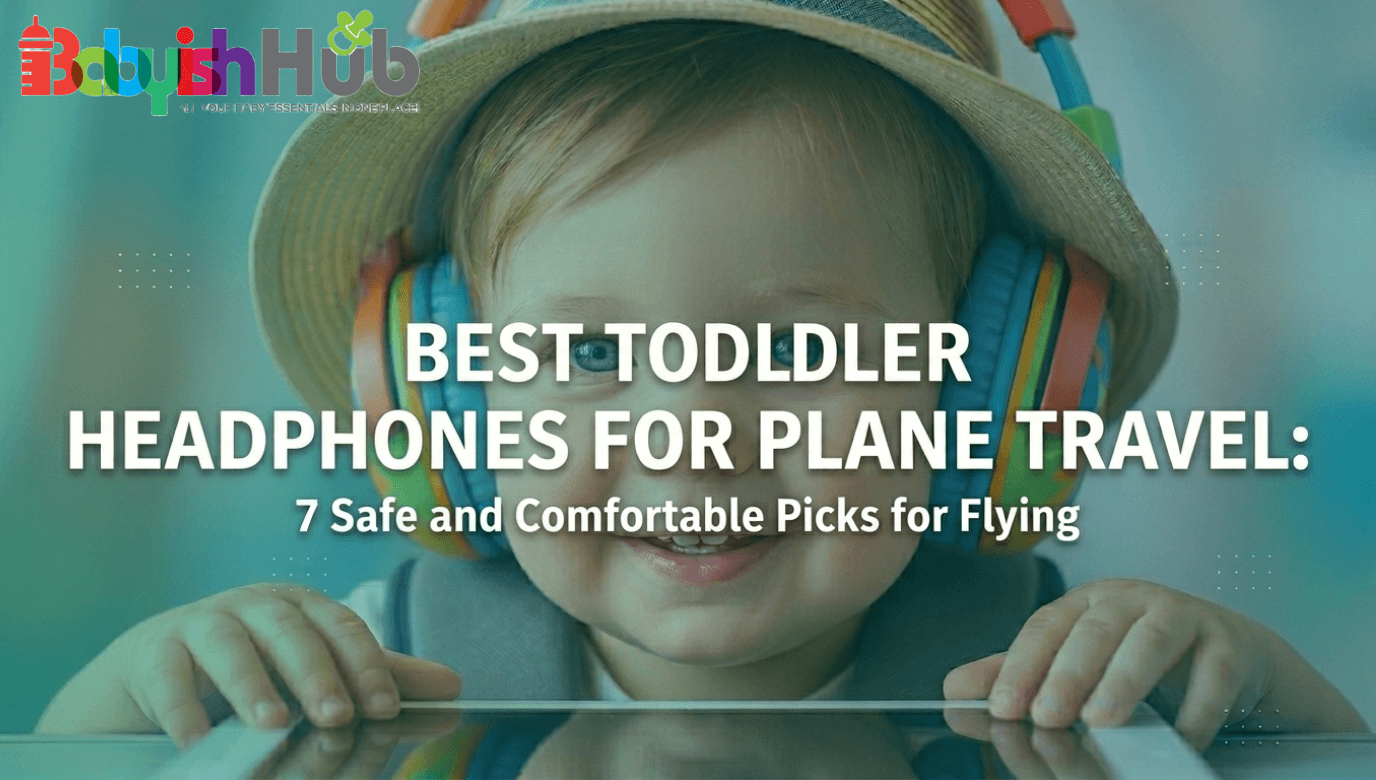
My middle child was two and a half on her first long-haul flight, and I made the rookie mistake of bringing a pair of headphones sized for my older child. They slid off her head every time she turned to look out the window, and by hour three, I was holding them in place with one hand while trying to eat my own meal with the other.
Toddler ears and heads are pretty smaller than the size a typical kids’ headphone is designed for, and that difference matters more on a plane than anywhere else. This guide focuses specifically on headphones sized and volume-limited for true toddlers, not just “kids” headphones that technically start at age 5 or 6.
Best Toddler Headphones for Plane Travel At A Glance:
- BuddyPhones Play+: Best overall for most families thanks to its 75dB ToddlerMode, dual wired and wireless connectivity, and travel-friendly design.
- Belkin SoundForm Mini 2: Best for long flights with an impressive 55-hour battery life plus a wired backup option.
- Puro JuniorJam Plus: Best premium choice, offering excellent sound quality and passive noise isolation while maintaining a safe 85dB limit.
- JBL JR310: Best value wired headphones with a trusted brand name, soft padding, and simple plug-and-play reliability.
- iClever BTH18: Best budget wireless option featuring a true 74dB toddler mode and outstanding battery life.
- BuddyPhones Explore+: Best lightweight pick for occasional travelers who want an affordable, no-charge-required wired option.
- Kidrox Toddler Headphones: Best ultra-budget choice for parents seeking a basic, toddler-sized pair with safe volume limiting.
Quick Comparison Table:
| Product | Wired or Wireless | Volume Limit (dB) | Battery Life | Foldable | Best For |
| BuddyPhones Play+ | Both | 75/85/94 (3 modes) | 20 hrs | Yes | Overall best toddler fit |
| Belkin SoundForm Mini 2 | Both | 85 | 55 hrs | Yes | Wired backup reliability |
| Puro JuniorJam Plus | Wireless | 85 | 22 hrs | Yes | Premium sound quality |
| JBL JR310 | Wired | 85 | N/A | No | Trusted brand, simple use |
| iClever BTH18 | Wireless | 74/85 (toddler mode) | 43 hrs | Yes | Budget-friendly with true toddler mode |
| BuddyPhones Explore+ | Wired | 75/85/94 (3 modes) | N/A | Yes | Lightweight occasional travel |
| Kidrox Toddler Headphones | Wired | 85 | N/A | No | Tightest budget, ages 1-7 |
7 Best Toddler Headphones for Plane Travel
Finding the right headphones can make flying with a toddler much easier. Here are the best options for comfort, safety, and in-flight entertainment.
1. BuddyPhones Play+
Best Overall toddler headphones for flying
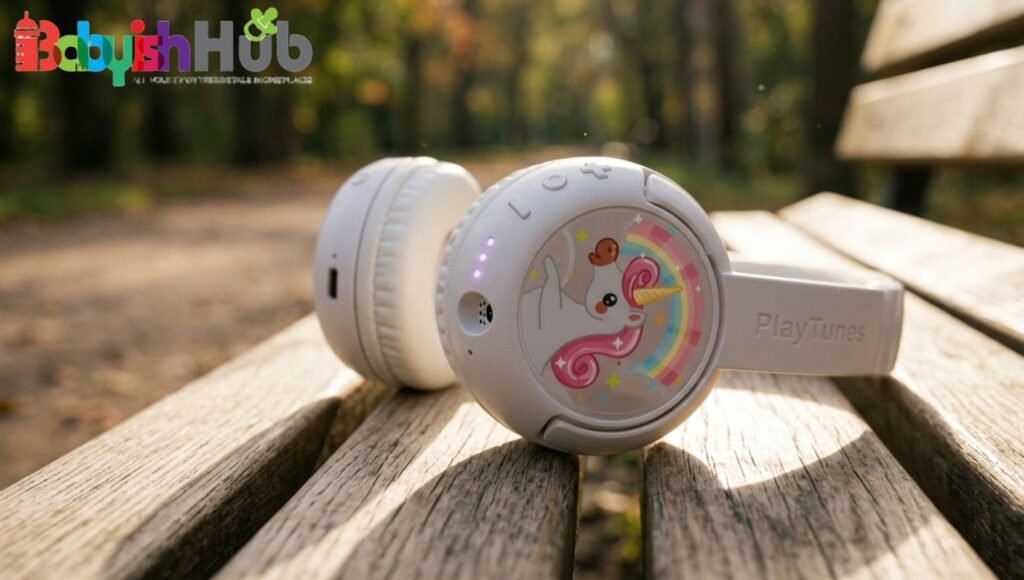
Why It Stands Out for Travel: The combination of a true 75dB toddler-specific volume cap and the wired fallback option makes this the safest, most flight-practical choice on this list. If the in-flight entertainment system only has a 3.5mm jack, you’re covered without needing an adapter.
BuddyPhones Play+ is specially built for toddlers, not just marketed at them. It’s designed to fit kids between the ages of 2 and 10, with a dedicated ToddlerMode capped at 75dB alongside KidsMode at 85dB and TravelMode at 94dB for older siblings sharing the same pair.
The dual wired-and-wireless connection means the headphones keep working even after the 20-hour battery runs out mid-flight, which matters more than almost any other feature on a long travel day.
The ear cups are made from hypoallergenic, durable materials designed for all-day wear, and the headphones come with a travel bag and both a 3.5mm cable and USB-C charging cable in the box. BuddyPhones are certified by TÜV and UL testing labs and built from BPA- and phthalate-free materials.
Pros: True ToddlerMode at 75dB, fits ages 2 to 10, works wired or wireless, 20-hour battery, travel bag included, hypoallergenic materials, third-party safety certified.
Cons: The Bluetooth pairing process can be fiddly for a parent managing a toddler at the same time, so pairing before you reach the airport is worth the extra few minutes.
2. Belkin SoundForm Mini 2
Best Wired Reliability
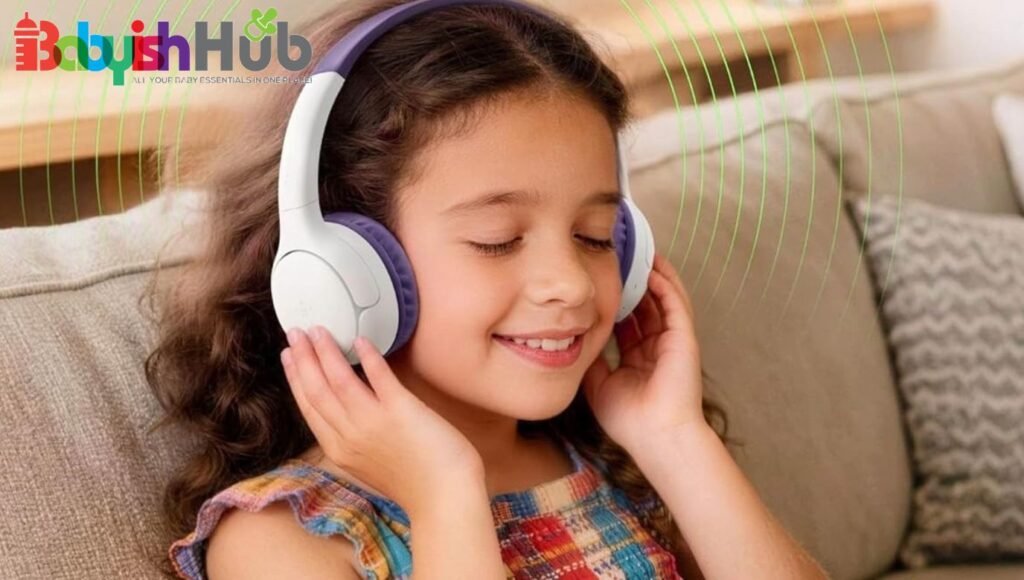
Why It Stands Out for Travel: The long battery life is the standout here. A 55-hour charge means you can use these across an entire multi-leg trip without hunting for an outlet at a layover.
Belkin built the SoundForm Mini 2 with a perfectly kid-sized fit, marketed specifically as toddler headphones with an adjustable headband designed to grow with your child. The 85dB volume limiter is hardware-based, and the foldable design makes it one of the more travel-ready options here.
What sets this pair apart is the dual connectivity. It runs on Bluetooth for up to 55 hours, but it also includes a 3.5mm aux port and cable, so a dead battery on a long-haul flight doesn’t mean a silent toddler. The over-ear cushions are sized for small heads rather than scaled down from an older child’s design.
Pros: Perfectly toddler-sized over-ear cushions, 85dB hardware volume limiter, 55-hour battery life, wired backup included, foldable for packing, IPX5 splash resistance on the newer model, 2-year coverage.
Cons: No ToddlerMode below 85dB the way BuddyPhones offers, so it’s a slightly higher ceiling for very young toddlers. The touch controls can be a bit sensitive for little hands that like to fidget.
3. Puro Sound Labs JuniorJam Plus
Best Premium Pick
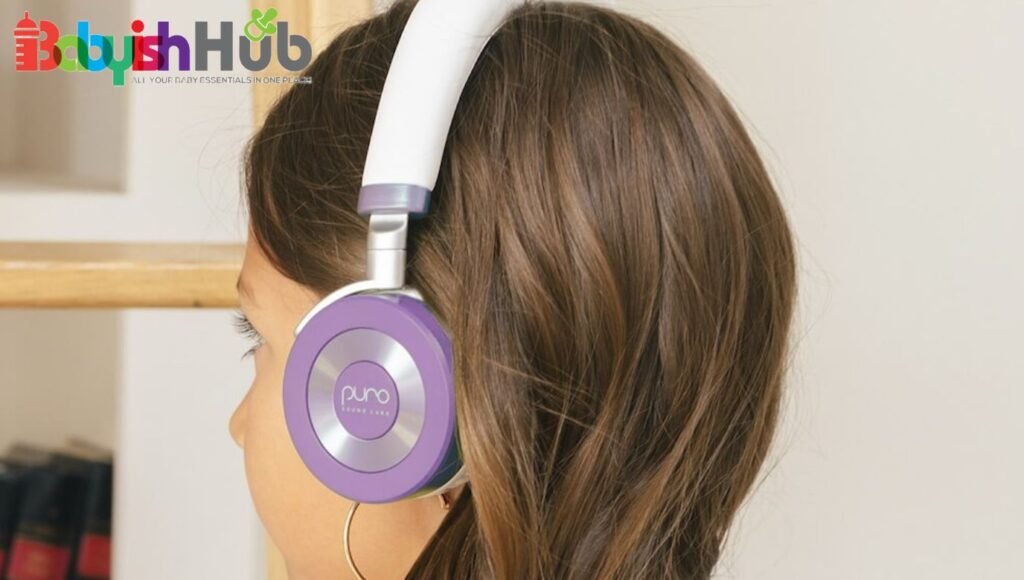
Why It Stands Out for Travel: Puro headphones are well regarded for holding up to repeated travel use over multiple years, which can offset the higher upfront price if you’re flying with your toddler regularly.
Puro Sound Labs built its reputation on studio-grade audio quality within a strict volume cap, and the JuniorJam Plus brings that same engineering to a smaller, toddler-friendly design. The Puro Balanced Response Curve delivers noticeably clearer sound than most budget kids’ headphones, while still capping out at 85dB to meet the World Health Organization’s recommended safe listening threshold.
The on-ear design is adjustable for a snug fit on a small head, and the 22-hour battery life via Bluetooth 5.1 holds up for most long-haul itineraries. Passive noise isolation blocks a meaningful amount of ambient cabin noise without needing active noise cancellation, which keeps the price and weight down.
Pros: Premium sound quality at a safe 85dB cap, 22-hour battery life, adjustable on-ear fit, passive noise isolation blocks up to 87% of ambient sound, Bluetooth 5.1 with 30-foot range.
Cons: This is the most expensive option on this list, and the audio quality improvement may not matter much to a toddler who’s mainly watching cartoons rather than listening critically to music. No wired fallback option on this specific model.
4. JBL JR310
Best Value
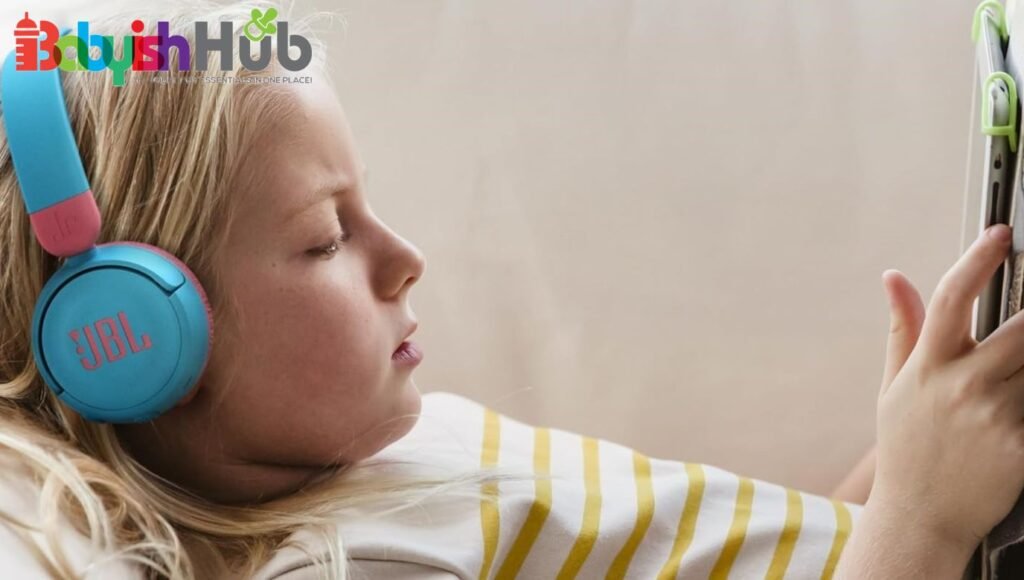
Why It Stands Out for Travel: The custom-designed padding feels softer than what you’ll find on most budget kids’ headphones, and the lighter overall weight reduces the chance of the headphones sliding around during a wiggly toddler’s nap.
JBL designed the JR310 specifically for the youngest music fans, with a lightweight, kid-sized build and soft padded ear cushions rather than a scaled-down adult design. The volume is engineered to never exceed 85dB, and the wired connection means there’s no battery to manage or charge before a flight.
The anti-tangling cable comes with a built-in mic and remote, and the headphones include reusable stickers so your toddler can personalize their pair, which can help with getting a reluctant toddler to wear them. JBL’s name recognition also means easy access to replacement parts and customer support if something breaks mid-trip.
Pros: Trusted, widely available brand, perfectly kid-sized fit, simple plug-and-play with no charging required, soft padded headband, includes stickers, budget-friendly price.
Cons: Wired only, so it requires a 3.5mm jack on the in-flight entertainment system or your tablet. No ToddlerMode below the standard 85dB cap, which is fine for most toddlers but not as conservative as BuddyPhones’ 75dB option.
5. iClever BTH18
Best Budget-Friendly Choice With True Toddler Mode
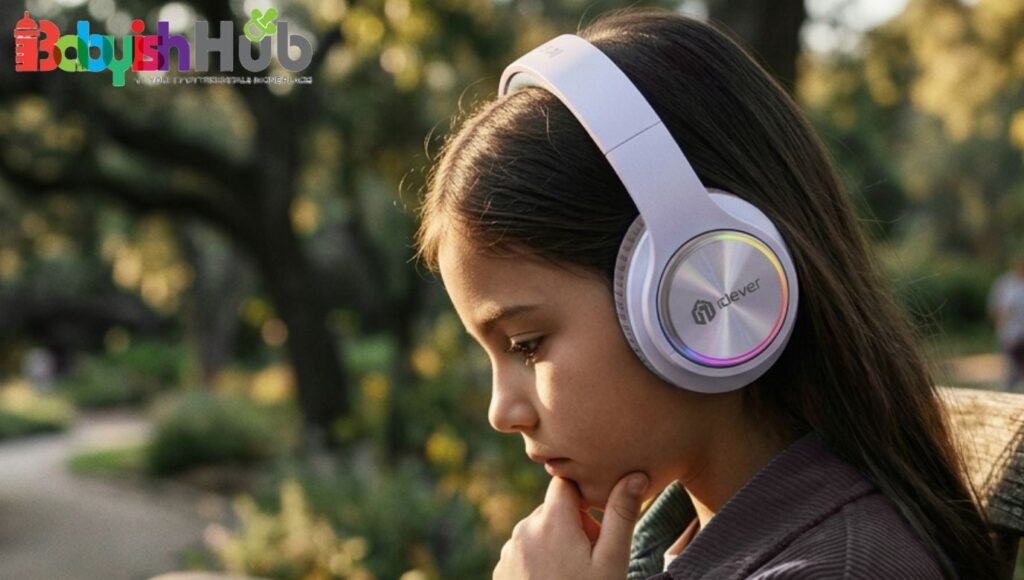
Why It Stands Out for Travel: Few headphones in this price range offer a true sub-80dB toddler mode, which makes this a smart pick for parents specifically worried about hearing protection for very young toddlers on long flights.
The iClever BTH18 is one of the few budget headphones that builds in a toddler-specific volume setting rather than offering a single 85dB cap for all ages. The 74dBA mode is explicitly tailor-made for toddlers, switchable with a simple two-button combination, while an 85dBA mode covers wired use and older siblings.
At 5.57 ounces, it’s noticeably lighter than several competitors, and the 43-hour battery life on a single charge covers even the longest international flights without needing a mid-trip charge. The rotatable, foldable ear cups adjust to fit a small head, and the materials are free of BPA, PVC, and heavy metals.
Pros: 74dBA toddler-specific mode, lightweight at 5.57 ounces, 43-hour battery life, foldable and rotatable ear cups, budget-friendly price, BPA/PVC-free materials.
Cons: Brand recognition is lower than JBL or Belkin, which may matter if customer support or warranty service becomes a concern. LED light features on some color variants could be distracting for a toddler trying to sleep on a flight.
6. BuddyPhones Explore+
Best Lightweight Option for Occasional Travel
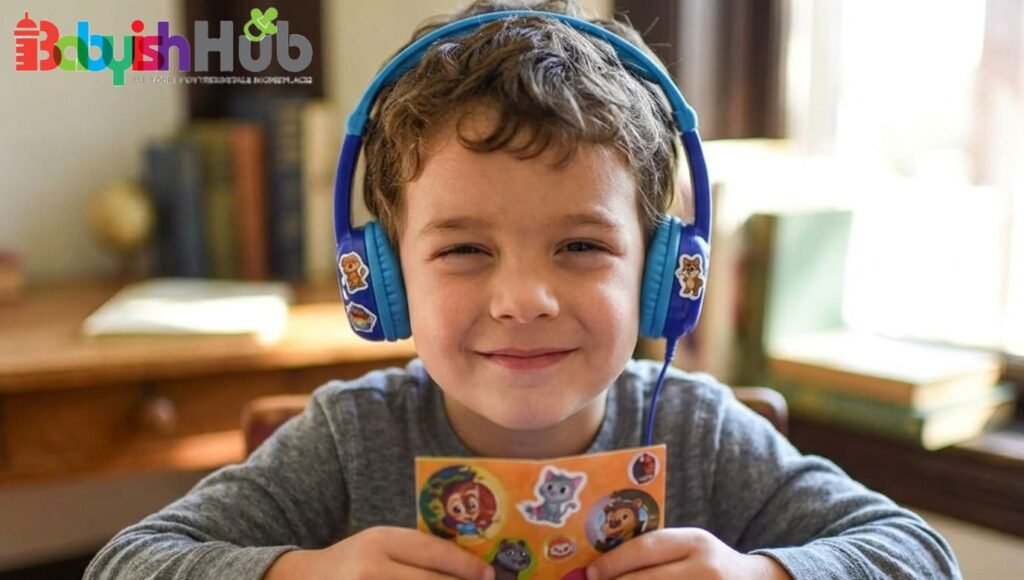
Suitable for occasional outings: If your toddler will use these mainly for flights and the occasional long car ride rather than daily wear, the lower price makes more sense than paying for features you won’t use often.
For parents who only fly with a toddler once or twice a year and don’t want to invest in a premium pair, the BuddyPhones Explore+ covers the essentials at a fraction of the cost of the brand’s higher-end Play+ model. It’s wired only, with a built-in audio-sharing cable so a sibling or parent can plug in and listen along without a splitter.
The design is simple and lightweight, with the same hypoallergenic ear cup materials used across the BuddyPhones line, and the volume-limiting circuitry still offers the brand’s signature multi-mode protection.
Pros: Affordable price point, wired and battery-free, audio-sharing cable built in, lightweight and foldable, simple design with no Bluetooth pairing required.
Cons: Less padding than the Play+ model, and the headband doesn’t feel quite as durable for daily, heavy use. Better suited to occasional trips than as a primary everyday pair.
7. Kidrox Wired Toddler Headphones
Best for the Tightest Budget
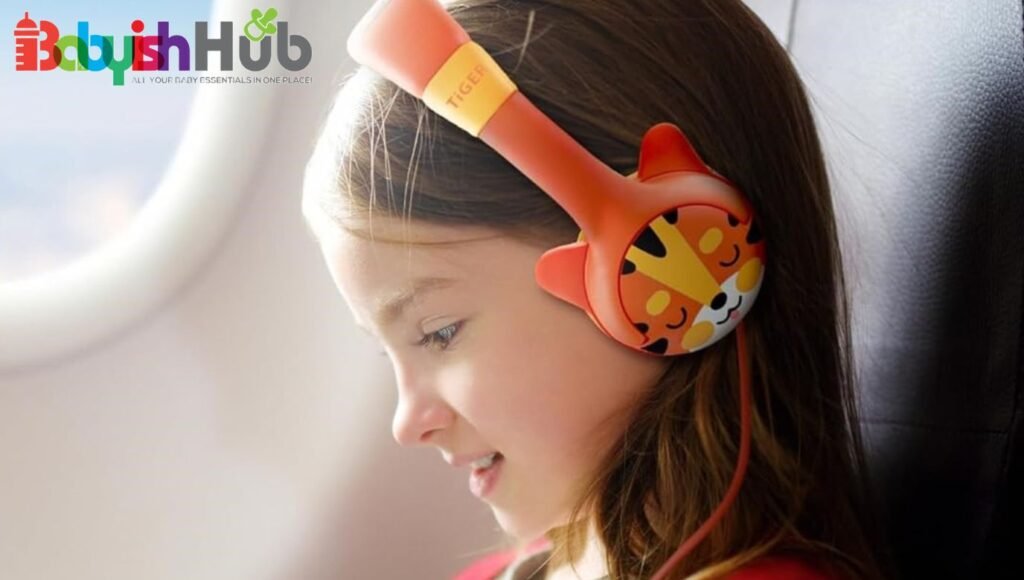
Everyday use and travel: For parents who want a true toddler-sized pair as a low-stakes backup or a first pair before investing in something more durable, this fills that role well.
Kidrox built this pair explicitly for ages 1 to 7, which puts it squarely in true toddler territory rather than the more common “kids” age range that starts at 5 or 6. The 85dB volume limit protects hearing on long flights, and the tangle-free flat cable is designed specifically to survive being shoved in a diaper bag.
The adjustable headband grows with your child over several years, and the lightweight on-ear cushions are sized for a younger fit than most wired competitors. Compatibility covers any standard 3.5mm device, including most airline seatback entertainment systems, tablets, and car DVD players.
Pros: Explicitly designed for ages 1 to 7, very affordable, tangle-resistant flat cable, adjustable headband, simple plug-and-play with no charging needed.
Cons: Build quality and audio fidelity are noticeably more basic than the premium picks on this list. No Bluetooth option, and the brand has a much smaller track record than established names like JBL or Belkin.
How We Chose The Best Toddler Headphones for Plane Travel
Here’s the approach we used to identify the best toddler headphones for comfortable and stress-free air travel:
Volume limiting for hearing protection was the most important filter we applied, and it shaped this list significantly. Many “kids” headphones on the market are designed and sized for ages 5 and up, with a single 85dB cap that doesn’t account for how much more vulnerable a toddler’s developing ears are at higher volumes for extended periods. We prioritized products with either a true sub-80dB toddler-specific mode or a verified, kid-sized fit rather than a scaled-down adult design relabeled for children.
Comfort during extended wear mattered just as much, given that international flights can mean six, ten, or even fourteen hours of potential use. We looked at cushion material, headband adjustability, and overall weight, since a heavier pair will slide and irritate a small head faster than a lightweight one.
Lightweight and foldable design influenced which products made the cut for actual travel use, since a bulky pair that doesn’t fold takes up valuable carry-on space. Durability for travel, compatibility with tablets and standard 3.5mm in-flight entertainment jacks, and real parent feedback on long-term use rounded out our evaluation criteria.
What To Look for When Buying Toddler Headphones for A Plane
Before you buy, it’s worth knowing which features can make a big difference during air travel. Consider these features when choosing toddler headphones for your next flight:
Volume Limiting to Protect Young Ears
The World Health Organization recommends that children’s audio exposure stay at or below 85 decibels, with more conservative limits recommended for very young children given how much more sensitive their developing ears are. Look for headphones with a hardware-based volume limiter rather than a software-based one, since hardware limiting cannot be overridden by a loud source device and remains consistent across every device you connect.
Comfortable Padding and Adjustable Fit
A toddler’s head is meaningfully smaller than even a 5- or 6-year-old’s, so check the manufacturer’s stated age range carefully rather than assuming any “kids” headphone will fit. Soft, generously padded ear cushions and a headband with a wide adjustment range matter more for toddlers than for older children, since toddlers can’t reliably tell you when something feels uncomfortable.
Wired vs. Wireless Connectivity
Wireless headphones offer freedom from a tangled cord, which matters in a cramped airplane seat. Wired headphones never run out of battery and connect directly to most airline seatback entertainment systems and tablets without pairing. Several picks on this list, including BuddyPhones Play+ and Belkin SoundForm Mini 2, offer both connection types in one pair, which removes the tradeoff entirely.
Battery Life for Long Flights
For wireless models, check the stated battery life against your actual flight time, including layovers and the trip home. A pair rated for 20 hours should comfortably cover a long-haul international flight, while anything under 10 hours may need a mid-trip charge that isn’t always practical in an airplane seat.
Foldable Design for Easy Packing
A foldable headphone takes up significantly less space in a carry-on or diaper bag, and a self-contained travel case helps protect the ear cups from getting crushed under other items.
Passive or Active Noise Reduction
Most toddler-appropriate headphones use passive noise isolation, which physically blocks ambient sound through the cushion seal rather than electronically canceling it. This is generally considered the safer, simpler choice for very young children, since it requires no additional circuitry that could interfere with a strict volume cap. Active noise cancellation exists in some kids’ headphones, but it’s more common in products designed for older children rather than toddlers.
Durable Construction That Can Handle Travel
Toddlers are not gentle with their belongings, and a flight adds extra stress from being shoved in seat pockets, dropped, or chewed on. Look for reinforced headbands, hypoallergenic and BPA-free materials, and any third-party safety certifications like TÜV or UL listed in the product description.
Wired vs. Bluetooth Toddler Headphones: Which Is Better for Flying?
Wired headphones connect directly to most airline seatback entertainment systems, which still commonly use a standard or dual-prong 3.5mm jack. This makes wired headphones essentially foolproof for in-flight movies and shows, with no pairing process and no battery to worry about.
Bluetooth headphones offer more freedom of movement and avoid a tangled cord getting caught on a tray table or armrest, which can matter for a toddler who likes to move around in their seat. The tradeoff is battery management and the occasional pairing hiccup, which can be frustrating mid-flight if the connection drops.
The most practical solution, and the reason several of our top picks made this list, is a headphone that offers both wired and wireless connectivity in the same pair. That flexibility means you’re never stuck without a working option regardless of what entertainment system you’re connecting to or how much battery is left.
Are Noise-Canceling Headphones Safe for Toddlers?
Active noise cancellation and volume limiting are two different things, and it’s worth understanding the distinction. Volume limiting caps the maximum output level the headphones can produce, regardless of the source device’s volume setting. Active noise cancellation uses microphones and circuitry to detect and cancel out ambient background noise, which can make quieter audio feel sufficiently loud without needing to increase the volume.
In theory, active noise cancellation can support safer listening by reducing the temptation to crank up the volume to hear over cabin noise. However, most active noise cancellation headphones on the market are designed for older children and adults rather than toddlers, partly because the technology adds bulk and weight that isn’t ideal for a small head.
For toddlers specifically, a reliable hardware volume limiter combined with good passive noise isolation from properly fitted ear cushions is generally considered the safer and more age-appropriate combination. Responsible listening also means limiting total daily exposure time, taking breaks during long flights, and periodically checking that the headphones are seated correctly on your toddler’s head.
Common Mistakes Parents Make When Buying Toddler Headphones:
Choosing headphones without checking for a true volume limiter is the most common mistake parents make. Some budget headphones marketed toward children don’t include any meaningful hardware limiting circuit, leaving the maximum volume entirely dependent on the source device.
Ignoring fit and comfort in favor of character branding or flashy design is a close second. A pair of headphones with a beloved cartoon character on the box won’t matter if the headband is too wide and slides off every time your toddler turns their head.
Forgetting to check compatibility with airline entertainment systems before the trip can mean discovering at 30,000 feet that your Bluetooth headphones won’t connect to the seatback screen, which only has a wired jack. Confirm connectivity options before you fly, especially on international carriers with older entertainment systems.
Buying bulky, non-foldable models that are difficult to pack adds unnecessary friction to carry-on space that’s already tight with diaper bags and snacks. Assuming wireless is always the better choice overlooks the real, practical advantage of a wired backup that never runs out of battery mid-flight.
Tips for Using Toddler Headphones on a Plane
Below, I have shared some practical tips to help your toddler use headphones comfortably, safely, and without hassle throughout the flight.
- Test the Fit Before Travel: Have your toddler wear the headphones at home for at least one full episode of their favorite show before the flight. This lets you confirm the fit is comfortable, the volume sounds appropriate, and your toddler is willing to keep them on without a fight.
- Charge Wireless Models Ahead of Time: Charge any Bluetooth headphones to full the night before travel, and consider bringing a portable battery pack if your flight is long enough that a recharge might be needed mid-trip.
- Bring a Wired Backup or Adapter: Even if your primary headphones are wireless, packing a basic wired pair or a Bluetooth-to-3.5mm adapter as backup means you’re never stuck without sound if the battery dies or the connection won’t pair.
- Keep Listening Sessions at Safe Volume Levels: Periodically check in on the volume level, especially if your toddler has figured out how to adjust it themselves. Encourage short breaks every hour or so during long flights to give their ears a rest.
- Pack the Headphones in a Protective Case: A hard or padded case keeps the ear cushions from getting crushed in a diaper bag and protects the headband from snapping under the weight of other carry-on items.
Frequently Asked Questions
Still have questions? Here are answers to some of the most frequently asked questions about toddler headphones for flying:
What are the best toddler headphones for long flights?
For long-haul flights, BuddyPhones Play+ and Belkin SoundForm Mini 2 are the strongest choices, since both offer dual wired-and-wireless connectivity, which means a dead battery won’t end your toddler’s entertainment mid-flight. Their long battery life, 20 and 55 hours respectively, also comfortably covers extended international travel.
Are volume-limited headphones important for toddlers?
Yes. Toddlers’ ears are still developing, and the World Health Organization recommends limiting children’s audio exposure to 85 decibels or below, with extra caution for very young children. A highly effective hardware-based volume limiter, ideally with a toddler-specific mode below 80dB like BuddyPhones’ 75dB ToddlerMode or iClever’s 74dBA setting, offers meaningfully more protection than a standard 85dB cap designed for older kids.
Can toddlers use Bluetooth headphones on an airplane?
Yes, Bluetooth headphones are permitted on airplanes and can connect to personal devices like a tablet or phone during flight. However, many airline seatback entertainment systems still require a wired connection, so confirm your specific airline’s setup before relying solely on Bluetooth.
Will toddler headphones work with in-flight entertainment systems?
Most will, provided they include a standard 3.5mm wired connection. Some older aircraft and international carriers use a dual-prong jack instead of the standard single jack, so it’s worth packing a dual-to-single adapter if you’re flying internationally and plan to use the seatback screen.
What volume level is considered safe for young children?
The World Health Organization recommends capping audio exposure at 85 decibels for safe listening, though many pediatric hearing specialists suggest staying closer to 70 to 75 decibels for toddlers and very young children, especially during extended listening sessions like a long flight. Look for headphones offering a dedicated lower-volume toddler mode rather than relying on a single 85dB ceiling.
Are wired or wireless headphones better for travel with toddlers?
Neither option is universally better, and the right choice depends on your specific flight and entertainment setup. Wired headphones are essentially foolproof for in-flight entertainment systems and never run out of battery, while wireless headphones offer more freedom of movement and avoid a cord that can tangle or get caught. The most practical solution for most families is a pair that offers both connection types in one headphone.
Final Thoughts on Choosing Toddler Headphones for Plane Travel
The best toddler headphones for plane travel combine excellent hearing protection, all-day comfort, and a fit sized for a toddler’s smaller head, not a scaled-down version of headphones built for older kids. Prioritize a true hardware volume limiter and a secure, comfortable fit over flashy features or character branding. Whether you choose BuddyPhones Play+ for its dedicated ToddlerMode or a simple wired pair like the JBL JR310 for its no-fuss reliability, the right headphones can turn a long flight into something your toddler enjoys, and that makes the whole trip a little easier for everyone in your row.