
How To Protect Your Baby’s Ears When Flying: 5 Proven Tips
The first time I flew with my oldest, she was four months old, and I was really terrified. I’d heard so many parents describe that moment during descent when their babies would scream inconsolably while everyone on the plane silently judged them.
I had googled “how do I protect my baby’s ears when flying” approximately forty times in the week leading up to the trip. I packed everything I could think of. I rehearsed a feeding plan. But I was still not fully prepared.
What I learned across three kids and more flights than I can count is that protecting your baby’s ears when flying is easily doable, and it makes a real difference, not just for your baby but for your own peace of mind as a parent.
Over the years, I’ve mastered a complete strategy for flying with a baby without losing your mind, but today, we are going to focus heavily on the most anxiety-inducing part of the journey: the cabin pressure shifts.
Here’s everything you need to know…
TL;DR: How to Protect Your Baby’s Ears When Flying
To prevent infant ear pain from cabin pressure shifts, feed your baby during takeoff and landing. The swallowing motion naturally opens the Eustachian tube to equalize pressure. Additionally, keep your baby awake during descent, maintain hydration, feed them at an incline, and consult your pediatrician if your infant has a cold or recent ear infection.
Why Do Babies’ Ears Hurt on Planes? The Science Behind Cabin Pressure
Before diving into the solutions, you first need to understand what happens to your little one’s ears during flight.
When the plane climbs or descends, the air pressure in the cabin changes. Adults usually manage this by yawning or swallowing, which helps the Eustachian tube equalize pressure between the middle ear and the environment.
Babies have this same tube, but it is shorter, narrower, and more horizontal than in older children and adults, which makes it harder for them to regulate that pressure shift on their own.
The result is a buildup of pressure in the middle ear that can feel uncomfortable or even painful. Babies cannot tell you their ears hurt, so they simply cry, arch their back, pull at their ears, and refuse to settle.
If you have ever seen a baby suddenly go from calm to completely distressed during descent with no obvious cause, pressure pain is almost always the culprit.
Now that you understand what makes the ears hurt, let’s now turn to the perfect solutions for this problem…
The Best Way To Relieve Baby Ear Pressure: Feeding and Swallowing
Nursing, bottle feeding, or offering a pacifier during takeoff and landing has proven to be one of the most recommended approaches, and in my experience, it genuinely works. The swallowing and sucking motion activates the same muscle that opens the Eustachian tube, helping the ear equalize more easily and more quickly.
Timing is key here: You want to start feeding or offering the pacifier just before the pressure changes begin, not after your baby is already in discomfort. On takeoff, that typically means starting when the plane begins its ascent. On landing, begin as the plane starts its descent, which is usually well before you touch down.
The Secret to Perfect Descent Timing: Don’t feed your little one the moment the captain announces the descent over the loudspeaker. Planes usually start a gradual descent 30 to 40 minutes before landing, and if you start feeding then, your baby will finish their bottle or drop to sleep long before the sharpest pressure changes occur. Instead, wait for these two concrete cues: when you feel the plane distinctly tilt downward and the engines go quiet, or when the flight crew walks through the cabin for final seatbelt checks (usually about 15 to 20 minutes before touchdown). That’s the high-pressure window where swallowing matters most.
If you are breastfeeding, I would suggest feeding on demand during these windows rather than waiting for a scheduled feeding time. That flexibility saved me more than once on a long-haul flight with a fussy, overtired baby.
5 Practical Tips to Prevent Infant Ear Pain During Flights
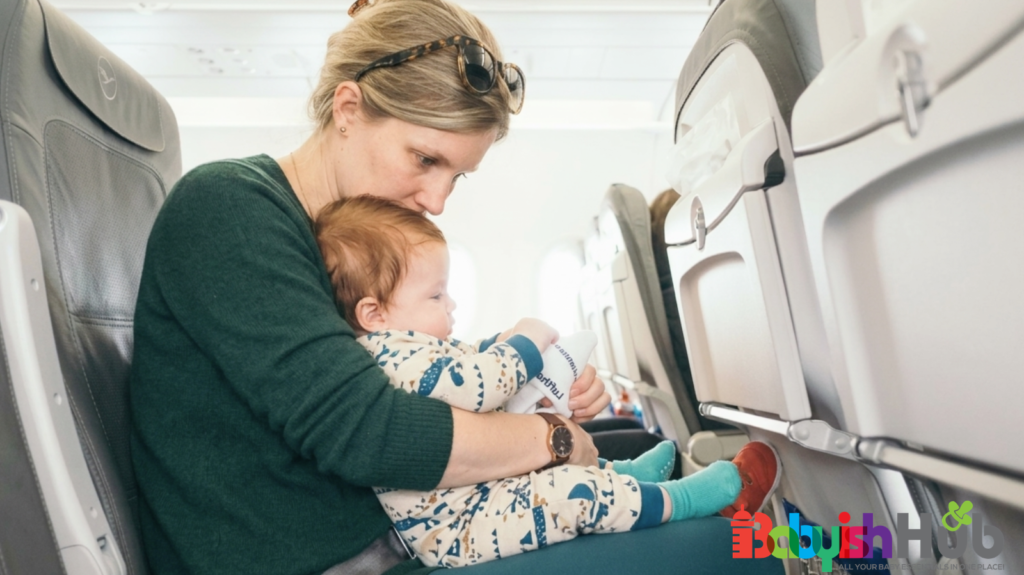
Follow these tips to help protect your baby’s ears when flying:
1. Wake Your Baby Before the Plane Descends
This is one tip I wish someone had told me sooner. A sleeping baby cannot swallow or suck, which means they have less natural ability to equalize ear pressure while they sleep. If your baby falls asleep mid-flight and you are approaching descent, gently try to rouse them so you can offer a feed or pacifier. This does not always go smoothly, and sometimes a sleeping baby is simply a gift you do not disturb. But when possible, having them awake during pressure changes gives you more tools to work with.
2. Manage Congestion and Maintain Hydration Mid-Flight
A congested baby has an even harder time managing ear pressure because the Eustachian tube is already partially blocked. If your baby is coming down with a cold or already has one, flying can be noticeably more uncomfortable for them.
Talk to your pediatrician before flying with a sick baby. According to the national guidelines on traveling with children, medical providers frequently advise against flying if an infant has an active ear infection or significant fluid buildup behind the eardrum because existing inflammation makes pressure pain exponentially worse.
Keeping your baby hydrated during the flight also helps. Dry cabin air affects everyone on a plane, and offering small, frequent feeds throughout the journey supports overall comfort.
3. Use An Inclined Feeding Position To Prevent Ear Discomfort
If you are bottle feeding, try to feed your baby at a slight incline rather than fully reclined. Feeding in a flat position can sometimes allow milk to pool near the Eustachian tube opening, which can contribute to middle ear discomfort. It is a small adjustment, but worth making, especially on a flight where you are already managing a lot.
4. Do Baby Earmuffs Protect Ears From Airplane Cabin Pressure?
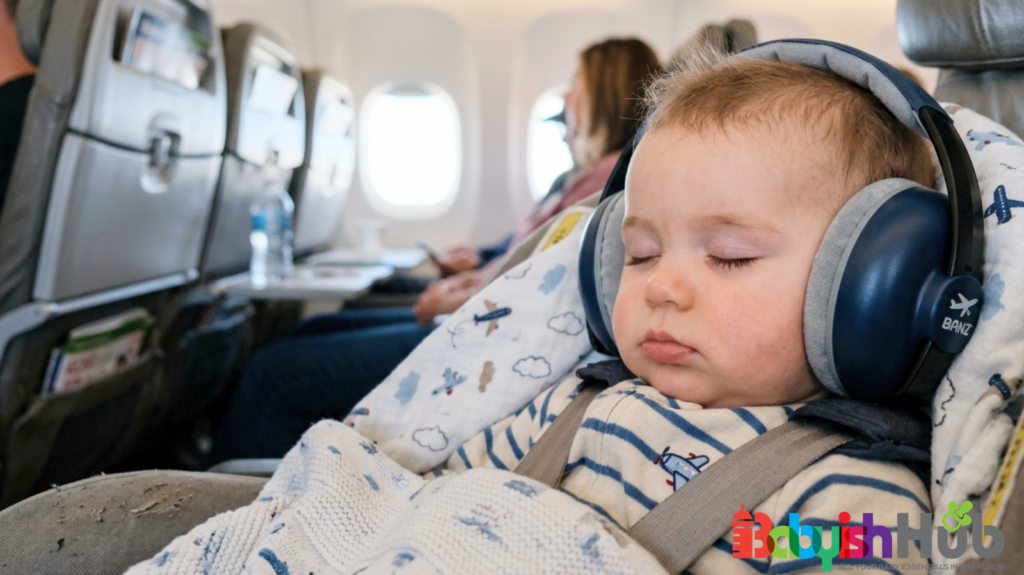
Baby earmuffs designed for flying, or infant hearing protection designed for loud environments, often come up in conversations about protecting baby ears on planes. It is worth being clear about what these do and do not do.
Infant earmuffs reduce sound and can help with the general noise of a loud cabin, which can be soothing for sensitive babies.
However, they do not address the pressure equalization issue that causes ear pain during takeoff and landing. They are not the same as noise-canceling headphones, and they do not create pressure balance.
That said, some babies find the muffled environment calming, which can indirectly help if your baby is less overstimulated and more willing to feed or take a pacifier. Just go in with realistic expectations about what they can and cannot do.
5. Your Emergency “Plan B” if Baby Refuses to Feed
What happens if you are mid-descent, your baby is crying, and they completely refuse the breast, bottle, or pacifier? This can sometimes happen, usually because their ears already hurt and sucking feels uncomfortable.
If you find yourself in this tight spot, try these two physical alternatives to stimulate their swallowing reflex:
- The Yawn Mimic: Hold your baby upright against your chest and gently massage the area right under their earlobes, along the edge of their jawline. This can help soothe the surrounding muscles.
- The Clean Finger Trick: If they reject a pacifier, let them suck on your clean pinky finger, placing the pad of your finger against the roof of their mouth. The unfamiliar texture often overrides a fussy refusal and triggers a strong, rhythmic sucking reflex that helps pop their ears.
Related: Best Toddler Headphones for Plane Travel
Can You Use EarPlanes or Pressure-Regulating Earplugs for Babies?
EarPlanes are filtered earplugs designed to slow down the rate of air pressure changes against the eardrum. While the packaging for the children’s version often targets older toddlers, the official product specifications certify them as safe and effective for toddlers aged 1 year and older.
If you are traveling with a toddler who can tolerate having soft silicone earplugs in their ears, they are absolutely worth discussing with your pediatrician. However, for infants under twelve months old, there is still no safe, widely available earplug option on the market. For babies under one, stick entirely to the natural sucking and swallowing techniques.
Pre-Flight Checklist (How To Prepare Your Infant for Air Travel):
Try to book flights that align with your baby’s natural sleep schedule if your itinerary allows it. A well-rested baby handles the sensory overload of air travel much better than an overtired one. An overtired baby who is also dealing with sudden ear pressure discomfort is a very difficult combination to manage in a small, enclosed space with 200 strangers.
Arrive at the airport with enough time so that you are not rushing. Stress and hurried transitions tend to unsettle babies before you even step foot on the plane, which makes everything harder once you are in the air.
Pack significantly more feeding supplies than you think you will need. Bring extra formula, an extra bottle, a backup pacifier, and more nursing pads. Whatever applies to your specific feeding situation, over-prepare.
Before you head to the gate, make sure you review the official TSA and airline rules for flying with a baby regarding bringing breast milk, formula, and infant gear through security so you don’t face unexpected delays. You will be incredibly grateful you did.
Finally, if your baby has had recent ear infections or your pediatrician has signaled any concerns about ear health, a quick check-in before a flight is always a good idea.
Ear infections significantly increase the discomfort of pressure changes, and your doctor can advise whether flying is currently advisable and if there are any additional medical steps to take.
What To Do If Your Baby Cries During Takeoff and Landing?
Here is something nobody really says out loud: Even when you do everything right, some babies still cry during descent. You can nurse them, offer the pacifier, keep them awake, and they may still have a rough few minutes.
This is not a failure on your part. Pressure sensitivity varies between babies, and some little ones simply feel it more than others.
What I always remind myself, and what I want to remind you, is that the discomfort is temporary. Descent lasts minutes. Most babies settle quickly once the pressure stabilizes at landing altitude. The moment that feels endless while you are in it usually resolves faster than you expect.
Experienced flight attendants have seen everything. Fellow parents on the plane understand more than you think. And your baby will not remember any of it.
Final Thoughts: Stress-Free Flying With a Baby
Every baby is different, and so is every flight. What worked perfectly for my second child did not work the same way for my third. But across all the trips, my main approach stayed the same: feed or use a pacifier during pressure changes, manage congestion proactively, keep them as comfortable and rested as possible, and give yourself grace when things do not go perfectly.
Protecting your baby’s ears when flying is not complicated, but it does require a little planning and a lot of flexibility. You have already done the most important thing by looking into it before you travel. That kind of thorough preparation is exactly what gets you and your baby through the journey in one piece.
Safe travels, mama. You have got this!