What Can I Put My Baby To Sleep On When Travelling? 5 Safest Sleep Options for Babies Away From Home
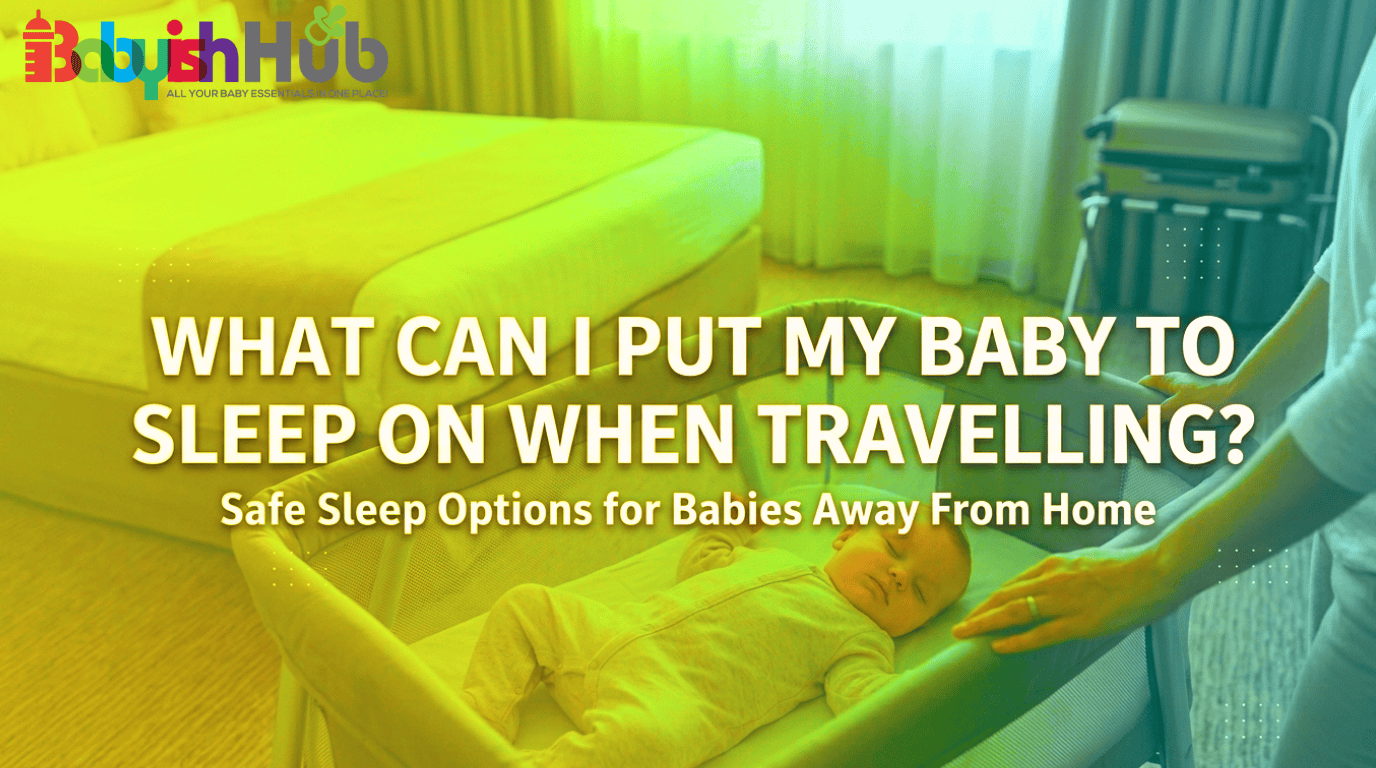
You’ve packed the nappy bag, booked the accommodation, and mentally prepared yourself for the logistics of travelling with a baby. Then it hits you, somewhere between folding the third muslin and searching for the portable white noise machine: what can I put my baby to sleep on when travelling?
It sounds like it should have a simple answer. It doesn’t. Because once you leave your home and the familiar crib that your baby has been sleeping in since day one, you are suddenly making sleep decisions in hotel rooms, at grandparents’ houses, in vacation rentals, and sometimes in places where the only option available looks questionable at best.
The good news is that there are several safe options for putting your baby to sleep when you are away from home. And it’s worth knowing what those options are before you leave, instead of figuring it out at 10 PM in an unfamiliar room with a tired baby in your arms.
This practical guide walks you through some of the safest baby sleep surfaces when travelling, grounded in what pediatric guidance recommends.
Safe Sleep Rules To Follow When Travelling With A Baby
Before getting into specific products and solutions, the one principle worth locking in is this: wherever you are, whatever the accommodation, your baby needs a firm, flat surface on their back with nothing else in the sleep space.
This rule does not change because you are on holiday. It does not relax because you are tired from travelling or because the only thing available is a soft hotel sofa.
The American Academy of Paediatrics is clear that safe sleep guidelines apply every single night, not just at home. As one pediatric nurse puts it directly: every night matters for your baby.
This is said to make packing decisions easier. If you know what your baby needs, you can plan for it, and most of the time, planning makes the whole trip significantly less stressful.
What Can I Put My Baby To Sleep On When Travelling? 5 Best Options:
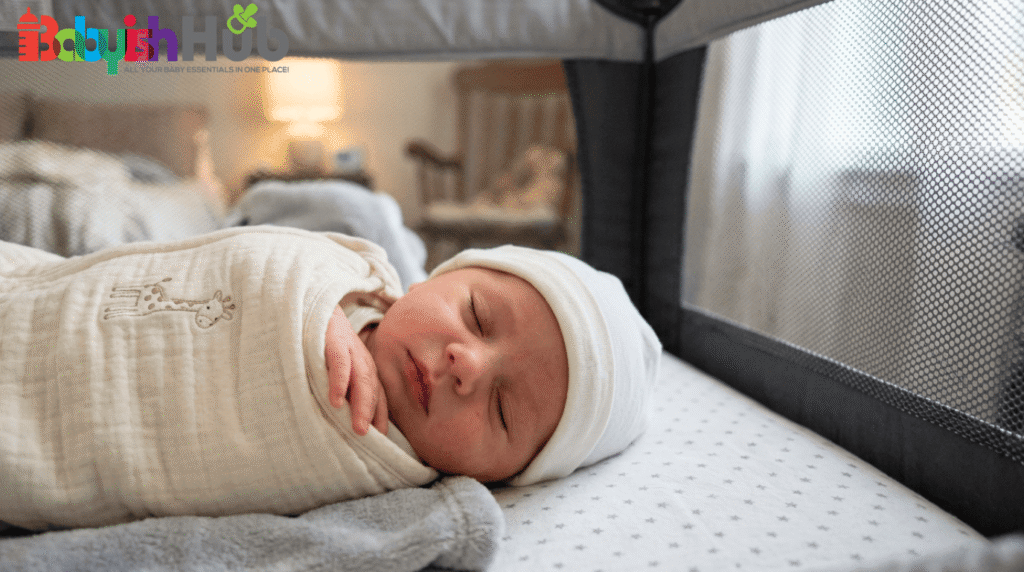
These safe baby sleep options can help your little one sleep comfortably while travelling, whether you are staying in a hotel, visiting family, or taking a longer trip away from home.
1. A Portable Travel Crib or Pack ‘n Play
This is the most popular option for travelling with a baby, and for good reason.
A portable play yard or travel crib gives your baby essentially the same sleep environment they have at home: a firm, flat mattress, an enclosed space, and a familiar setup.
The Pack ‘n Play style play yard is probably the most widely used travel sleep solution for infants and young babies. It folds down into a carry bag, sets up in minutes without tools, and fits into the corner of a hotel room or a spare bedroom at a relative’s house without much drama.
Most models are suitable from newborn up to around 30 pounds, making them a long-use investment rather than a one-trip purchase.
For road trips, a full-size travel play yard is straightforward to pack. For air travel, the bulk and weight can be more challenging, and a more compact option may serve you better.
One Important Note: Only use the mattress pad that comes with the play yard, and do not add extra padding, a softer mattress topper, or additional bedding inside. The sleep surface should be firm. Adding softness changes the safety profile, even in a product that is otherwise well-designed for infant sleep.
2. A Compact or Lightweight Travel Bassinet For Newborns
For younger babies, particularly newborns and infants under about 4 to 5 months, you should consider using a dedicated travel bassinet.
These are more compact than a full play yard, which makes them significantly easier to manage through airports and in smaller accommodation spaces.
Here’s what to look for: Any travel bassinet you purchase should meet current federal infant sleep product safety standards. The Consumer Product Safety Commission requires all infant sleep products, including travel bassinets, to meet the same safety standards as cribs and portable cribs.
If a product does not state compliance with these standards, skip it regardless of how convenient or appealing it looks.
NOTE: Several products in this category have been recalled or flagged by the CPSC for failing to meet safety requirements, so I strongly advise you to check the CPSC SaferProducts.gov database before buying any travel bassinet is a worthwhile two-minute step.
3. A Hotel or Rental Crib (with Important Caveats)
Many hotels offer you a crib on request, and if you prefer to travel light, this can seem like the obvious solution. It can work well. But it comes with a few caveats that are worth understanding before you rely on it entirely:
Hotel cribs vary widely in quality, age, and maintenance. You will not know the history of a hotel crib: whether it has been subject to a recall, how old it is, how it has been stored, or whether the mattress fits correctly.
For older infants and toddlers, this is less of a concern. For very young babies, particularly newborns, some parents prefer not to leave this to chance.
If you do use a hotel crib, inspect it when it arrives. Check that:
- The slats are no more than 2 3/8 inches apart
- The mattress fits snugly without gaps along the sides
- No screws, bolts, or hardware look loose or damaged
- The mattress feels firm and flat
Wipe it down with your own safe cleaner before use. And use only the sheet provided with the crib, keeping the sleep surface completely bare.
4. A Floor Mattress or Firm Surface on the Ground
A floor setup can sound strange at first, especially if you have always pictured babies sleeping in cribs. But it is both safe and sometimes the most practical solution in a pinch.
Placing your baby on a firm, flat surface on the floor is safer than placing them on a soft, elevated surface like an adult bed or sofa.
If you find yourself without a travel crib and no suitable alternative, a firm foam sleeping mat or a thin, firm sleeping mat placed directly on the floor may be a safer temporary option.
The surface needs to be firm, not a plush rug or a soft cushion. I would also check the surrounding area carefully because hotel rooms and relatives’ homes often have cords, pillows, loose blankets, or pet beds within reach.
One medical professional puts it simply: If you have no other choice, a sheet on the floor with nothing around the baby is preferable to an unsafe elevated surface.
This is not an ideal long-term solution, but it is a genuinely safer option in an emergency than some of the alternatives parents reach for out of desperation.
5. Employ A Baby Monitor for Extra Peace of Mind in Unfamiliar Spaces
This is not a sleep surface itself, but it belongs in this conversation. When you are in an unfamiliar environment, such as a hotel room, a vacation rental, or a relative’s spare room, a reliable baby monitor can come in handy for getting your baby to sleep in a new place.
At home, you know the sounds of your house, the layout of the rooms, and the distance between where your baby sleeps and where you are. In a new space, none of that is familiar.
A portable monitor lets you settle your baby in their travel sleep space and then actually leave the room without that low hum of anxiety about what you might be missing.
If you are still researching which monitor travels well, our guide to travel-friendly baby monitors covers this in more detail.
And our best non-WiFi baby monitor roundup specifically highlights models that work brilliantly in hotels and rental properties without needing to connect to a WiFi network.
Unsafe Baby Sleep Surfaces To Avoid While Travelling
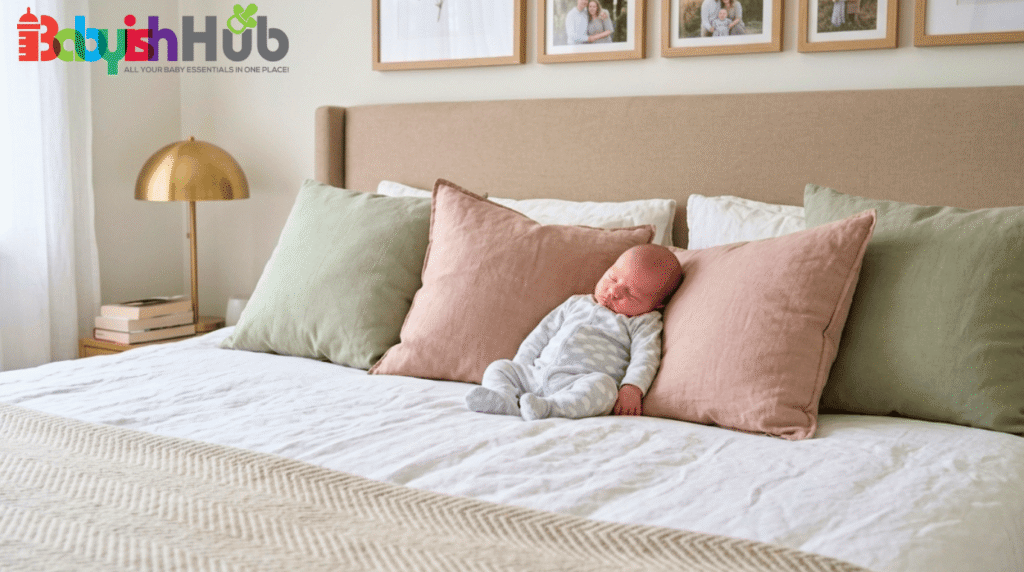
Knowing what to avoid is just as important as knowing what works. These are the surfaces that parents reach for most often when travelling, and the reasons each one carries real risk.
- Adult beds: An adult mattress, particularly a hotel mattress, is too soft for infant safe sleep. Soft surfaces increase the risk of suffocation and rebreathing. Bed-sharing with a baby under four months also carries a significantly elevated risk, and the unfamiliar environment of a hotel room makes it harder to monitor safely.
- Sofas and armchairs: The CPSC notes that couch sleeping increases the risk of infant death substantially. The uneven surface, the gaps between cushions, and the soft material all create conditions where a baby can roll into an unsafe position. If you fall asleep on a sofa while feeding or soothing your baby, move them to their sleep surface as soon as you wake.
- Car seats outside the car: A car seat is designed to keep your baby safe during travel. Once removed from the vehicle and placed on a flat surface, it is no longer at the correct angle and is no longer secured. The reclined position of a car seat, when unsupported outside the vehicle, can cause a baby’s head to fall forward and compress the airway. If your baby falls asleep in the car seat during a drive, transfer them to their flat sleep surface when you arrive at your destination.
- Baby nests, pods, and loungers: Products like Dock-a-Tots and similar infant loungers are popular for daytime use but are not safe sleep surfaces. The AAP explicitly states these products should not be used for infant sleep. They are soft, inclined, and do not meet federal infant sleep safety standards.
- Inclined or bouncy seats: Any sleep surface inclined at more than 10 degrees is not considered safe for infant sleep by the CPSC. This includes rockers, gliders, and bouncers. If your baby falls asleep during travel, transfer them to a flat surface as soon as you are able.
Practical Tips To Help Your Baby Sleep Better In A New Place
Getting the perfect sleep surface right is step one. Getting your baby to sleep on it in a new environment is its own challenge, and one that catches many parents off guard on their first trip with a little one.
Babies are creatures of association. The smells, sounds, and sensory cues of their home sleep environment are part of what signal sleep.
In a new place, those cues are missing. A few things that help in such situations:
- Bring a fitted sheet from home to use in the travel crib so the scent is familiar.
- Use the same white noise you use at home.
- Keep the pre-sleep routine as close to normal as you can manage, even if everything else about the day has been different.
- And accept that the first night in a new place is often the hardest, and usually gets easier from night two onward.
For more on managing sleep while away from home, our travelling with a baby guide walks through what to realistically expect and how to handle it without losing your mind.
Final Thoughts on Safe Baby Sleep While Travelling
The question of “what can I put my baby to sleep on when travelling” has a simple answer: a firm, flat surface on your baby’s back, with nothing else in the space. A travel play yard or portable crib is the most practical way to deliver that in almost any situation. Plan for it before you go, inspect any provided crib when you arrive, and keep the same safe sleep principles you follow at home. Travelling with a baby is easily manageable with just a little preparation before the trip.