How To Travel with Baby Formula Without The Stress (A Real Mom’s Guide)
Traveling with a formula-fed baby sounds simple enough until you’re standing at airport security at 6 a.m., sleep-deprived, trying to explain to a TSA agent why you have four different containers of powder and a thermos of warm water in your carry-on. I have been that mom. Twice.
Understanding how to travel with baby formula is one of those things nobody fully prepares you for, and the generic advice out there barely scratches the surface.
It doesn’t tell you what to do when your formula canister lid cracks in the overhead bin, or how to handle a hungry, screaming baby on a two-hour delayed flight with no access to hot water.
In this guide, I share my honest, practical breakdown, which I wish somebody had shared with me before my first big trip with my formula-fed daughter.
Know The Rules Before You Pack
If you are flying with your baby, the single most important thing to understand is that formula is exempt from the standard liquid rule.
The TSA allows formula, breast milk, and juice for infants in quantities exceeding 3.4 ounces in carry-on bags. You do not need to fit it in a quart-sized bag. (Source).
That said, you should still declare it at the security checkpoint. The formula may be subject to additional screening, which can include opening containers or testing the liquid. It does not happen every time, but it is worth knowing so you are not caught off guard.
If you are traveling internationally, research the rules for each country you are passing through. Some destinations have stricter customs regulations around food items, and powdered formula is sometimes flagged.
Printing a copy of the TSA or relevant national guidelines and keeping it in my travel folder has saved me from unnecessary airport arguments.
Choosing The Right Formula Format for Travel
This is where a lot of parents make things harder than they need to be. Your usual formula format at home might not be the most practical one on the road.
Powdered formula is lightweight and easy to pack in bulk, which makes it ideal for longer trips. But the main challenge is that it requires measured water and mixing, which is less straightforward when you are on a train, in a car, or navigating a foreign airport.
Ready-to-feed formula is the most travel-friendly option for short trips or day outings. It requires zero prep and no water. You open it, pour or attach a nipple, and you are done.
It’s heavier and more expensive, but when your baby is hungry and you are stuck in traffic on a road trip, that trade-off can feel completely worth it.
Formula concentrate falls somewhere in between. It requires mixing with equal parts water, so you still need access to water, but the volume you carry is smaller than that of ready-to-feed.
My personal strategy was to use ready-to-feed for travel days and flights, then switch back to powder once we were settled at our destination. It kept things manageable on the hard days without inflating costs for the whole trip.
How To Pack Formula for Travel
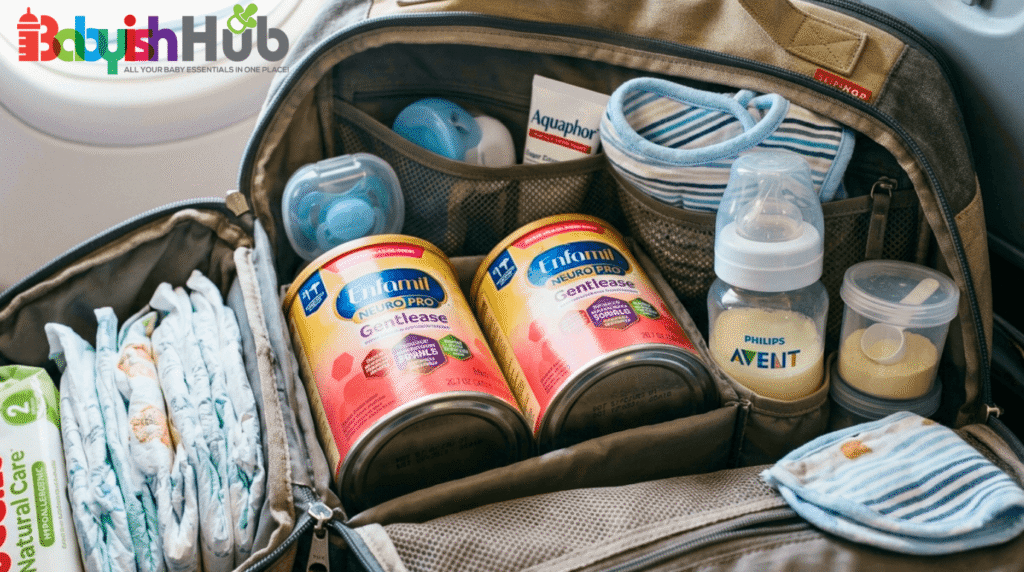
Packing formula properly is about protecting it from moisture, contamination, and mess. A split canister on a long-haul flight is a miserable experience.
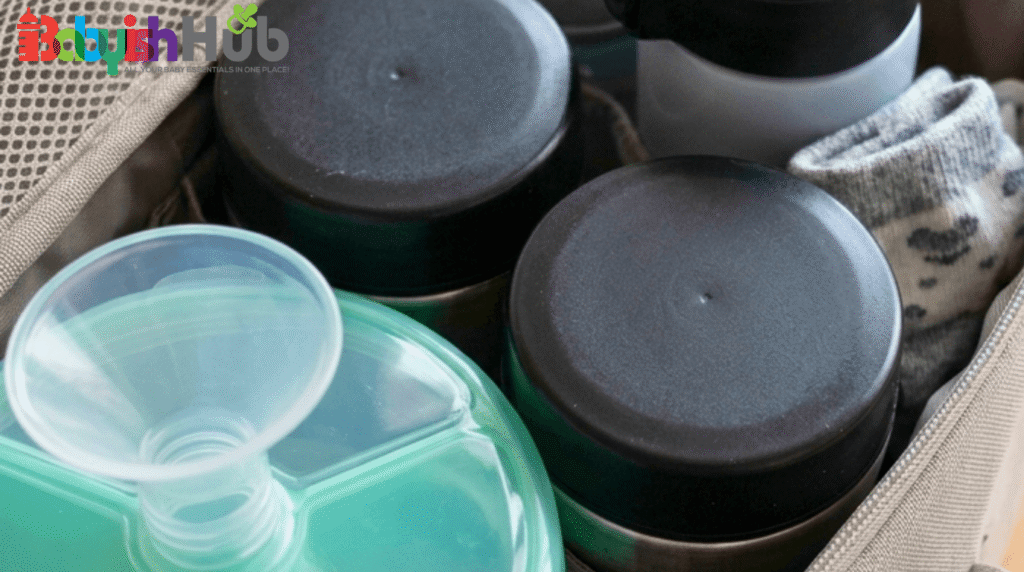
For powdered formula, pre-measure individual servings into small, airtight formula dispensers. These are compact, stackable containers that let you pour one serving at a time without hauling the whole canister around.
Label each compartment with the number of scoops if you are using different amounts at different feeds.
If you are bringing the original canister, secure the lid with a small piece of tape before placing it in your bag. The change in cabin pressure can cause lids to loosen, and powder going everywhere inside a packed diaper bag is exactly as frustrating as it sounds.
Keep the formula in your carry-on rather than checked luggage. Temperature changes in the cargo hold can be extreme, and you do not want your only supply of formula sitting in an unpressurized bay in below-freezing conditions.
For ready-to-feed cartons or pre-made bottles, keep them in an insulated bag. Most ready-to-feed formulas do not require refrigeration until opened, but keeping it at a stable temperature helps if you are somewhere warm.
Managing Water on the Go
This is the part that trips up even experienced traveling parents. Mixing formula requires the right water, and access to that water is not always guaranteed.
At home, you may use filtered or boiled water. On the road, you need a plan. For air travel, bring an empty insulated thermos through security, then fill it with hot water from a coffee shop or airport restaurant after you clear the checkpoint.
Most airport cafes will provide hot water on request, often for free, if you explain it is for a baby’s bottle.
If you are driving, a small travel kettle that plugs into a car adapter is a surprisingly useful investment. It lets you heat water at rest stops or in hotel rooms without hunting for a microwave.
When traveling internationally, never use tap water to mix formula unless you are certain it is safe. Stick to bottled water, and use water that is still rather than sparkling.
In many countries, asking your hotel for a kettle and using sealed bottled water is the safest and most straightforward approach.
Keeping Bottles Clean While Traveling
Sterilizing bottles on the road is genuinely inconvenient, and I will not pretend otherwise. There are a few approaches that work, as I’ve discussed below:
- Microwave steam sterilizer bags are a lifesaver for hotel stays. You add water to the bag, place the bottle parts inside, and microwave for a few minutes. They are compact and reusable for multiple cycles. Most hotels have microwaves available, either in the room or in a common area.
- Sterilizing tablets are another low-effort option. You dissolve a tablet in water, submerge your bottle parts, and wait the recommended time. No heat is required, which makes them ideal for situations where a microwave is not available.
- On very short trips or for older babies whose pediatrician has given the green light to move past strict sterilization, washing bottles thoroughly with hot soapy water and letting them air-dry can be sufficient. This is something to confirm with your own doctor before you travel.
Bring more bottles than you think you need. Having an extra two or three on hand means you are not scrambling to wash a bottle mid-flight when your baby is already upset.
Feeding On Planes, Trains, And Long Car Rides
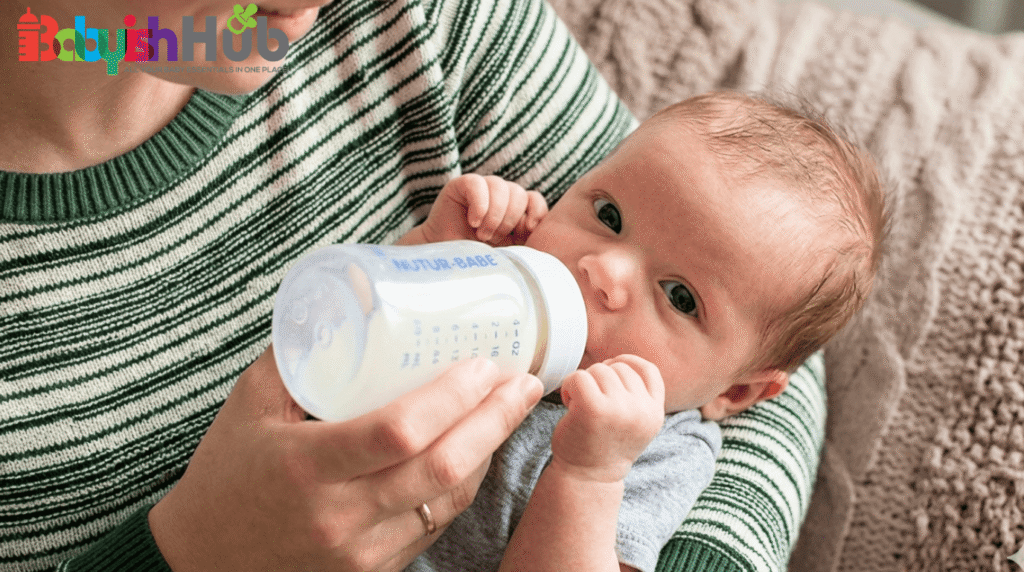
Timing feeds around your travel logistics is both an art and a survival strategy.
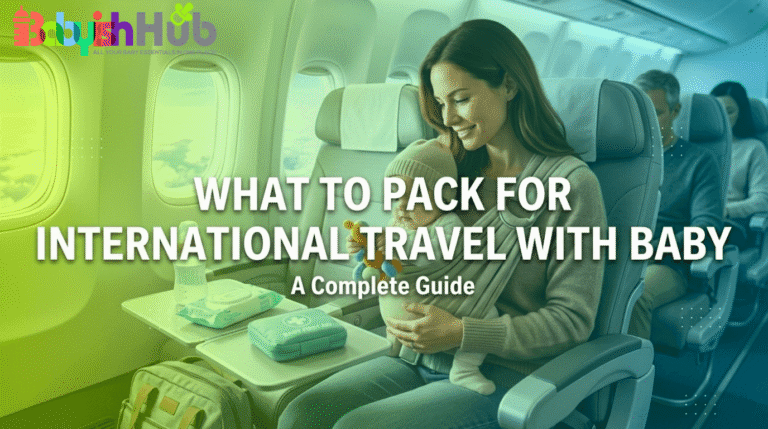
On flights with your baby, try to time a feeding for takeoff and landing. The sucking motion helps equalize ear pressure, which can reduce discomfort for your baby during altitude changes.
Even if your baby is not due for a feed, having a bottle or pacifier ready for those moments is a smart move.
On long car rides, plan feeding stops just like you plan bathroom breaks. Trying to prepare the formula while driving or hand a bottle to a screaming baby from the front seat is both stressful and unsafe.
Pull over, take a breath, and feed in a calm environment. Your travel time will increase slightly, but the overall experience will be far smoother.
On trains, use the ready-to-feed format whenever possible. Trains can be bumpy, and mixing powder without spilling requires a level of coordination that is hard to maintain while holding a baby.
A Quick Word On Formula Availability Abroad
Do not assume your usual formula brand will be available at your destination. Formula recipes, ingredients, and labeling vary significantly between countries.
Even well-known international brands may have different formulations depending on where they are sold.
Carry enough formula for your entire trip, plus two or three extra days’ worth as a buffer for delays or travel disruptions.
If you’re on a specialty formula due to allergies or sensitivities, this buffer becomes even more important, as alternatives may not be available or may not agree with your baby.
How To Travel With Baby Formula When Your Baby Has A Sensitive Stomach
If your baby is on a sensitive, hydrolyzed, or amino acid-based formula, you already know how carefully you manage feeds at home. Travel does not have to derail that routine.
Keep the formula in its original packaging so you can identify it clearly at customs and answer any questions about its contents.
Bring documentation from your pediatrician if you are carrying unusually large quantities, particularly for international travel.
Stick to your baby’s regular feeding schedule as closely as possible.
Time zone changes can disrupt sleep and hunger cues, so watch your baby’s signals rather than the clock when you are significantly jet-lagged.
Before You Leave Home…
A little preparation before you walk out the door makes the whole trip easier. Confirm your formula supply is sufficient. Pack more than you think you need.
Test your travel thermos to make sure it holds heat for the hours you need it to. Organize your diaper bag so formula, bottles, and water are all within easy reach without unpacking everything.
And give yourself some grace. The first trip with a formula-fed baby feels overwhelming. By the second or third, you will have a system that works and the confidence to handle whatever comes up.
Knowing how to travel with baby formula is all about having a plan and a backup for when that plan changes. Babies are wonderfully unpredictable, and travel adds a layer of variables you cannot always control.
What you can control is how prepared you are. And when you are prepared, you can enjoy the trip, which is the whole point of going somewhere in the first place.
You have got this. And so does your baby.
Traveling With Formula FAQs:
Below are answers to some of the most common questions parents have about packing, carrying, and using baby formula while traveling, whether you’re flying, driving, or heading overseas.
How Do You Travel With Baby Formula Powder?
Traveling with baby formula powder is usually simple: Pack enough formula for the trip plus extra for delays, and store it in its original container or a clean formula dispenser. Keep it in your carry-on for easy access. If you’re flying, inform security officers that you’re carrying infant feeding supplies before screening begins.
How Do You Travel With Baby Formula and Water?
Many parents find it easiest to carry pre-measured formula powder and separate bottles of water. Mix bottles as needed rather than preparing them hours in advance. This keeps the formula fresh and reduces waste. For longer travel days, pack extra water and feeding supplies in case flights, traffic, or schedules change unexpectedly.
Can I Bring Hot Water for Baby Formula on an International Flight?
Yes, parents can generally bring water needed for infant feeding, including warm or hot water, when traveling with a baby. Security screening procedures may vary by airport and country, so allow extra time. Many airlines can also provide hot water onboard, though availability and temperature may vary by flight.
Can I Take Unopened Baby Formula on an International Flight?
Yes, unopened baby formula is generally allowed on international flights. Keeping the formula sealed in its original packaging can make security inspections easier and help verify what you’re carrying. Because regulations may vary slightly by country, it’s a good idea to check your airline and destination airport requirements before departure.
Can You Bring Baby Formula Powder on a Plane?
Yes, baby formula powder is typically permitted in both carry-on and checked luggage. Most parents prefer to carry it on board so it’s available during delays, layovers, or unexpected schedule changes. Store it securely to prevent spills, and be prepared for security officers to inspect or screen infant feeding items.
How Do You Travel With Baby Formula on a Plane?
When flying with formula, keep all feeding essentials together in your carry-on, including formula, bottles, water, bibs, and cleaning supplies. Pre-portioning formula can make feedings easier during busy travel moments. Bringing more than you think you’ll need helps reduce stress if your flight is delayed or rerouted.