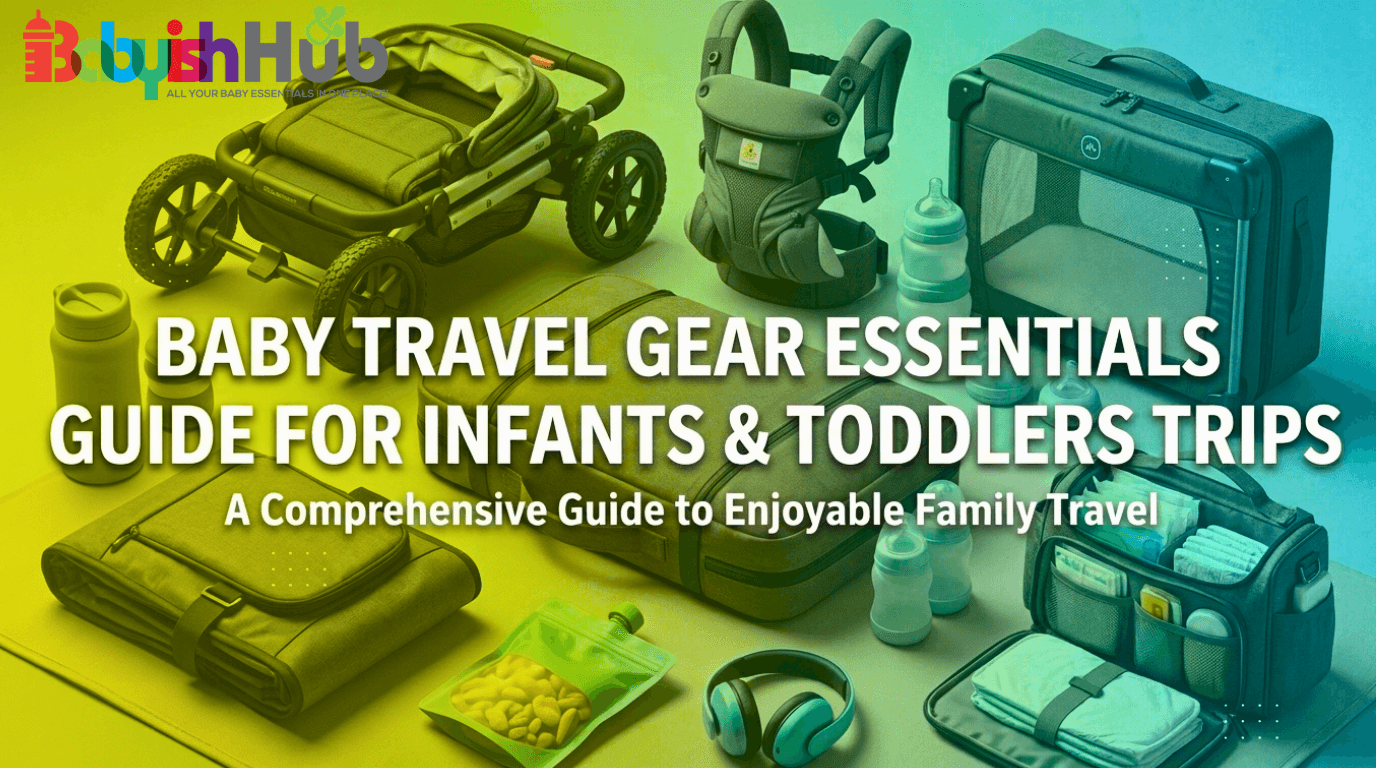
Baby Travel Gear Essentials: Guide for Infants & Toddlers Trips
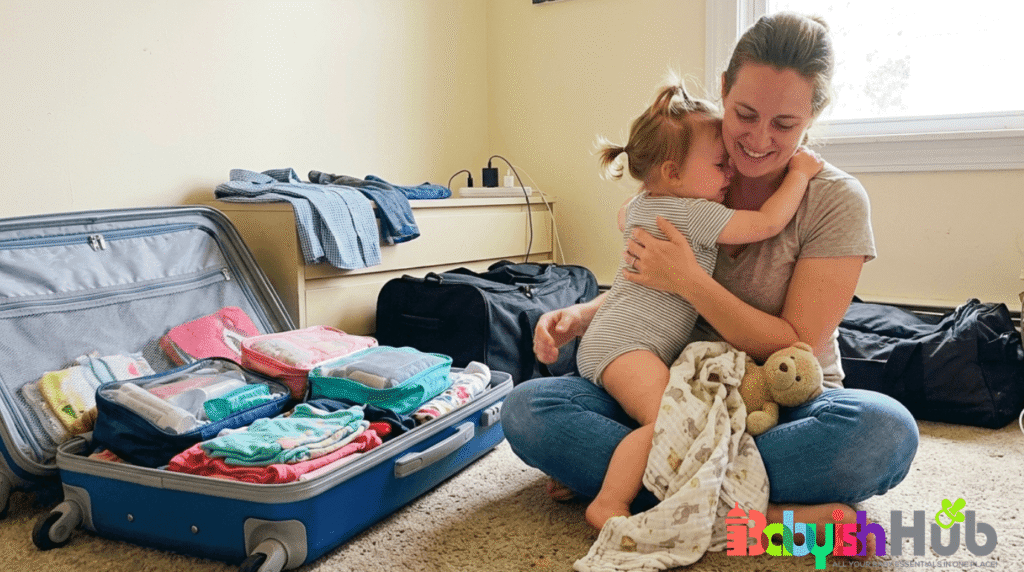
The first time I flew with my oldest, I packed like I was moving across the country. Two bags just for her, a travel stroller I had never practiced folding, and a diaper bag so stuffed I could barely zip it. By the time we reached the gate, I was sweating through my shirt, and she was already fussing.
Baby travel gear can make or break a trip with little ones, and the difference usually comes down to knowing what you need versus what just looks helpful in a product photo.
This guide covers every major category of baby travel gear, walks you through which items earn their spot in your bag, and tells you what works well and what might be challenging, so you can make decisions that fit your travel style, your baby’s age, and the kind of trip you are taking.
In This Guide:
Do You Need Baby Travel Gear When Traveling with A Baby?
The short answer is YES, some of it. But the longer answer depends entirely on where you are going, how long you will be gone, and how your baby handles disruption.
Baby travel gear refers to products specifically designed or well-suited for traveling with infants and toddlers. This includes:
- Lightweight strollers
- Portable cribs
- Compact diaper bags
- Travel-friendly carriers
- Safety kits for hotel rooms
It’s a separate category from your everyday baby gear, though some everyday items do double duty beautifully on the road.
If you’re driving two hours to a family member’s house who has everything you need waiting for you, you probably do not need to invest in a single piece of travel-specific gear.
But if you are flying across the country, spending nights in a hotel, or taking an international trip, the right travel gear will reduce stress for both you and your baby significantly.
So, What Baby Travel Gear Is Worth It for Parents?
When I started traveling with babies regularly, I learned to sort gear into two buckets: things I genuinely could not function without, and things that seemed useful at home but became dead weight the moment we hit the airport.
For sleep, a compact travel crib is usually worth every dollar if your destination does not provide a safe crib. Nothing derails a trip faster than a baby who cannot sleep in an unfamiliar environment without a safe, dedicated space. A white noise machine or app is another low-effort, high-return item that helps recreate the sleep environment from home.
For transport, a lightweight travel stroller or a good baby carrier covers most situations. You likely do not need both on short trips unless your destination involves a lot of varied terrain. Read our how to choose a baby stroller guide
For feeding, an insulated bottle bag and a compact formula dispenser handle most scenarios without taking up much space. A portable booster seat earns its spot on longer trips, especially if your baby or toddler is eating solids and you will be eating at restaurants.
The items that rarely earn their spot include: full-sized swings, unnecessary bath seats, novelty travel gadgets that promise to entertain your baby but require charging, and duplicate gear you already have at your destination.
Essential Baby Travel Gear Categories
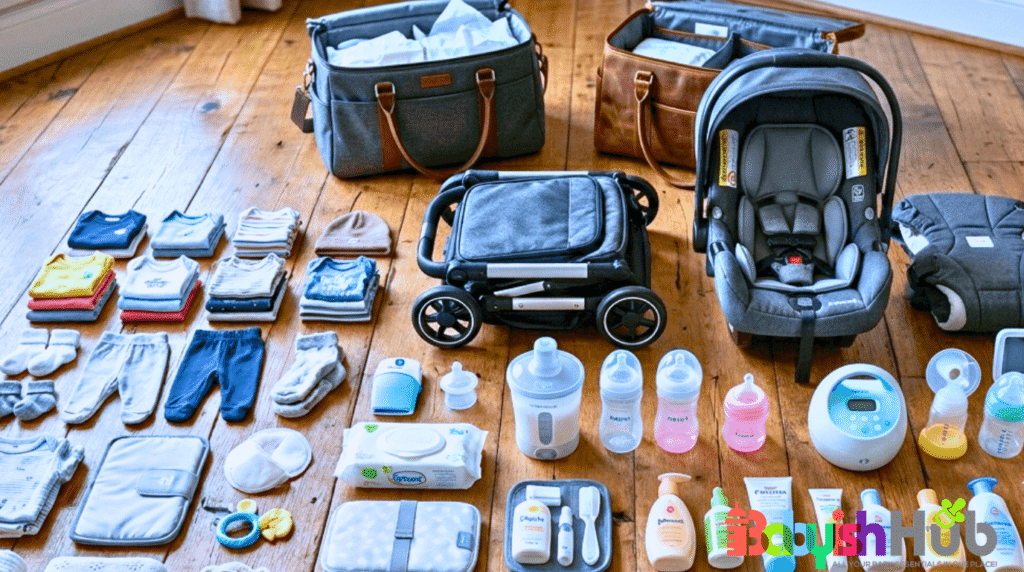
Every trip with your baby calls for some version of these MAIN categories. The specific products within each category will vary based on your child’s age and your travel plans, but understanding what each category covers helps you make smarter packing decisions before you ever zip a bag.
1. Baby Travel Strollers
A good travel stroller might be the single most important piece of baby travel gear you own. It carries your child, holds your bags, and keeps you hands-free through airports, city streets, and resort paths.
The main choice is between a lightweight umbrella-style stroller and a more structured travel system. Lightweight strollers, typically under 15 pounds, fold quickly, fit into overhead bins on some airlines, and move through crowded spaces easily.
The drawback is that they often offer less recline and less storage than full-size models, which matters more for younger babies who still need to lie flat.
Look for a stroller that folds with one hand, has a compact fold size, and can handle the terrain of your destination. The cobblestone streets in Europe call for slightly sturdier wheels than a smooth resort path in Florida.
For air travel specifically, gate-checking is standard practice, so a stroller with a carry bag or a protective sleeve helps prevent damage on the tarmac.
FAA regulations do not restrict stroller sizes for gate checking, but individual airlines have their own policies on what fits in the cabin. If you want to keep your stroller with you during the flight, a compact buggy that fits in the overhead bin is worth the investment.
2. Car Seats for Travel
Car seat safety does not take a vacation, and this is one area where cutting corners has real consequences. If you’re renting a car at your destination, renting a car seat through the agency is convenient but comes with risks: you cannot verify the seat’s history, and rental seats are often poorly fitted by staff who are not trained in proper installation.
Bringing your own car seat gives you control over safety and fit, but adds logistics. A lightweight infant seat with a travel bag protects it during checked baggage handling. Convertible car seats are heavier but grow with your child, making them a better long-term investment for families who travel regularly.
For flights, the FAA approves certain car seats for use in airplane seats. Look for the FAA-approved label on the seat itself. Using an approved car seat on a plane provides better restraint during turbulence than a lap hold alone. Your child will need a ticketed seat for this to work, which adds cost but also adds safety and often makes the flight easier for everyone.
Infant seats work on aircraft more easily than larger convertible seats due to their smaller footprint. If your baby is still in the infant stage, this is worth factoring into your seat timing decision.
3. Baby Travel Cribs And Sleep Solutions
Sleep is one thing that can make your trip wonderful or miserable. When my second, Rigel, was around seven months, we took a weekend trip and assumed the hotel would have a safe crib. What they provided was an old portable crib that I did not trust for a single minute.
After that trip, I never left home without our own travel crib again.
Portable travel cribs come in a few different styles, and the best choice depends on your baby’s age, your travel plans, and how much space you have:
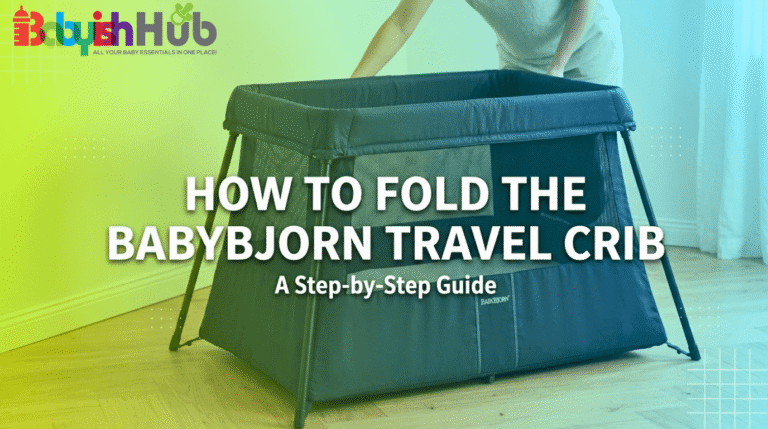
- Full-size travel cribs: These are the closest option to a regular crib and are often the best choice for overnight sleep, especially on longer trips. Models such as the 4moms Breeze and BabyBjörn Travel Crib fold into a carrying bag, set up quickly, and meet established crib safety standards.
- Compact bassinets: Designed for younger babies, bassinets are lighter and take up less room than full-size travel cribs. They’re a good option for newborns and infants who haven’t yet outgrown the bassinet stage.
- Travel co-sleepers or bedside sleepers: These are designed to keep your baby close while sleeping. If you’re considering one, make sure it follows current safe sleep recommendations and is appropriate for your baby’s age and development.
Whatever you choose, verify it meets current crib safety standards and avoid placing any soft bedding, pillows, or positioners inside it. Safe sleep rules apply on the road just as they do at home.
Jet lag and sleep disruption are also worth planning for. Blackout curtains for hotel windows, a portable white noise machine, and keeping your baby’s bedtime routine as consistent as possible all help.
Some parents find that bringing a familiar sleep sack or swaddle from home provides enough sensory consistency to help a baby settle in a new space.
RELATED: 10 Best Baby Travel Sleep Options for Every Age
4. Diaper Bags and Organizers
Your diaper bag on a travel day is doing the work of three bags at once. It holds diapers and wipes, snacks, a change of clothes, entertainment, and often your own essentials too. A bag that fails you at 30,000 feet or in the middle of a crowded museum is a real problem.
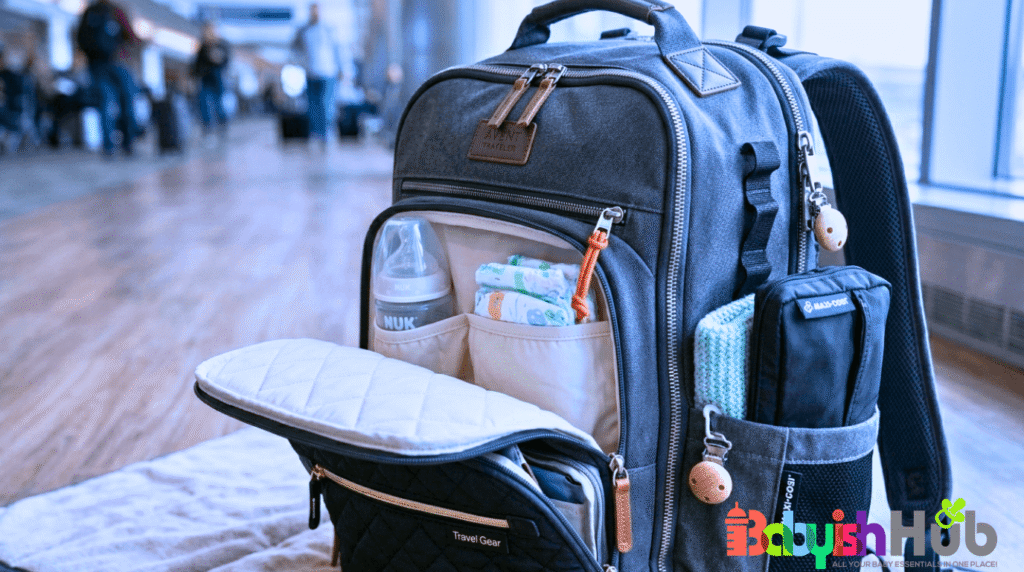
For travel, a backpack-style diaper bag wins over a tote in almost every situation. It keeps your hands free, distributes weight evenly, and is easier to manage while pulling a carry-on or pushing a stroller. Look for a bag with:
- Dedicated compartments
- An insulated pocket for bottles
- A built-in changing pad
- A stroller attachment system is a nice bonus for keeping the bag accessible without adding strain to your back.
Rolling diaper bags exist and make sense for parents who travel very frequently or carry a lot of medical supplies, but they are less versatile in most travel environments than a well-designed backpack.
The organizational system inside the bag is as important as the bag itself. Packing cubes, zip pouches, and a consistent layout mean you can find what you need during a diaper blowout at 35,000 feet without emptying the entire bag onto your tray table.
5. Baby Carriers and Slings
There are places a stroller simply cannot go. Cobblestone streets, beach sand, crowded airport security lines, hiking trails, and narrow restaurant aisles all call for a carrier. Having a reliable baby carrier in your travel kit means you are never stuck because the wheels will not cooperate.
The most common travel-friendly carrier options include:
- Carriers with padded waist belts: These are often the most comfortable choice for long days because they help spread your baby’s weight more evenly. Ergobaby and Lillebaby are popular options for extended wear.
- Ring slings: A lighter, more compact option that works well for shorter carrying periods and in warm climates.
- Hybrid wrap-style carriers: These offer a balance between structured carriers and wraps, but can take more time and practice to learn.
For travel specifically, look for a carrier that folds compactly, can be used from the front and back, and has adjustability to fit both you and your partner if you will be sharing. A carrier that you only practice folding once before you leave is likely to frustrate you in the field.
Heat is worth factoring in, too. Mesh panel carriers designed for warm weather are meaningfully more comfortable in summer climates or tropical destinations than padded carriers that trap heat.
6. Feeding And Nutrition Travel Gear
Feeding your baby on the road introduces its own set of logistics. Whether you are breastfeeding, formula feeding, or navigating the world of solid foods, a few targeted items can make a huge difference, as outlined below:
- An insulated bottle bag keeps expressed milk or formula at the right temperature for several hours without needing refrigeration.
- Travel-size formula dispensers pre-load your measured portions so you are not fumbling with a full canister on a plane.
- A portable bottle warmer that works with a car adapter or USB power is worth having on road trips, though most flight attendants will warm a bottle with hot water on request.
- For solid foods, a compact travel high chair or clip-on booster seat gives your baby a safe, contained space to eat at restaurants without relying on whatever the establishment provides.
Some clip-on seats attach to table edges and pack down to almost nothing, which makes them a consistent favorite among traveling parents.
Additional helpful items to round out a practical travel feeding kit include:
- Silicone bibs that fold flat
- Spill-proof snack cups
- Reusable food pouches
The goal of these items is to minimize mess and maximize independence so you can enjoy the meal too.
7. Baby Travel Clothing And Comfort Items
Packing clothing for a baby requires thinking about temperature ranges, laundry access, and the sheer frequency of outfit changes that come with the territory. Layering is your best strategy regardless of destination.
Consider packing the following:
- Lightweight base layers: These help regulate temperature and can be worn on their own or under warmer clothing as needed.
- Fleece jackets, sweaters, or cardigans: Easy-to-add layers that provide warmth without taking up too much space.
- UV-protective clothing: A helpful option for sunny destinations, reducing the amount of skin exposed to the sun and the need for sunscreen.
- A compact travel blanket: Useful as a blanket, stroller cover, nursing cover, or sun shade.
- A muslin swaddle: One of the most versatile baby items, serving as a swaddle, light blanket, burp cloth, or nursing cover.
- A stroller footmuff for cold-weather travel: Helps keep your baby warm in the stroller without relying on multiple bulky layers.
Packing a few versatile items that can serve multiple purposes can save valuable space in your luggage while helping your baby stay comfortable throughout the trip.
8. Hygiene And Diapering Travel Kit
The diapering and hygiene side of travel is mostly about staying organized and being prepared. You cannot always count on finding a clean or convenient changing station, so having a few essentials on hand can make diaper changes much easier.
A well-stocked travel diapering kit should include:
- A foldable, wipeable changing mat: Provides a clean surface for diaper changes, whether you’re in an airport, park, restaurant, or airplane.
- A travel wipe dispenser: Keeps your wipes moist and makes them easier to access when you’re changing a diaper in a hurry.
- Diapers and a spare outfit: Delays and accidents happen, so it’s always worth carrying extras.
- Disposable diaper bags: Useful for containing odors and disposing of diapers when a trash can isn’t immediately available.
- Hand sanitizer: Helps keep hands clean when soap and water aren’t nearby.
- Travel-size cleaning wipes or surface spray: Handy for wiping down changing tables and other public surfaces before use.
Most parents find that a simple, well-organized diapering kit is more useful than a collection of specialized gadgets. A well-organized kit ensures that the essentials are readily available whenever and wherever a diaper change is needed.
9. Baby Safety Travel Gear
Hotel rooms and vacation rentals are not designed with babies in mind, and a few targeted safety items can prevent a scary situation. Consider bringing the following:
- Outlet covers: Small and lightweight, these help prevent curious babies and toddlers from accessing electrical outlets.
- A portable door alarm: Useful in vacation rentals or hotel rooms, especially if your toddler has learned how to open doors.
- Corner and edge protectors: These are pretty easy to pack and helpful for reducing bumps and scrapes from sharp furniture edges.
- A travel baby monitor: A travel-friendly baby monitor lets you keep an ear or eye on your baby while they’re sleeping. Audio monitors are often sufficient for hotel rooms, while video monitors can be helpful in larger vacation rentals.
- A GPS tracker for toddlers: Some parents choose to attach a small tracker to a child’s shoe, clothing, or backpack when visiting crowded places such as airports, theme parks, or busy tourist attractions.
- A travel first-aid kit: This should include a thermometer, age-appropriate pain or fever medication, bandages, antiseptic wipes, and any prescription medications your child may need.
Baby Travel Gear for Different Types of Trips
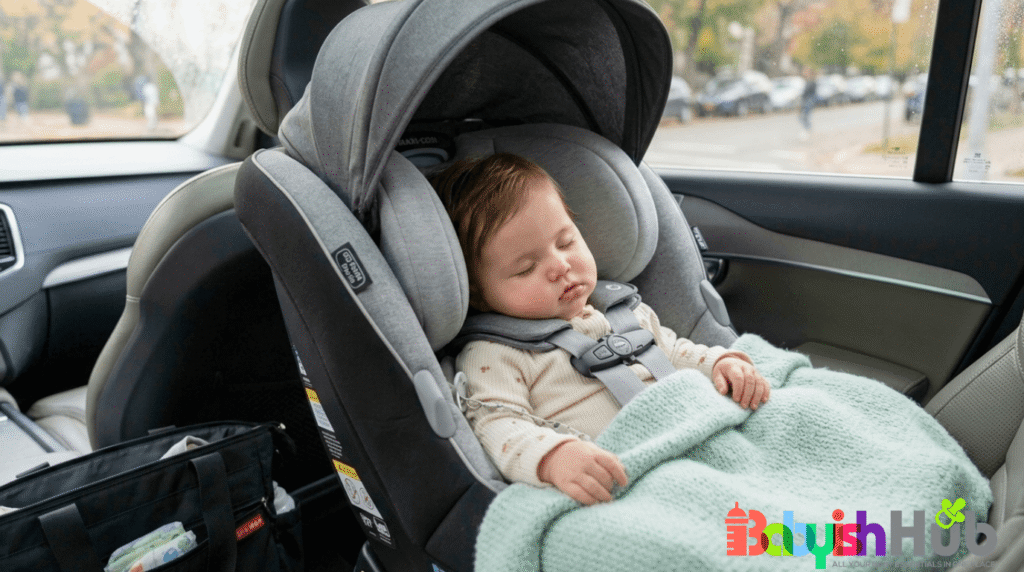
The right gear for a weekend road trip looks very different from what you need for a transatlantic flight. Matching your gear choices to your trip type keeps you from overpacking on short trips and underpreparing for complex ones.
Air Travel with Babies
Flying with a baby involves more logistics than almost any other travel scenario. TSA allows baby food, formula, and breast milk in quantities exceeding the standard 3-1-1 liquid rule, but you should declare them separately at security and be prepared for additional screening.
The strategy of what to carry versus check matters significantly on travel days. Keep diapers, wipes, formula, snacks, a change of clothes, and entertainment in your carry-on.
Anything you can live without during the flight goes in checked luggage. Gate-check your stroller at the jet bridge so it returns to you as soon as you deplane rather than at baggage claim.
For in-flight comfort, a baby carrier lets you walk the aisle without needing your hands free. An inflatable footrest designed for airplane seats helps toddlers find a more comfortable position for long flights.
Noise-canceling headphones designed for babies protect their hearing and can be surprisingly effective at calming them during the sensory overload of a flight.
Road Trips with Babies
Road trips offer you more flexibility than flying, but come with their own challenges. A baby strapped in a car seat for hours needs engagement, comfort, and predictable stops.
Proper car seat installation is worth double-checking before any long drive. A car seat mirror or a car baby camera lets you see your rear-facing baby without constantly turning around. Window shades protect your baby from direct sun and help regulate temperature in the back seat.
Motion sickness in babies and toddlers is more common than many parents realize. If your child shows signs of car sickness, talk to your pediatrician before the trip. Good ventilation and minimizing visual stimulation during motion can help.
Entertainment for older babies and toddlers, soft toys, board books, and simple suction cup toys that attach to the car seat tray all help manage the stretches between rest stops.
International Travel with Babies
International travel adds layers of planning that domestic trips do not require. The gear itself does not change dramatically, but how you choose it does.
You’ll need adaptable gear that works across climate zones when you are visiting multiple countries or destinations with variable weather.
Look for electrical adapters that support your baby’s devices, particularly if you use a sound machine, baby monitor, or bottle warmer that requires charging. Universal voltage compatibility on devices saves you from blown circuits in foreign hotels.
Climate-specific packing deserves extra thought. For instance, traveling to a hot, humid destination with a young baby calls for loose, breathable clothing, extra sun protection, and a carrier with mesh ventilation panels.
Cold-weather destinations require layering systems that do not compromise car seat harness fit, since bulky coats under car seat straps reduce safety in a crash.
Hotel And Resort Travel With Babies
Hotels vary significantly in what they provide for baby guests. Many larger hotel chains offer cribs, high chairs, and basic baby-proofing on request, but the quality and safety of those items can be inconsistent.
Always call ahead of your travel or vacation with a baby to ask specifically what they have and in what condition, rather than assuming a crib will be safe enough to trust.
Setting up a safe sleep space in a hotel involves a few quick steps:
- Check the crib mattress for firmness
- Remove any decorative bumpers
- Position the crib away from windows, cords, and curtains
If the hotel crib does not meet your standards, your travel crib becomes the backup plan you will be grateful you packed.
Baby-proofing your hotel room takes about ten minutes with the right kit: outlet covers, a door stopper to prevent pinched fingers, and a quick scan for accessible cords, glass items, and unstable furniture covers most hazards.
Pro TIP: Hotel bathrooms often have hard surfaces at exactly the right height for a cruising baby to bump their head, so a few foam edge bumpers are worth having in the bag.
How To Choose The Best Baby Travel Gear
The sheer volume of baby travel products on the market can make choosing feel overwhelming. Breaking your decision into these few simple categories can make it much easier for you to choose what works for your family.:
Age and Stage of Your Baby
Age is one of the most important factors when choosing gear. Newborns need flat, safe sleep options, strong car seat support, and carriers that protect the neck and spine. Babies who are starting to move around need more secure, contained setups.
Toddlers need durable, flexible gear that keeps up with their independence. Choosing items based on your child’s current stage helps you avoid buying things you won’t use yet.
Weight and Foldability
If it doesn’t travel easily, it won’t get used. Try lifting and folding items like strollers and travel cribs before buying them. If setup feels confusing in a store, it will feel even harder in an airport or hotel room with a baby in your arms. Simple, quick-fold designs are usually worth prioritizing.
Safety Standards
Safety should always come first. For car seats, look for compliance with NHTSA standards. For portable sleep products, check for ASTM F406 certification. FAA approval is also important for car seats used during flights. Sticking with trusted brands and clear certification labels helps reduce safety risks.
Budget vs Premium Options
There is usually a balance between price and quality. Mid-range products from reputable brands often give the best mix of safety, durability, and usability. Very cheap options may wear out quickly and end up costing you more in the long run. Higher-end gear can be worth it if you travel often and plan to use the item repeatedly.
Minimalist Vs Full Baby Travel Gear Setup
One of the best decisions you can make before packing is choosing which travel philosophy fits your trip. You can go the minimalist way or go with a full gear setup. Which one works for you? Let’s find out…
A Minimalist Setup
This kind of setup simply means taking only the absolute essentials: one carrier or compact stroller, a travel crib if needed, a well-organized diaper bag, and the feeding supplies your baby requires. This approach works well for short trips, destinations where you can borrow or rent gear, and experienced traveling parents who know their baby’s predictable needs.
A full gear setup
Here, you prioritize comfort and preparedness over mobility. This makes sense for longer trips, first-time travel with a baby, destinations without easy access to baby supplies, or families with babies who have specific needs that require equipment. The downside here is that you’ll have heavier luggage and more logistics.
Most parents land somewhere in the middle (i.e., they adopt a hybrid approach). This simply means:
- Bringing the sleep gear and feeding essentials, you cannot substitute
- Using a compact travel stroller that handles most terrain
- Skipping everything that has a reasonable workaround at the destination.
The decision framework here is simple: if the cost or stress of not having it exceeds the inconvenience of carrying a baby travel item, pack it. If you can manage without it or find one there, leave it at home.
Personal Tip: One thing I have come to learn from countless tips with my 3 kids is that the length of the trip becomes your clearest guide on what to pack. Weekend trips call for minimalism. Trips over two weeks, especially with young babies, usually justify a more complete setup.
Baby Travel Packing Checklist (Complete System)
This section breaks down everything you should pack so nothing important gets left behind.
Carry-On Essentials:
Your carry-on is your “just in case” kit for the travel day. It should cover the flight itself plus extra time in case of delays or changes.
Pack:
- Diapers for the flight, plus at least a 4-hour buffer
- Wipes and a portable changing pad
- At least two full outfit changes for your baby, plus one change of clothes for you
- Formula or pumped milk for the full trip, with extra in case of delays
- Snacks if your baby is eating solids
- A small first aid kit with a thermometer, infant pain reliever, and any daily medications
- One or two small, familiar toys for comfort and distraction
- A baby carrier, packed where you can easily reach it
Checked Luggage Essentials:
Your checked luggage holds the bulk of your baby gear, especially the items you won’t need during the flight but will rely on once you arrive.
Pack:
- Travel crib and fitted sheet
- Extra diapers for the length of your trip, plus an additional day’s supply
- Backup clothing for your baby
- Full feeding kit, including a portable booster seat if you use one
- Baby-proofing kit for your destination
- Larger comfort items like a sound machine and a travel blanket
Emergency Backup Items:
These are the small extras that help you handle surprises while traveling, just in case things don’t go as planned.
Keep:
- An extra set of baby clothes in your personal item (separate from your diaper bag)
- A backup pacifier in a clean, sealed bag (if your baby uses one)
- Travel-size laundry detergent for quick washing if needed
- Digital copies of your baby’s vaccination records and insurance details saved on your phone
Seasonal Packing Variations:
Different weather conditions call for a few simple changes to your baby’s travel packing list.
- Summer travel: Focus on sun protection with UV-protective clothing, a wide-brim hat, and baby-safe sunscreen for babies over six months. A small clip-on stroller fan can also help keep your baby cool in hot weather.
- Winter travel: Pack warm layers such as thermal clothing and a cozy sleep sack. A stroller footmuff helps keep your baby warm outdoors. Always remove heavy coats before placing your baby in a car seat to ensure the harness fits correctly.
- Rainy weather travel: Bring a stroller rain cover to keep your baby dry while out and about. A waterproof changing pad is also useful for handling diaper changes in damp or unpredictable conditions.
Common Mistakes Parents Make When Buying Baby Travel Gear
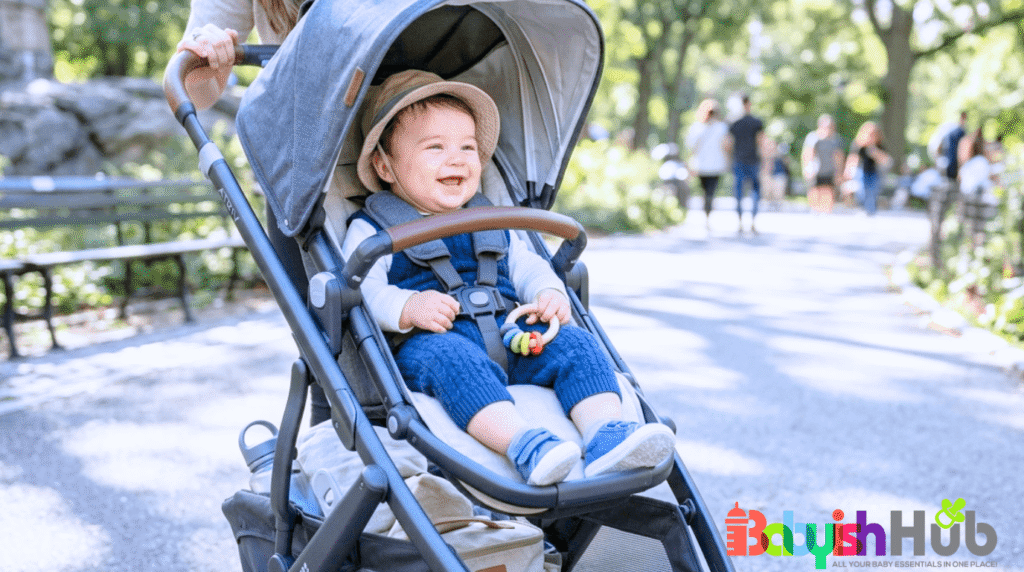
After talking to dozens of parents and making plenty of my own errors, I have concluded that the following patterns stand out as the most common and most avoidable mistakes you can make when purchasing travel gear for your little one.
- Overpacking (the most common mistake): The instinct to prepare for every possible scenario leads to bags so heavy that travel becomes more exhausting than staying home. A useful exercise before your first trip with a baby is to lay out everything you plan to pack, then remove one-third of it. You will almost certainly be fine.
- Choosing Style Over Functionality (this catches a lot of first-time parents): The beautifully designed stroller with the fashion-forward print may not fold as quickly or compactly as the plain one. The trendy diaper bag tote might not hold as much or stay as organized as a backpack designed for function. Gear that looks good in photos but fails in the field is not worth the premium.
- Ignoring Airline and Destination Restrictions: This mistake creates headaches at the worst possible moments. Check your airline’s policies on stroller dimensions, car seat use in the cabin, and liquid allowances for baby items before your travel day. Research whether your destination has easy access to diapers and formula in the brands your baby tolerates, so you know whether you need to bring your entire supply.
- Buying Gear Without Testing Portability: This is another costly mistake. Ordering everything online and leaving the tags on until the day before your trip means you have no idea how heavy the stroller feels with a diaper bag hanging off it, or how quickly the travel crib sets up when you are tired.
- Buying Gear Your Baby Will Quickly Outgrow: Not thinking about long-term usability leads to buying things your child will outgrow in two months. When possible, invest in gear that spans multiple stages. A convertible car seat, a stroller with an adjustable seat, and a carrier with a wide weight range all grow with your child rather than aging out after a single season.
Safety Considerations for Baby Travel Gear
Safety should always come first when choosing and using baby travel gear. It’s important to go beyond marketing claims and focus on proper standards, correct use, and hygiene.
Keep these KEY safety points in mind:
- Safety Certifications Are Crucial: For car seats, look for NHTSA compliance in the United States. FAA approval is required for car seats used on airplanes. For travel sleep products like cribs, ASTM F406 is the key safety standard.
- Watch Out For Counterfeit Gear: Fake or unregulated baby products are common on third-party marketplaces. Buy directly from manufacturers or authorized retailers, and be cautious of prices that seem unusually low for well-known brands.
- Proper Car Seat Installation Is Critical: A correctly installed car seat in a rental car is much safer than a poorly installed familiar one. If you’re unsure, look for a Child Passenger Safety technician at your destination. Many fire stations or pediatric clinics offer free checks.
- Practice Good Hygiene While Traveling: Babies have less developed immune systems, so cleanliness is quite crucial on the road. Wash your hands often, sanitize shared surfaces, and be mindful of what your baby puts in their mouth in public spaces.
Baby Travel Gear Maintenance and Storage Tips
Taking care of your baby’s travel gear helps it last longer, stay safer, and work better every time you use it. Follow these maintenance and storage tips:
Clean Gear After Each Trip
Make sure you clean fabric items like carriers, diaper bags, and stroller seats after travel, following the manufacturer’s instructions. Most can be spot-cleaned or gently machine-washed. Leaving dirt, sunscreen, or food residue can damage the fabric and cause odors over time.
Prevent Mold And Mildew
Always make sure the gear is completely dry before storing it. Pay special attention to car seat covers, carrier padding, and travel cribs, which can trap moisture. Even a small amount of dampness can lead to mold growth during storage.
Store Gear In An Organized System
Keep all your travel-specific items in one dedicated bin, shelf, or bag so everything is easy to find before your next trip. Using original storage bags or protective cases also helps keep items clean and protected.
Replace Worn Parts Instead of Whole Items
To extend the life of your gear, follow proper usage guidelines and replace individual parts like straps, buckles, or fabric covers when they wear out. Many manufacturers offer replacement parts, which can save you from having to buy a whole new product.
Frequently Asked Questions About Baby Travel Gear:
Here are some quick answers to some of the questions parents ask most about baby travel gear.
What is the most essential baby travel gear?
The three items most parents find indispensable are a safe sleep space (travel crib or pack and play), a reliable way to transport your baby (carrier or travel stroller), and a well-organized diaper bag with feeding supplies. Everything else depends on your trip length and destination.
Do I need a travel stroller for a newborn?
Not necessarily. Newborns often travel most easily in a good carrier since they need to lie flat, and many infant car seat systems attach to full-size strollers via an adapter. A dedicated travel stroller becomes more useful around four to six months when your baby has better head control and can sit more comfortably in a reclined stroller seat.
Can I bring a car seat on a plane?
Yes. FAA-approved car seats can be used in an airplane seat if your baby has a ticketed seat. You can also gate-check a car seat at no charge on most airlines. Bring the car seat in a protective bag to prevent damage during handling.
What baby gear do hotels usually provide?
Many hotels offer a crib or pack and play, a high chair, and basic toiletries on request. However, quality varies considerably. Always call ahead to confirm availability and ask specifically about the condition and age of the crib before deciding whether to bring your own travel crib.
How do I pack baby gear efficiently for flights?
Use your carry-on for everything you need during the travel day: diapers, wipes, feeding supplies, a change of clothes, and a few comfort items. Pack heavier and bulkier baby gear in checked luggage. Gate-check your stroller and car seat so they are with you at your destination rather than waiting at baggage claim.
Is it better to rent or bring baby travel gear?
Renting works well for items like full-size cribs and strollers at resort destinations where rental gear is vetted and well-maintained. For car seats and sleep surfaces, bringing your own is almost always safer since you know the history of the product and can verify its condition. For frequent travelers, owning a dedicated set of compact travel gear pays for itself quickly compared to repeated rental costs.
What is the lightest travel gear setup for babies?
A minimalist setup for a mobile, healthy baby typically includes a lightweight umbrella stroller under 13 pounds, a structured baby carrier, a backpack diaper bag, a compact travel crib, and a small feeding and hygiene kit. Skipping the car seat is only viable if you have no driving at your destination or if car seats are guaranteed by your rental company at a standard you trust.
Final Takeaways for Baby Travel Gear
Traveling with a baby is logistically demanding, but the right baby travel gear removes the friction that turns a challenging trip into an impossible one. The most important thing to always remember is to prioritize safety, portability, and the items your baby depends on. Everything else is optional.
You do not need to spend a lot of money or bring everything from your nursery. You just need gear that works well, is easy to set up, and suits the way you travel. Start simple, learn from each trip, and refine your kit over time.
Parents who travel easily with babies usually do not rely on having lots of gear. They focus on knowing what they need and feel confident handling whatever comes up along the way.